
Introduction
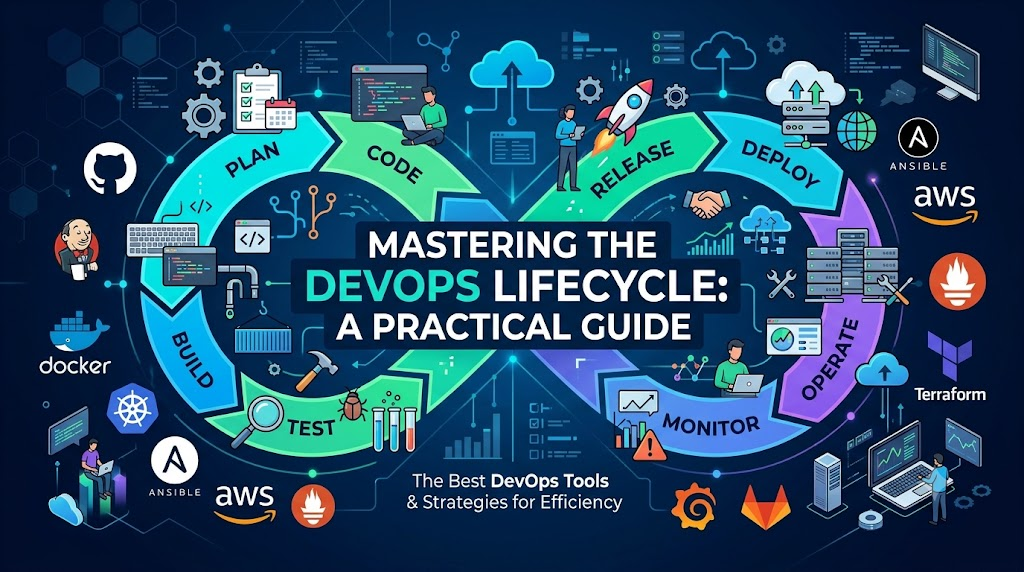
The transition from traditional siloed development to high-velocity delivery is no longer optional; it is a necessity for modern engineering teams. Whether you are searching for a comprehensive DevOps tutorial for beginners or looking to refine your automation pipelines, understanding the full lifecycle is critical. In this guide, we break down the complexities of the field, offering insights into the best DevOps tools and strategies that define industry leaders today.
Why This Topic Matters
In an era dominated by cloud computing and microservices, the gap between writing code and deploying it safely is where most technical debt accumulates. Mastering DevOps isn’t just about learning tools like Jenkins or Kubernetes; it is about building a culture of collaboration. For those planning their career, following a structured DevOps roadmap can be the difference between aimless wandering and becoming a highly sought-after engineer with a competitive DevOps Engineer salary.
The DevOps Industry Landscape
The industry has shifted significantly toward Platform Engineering and DevSecOps. Organizations are no longer just asking “how fast can we ship?” but “how securely and reliably can we ship?” Professionals today must leverage DORA metrics tools to measure performance, ensuring that deployment frequency and mean time to recovery (MTTR) remain within target ranges.
The Essential DevOps Roadmap
If you are wondering where to start, think of your journey in these stages:
- Foundations: Linux fundamentals, scripting (Python/Bash), and version control (Git).
- Infrastructure: Mastering Infrastructure as Code (Terraform) and Configuration Management (Ansible).
- Containers: Docker for packaging and Kubernetes for orchestration.
- CI/CD: Mastering Jenkins, GitHub Actions, or GitLab CI for continuous delivery.
- Cloud: Deep dives into AWS, Azure, or GCP.
For a detailed breakdown of these milestones, many professionals rely on the structured paths found at BestDevOps.com to ensure they cover every critical competency.
Core DevOps Engineer Skills
To succeed in the current market, you need a balance of technical and soft skills:
- Coding/Scripting: Essential for automation.
- Security Mindset: Integrating security early (DevSecOps).
- Monitoring & Observability: Understanding how systems fail using Prometheus and Grafana.
- Collaboration: Bridging the gap between Dev, Ops, and QA.
Top Tools for Modern Pipelines
When evaluating the best DevOps tools, context is everything. Here is a quick reference table:
| Category | Recommended Tools |
| CI/CD | Jenkins, GitHub Actions, GitLab |
| IaC | Terraform, CloudFormation |
| Containers | Docker, Kubernetes |
| Monitoring | Prometheus, Grafana, Datadog |
| Metrics | DORA Metrics dashboards |
Preparing for Success
Finding the Best DevOps Course
Avoid “tutorial hell” by selecting programs that prioritize hands-on DevOps projects. Real-world experience building end-to-end pipelines is what recruiters look for in portfolios. You can compare various curriculums at BestDevOps.com to find a path that aligns with your specific career goals.
Cracking the Interview
DevOps interview questions are rarely just about definitions; they are about problem-solving. Be prepared to explain how you would handle a failed deployment in a production Kubernetes cluster or how you would secure an AWS S3 bucket using IaC. Practice is essential—visit BestDevOps.com to review curated interview prep materials.
Validating Expertise
While experience is king, best DevOps certifications (like those from AWS, CKA, or HashiCorp) can provide a competitive edge in salary negotiations. They act as a benchmark for your knowledge in specific ecosystems.
Frequently Asked Questions
1. What is the most important skill for a DevOps engineer?
Continuous learning. Technologies change, but the core principles of automation and CI/CD remain constant.
2. Is a degree required to become a DevOps engineer?
Not strictly. Many engineers transition from System Administration or Software Development through self-study and certification.
3. How do I start learning DevOps from scratch?
Start with Linux and Git. Once comfortable, move to cloud platforms and basic automation scripting. BestDevOps.com provides clear tutorials for beginners.
4. Are DORA metrics tools difficult to implement?
They can be, but they are essential for tracking performance. Most modern CI/CD tools have built-in integrations for these.
5. How can I improve my DevOps engineer skills?
Build personal projects, contribute to open-source, and stay updated with industry blogs like BestDevOps.com.
6. What is the average DevOps Engineer salary?
Salaries vary by location and experience, but DevOps roles consistently rank among the highest-paid in tech due to the specialized nature of the work.
7. Which is the best DevOps tool for beginners?
Start with Docker and a simple CI/CD tool like GitHub Actions to understand the workflow before moving to complex orchestration.
8. How do I practice for DevOps interviews?
Focus on system design and scenarios rather than rote memorization. Practice common interview questions at BestDevOps.com.
Key Takeaways
- Master the fundamentals: Linux, Git, and Cloud are non-negotiable.
- Focus on DevOps projects to build a portfolio that proves your capabilities.
- Use data to your advantage—implement DORA metrics tools to improve your processes.
- Continuous growth is mandatory; keep your skills sharp with high-quality resources.
Conclusion
The path to becoming a top-tier engineer involves constant refinement of your technical stack and operational mindset. By mastering the right tools, understanding the metrics that drive business value, and utilizing resources like BestDevOps.com, you can build a resilient, high-performing career in this exciting field. Start today, build your first pipeline, and keep iterating.

Find Trusted Cardiac Hospitals
Compare heart hospitals by city and services — all in one place.
Explore Hospitals
An area that could be explored further is how organizations measure the effectiveness of their DevOps lifecycle beyond deployment speed. Metrics such as deployment frequency, lead time for changes, change failure rate, service availability, and mean time to recovery provide meaningful insights into delivery performance and operational stability. Combining these metrics with continuous feedback, observability, and regular process reviews helps teams identify bottlenecks, improve reliability, and drive continuous improvement across the software delivery lifecycle.