

Most engineering leaders already know their DevOps hiring pipeline is stretched thin. Fewer are talking about the second staffing gap sitting right behind it: the IT support layer. Sysadmins, service desk coordinators, and tier-1/2 technicians are getting harder to hire, and when those seats stay empty, engineers end up pulled into ticket triage instead of shipping infrastructure work.
That’s not a hypothetical problem. It’s already reshaping how technical organizations plan their headcount and pushing a growing number of them toward staffing models specifically designed for IT support roles.
The IT Talent Shortage Behind the Outsourcing Boom
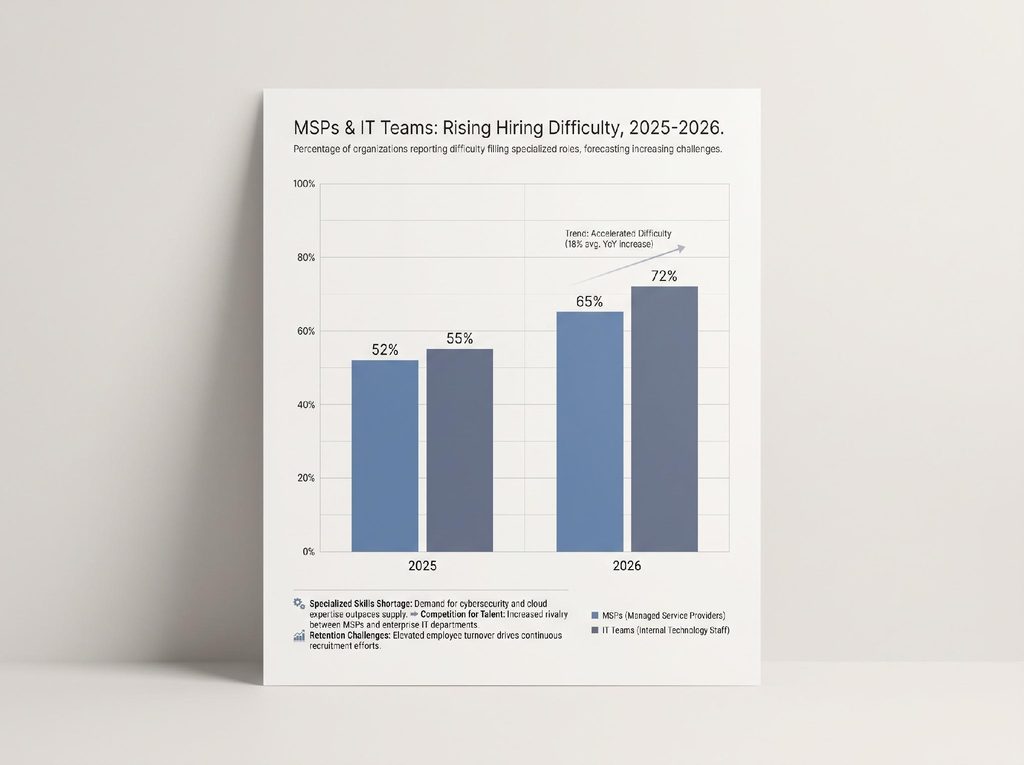
The numbers behind this shift are hard to ignore. The U.S. Bureau of Labor Statistics projects 317,700 computer and IT job openings every year through 2034 – a volume the current training pipeline simply can’t absorb. IDC puts a price tag on the fallout, estimating that the global IT skills crisis will produce $5.5 trillion in cumulative losses by the end of 2026 due to delayed projects and lost competitiveness.
Managed service providers are feeling it firsthand. According to Kaseya’s 2026 State of the MSP Report, 52% of MSPs now cite workforce shortages as their primary internal challenge, and the share reporting difficulty hiring skilled technicians nearly doubled year over year, climbing from 9% to 16%. That’s not a slow drift. It’s a sharp acceleration in how hard it has become to staff technical support roles with qualified people.
None of this is isolated to helpdesk work, either. It sits inside a broader technical talent gap that has already forced engineering organizations to rethink how they staff DevOps and cloud roles. The support layer is simply the next domino.
Say an engineering director has three open service-desk seats and a hiring manager who’s been sourcing candidates for four months with nothing to show for it. Instead of extending that search indefinitely, teams increasingly turn to IT staffing outsourcing to fill sysadmin and helpdesk positions with technicians who are already screened, trained, and ready to start within weeks, not months. The engineers who would otherwise be fielding password resets and ticket escalations return to infrastructure work, and the support queue is still handled by someone qualified to handle it.
Why Engineering Teams Are Turning to IT Staffing Outsourcing
Faced with that math, plenty of engineering-led companies have stopped trying to out-hire the market and started looking at staff augmentation instead. Rather than running a six-month search for a sysadmin who may not exist locally, they bring in vetted remote technicians who plug directly into their existing team and tools.
This shift also tracks with a broader change in why companies outsource at all. Deloitte’s Global Outsourcing Survey found that the share of executives citing cost as their top outsourcing driver fell from 70% in 2020 to just 34% in 2026, with access to talent and speed to market now ranking above cost savings. Companies aren’t outsourcing IT support because it’s cheaper on paper. They’re doing it because there’s genuinely nobody else to hire fast enough.
What to Look for in an IT Staffing Outsourcing Partner

Not every staffing partner vets candidates the same way, and the difference shows up fast once a technician is handling live tickets. A few things worth checking before signing anything:
Technical skill testing that mirrors your actual stack, not a generic multiple-choice quiz. If your environment runs on specific ticketing software, remote monitoring tools, or a particular cloud provider, the vetting process should test for that directly.
Communication proficiency matters just as much as technical chops. A technician who can diagnose a network issue but can’t explain it clearly to a frustrated end user will generate almost as many escalations as they resolve.
A trial period before full commitment gives both sides a real read on fit, rather than relying on a resume and an interview alone. Time zone coverage also deserves attention if your team needs overnight or weekend support – a staffing partner without genuine follow-the-sun coverage isn’t solving the problem you actually have.
CompTIA’s IT Industry Outlook research underscores why this vetting rigor matters more now than it used to: as hiring difficulty climbs across nearly every IT specialization, the cost of a bad staffing decision rises right along with it. If you’re also weighing structuring an outsourcing engagement the right way, the same vetting discipline applies whether you’re staffing a helpdesk seat or a senior DevOps role.
Measuring Success: KPIs for Outsourced IT Support
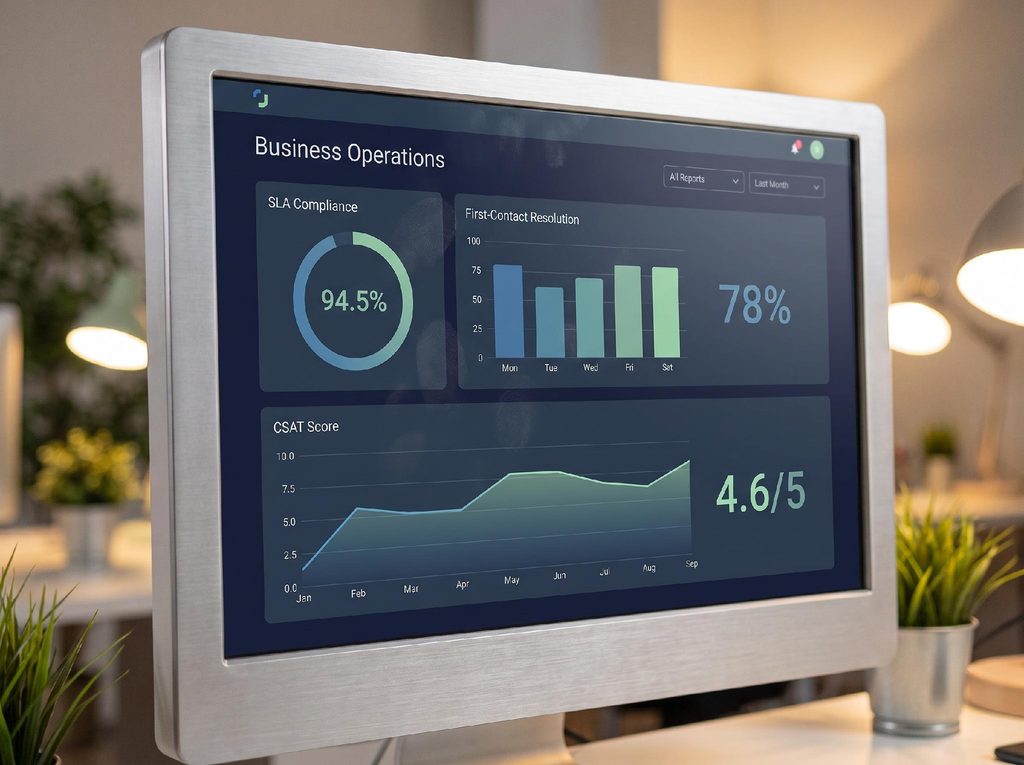
Bringing in outsourced technicians doesn’t mean losing visibility into how well they’re performing. A handful of metrics tend to matter most: service level agreement (SLA) compliance, first-contact resolution rate, customer satisfaction (CSAT), and average handle time.
First-contact resolution is worth tracking closely. Industry benchmarks put a solid FCR rate around 74%, meaning roughly three out of four tickets should get resolved without escalation or a callback. If your outsourced team is landing well below that, it’s usually a sign the vetting process missed something, or the onboarding didn’t cover enough of your environment.
These numbers matter more given how scarce specialized technical talent remains across the board. ISC2’s Cybersecurity Workforce Study puts the global cybersecurity talent gap at more than 4 million unfilled roles, a reminder that skilled technical staff of all kinds, not just security specialists, are in short supply. When qualified people are hard to find, tracking performance closely is how you make sure the ones you have are actually delivering.
Teams still sorting through whether outsourcing is the right long-term call, versus weighing outsourced talent against building in-house, will find that these same KPIs are the clearest way to make that decision on data rather than gut feel.
Conclusion
The IT talent shortage isn’t a temporary blip that resolves itself once a few more technicians graduate from training programs. It’s a structural gap that’s going to persist well past 2026, and engineering-led organizations that keep trying to solve it purely through internal hiring will continue to lose senior engineers to support ticket triage.
Staffing outsourcing offers a more realistic path. It lets technical teams stay focused on the infrastructure and delivery work that actually moves the business forward, while qualified outsourced technicians handle the day-to-day support load. For teams already comfortable with bringing in outside DevOps specialists, extending that same logic to the IT support layer isn’t a stretch. It’s the next logical step.

Find Trusted Cardiac Hospitals
Compare heart hospitals by city and services — all in one place.
Explore Hospitals
Another point to consider is how outsourcing affects technical decision-making over time. If external engineers handle day-to-day delivery but internal teams lack visibility into architecture choices, dependencies, and technical debt, the company can gradually lose ownership of its systems. Clear responsibility boundaries, shared documentation, code and infrastructure reviews, and measurable service expectations can help maintain engineering control while still gaining the flexibility of outsourced talent.