
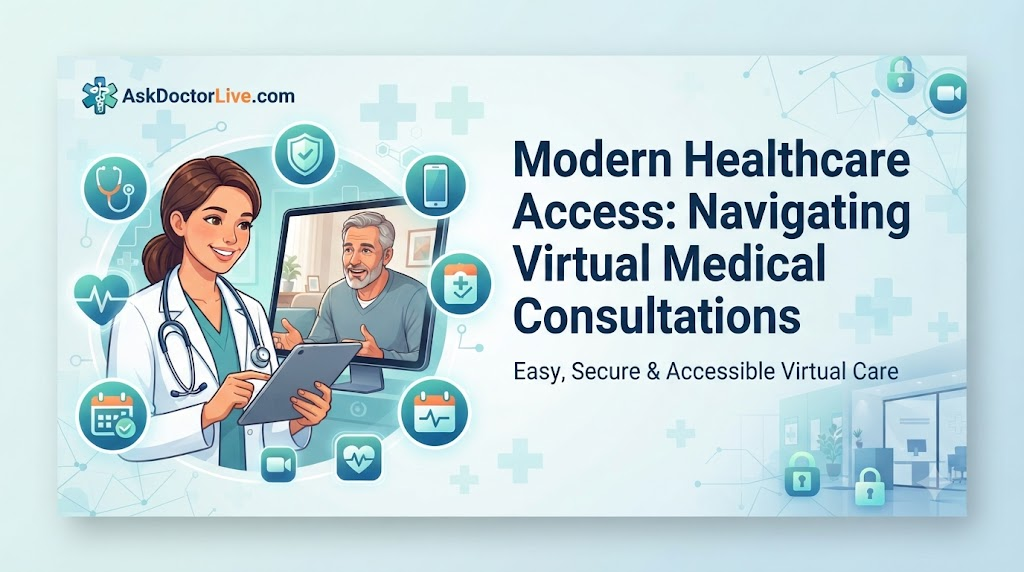
Technology continues to reshape how people manage their daily lives, and healthcare is no exception. From booking appointments digitally to reviewing health records on mobile devices, patients now expect greater flexibility and speed when connecting with medical professionals. While traditional in-person visits remain a cornerstone of medicine, remote healthcare consultations have emerged as a practical alternative for a wide range of non-urgent medical inquiries.
For working parents, busy professionals, and older adults managing everyday health questions, virtual care bridges the gap between busy schedules and medical advice. By making it easier to communicate with healthcare professionals remotely, digital platforms provide reassurance and convenience without requiring immediate travel. However, virtual care is not a universal solution, and understanding its appropriate applications and limitations is essential for safe and effective health management.
What Is an Online Doctor Consultation?
An online doctor consultation refers to a virtual medical interaction where a patient connects with a qualified healthcare provider using digital communication tools. Rather than sitting in a physical waiting room, patients use secure applications or web interfaces to discuss health concerns from home, work, or any private space.
Communication methods vary depending on the platform and the nature of the inquiry. Patients might use text-based messaging, audio calls, or high-definition video connections to describe symptoms, ask health-related questions, and receive professional guidance. These virtual sessions are typically well-suited for non-emergency concerns, general health inquiries, lifestyle guidance, and follow-up discussions regarding ongoing management plans.
Despite its flexibility, virtual care cannot replace every aspect of traditional medicine. Situations requiring a physical examination, hands-on diagnostic testing, or emergency intervention still necessitate an in-person visit to a clinic, urgent care center, or hospital emergency department.
When Should You Ask a Doctor Online?
Many everyday health questions do not require an immediate trip to a physical clinic. People often choose to ask a doctor online when they encounter minor health issues or need guidance on whether further medical evaluation is necessary.
Common scenarios include seeking clarification on mild, non-emergency symptoms, asking follow-up questions after a recent diagnosis, or discussing medication-related questions that require professional review. Patients also use digital channels to interpret general lab or test results when advised by a physician or to receive general wellness advice.
While remote guidance is helpful for many situations, it is crucial to recognize that digital platforms are not appropriate for every medical condition. Severe or rapidly worsening symptoms always demand immediate, in-person medical assessment.
Benefits of Talking to A Doctor Online
Remote healthcare consultations offer several practical advantages for patients who value convenience and accessibility. One of the primary benefits is the reduction in travel time and transportation barriers, which is especially helpful for individuals living in remote areas or those with mobility challenges.
Talking to a doctor online also provides flexible access for individuals with demanding work schedules or family care responsibilities. Patients can discuss health concerns from the comfort of home, eliminating the need to take extensive time off work or arrange childcare just to ask a quick medical question. Furthermore, virtual follow-up consultations make it easier for patients to maintain continuity of care and keep their physicians updated on their progress.
At the same time, digital care should be viewed as a complementary tool rather than a complete replacement for traditional healthcare. While convenient, remote sessions depend on stable technology and clear communication, and they lack the physical touch points of an office visit.
Understanding 24/7 Online Doctor Consultation
Health concerns rarely follow a standard nine-to-five schedule. When unexpected questions arise outside of traditional clinic hours, having access to continuous healthcare support can provide immense peace of mind. A 24/7 online doctor consultation service allows individuals to seek professional guidance whenever questions emerge, whether late at night or during a busy weekend.
Around-the-clock availability is particularly useful for general health concerns, minor symptoms that develop after hours, or preparing questions before the next regular clinic visit. However, extended availability does not mean that every medical concern should be handled in the middle of the night. True medical emergencies require immediate attention from local emergency services rather than waiting for a digital queue.
How Online Doctor Chat Can Support Patients
Text-based communication has become an integral part of modern digital communication, and healthcare is no exception. An online doctor chat interface allows patients to type out their concerns, share relevant medical history, and receive structured written responses from qualified professionals.
This format is particularly useful for patients who prefer writing down their thoughts or want a clear, written record of the doctor’s guidance. It allows individuals to describe their symptoms carefully and clarify healthcare instructions without the pressure of a live video or phone call. Nevertheless, text communication has clear boundaries. Because a doctor cannot physically examine the patient or read visual cues as easily, text-based care is best reserved for straightforward questions, general advice, and informational support.
What Is an Online Medical Second Opinion?
Navigating a complex diagnosis or a major treatment plan can be overwhelming. Seeking an online medical second opinion allows patients to consult another qualified professional to review their existing medical records, test results, and diagnosis notes.
This process helps patients gain a broader perspective on their health, understand alternative treatment options, and clarify any lingering questions about their care plan. Preparing for a second opinion involves gathering comprehensive medical history and recent diagnostic reports so the reviewing physician has accurate context. Ultimately, a second opinion is designed to complement existing medical care and empower patients with knowledge, rather than encourage individuals to disregard the guidance of their primary medical team.
Online General Physician Consultation
General physicians serve as the first line of defense in everyday healthcare, helping patients manage common illnesses, preventive care, and overall wellness. An online general physician consultation makes it convenient to address everyday health inquiries without visiting a crowded waiting room.
Patients frequently turn to general physicians online to discuss mild symptoms, common seasonal illnesses, lifestyle and nutrition questions, or basic wellness tracking. These virtual visits also help patients determine whether their symptoms require self-care at home or an in-house examination with a local specialist.
Online Dermatologist Consultation
Skin and hair health can be influenced by numerous factors, including genetics, environment, and lifestyle. An online dermatologist consultation allows individuals to share clear descriptions or photographs of skin concerns with a qualified skin specialist.
Virtual dermatology discussions are often useful for evaluating common skin changes, hair concerns, and general skincare questions. However, accurate dermatological diagnosis frequently requires specialized physical examination tools, direct tactile assessment, or in-person diagnostic testing, meaning that certain skin conditions will always require a traditional clinic visit.
Online Gynecologist Consultation
Women’s health encompasses a wide range of unique physiological and reproductive considerations. An online gynecologist consultation provides a private, accessible environment for women to discuss menstrual health questions, reproductive wellness, and general hormonal concerns.
These consultations are valuable for routine follow-up discussions, reviewing general test results, and addressing educational questions about women’s wellness. Keeping discussions respectful, open, and medically grounded ensures that patients receive accurate information while understanding when a physical pelvic examination or in-person screening is necessary.
Online Pediatrician Consultation
Parents and caregivers often face sudden questions regarding their children’s health, particularly outside regular clinic hours. An online pediatrician consultation helps parents seek professional guidance for common child health questions, minor feeding concerns, or mild behavioral and developmental queries.
Virtual pediatric care can help parents decide whether a child needs to be seen in person or if simple home care is sufficient. However, infants and children can experience rapid health changes. Any serious, rapidly worsening, or emergency symptoms in children require immediate, in-person pediatric evaluation.
When Online Consultation May Not Be Enough
Recognizing the boundaries of digital healthcare is critical for patient safety. While remote consultations are efficient for many routine needs, online care is entirely unsuitable for medical emergencies.
Patients must seek immediate emergency medical care rather than relying on digital platforms if they experience severe breathing difficulty, sudden chest pain, major bleeding, sudden neurological symptoms, loss of consciousness, or severe trauma. Digital platforms cannot perform emergency life-saving interventions, physical resuscitation, or acute diagnostic procedures.
How to Prepare for an Online Doctor Consultation
Describe Your Main Concern Clearly
Articulating your primary reason for seeking care helps the doctor focus the conversation immediately, ensuring that the most pressing health issue is addressed first.
Prepare Your Medical History
Having a summary of your known health conditions, past surgeries, known allergies, and current medications ready allows the physician to evaluate your situation safely and accurately.
Keep Relevant Reports Available
Gathering recent laboratory results, imaging reports, or discharge summaries enables the doctor to review objective data alongside your verbal description.
Describe Symptoms Accurately
Note when your symptoms first appeared, how frequently they occur, and whether anything specific makes them better or worse to give the physician a complete clinical picture.
Prepare Questions in Advance
Writing down your specific questions before the session starts ensures that you do not forget important details during the discussion.
How to Choose an Online Doctor Consultation Service
Selecting a digital healthcare platform requires careful consideration of several practical factors. Patients should look for services that feature verified, qualified medical professionals across relevant specialties.
The consultation format, ease of the appointment scheduling process, and clarity of communication options are also important practical elements. Furthermore, patients should prioritize platforms that maintain strict data privacy and security practices to protect sensitive medical information, while remaining transparent about the limitations of virtual care.
How AskDoctorLive.com Can Help
Finding reliable digital healthcare guidance can sometimes feel overwhelming with so many options available. Platforms like AskDoctorLive.com provide a relevant space for individuals looking to connect with qualified medical professionals through convenient online channels.
Whether someone needs an online doctor consultation for a general health question, an online general physician consultation for minor symptoms, or specialized insights such as an online dermatologist consultation, online gynecologist consultation, or online pediatrician consultation, structured digital platforms offer accessible pathways to care. Additionally, patients seeking an online medical second opinion or direct online doctor communication can utilize these environments to navigate their healthcare journeys with greater confidence. The focus remains on delivering educational support and professional connectivity without replacing the fundamental role of in-person medicine.
Privacy and Responsible Use of Online Healthcare
Protecting personal health information is paramount in the digital age. When utilizing online healthcare services, patients should remain mindful of privacy practices, secure their account credentials, and share only relevant medical details through legitimate, encrypted platforms.
Responsible use also involves avoiding unnecessary disclosure of sensitive data on unverified websites and always following the professional advice provided by qualified clinicians. Treating digital health tools with the same caution and respect as traditional medical visits ensures a secure and beneficial experience.
Common Mistakes to Avoid During Online Medical Consultation
Navigating virtual care effectively involves avoiding several common pitfalls. Patients should refrain from providing incomplete medical histories, hiding important medication use, or attempting to self-diagnose complex conditions based solely on internet searches.
Another mistake is ignoring worsening symptoms or assuming that every medical issue can be successfully evaluated and resolved remotely. Patients should never use another person’s prescription, expect guaranteed diagnostic outcomes from a single virtual chat, or delay necessary in-person medical care when a physical examination is warranted.
Future of Online Healthcare
The landscape of digital medicine continues to evolve through technological advancements and improved connectivity. Future developments will likely feature more secure digital communication tools, enhanced video consultation quality, streamlined digital health records, and more integrated remote monitoring technologies.
While these tools will improve access to specialists and simplify follow-up care, technology will not replace the irreplaceable human element of medicine, nor will it eliminate the need for physical hospitals and hands-on doctor visits.
Conclusion
The growing integration of digital tools into modern medicine has fundamentally transformed how individuals access medical guidance. From routine general inquiries to specialized discussions, online doctor consultations offer remarkable convenience and flexibility for patients managing busy lives.
However, successful digital healthcare relies on responsible use, proper preparation, and a clear understanding of remote care limitations. Recognizing when a virtual conversation is appropriate and knowing when to seek immediate in-person or emergency medical evaluation remains essential for overall well-being. For those exploring digital health options and seeking accessible professional guidance, platforms like AskDoctorLive.com provide a valuable resource to support informed, connected healthcare decisions.

Find Trusted Cardiac Hospitals
Compare heart hospitals by city and services — all in one place.
Explore Hospitals