
Introduction
AI Learning Path Recommendation Engines are intelligent systems that design, personalize, and continuously optimize learning journeys for individuals or employees based on skills, goals, performance data, and behavioral patterns. These platforms use machine learning, recommendation algorithms, and skills intelligence graphs to deliver the “next best learning step” for each learner.
Instead of offering static course catalogs, these engines dynamically build structured learning paths such as onboarding journeys, upskilling tracks, certification routes, or career development plans. They analyze user behavior, skill gaps, assessment results, and job roles to recommend the most relevant learning content at the right time. Modern systems also use adaptive learning and reinforcement learning to continuously refine recommendations based on feedback loops and outcomes.
These platforms are now a core part of AI-powered LMS and talent development ecosystems.
Why It Matters
Organizations today face rapid skill change, making traditional training outdated. AI learning path engines solve this by continuously adapting learning journeys.
They help organizations:
- Close skill gaps faster
- Personalize employee learning journeys
- Improve onboarding speed and quality
- Increase training completion rates
- Align learning with business goals
- Reduce wasted training effort
Without AI-driven learning paths, employees often consume irrelevant training or follow generic programs that do not match their actual needs.
Real World Use Cases
- Employee onboarding automation
- IT and engineering upskilling paths
- Sales certification journeys
- Compliance training personalization
- Internal mobility and career pathing
- Leadership development programs
- Academic adaptive learning systems
- Customer training portals
- Partner enablement programs
- Workforce reskilling at scale
Evaluation Criteria for Buyers
When selecting AI Learning Path Recommendation Engines, organizations should evaluate:
- Quality of personalization algorithms
- Skills inference and ontology depth
- Adaptive learning capability
- Integration with LMS and HR systems
- Real-time learning adjustments
- Recommendation accuracy
- Content ecosystem strength
- User experience and engagement
- Analytics and tracking depth
- Scalability for enterprise deployment
What’s Changed in AI Learning Path Engines
Modern systems have evolved from rule-based course sequencing into dynamic AI recommendation systems.
Key advancements include:
- Machine learning-based skill gap detection
- Reinforcement learning for path optimization
- Continuous feedback loops for personalization
- Real-time adaptation based on user behavior
- Integration with skills graphs and workforce data
Research shows that adaptive systems using reinforcement learning and knowledge tracing improve learning effectiveness and path accuracy significantly.
AI recommendation engines now act as personalized learning assistants that continuously refine suggestions based on learner interaction patterns.
Quick Buyer Checklist
| Requirement | Why It Matters |
|---|---|
| AI personalization engine | Builds tailored learning paths |
| Skills graph support | Connects roles and competencies |
| Adaptive learning logic | Adjusts difficulty dynamically |
| Real-time recommendations | Improves learning relevance |
| HR/LMS integration | Ensures workflow continuity |
| Content tagging system | Improves recommendation accuracy |
| Analytics dashboards | Tracks learning effectiveness |
| Feedback loop system | Improves AI over time |
| Multi-device access | Supports modern learning habits |
| Scalability | Supports enterprise adoption |
Best For
- Enterprises with large workforce training needs
- EdTech platforms and LMS providers
- HR and L&D teams
- Universities and digital learning platforms
- IT and technical upskilling programs
- Customer education platforms
- Global organizations with distributed teams
Not Ideal For
- Small teams with informal training needs
- Organizations without structured learning content
- Manual training-only environments
- Companies without HR or LMS systems
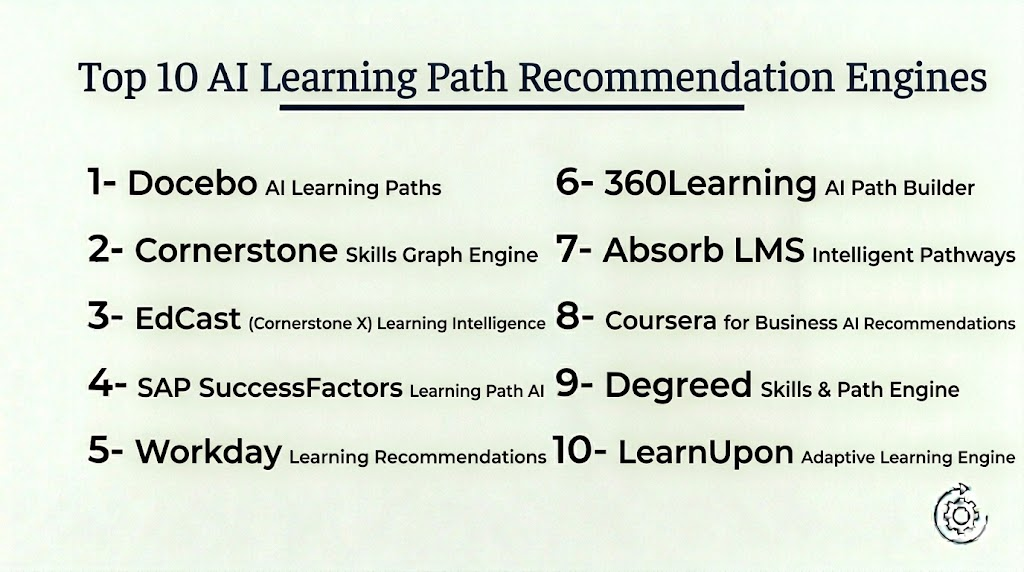
Top 10 AI Learning Path Recommendation Engines
1- Docebo AI Learning Paths
2- Cornerstone Skills Graph Engine
3- EdCast (Cornerstone X) Learning Intelligence
4- SAP SuccessFactors Learning Path AI
5- Workday Learning Recommendations
6- 360Learning AI Path Builder
7- Absorb LMS Intelligent Pathways
8- Coursera for Business AI Recommendations
9- Degreed Skills & Path Engine
10- LearnUpon Adaptive Learning Engine
1- Docebo AI Learning Paths
One-line Verdict
Best for enterprise AI-driven learning path automation and personalization.
Short Description
Docebo uses AI to automatically generate personalized learning paths based on learner behavior, skills, and organizational goals. It is widely used for enterprise training, onboarding, and upskilling.
Standout Capabilities
- AI-powered learning path builder
- Skill-based content recommendations
- Automated course sequencing
- Personalized onboarding journeys
- Adaptive learning workflows
- Learning analytics dashboard
- Content tagging intelligence
AI-Specific Depth
Docebo uses machine learning algorithms to analyze learner interactions and continuously refine learning path recommendations.
Pros
- Strong enterprise scalability
- Excellent personalization engine
- Good integration ecosystem
- Easy course automation
Cons
- Complex for small teams
- Requires structured content library
- Premium pricing
Security & Compliance
Not publicly stated
Deployment & Platforms
- Cloud LMS platform
Integrations & Ecosystem
- HRIS systems
- CRM platforms
- Video conferencing tools
- Enterprise learning tools
Pricing Model
Enterprise subscription
Best-Fit Scenarios
- Corporate training programs
- Employee onboarding
- Global workforce learning
- Enterprise L&D systems
2- Cornerstone Skills Graph Engine
One-line Verdict
Best for skills-based enterprise learning path optimization.
Short Description
Cornerstone uses a skills graph and AI engine to build personalized learning journeys aligned with workforce skills and career goals.
Standout Capabilities
- Skills graph mapping
- AI learning recommendations
- Career path alignment
- Adaptive course sequencing
- Learning analytics
- Workforce skill tracking
- Personalized training journeys
AI-Specific Depth
Uses AI-driven skills ontology mapping to align learning content with employee roles and future career paths.
Pros
- Strong enterprise ecosystem
- Deep skills intelligence
- Good career alignment
- Scalable system
Cons
- Complex implementation
- Requires HR maturity
- Enterprise pricing
Security & Compliance
Not publicly stated
Deployment & Platforms
- Cloud HR + learning platform
Integrations & Ecosystem
- HRIS systems
- LMS platforms
- Talent systems
- Analytics tools
Pricing Model
Enterprise subscription
Best-Fit Scenarios
- Workforce upskilling
- Career development systems
- Enterprise training programs
- Skills-based learning design
3- EdCast by Cornerstone
One-line Verdict
Best for AI-driven knowledge + learning path recommendations.
Short Description
EdCast combines learning experience platforms with AI recommendation engines to deliver personalized learning paths across enterprise content systems.
Standout Capabilities
- AI content recommendations
- Learning experience personalization
- Skills-based learning paths
- Knowledge discovery engine
- Adaptive learning suggestions
- Enterprise content aggregation
- Employee learning dashboards
AI-Specific Depth
Uses AI recommendation models to curate and sequence learning content based on employee skills and behavior patterns.
Pros
- Strong content aggregation
- Good personalization engine
- Enterprise scalability
- Strong learning UX
Cons
- Requires integration effort
- Complex setup
- Enterprise-focused
Security & Compliance
Not publicly stated
Deployment & Platforms
- Cloud learning experience platform
Integrations & Ecosystem
- HR systems
- LMS platforms
- Enterprise knowledge systems
- Collaboration tools
Pricing Model
Enterprise subscription
Best-Fit Scenarios
- Knowledge-driven organizations
- Employee upskilling
- Learning experience platforms
- Enterprise learning ecosystems
4- SAP SuccessFactors Learning AI
One-line Verdict
Best for enterprise learning path automation in SAP ecosystems.
Short Description
SAP SuccessFactors uses AI to recommend learning paths based on employee roles, skills, and organizational requirements.
Standout Capabilities
- AI learning recommendations
- Role-based learning paths
- Skills gap analysis
- Compliance training paths
- Workforce learning analytics
- Adaptive content delivery
- Certification tracking
AI-Specific Depth
SAP uses AI models to align learning paths with workforce skills and organizational development goals.
Pros
- Strong SAP integration
- Reliable enterprise system
- Good compliance support
- Scalable architecture
Cons
- Complex setup
- SAP dependency
- Enterprise pricing
Security & Compliance
Enterprise-grade compliance
Deployment & Platforms
- SAP cloud HR system
Integrations & Ecosystem
- SAP ERP
- HR systems
- Learning tools
- Analytics platforms
Pricing Model
Enterprise subscription
Best-Fit Scenarios
- SAP-based enterprises
- Compliance training
- Workforce learning systems
- Global organizations
5- Workday Learning Recommendations
One-line Verdict
Best for AI-powered learning paths integrated with HR data.
Short Description
Workday uses AI to recommend personalized learning paths based on employee performance, skills, and career goals.
Standout Capabilities
- AI learning recommendations
- Skills-based learning paths
- Career development alignment
- Workforce analytics
- Adaptive training suggestions
- HR data integration
- Learning dashboards
AI-Specific Depth
Uses machine learning to connect HR data with learning recommendations and continuously refine learning paths.
Pros
- Strong HR integration
- Reliable enterprise analytics
- Good personalization
- Scalable system
Cons
- Workday dependency
- Complex configuration
- Enterprise pricing
Security & Compliance
Enterprise HR compliance
Deployment & Platforms
- Workday cloud platform
Integrations & Ecosystem
- HRIS systems
- Finance systems
- Analytics tools
- Enterprise apps
Pricing Model
Enterprise subscription
Best-Fit Scenarios
- HR-driven learning systems
- Enterprise training programs
- Workforce development
- Global organizations
6- 360Learning AI Path Builder
One-line Verdict
Best for collaborative and AI-powered learning path creation.
Short Description
360Learning uses AI to help organizations build collaborative and personalized learning paths driven by peer content and skills data.
Standout Capabilities
- AI learning path builder
- Collaborative course creation
- Skills-based recommendations
- Peer learning integration
- Adaptive learning workflows
- Content automation
- Engagement tracking
AI-Specific Depth
Uses AI to recommend learning paths based on collaborative learning behavior and skill gaps.
Pros
- Strong collaboration focus
- Easy course creation
- Good UX
- Fast deployment
Cons
- Limited deep enterprise analytics
- Mid-market focus
- Less predictive depth
Security & Compliance
Not publicly stated
Deployment & Platforms
- Cloud LMS platform
Integrations & Ecosystem
- HR systems
- Slack
- Teams
- Content tools
Pricing Model
Subscription-based
Best-Fit Scenarios
- Collaborative learning teams
- Mid-market companies
- Training program creation
- Agile learning environments
7- Absorb LMS Intelligent Pathways
One-line Verdict
Best for AI-powered structured learning paths in enterprise LMS systems.
Short Description
Absorb LMS uses AI to create structured and personalized learning paths for employees based on roles and competencies.
Standout Capabilities
- AI learning recommendations
- Automated course sequencing
- Role-based learning paths
- Skills tracking
- Training analytics
- Certification management
- Content personalization
AI-Specific Depth
Uses AI to match learners with relevant content based on job roles and skill assessments.
Pros
- Easy LMS interface
- Good enterprise scalability
- Strong reporting tools
- Flexible learning paths
Cons
- Limited advanced AI features
- Less predictive capability
- Requires content setup
Security & Compliance
Not publicly stated
Deployment & Platforms
- Cloud LMS platform
Integrations & Ecosystem
- HR systems
- CRM tools
- Content libraries
- Enterprise tools
Pricing Model
Subscription-based
Best-Fit Scenarios
- Corporate training programs
- Compliance training
- Enterprise LMS deployment
- Structured learning paths
8- Coursera for Business AI Recommendations
One-line Verdict
Best for external learning content-based AI learning path recommendations.
Short Description
Coursera uses AI to recommend structured learning paths based on global course catalog, skills, and job roles.
Standout Capabilities
- AI course recommendations
- Skill-based learning paths
- Certification pathways
- Personalized learning journeys
- Industry-aligned training
- Adaptive content suggestions
- Career development tracks
AI-Specific Depth
Uses AI recommendation engines trained on learner behavior and course performance data.
Pros
- Strong global content library
- High-quality courses
- Good skill alignment
- Easy adoption
Cons
- External content dependency
- Limited internal customization
- Subscription costs scale with usage
Security & Compliance
Not publicly stated
Deployment & Platforms
- Cloud learning platform
Integrations & Ecosystem
- HR systems
- LMS platforms
- Enterprise tools
- API integrations
Pricing Model
Subscription-based
Best-Fit Scenarios
- Corporate upskilling
- Certification programs
- External learning needs
- Global workforce training
9- Degreed Skills & Path Engine
One-line Verdict
Best for enterprise skill-based learning experience platforms.
Short Description
Degreed uses AI to connect skills, learning content, and career paths into a unified learning experience system.
Standout Capabilities
- AI skill-based learning paths
- Content aggregation engine
- Career development tracking
- Skills intelligence graph
- Personalized recommendations
- Learning analytics
- Workforce development tools
AI-Specific Depth
Uses AI to map skills to content and continuously adjust learning pathways based on user progress.
Pros
- Strong skills intelligence
- Good enterprise adoption
- Flexible learning ecosystem
- Strong analytics
Cons
- Complex implementation
- Requires data maturity
- Enterprise pricing
Security & Compliance
Not publicly stated
Deployment & Platforms
- Cloud learning experience platform
Integrations & Ecosystem
- HR systems
- LMS platforms
- Content libraries
- Enterprise tools
Pricing Model
Enterprise subscription
Best-Fit Scenarios
- Skills transformation programs
- Enterprise learning ecosystems
- Career development systems
- Workforce upskilling
10- LearnUpon Adaptive Learning Engine
One-line Verdict
Best for simple AI-driven learning path automation for businesses.
Short Description
LearnUpon uses AI to automate learning path recommendations and improve employee training journeys across organizations.
Standout Capabilities
- AI learning path automation
- Course recommendation engine
- Training workflow automation
- Skills tracking
- Reporting dashboards
- Certification paths
- Learning analytics
AI-Specific Depth
Uses AI models to recommend learning paths based on learner behavior and course completion data.
Pros
- Easy to use
- Fast deployment
- Good for SMB and mid-market
- Strong LMS features
Cons
- Limited advanced AI depth
- Basic predictive capabilities
- Less enterprise intelligence
Security & Compliance
Not publicly stated
Deployment & Platforms
- Cloud LMS platform
Integrations & Ecosystem
- HR systems
- CRM tools
- Video tools
- API integrations
Pricing Model
Subscription-based
Best-Fit Scenarios
- SMB training programs
- Employee onboarding
- Simple learning paths
- Mid-market organizations
Comparison Table
| Platform | Best For | AI Personalization | Skills Intelligence | Enterprise Fit | Content Ecosystem |
|---|---|---|---|---|---|
| Docebo | Enterprise LMS | Strong | Strong | Excellent | Strong |
| Cornerstone | Skills learning | Strong | Excellent | Excellent | Strong |
| EdCast | Knowledge learning | Strong | Strong | Excellent | Strong |
| SAP SuccessFactors | Enterprise HR learning | Strong | Strong | Excellent | Strong |
| Workday | HR-driven learning | Strong | Strong | Excellent | Strong |
| 360Learning | Collaborative learning | Moderate | Moderate | Strong | Strong |
| Absorb LMS | LMS automation | Moderate | Moderate | Strong | Moderate |
| Coursera | External learning | Strong | Strong | Strong | Excellent |
| Degreed | Skills ecosystem | Strong | Excellent | Excellent | Strong |
| LearnUpon | SMB learning | Moderate | Moderate | Moderate | Moderate |
Evaluation & Scoring Table
| Platform | Core Features 25% | Ease of Use 15% | Integrations 15% | Security 10% | Performance 10% | Support 10% | Value 15% | Total |
|---|---|---|---|---|---|---|---|---|
| Docebo | 9.3 | 8.4 | 9.0 | 8.8 | 9.1 | 8.6 | 8.2 | 8.8 |
| Cornerstone | 9.4 | 7.8 | 9.1 | 8.8 | 9.2 | 8.6 | 8.0 | 8.8 |
| EdCast | 9.2 | 8.1 | 9.0 | 8.7 | 9.0 | 8.5 | 8.1 | 8.7 |
| SAP | 9.2 | 7.7 | 9.1 | 9.0 | 9.0 | 8.6 | 7.8 | 8.7 |
| Workday | 9.3 | 7.8 | 9.2 | 9.0 | 9.1 | 8.7 | 7.9 | 8.8 |
| 360Learning | 8.9 | 8.6 | 8.8 | 8.6 | 8.8 | 8.5 | 8.6 | 8.7 |
| Absorb | 8.8 | 8.7 | 8.6 | 8.5 | 8.7 | 8.4 | 8.7 | 8.6 |
| Coursera | 9.1 | 9.0 | 9.2 | 8.8 | 9.0 | 8.7 | 8.8 | 8.9 |
| Degreed | 9.2 | 8.2 | 9.0 | 8.8 | 9.1 | 8.6 | 8.1 | 8.8 |
| LearnUpon | 8.6 | 9.1 | 8.5 | 8.4 | 8.6 | 8.3 | 9.0 | 8.6 |
Top 3 Recommendations
Best for Enterprise Learning Systems
- Docebo
- Cornerstone
- Workday
Best for Skills-Based Learning Ecosystems
- Degreed
- EdCast
- Coursera
Best for SMB and Mid-Market
- LearnUpon
- 360Learning
- Absorb LMS
Which Tool Is Right for You
Choose Docebo if
You want enterprise AI-driven personalized learning paths.
Choose Cornerstone if
You want deep skills-based workforce learning.
Choose EdCast if
You need knowledge + learning integration.
Choose SAP SuccessFactors if
You are in SAP ecosystem.
Choose Workday if
You want HR-integrated learning recommendations.
Choose 360Learning if
You want collaborative learning path creation.
Choose Absorb LMS if
You want structured LMS automation.
Choose Coursera if
You want external global learning content.
Choose Degreed if
You want a skills-first learning ecosystem.
Choose LearnUpon if
You want simple AI learning path automation.
30 60 90 Days Implementation Playbook
First 30 Days
- Define learning objectives
- Integrate LMS and HR data
- Set skill frameworks
- Configure recommendation engine
- Identify pilot groups
Next 60 Days
- Launch AI learning paths
- Collect learner behavior data
- Optimize recommendations
- Train L&D teams
- Improve content mapping
Final 90 Days
- Scale across organization
- Enable predictive learning paths
- Optimize skills intelligence
- Automate learning journeys
- Measure learning ROI
Common Mistakes
- Using AI without structured skill data
- Ignoring content tagging quality
- Overloading learners with recommendations
- Poor LMS integration
- Not validating recommendation accuracy
- Treating AI as static system
- Lack of feedback loops
- Ignoring learner experience
Frequently Asked Questions FAQs
1. What is an AI learning path recommendation engine?
It is a system that uses AI to design personalized learning journeys for users.
2. How does it work?
It analyzes skills, behavior, and performance data to recommend learning content.
3. What is adaptive learning?
It is learning that adjusts automatically based on learner progress.
4. Do these tools use machine learning?
Yes, most use ML and recommendation algorithms.
5. Are they used in enterprises?
Yes, they are widely used in corporate training systems.
6. Can they improve skill development?
Yes, they personalize learning for faster skill acquisition.
7. Do they integrate with LMS?
Yes, most integrate with LMS and HR systems.
8. Are they suitable for small businesses?
Some lightweight tools like LearnUpon are suitable.
9. What is the main benefit?
Personalized and efficient learning pathways.
10. What is the biggest limitation?
Dependence on high-quality data and structured content.
Conclusion
AI Learning Path Recommendation Engines are redefining modern learning by transforming static training programs into dynamic, personalized, and adaptive learning journeys. These systems ensure that every learner receives the right content at the right time based on skills, goals, and behavior. Enterprise platforms focus on deep skills intelligence and workforce integration, while mid-market tools prioritize ease of use and automation. As organizations move toward skills-based workforce development, these engines will play a critical role in shaping future-ready learning ecosystems that continuously evolve with business needs.

Find Trusted Cardiac Hospitals
Compare heart hospitals by city and services — all in one place.
Explore Hospitals
Very helpful comparison for anyone planning a career in AI or tech.