
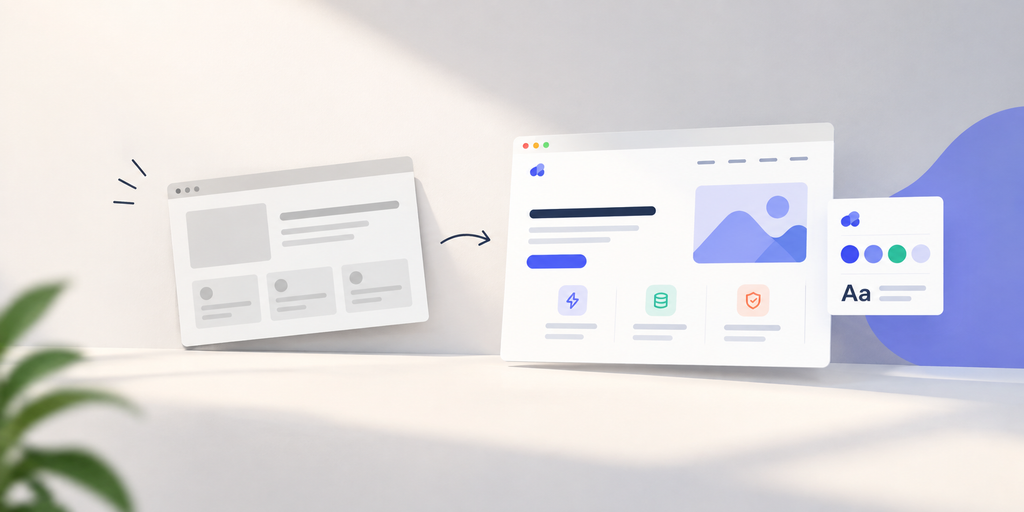
Most developers who launch a product get the technical part right. The architecture holds. The deployment works. The product does what it promises.
But it looks like something built in a weekend. And users notice.
A mismatched color palette. A logo that feels borrowed from somewhere. A landing page that reads like internal documentation. The gap between how good the product is and how it presents itself is where a lot of early traction quietly dies.
The fix doesn’t require hiring a designer. There are tools built specifically for this situation that handle professional logo design and generate a full brand kit, colors, fonts, logo variations, from a set of inputs about your product and style. The output is consistent and ready to use across everything from day one.
Still, most developers skip this step. The reasons are predictable, and most of them are wrong.
Why Technical Founders Deprioritize Brand
The thinking usually goes: ship first, fix the visuals later. Focus on the product. If it’s good enough, people will look past the presentation.
Some will. Most won’t.
Users deciding whether to try a new tool are doing a fast, mostly unconscious credibility check. The product’s visual identity is part of that check. A logo that looks placeholder and a site with no visual coherence both send the same signal: this might not be serious. That impression forms before anyone has read a single feature description.
The assumption that good products overcome bad branding is optimistic. It happens, but it’s the exception. Most products that succeed with poor visual identity succeed despite it, not because users didn’t notice.
What You Really Need at This Stage
Not much. That’s the part people overcomplicate.
You don’t need a brand strategy. You don’t need typography guidelines or a brand voice document. What you need is something that looks like it was chosen on purpose: a logo that holds up at different sizes, a color palette with two or three colors that actually go together, and a font pairing that doesn’t clash.
Apply those three things consistently across your landing page, your product UI, and any outward-facing communications, and you’ll look more credible than 80% of developer-built products at the same stage.
Consistency is doing more work than people give it credit for. A simple, consistent identity beats a complex one applied inconsistently every time.
Where This Usually Goes Wrong
The logo gets made once and then forgotten. The site uses one color scheme, the product UI uses another, the email notifications use the default styling from whatever framework was used. Nobody made a deliberate decision about any of it.
That fragmentation is visible to users even when they can’t name it. Something just feels off. The product doesn’t feel finished, even if the functionality is solid.
The other failure mode is perfectionism. A developer who cares about the brand ends up spending weeks iterating on logo options and never ships. There’s a version of this that becomes a genuine blocker. Done and consistent beats perfect and inconsistent. Get something out, apply it everywhere, move on.
Starting With the Logo
Everything else follows from the logo. The color palette, the font choices, the visual tone of the site. Get that decision made early and the rest becomes easier.
Hiring a designer before the product has validated is usually premature. You don’t know enough about your users or your positioning yet to give a proper brief. The result is something that looks great but needs to change in a few months when the product direction shifts.
Using a tool that generates brand assets from your inputs gets you to something usable without that overhead. You’re not picking from a clip art library. You’re working through prompts about your industry, your style preferences, and your product name, and the output reflects those inputs. That’s a different quality of result than most people expect.
After the Brand: Getting Found
A coherent visual identity helps with conversion once someone lands on your product. Getting them there is a separate problem. For SaaS products, organic search tends to be the most cost-efficient channel over time, but it requires early groundwork. Working with a saas seo services team from the start means you’re building authority while the product is still finding its footing, rather than trying to catch up later when the competitive gap is wider.
Brand and search are more connected than they look. A product that’s visually consistent and easy to remember generates branded search over time. Word of mouth works better when people can actually describe what they’re recommending. The brand compounds in ways that are hard to attribute but real.
Picking the Right Tools and Staying With Them
The tool choice matters less than most people think. What matters is picking something and not switching. DevOpsSchool’s breakdown of top branding tools covers the main options worth considering if you’re evaluating what fits your workflow and output needs.
The pattern that works: generate the brand assets once, document the colors and fonts somewhere you’ll actually refer to, and apply them consistently from that point forward. That’s the whole system. It doesn’t need to be more complicated than that.
Developers are generally good at picking a stack and committing to it. Brand works the same way.
The Short Version
Ship with a coherent visual identity or ship without one. The product might be the same either way. The user’s first impression will not be.
You don’t need a designer for this. You need thirty minutes, a clear idea of what your product does, and a tool that can turn those inputs into something consistent and usable.
The developers who treat branding as a real launch requirement, not a post-launch cleanup task, start at a better position. That advantage is small early on and larger over time.

I’m Rajesh Kumar, a DevOps, SRE, DevSecOps, Cloud, and Platform Engineering expert passionate about sharing practical knowledge, real-world experiences, and industry best practices. I have worked at Cotocus and regularly write about technology, travel, investing, health, product reviews, and digital marketing through my various platforms.
I publish technical articles at DevOps School, travel stories at Holiday Landmark, stock market insights at Stocks Mantra, health and fitness guidance at My Medic Plus, product reviews at TrueReviewNow, and SEO and digital marketing strategies at Wizbrand.
Find Trusted Cardiac Hospitals
Compare heart hospitals by city and services — all in one place.
Explore Hospitals