
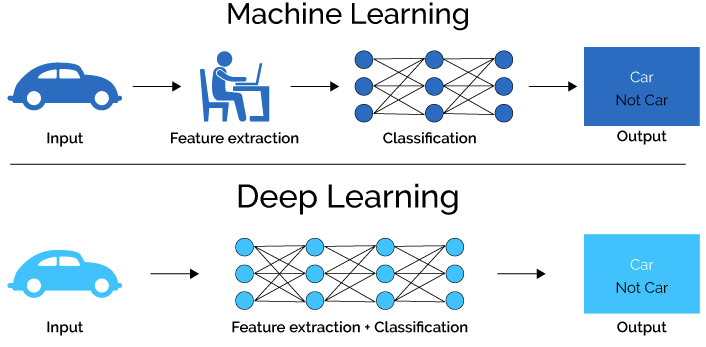
Have you ever wondered what the difference is between deep learning and machine learning? Although these two terms are often used interchangeably, they are not the same thing. In this article, we will explore the key differences between deep learning and machine learning.
Introduction
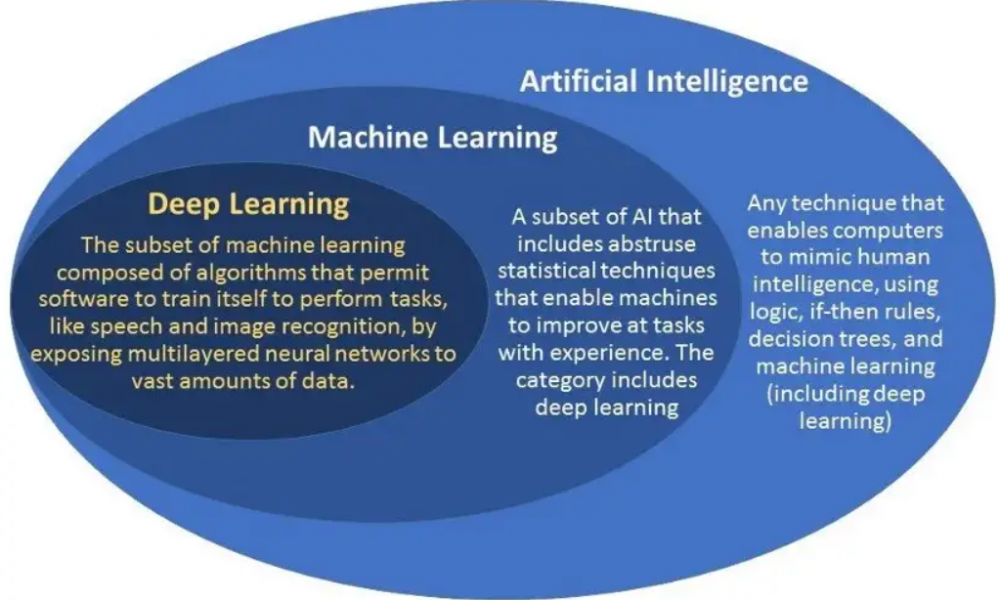
Machine learning and deep learning are both subsets of artificial intelligence (AI) that involve training a computer to learn from data. Machine learning is a method of teaching computers to learn from data and make predictions or decisions without being explicitly programmed. Deep learning, on the other hand, is a type of machine learning that uses artificial neural networks to learn from large amounts of data.
Machine Learning
Machine learning is a type of artificial intelligence that involves training a computer to learn from data. It is based on the idea that machines can learn from examples and experience, just like humans do. Machine learning algorithms can be used to identify patterns in data, make predictions, and make decisions.
There are three main types of machine learning: supervised learning, unsupervised learning, and reinforcement learning. In supervised learning, the computer is trained on labeled data, where the correct answers are provided. In unsupervised learning, the computer is trained on unlabeled data, where the correct answers are not provided. In reinforcement learning, the computer learns by trial and error, receiving feedback in the form of rewards or penalties.
Machine learning algorithms are often used in applications such as image recognition, speech recognition, and natural language processing.
Deep Learning
Deep learning is a type of machine learning that uses artificial neural networks to learn from large amounts of data. It is based on the idea that neural networks can simulate the human brain and learn from examples and experience.
Deep learning algorithms are designed to learn and improve over time, by adjusting the weights of connections between nodes in the neural network. This allows the network to recognize patterns in data and make predictions or decisions.
Deep learning is used in applications such as image and speech recognition, natural language processing, and self-driving cars.
Key Differences
The key differences between deep learning and machine learning can be summarized as follows:
Complexity
Deep learning is more complex than machine learning because it uses artificial neural networks that simulate the human brain. These networks have many layers and connections, making them capable of learning and recognizing complex patterns in data.
Data
Deep learning requires large amounts of labeled data to train the neural networks. Machine learning algorithms can work with smaller amounts of labeled data, or even unlabeled data.
Performance
Deep learning algorithms are often more accurate than machine learning algorithms because they are better at recognizing complex patterns in data. However, they also require more computational resources and time to train.
Interpretability
Machine learning algorithms are often more interpretable than deep learning algorithms because they are based on simpler models that can be easily understood. Deep learning algorithms, on the other hand, use complex neural networks that are difficult to interpret.
Conclusion
In conclusion, deep learning and machine learning are both subsets of artificial intelligence that involve training a computer to learn from data. Machine learning is a method of teaching computers to learn from data and make predictions or decisions without being explicitly programmed. Deep learning, on the other hand, is a type of machine learning that uses artificial neural networks to learn from large amounts of data. While both have their own strengths and weaknesses, deep learning is generally more complex, requires more data and computational resources, and is less interpretable than machine learning.

👤 About the Author
Ashwani is passionate about DevOps, DevSecOps, SRE, MLOps, and AiOps, with a strong drive to simplify and scale modern IT operations. Through continuous learning and sharing, Ashwani helps organizations and engineers adopt best practices for automation, security, reliability, and AI-driven operations.
🌐 Connect & Follow:
Website: WizBrand.com
Facebook: facebook.com/DevOpsSchool
X (Twitter): x.com/DevOpsSchools
LinkedIn: linkedin.com/company/devopsschool
YouTube: youtube.com/@TheDevOpsSchool
Instagram: instagram.com/devopsschool
Quora: devopsschool.quora.com
Email– contact@devopsschool.com
Find Trusted Cardiac Hospitals
Compare heart hospitals by city and services — all in one place.
Explore Hospitals