Are you looking to build a successful CloudOps team? Look no further! In this article, we’ll discuss the step-by-step process of building a CloudOps team that can take your business to new heights.
What is CloudOps?
Before we dive into the steps, let’s first define what CloudOps is. Simply put, CloudOps is the practice of managing and operating cloud infrastructure and applications. It involves a combination of DevOps practices, cloud technologies, and business acumen.
Step 1: Define Your Goals
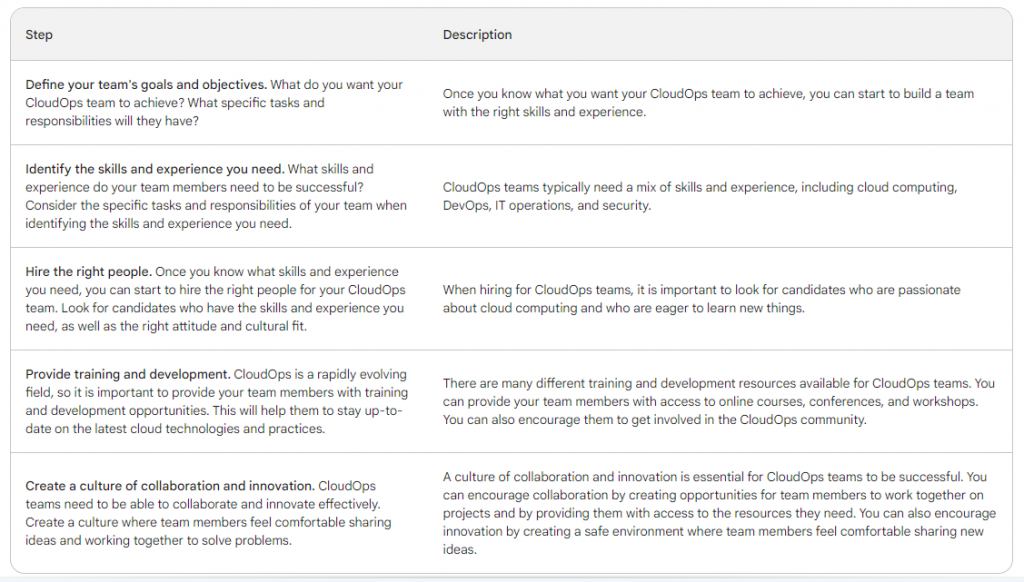
The first step in building a CloudOps team is to define your goals. What are you trying to achieve with your cloud infrastructure? Are you looking to reduce costs, improve scalability, or increase efficiency? Once you have a clear understanding of your goals, you can begin to build a team that can help you achieve them.
Step 2: Hire the Right People
The right people are crucial to the success of your CloudOps team. You’ll need a mix of technical and business expertise to ensure that your team can operate effectively. Look for candidates with experience in cloud technologies, automation, and business operations. Don’t forget to assess their communication skills, as communication is key when working in a team environment.
Step 3: Develop a Culture of Collaboration
A culture of collaboration is essential to the success of your CloudOps team. Encourage your team to work together, share knowledge, and learn from each other. Foster an environment where everyone feels comfortable asking questions and offering suggestions. This will help to ensure that your team is working towards a common goal and can operate seamlessly.
Step 4: Implement DevOps Practices
DevOps practices are a crucial part of CloudOps. They enable teams to automate processes, improve efficiency, and reduce errors. Implementing DevOps practices such as continuous integration and continuous deployment (CI/CD) can help your team to deliver value to your customers faster and with greater accuracy.
Step 5: Invest in Training and Development
Investing in training and development is essential to the long-term success of your CloudOps team. Cloud technologies are constantly evolving, so it’s important to keep your team up-to-date with the latest tools and practices. Offer training programs, attend conferences, and encourage your team to attend meetups and networking events.
Step 6: Measure and Improve Performance
Measuring and improving performance is the final step in building a successful CloudOps team. Implement metrics such as uptime, response time, and customer satisfaction to track the performance of your team. Use this data to identify areas for improvement and implement changes to optimize performance.
In conclusion, building a successful CloudOps team requires a combination of technical expertise, business acumen, and a culture of collaboration. By following these six steps, you can build a team that can help you achieve your cloud infrastructure goals and take your business to new heights. So what are you waiting for? Start building your CloudOps team today!

👤 About the Author
Ashwani is passionate about DevOps, DevSecOps, SRE, MLOps, and AiOps, with a strong drive to simplify and scale modern IT operations. Through continuous learning and sharing, Ashwani helps organizations and engineers adopt best practices for automation, security, reliability, and AI-driven operations.
🌐 Connect & Follow:
Website: WizBrand.com
Facebook: facebook.com/DevOpsSchool
X (Twitter): x.com/DevOpsSchools
LinkedIn: linkedin.com/company/devopsschool
YouTube: youtube.com/@TheDevOpsSchool
Instagram: instagram.com/devopsschool
Quora: devopsschool.quora.com
Email– contact@devopsschool.com
Find Trusted Cardiac Hospitals
Compare heart hospitals by city and services — all in one place.
Explore Hospitals