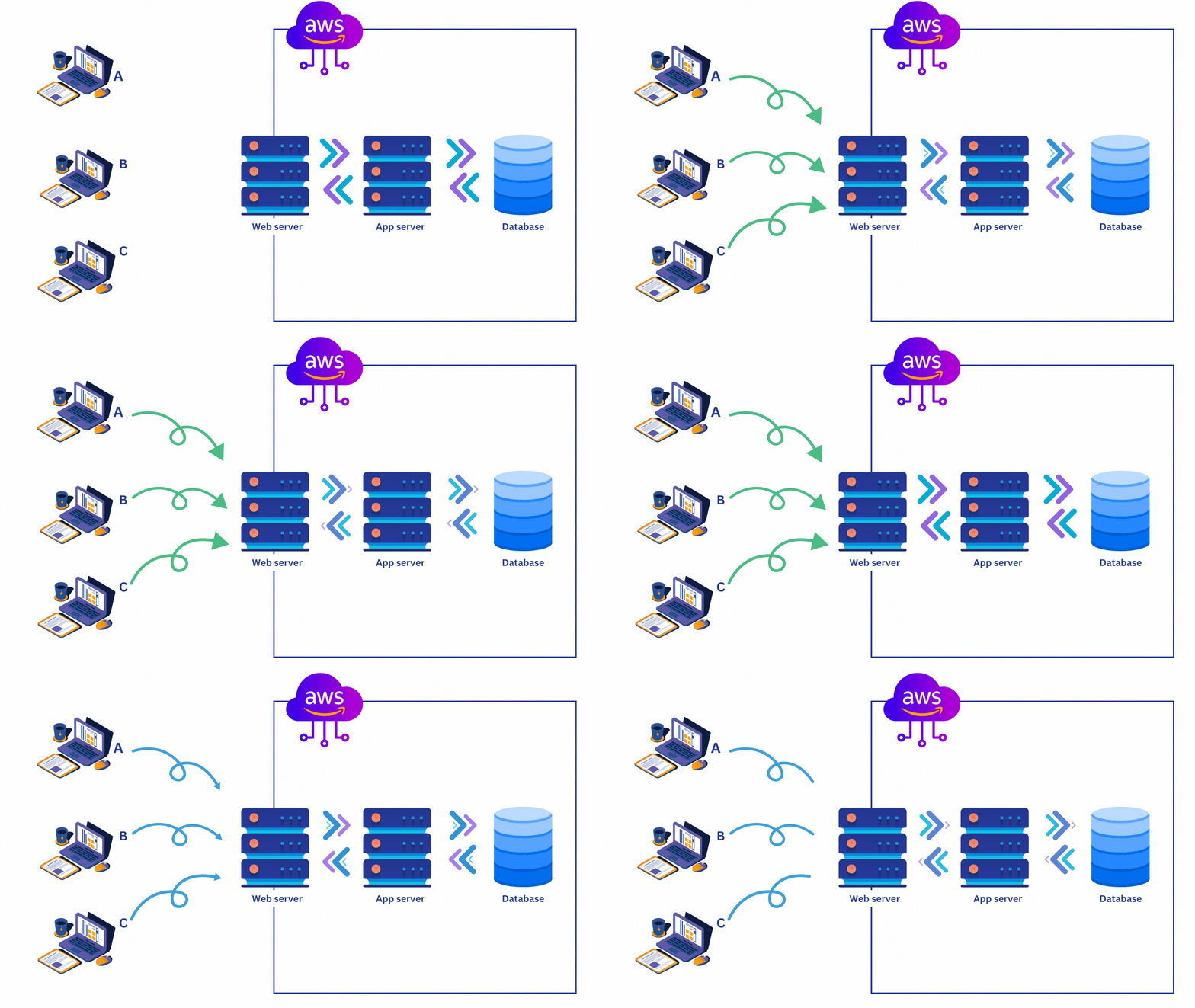
- Three-Tier Architecture: As mentioned in the previous response, the three-tier architecture divides an application into three logical layers: presentation layer, business logic layer, and data storage layer. It is primarily focused on structuring the application’s components and separating concerns. The layers are typically organized as follows:
- Presentation Layer: Handles the user interface and user interactions. It is responsible for capturing user input and presenting information to the users.
- Business Logic Layer: Contains the application’s core functionality, rules, and workflows. It processes user requests, performs computations, and implements business logic.
- Data Storage Layer: Manages the storage and retrieval of data. It includes databases, file systems, or other storage mechanisms.
The primary purpose of the three-tier architecture is to provide modularity, scalability, and separation of concerns within an application.

I’m Rajesh Kumar, a DevOps, SRE, DevSecOps, Cloud, and Platform Engineering expert passionate about sharing practical knowledge, real-world experiences, and industry best practices. I have worked at Cotocus and regularly write about technology, travel, investing, health, product reviews, and digital marketing through my various platforms.
I publish technical articles at DevOps School, travel stories at Holiday Landmark, stock market insights at Stocks Mantra, health and fitness guidance at My Medic Plus, product reviews at TrueReviewNow, and SEO and digital marketing strategies at Wizbrand.
Find Trusted Cardiac Hospitals
Compare heart hospitals by city and services — all in one place.
Explore Hospitals