
How to Evaluate Source Code Analysis Tools: Practical Criteria for DevOps Teams
Selecting a source code analysis tool requires more than feature checklists. Use this framework to measure accuracy, developer fit, integration quality, and reporting value before rollout.
Static vs Dynamic Code Analysis: Differences, CI/CD Workflow, and Practical Use
Static analysis inspects code without executing it, while dynamic analysis evaluates behavior at runtime. This guide explains the trade-offs, shows how both fit into CI/CD, and provides practical pipeline examples.
Static vs Dynamic Code Analysis: Differences, Trade-offs, and CI/CD Integration
Static and dynamic code analysis solve different quality and security problems, and neither replaces the other. Learn how they differ, where each fits in DevOps, and how to use both in one CI/CD quality gate.
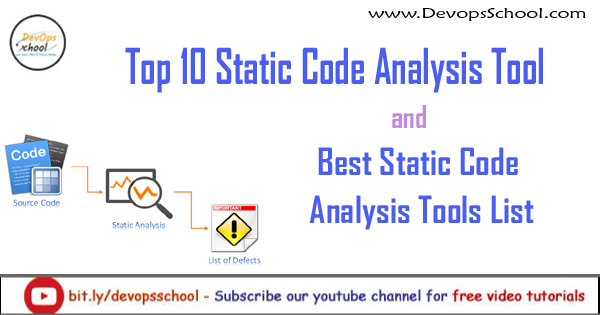
Top 10 Static Code Analysis Tool | Best Static Code Analysis Tools List
Software security is a very important concern for todays Software market and for that you need to do code analysis in the development lifecycle. Now we can not imagine ourselves to sit back and do manual reading each line of codes and find issues and bugs. Those days of manual review in the software development lifecycle to find the flaws in the codes are over now.
Now the mindsets has changed and developing quality & secure code from the beginning is on rise. This is the time of automation and developers & programmers are now shifting towards the adoption of tools which auto detects the flaws as soon as possible in the software development lifecycle.
As the process shifting towards the automation, static code analysis (SCA) has become an important part of creating quality code. Now the question here is, What is Static Code Analysis?
Static Code Analysis is a technique which quickly and automatically scan the code line by line to find security flaws and issues that might be missed in the development process before the software or application is released. It functions by reviewing the code without actually executing the code.
Read More