
India processes more real-time payments than any other country, and the e-commerce market is projected to reach $163 billion by 2026. For engineering teams, the payment gateway you pick decides more than checkout UX: it governs integration time, how your service degrades during traffic spikes, how clean your reconciliation jobs run, and whether your finance team pings you on a Sunday because a settlement cycle shifted.
This guide reviews seven payment gateways in India through a developer lens: API design, SDK coverage, sandbox quality, settlement cycles, webhook reliability, and the compliance posture required under the Reserve Bank of India (RBI) payment aggregator framework.
A quick note on fees: all prices below are public rates valid at the time of publication. Pricing in Indian payment services changes often, especially for high-volume merchants on custom contracts, so verify current rates on each provider’s site before you sign anything.
How We Evaluated the Best Payment Gateway Options
We weighted the criteria that matter when a payment page actually ships:
- API surface, server SDKs, and native mobile SDKs
- Documentation depth and sandbox parity with production
- Payment options coverage: Unified Payments Interface (UPI), debit cards, credit cards, net banking, digital wallets, international cards
- Settlement cycles and payout APIs
- Security measures: PCI DSS level, end to end encryption, 2FA, fraud screening
- RBI compliance (payment aggregator licence or equivalent)
- Customer support channels and response realities
Pricing is in the comparison, but we treated it as a secondary filter. A 0.2% difference in transaction fees is cheaper than six engineering weeks spent working around a broken webhook retry policy.
Quick Comparison of the Top Payment Gateways
| Gateway | Headline fee (standard public rate) | Standard settlement | Strong on |
| Unlimit | Custom, enterprise | T+1 to T+3 (merchant tier) | Cross-border, 150+ currencies, BaaS |
| Razorpay | ~2% + taxes on cards | T+2 default, instant optional | Developer tooling, SaaS stack |
| Cashfree Payments | Custom, published tiers | T+1, instant available | Payouts API, reconciliation |
| PayU | Custom, enterprise | T+1 to T+2 | Enterprise merchants, EMI |
| Juspay | Custom orchestration pricing | Routed through acquirers | Success-rate routing, scale |
| Paytm Payment Gateway | 0% on UPI/RuPay debit, 1.99% on cards and wallet | T+1 | Wallet reach, QR |
| Instamojo | 2% + ₹3 per transaction | T+3 default | Payment links, freelancers |
7 Best Payment Gateways in India
1. Unlimit
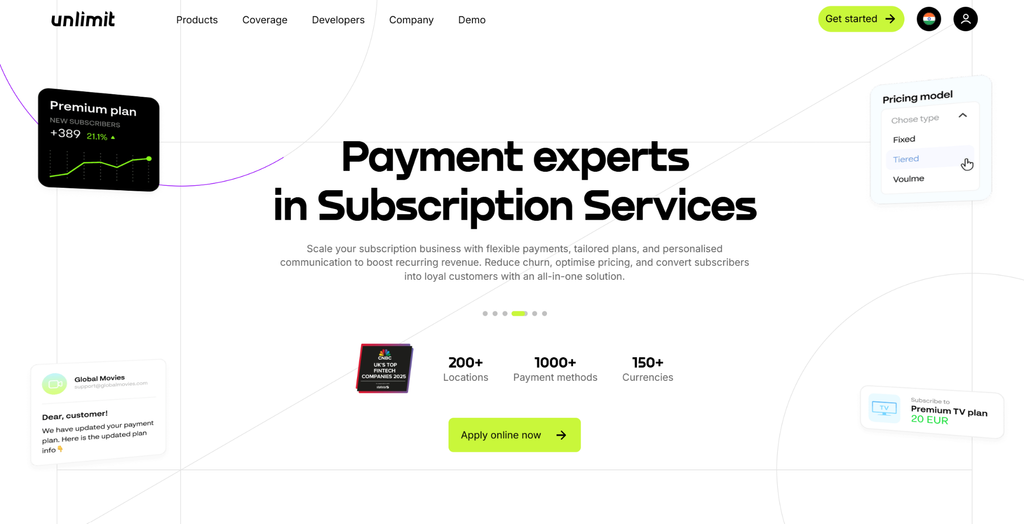
Unlimit holds two RBI authorisations in India: the Online Payment Aggregator licence granted on 25 April 2024, when it launched local operations in Gurugram, and the Payment Aggregator – Cross Border (PA-CB) licence granted in December 2025. The second licence is what sets Unlimit apart from most entries on this list: it covers end-to-end inward and outward cross-border payment flows under RBI’s consolidated Master Direction on Payment Aggregators (September 2025), with only around 19 entities holding final PA-CB authorisation as of early 2026. On the infrastructure side, Unlimit connects domestic acceptance (UPI, cards, net banking) with cross-border payouts, local acquiring across 200+ geographies, and card issuing. The publicly disclosed customer roster includes Xiaomi, Telegram, inDrive, and Convera.
For developers, the practical implication is a single API contract that covers both your Indian checkout and your international expansion plan. Unlimit publishes support for 1,000+ payment methods and 150+ currencies, with Banking-as-a-Service APIs for embedded accounts and card issuing available alongside the acquiring stack.
Where Unlimit Fits
Pick Unlimit when your product is cross-border by design: a global SaaS collecting from Indian subscribers, a marketplace paying out drivers in multiple countries, a crypto or fintech company that needs fiat on-ramps across LATAM, Africa, and APAC on the same contract. The surface area is wider than a pure domestic Indian payment gateway, which is overkill if you only sell to Mumbai and never leave INR.
2. Razorpay
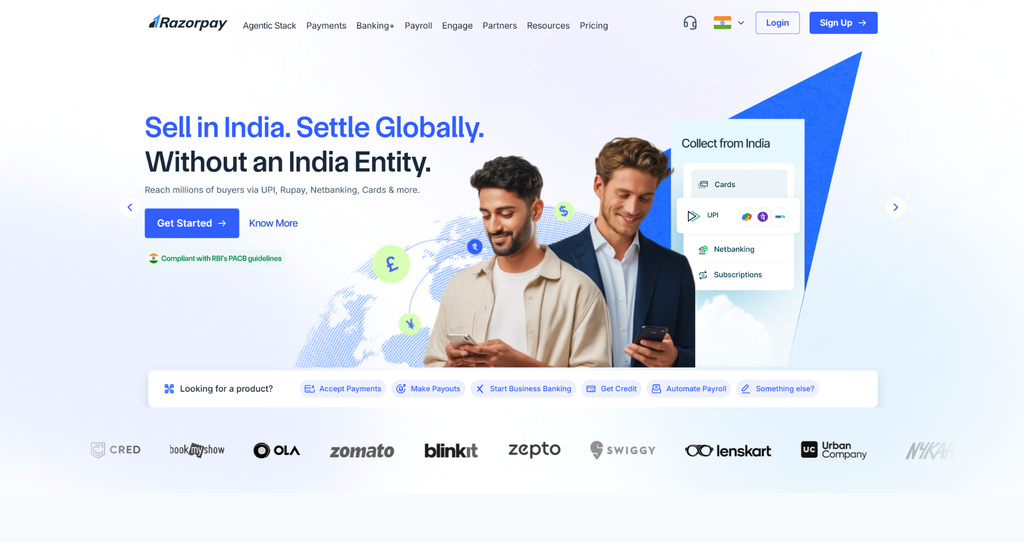
Razorpay reports serving 5 million businesses in India and is the default pick for most Indian SaaS and D2C teams. Its REST API is clean, idempotency is first-class, and the webhook event taxonomy covers the lifecycle you need for subscription billing without hacks.
Headline fee is 2% plus 18% GST on domestic card transactions in standard plans, with no setup fees or annual maintenance charges. UPI carries the same 2% as a Razorpay platform fee despite zero network MDR under RBI’s zero-MDR mandate (in effect since January 2020): that is a gateway charge, not an MDR passed through. Instant settlement is available on request for a convenience fee. Reliable customer support runs 24/7 via ticket submission, with phone support on higher tiers.
Developer Notes on Razorpay
The Standard Checkout, Payment Links, Subscriptions, Route (split payments), and Payouts products share the same auth model, which keeps your service account sprawl under control. Plugins exist for Shopify, WooCommerce, Magento, and most CMS platforms, so a basic integration can reach production in under 30 minutes if you accept the hosted checkout.
3. Cashfree Payments
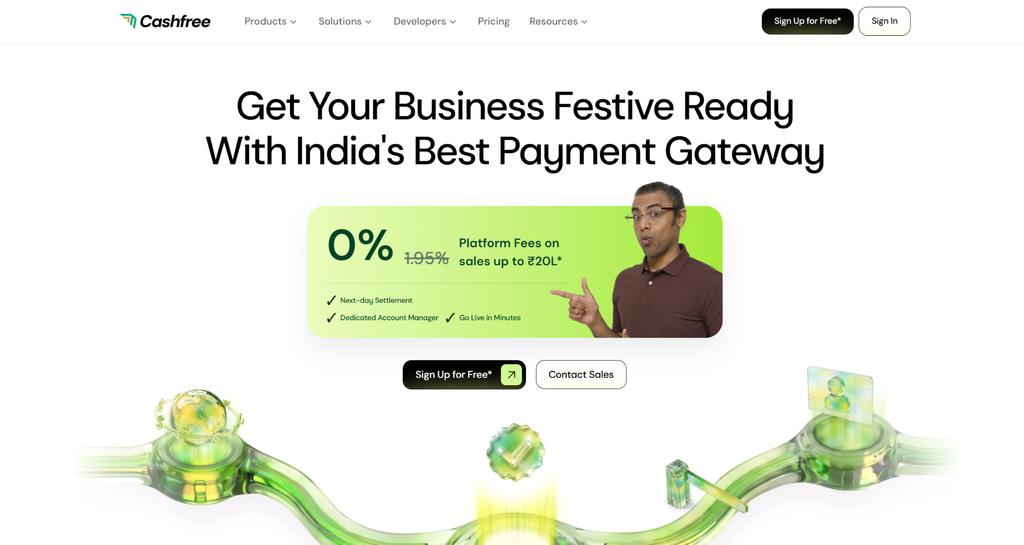
Cashfree processes over USD 80 billion in annual payment volume and is the gateway most often chosen when payouts are as critical as collections. The Payouts API supports IMPS, NEFT, UPI, and bank account transfers with ledger-level webhooks, which is why mobility, lending, and gig-economy platforms gravitate here.
Developer Notes on Cashfree
Instant settlements are advertised, and the reconciliation API returns settlement-level data with transaction mappings rather than making you join CSV exports. The sandbox mirrors production endpoints, which cuts the usual “it worked in staging” class of bugs. Customer support runs through website queries and email; prioritise your account manager for anything time-sensitive.
4. PayU
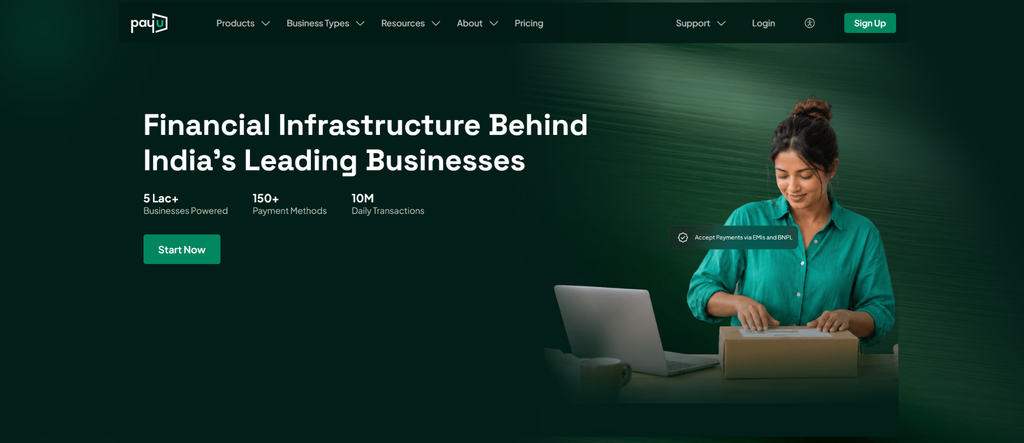
PayU is the established enterprise option, with deep EMI (equated monthly instalments) integrations across Indian issuing banks and a strong record on recurring payments for subscription merchants. Multilingual checkout, one-click payments, and instant refunds are standard.
Developer Notes on PayU
Enterprise pricing requires a sales consultation, which is honest signalling: PayU’s commercial model is built for merchants with meaningful monthly revenue, not freelancers. International payment flows are handled, but domestic and cross-border charges differ, so model both before you commit. Reporting APIs feed finance tools directly, which is useful if your reconciliation lives in a data warehouse.
5. Juspay
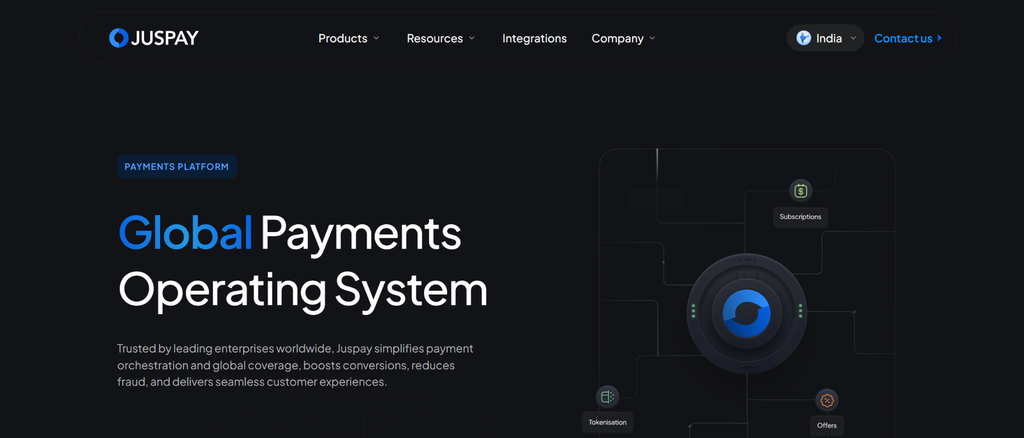
Juspay is a payment orchestration platform rather than a classic online payment gateway. It sits above your acquirers, routes each transaction to the acquirer most likely to approve it, and handles retries, 3DS fallback, and tokenisation across providers. India’s largest consumer apps run on Juspay precisely because single-acquirer setups cannot absorb Diwali-scale traffic.
Developer Notes on Juspay
Mobile SDKs for Android and iOS are the strongest in the market, with sub-second checkout rendering as a design goal. The dashboard surfaces decline reasons per acquirer, so your team can argue with issuing banks using data. Pricing is customised and typically only makes sense above a certain transaction floor; smaller teams are better served by a direct gateway.
6. Paytm Payment Gateway
Paytm has over 300 million users for everyday digital payments, which is the real reason it stays on shortlists: wallet users check out faster when they recognise the brand. The gateway covers wallets, UPI, cards, net banking, and QR. Pricing follows RBI’s zero-MDR mandate: UPI and RuPay debit sit at 0%, Visa/Mastercard debit at 0.40% under ₹2,000 and 0.90% above, and credit cards, Paytm Wallet, and net banking at 1.99% plus GST.
Developer Notes on Paytm
Online onboarding is quick, and ecommerce plugins cover the usual stack. Dedicated support runs through a toll-free number and email. APIs are serviceable but less modern than Razorpay or Cashfree, so weight the ecosystem benefit against developer experience when you choose.
7. Instamojo

Instamojo targets small and medium businesses, solopreneurs, and content creators who do not need a full gateway stack. Payment links, hosted stores, and social-selling flows are the main surface area, with cards, UPI, and wallets accepted at the back end.
Developer Notes on Instamojo
Standard fees are 2% plus ₹3 per transaction across payment methods, with no setup fees or annual maintenance charges. The flat ₹3 component bites micro-transactions (under ₹200 it is effectively a 3.5% load), but on anything above ₹500 it undercuts gateways that bill ₹3,600 to ₹5,000 in annual maintenance regardless of volume. Integration is mostly no-code; developer APIs exist but are not the product’s centre of gravity.
Developer Considerations Beyond the Feature Grid
APIs, SDKs, and Documentation
Every gateway on this list offers REST APIs. The differentiator is sandbox parity, webhook retry semantics, and idempotency key support. Before committing, run three tests: a double-tap on the same request should return the same transaction, a webhook endpoint that returns 500 should see controlled retries, and a refund on a settled transaction should not require a support ticket.
Security and Regulatory Readiness
Every reputable gateway complies with PCI DSS and encrypts transactions. Two-factor authentication, real-time payment tracking, and fraud detection are table stakes. Where providers differ is in how they handle 3DS2 challenges on international transactions and whether their RBI tokenisation implementation covers your card-on-file use cases.
Settlement, Cash Flow, and Reconciliation
Settlement cycles range from T+1 to T+3 days under standard plans. For a business with thin margins, T+1 versus T+3 is a material cash flow difference. Instant settlements exist at most providers for a convenience fee; model whether that fee is cheaper than a working capital line before you flip the switch.
How to Choose the Right Payment Gateway
Match the gateway to the shape of your business, not to brand recognition:
- Startups and freelancers who sell in INR and need a payment page in a day: Instamojo or Razorpay Payment Links.
- Scaling SaaS or D2C with international customers: Razorpay or Cashfree for the stack, Unlimit if you also pay out across borders.
- Enterprise merchants with heavy EMI, large businesses with complex reconciliation: PayU or Juspay.
- Marketplaces and apps that need wallet reach plus QR: Paytm Payment Gateway alongside one of the above.
Separate setup fees from transaction fees, check GST treatment, and never compare TDR (Transaction Discount Rate) across providers without matching the payment method mix. A 1.9% headline rate on UPI is meaningless if 70% of your customers pay with international cards at 3.5%.
FAQ
Which Is the Best Payment Gateway in India for Developers?
There is no single best payment gateway. For most SaaS and consumer apps, Razorpay offers the fastest path to production. For global merchants collecting in India and paying out abroad, Unlimit covers both sides on one contract. For enterprise scale with success-rate optimisation, Juspay orchestrates the rest.
Are Indian Payment Gateways Safe for Online Transactions?
Yes, when selected correctly. All providers listed hold or operate under RBI-regulated entities, comply with PCI DSS, and support end to end encryption and 2FA. Merchant responsibility covers API key hygiene, webhook signature verification, and keeping dashboards behind SSO.
Do Payment Gateways Support International Transactions?
Most do, but international payment acceptance requires additional underwriting and often a separate MCC approval. Unlimit, Razorpay, PayU, and Cashfree all support international cards; verify currency settlement rails before launch.
Can Payment Gateways Handle Recurring Payments?
Yes. UPI AutoPay, card-on-file tokenisation, and eNACH mandates are supported by Razorpay, Cashfree, PayU, and Paytm Payment Gateway. Mandate flows differ by provider, so prototype your renewal logic in sandbox before committing to a billing engine.
Final Thoughts
The best payment gateway for your product is the one that lets your engineers ship, your finance team reconcile without manual joins, and your customers check out without friction. Build a two-week sandbox test against the two gateways that fit your profile, measure the auth success rate on real card ranges, and only then negotiate commercials. Shortlist on fit, decide on data.

I’m Rajesh Kumar, a DevOps, SRE, DevSecOps, Cloud, and Platform Engineering expert passionate about sharing practical knowledge, real-world experiences, and industry best practices. I have worked at Cotocus and regularly write about technology, travel, investing, health, product reviews, and digital marketing through my various platforms.
I publish technical articles at DevOps School, travel stories at Holiday Landmark, stock market insights at Stocks Mantra, health and fitness guidance at My Medic Plus, product reviews at TrueReviewNow, and SEO and digital marketing strategies at Wizbrand.
Find Trusted Cardiac Hospitals
Compare heart hospitals by city and services — all in one place.
Explore Hospitals