
Software as a service (SaaS) delivers applications over the internet, usually on a subscription. The provider runs the infrastructure, updates and security. Many SaaS products use a multi-tenant architecture, where one running instance serves many customers whose data and settings stay separate.
The posts under this tag cover the core concepts: tenants and multi-tenancy, how SaaS compares with IaaS, PaaS and FaaS, and what iPaaS integration platforms do. Tool comparisons cover cloud hosting platforms, shadow IT discovery tools for finding unapproved SaaS use, and business apps such as appointment scheduling software.
A large share of the tag covers careers on the customer-facing technical side of SaaS companies. Role blueprints for Technical Account Manager, Solutions Engineer, Associate Solutions Consultant, Implementation Consultant, Implementation Specialist and Post-Sales Engineer set out responsibilities, skills, KPIs and career paths. The tag helps engineers thinking about a move into presales or post-sales work, architects designing multi-tenant products, and IT teams that evaluate or govern SaaS tools.
Start here
- What is a tenant / multi-tenant in computing and software domain? – Explains tenants and multi-tenancy, the basic architecture behind most SaaS products.
- IAAS vs PAAS VS SAAS FAAS – Shows where SaaS fits among cloud service models and how much control each gives.
- Introduction of iPaaS, Integration Platform as a Service – Explains how integration platforms connect SaaS apps and how iPaaS differs from PaaS.
- Top 10 Shadow IT Discovery Tools: Features, Pros, Cons & Comparison – Compares tools for finding unapproved SaaS use across an organization.
- Solutions Engineer: Role Blueprint, Responsibilities, Skills, KPIs, and Career Path – Describes the presales technical role: demos, discovery, PoCs, skills and KPIs.
- Technical Account Manager: Role Blueprint, Responsibilities, Skills, KPIs, and Career Path – Covers the TAM's strategic and technical duties, the skills needed and how the career progresses.
- Implementation Consultant: Role Blueprint, Responsibilities, Skills, KPIs, and Career Path – Explains onboarding, configuration and integration work in SaaS implementation roles.
Latest SaaS articles
7 Best Explo Alternatives for SaaS Teams Planning a Migration
Seven options for replacing customer-facing dashboards, with a migration checklist that goes beyond rebuilding the charts. Embeddable is our best overall Explo alternative for SaaS teams using…
Top 10 Shadow IT Discovery Tools: Features, Pros, Cons & Comparison
Introduction Shadow IT Discovery Tools are security and visibility platforms designed to identify, monitor, and control unauthorized applications, services, and devices used within an organization without formal…
Top 10 Cloud Hosting Platforms in 2026: Complete Comparison of Features, Pricing, Pros and Cons
Cloud hosting has become an essential foundation for modern websites, mobile applications, enterprise software, e-commerce platforms, artificial intelligence applications, and SaaS businesses. Whether you are launching your…
Cloud Git Hosting Platforms: How to Compare SaaS and Self-Hosted Options
This revised guide expands a short 2015 tool list into a practical decision framework for DevOps teams. It covers the platforms named in the original post, when to choose cloud vs self-hosted Git, and the core commands every team uses.
Cloud Adoption in Organizations: Service Models, Hybrid Tradeoffs, and Practical First Steps
Cloud computing evolved from a 2010 buzzword into a core operating model for modern IT. This guide explains service models, cloud-only vs hybrid decisions, workload placement, and practical migration starting points.
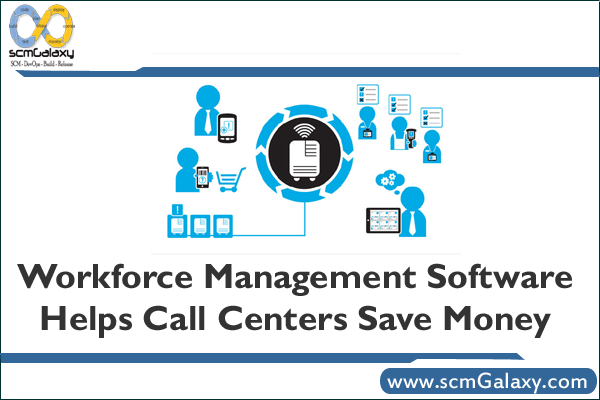
How Workforce Management Software Reduces Call Center Costs (and How to Evaluate SaaS vs Hosted WFM)
Workforce management software can improve inbound call center economics by lowering overstaffing, reducing abandoned calls, and improving service levels. This guide explains the operating workflow and how to separate true SaaS WFM from hosted legacy deployments.
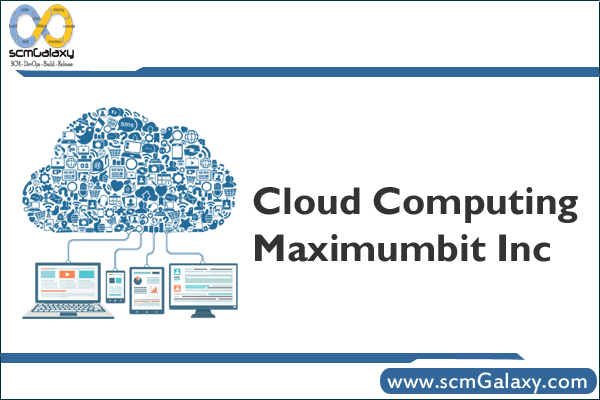
Cloud Computing Explained for DevOps: Service Models, Workflow, Risks, and Historical Context
Learn cloud computing in practical DevOps terms, from SaaS/PaaS/IaaS responsibility boundaries to adoption workflow and common risks. This revision also clarifies legacy concepts from the original 2010 article, including Citrix C3.
Signs Your Organization Has Outgrown Its Current SaaS Stack—and What to Replace First
Things used to work smoothly. The apps did their jobs. The team felt productive. Now something feels off. People complain more. Tasks take longer. Simple things become…
How to Choose a Domain Extension for Your SaaS Launch
Launching a SaaS product means making hundreds of decisions — from adjusting your pricing strategy to creating an engaging onboarding experience. Choosing a domain extension can seem…
Top Business Software & SaaS Tools
The software-as-a-service (SaaS) landscape has reached unprecedented density, making it exceptionally challenging for businesses—from five-person startups to global enterprise IT units—to evaluate, select, and integrate tools that…
Top 10 Remote Backup for SaaS Tools: Features, Pros, Cons & Comparison
Introduction Remote Backup for SaaS Tools are specialized solutions designed to protect, retain, and recover data stored in cloud-based Software-as-a-Service platforms such as email systems, collaboration suites,…
4 Contract Risks DevOps Leaders Miss in SaaS Tooling
DevOps teams rely on specialized SaaS tools to automate, monitor, and scale software development and delivery processes. These platforms reduce manual effort, minimize human error, and help…
The Role a SaaS SEO Agency Plays in Predictable Pipeline Growth
Predictable pipeline growth rarely starts with traffic counts alone. Software buyers compare vendors, revisit proof points, and pause at pages that fail to answer practical questions. Revenue…
Customer Loyalty Strategy for SaaS and eCommerce: How to Pick the Right Software
Customer Loyalty Strategy for SaaS and eCommerce: How to Pick the Right Software TL;DR Retaining a customer costs 5 to 25 times less than acquiring a new…
Technical Account Manager: Role Blueprint, Responsibilities, Skills, KPIs, and Career Path
A Technical Account Manager (TAM) is a customer-facing technical leader in Support who owns the end-to-end technical relationship for a portfolio of customers—typically mid-market to enterprise—ensuring product stability, successful adoption, and fast, high-quality resolution of complex issues. The TAM blends deep troubleshooting, operational rigor, and stakeholder management to reduce customer risk and translate technical realities into clear plans, timelines, and outcomes.
Implementation Specialist: Role Blueprint, Responsibilities, Skills, KPIs, and Career Path
An **Implementation Specialist** is an individual contributor in **Solutions Engineering** responsible for onboarding customers onto a software product by translating business requirements into configured solutions, validated integrations, user readiness, and a successful go-live. The role sits at the intersection of customer delivery, technical configuration, and project execution—ensuring that what was sold can be implemented reliably, securely, and on time.
Senior SaaS Operations Specialist: Role Blueprint, Responsibilities, Skills, KPIs, and Career Path
The **Senior SaaS Operations Specialist** owns the reliability, security posture, cost efficiency, and day-to-day operational excellence of an organization’s **Software-as-a-Service (SaaS) application portfolio** within **Enterprise IT**. This role ensures that SaaS apps are provisioned correctly, integrated with identity and device controls, monitored appropriately, and governed with clear standards across the full lifecycle—from intake and implementation through renewal and retirement.
SaaS Operations Specialist: Role Blueprint, Responsibilities, Skills, KPIs, and Career Path
The **SaaS Operations Specialist** is responsible for the operational health, governance, and lifecycle management of the organization’s Software-as-a-Service (SaaS) application portfolio within **Enterprise IT**. This role ensures SaaS tools are secure, cost-effective, compliant, reliably available to end users, and integrated appropriately into the broader IT operating environment (identity, ITSM, device management, security monitoring, and procurement).
Lead SaaS Operations Specialist: Role Blueprint, Responsibilities, Skills, KPIs, and Career Path
The **Lead SaaS Operations Specialist** is a senior individual contributor within **Enterprise IT** accountable for the operational health, reliability, security baseline, and cost-effective utilization of the organization’s portfolio of Software-as-a-Service (SaaS) applications. This role ensures SaaS services are consistently available, properly governed, integrated into the enterprise identity and access ecosystem, and continuously improved through measurable operational outcomes.
Associate SaaS Operations Specialist: Role Blueprint, Responsibilities, Skills, KPIs, and Career Path
The **Associate SaaS Operations Specialist** supports the day-to-day operational management of an organization’s SaaS application portfolio—ensuring users have the right access, licenses are allocated efficiently, configurations are controlled, and service performance meets expectations. This role executes standardized processes across onboarding/offboarding, access requests, license management, SaaS tenant administration, and operational reporting, while escalating exceptions and complex issues to senior specialists or platform owners.
Lead Customer Success Specialist: Role Blueprint, Responsibilities, Skills, KPIs, and Career Path
The **Lead Customer Success Specialist** is a senior individual contributor in **Customer Operations** responsible for driving customer outcomes, retention, and expansion readiness across a portfolio of mid-to-high complexity customers for a software/IT organization (typically B2B SaaS). This role combines hands-on customer success execution (onboarding, adoption, risk management, renewals support) with “lead” expectations: shaping playbooks, mentoring peers, improving operational quality, and serving as the primary escalation point for complex customer situations.
Sales Engineer: Role Blueprint, Responsibilities, Skills, KPIs, and Career Path
A Sales Engineer (SE) is a customer-facing technical individual contributor who partners with Sales to qualify, shape, and win opportunities by translating customer needs into viable solutions and proving product value through discovery, demonstrations, architectures, and proof-of-concept (POC) activities. The role exists to reduce technical risk in the sales cycle, accelerate time-to-decision, and ensure the customer’s requirements are accurately mapped to the product’s capabilities and roadmap.
Post-Sales Engineer: Role Blueprint, Responsibilities, Skills, KPIs, and Career Path
A **Post-Sales Engineer** is a customer-facing technical professional in the **Solutions Engineering** family who ensures customers successfully implement, integrate, adopt, and expand a purchased software product after the deal is closed. The role bridges product capabilities and real-world customer environments by translating requirements into secure, reliable configurations and integrations, removing technical blockers, and guiding customers to measurable outcomes.
Solutions Engineer: Role Blueprint, Responsibilities, Skills, KPIs, and Career Path
A Solutions Engineer (SE) is a customer-facing technical individual contributor who partners with Sales and Customer Success to design, validate, and communicate how a software product solves a prospect’s or customer’s business and technical needs. The role blends pre-sales engineering, solution architecture, product expertise, and technical storytelling—often across demos, discovery, proof-of-concepts (PoCs), security reviews, and integration planning.
Associate Solutions Engineer: Role Blueprint, Responsibilities, Skills, KPIs, and Career Path
The Associate Solutions Engineer is an early-career technical customer-facing engineer who supports the sales process by translating prospect requirements into clear solution approaches, delivering product demonstrations, and assisting with proofs of concept (POCs) and technical validations. The role blends technical depth (APIs, integrations, cloud fundamentals, security basics) with consultative communication to help prospects understand value, feasibility, and implementation paths.
Implementation Consultant: Role Blueprint, Responsibilities, Skills, KPIs, and Career Path
The Implementation Consultant is a customer-facing delivery professional within Solutions Engineering responsible for successfully onboarding customers onto the company’s software product(s), configuring the solution to meet agreed requirements, enabling integrations, and ensuring adoption through training and operational readiness. The role bridges business objectives and technical execution, translating customer workflows into a secure, supportable configuration that achieves measurable time-to-value.
Associate Solutions Consultant: Role Blueprint, Responsibilities, Skills, KPIs, and Career Path
The **Associate Solutions Consultant** is an early-career, customer-facing technical professional in the **Solutions Engineering** organization who helps prospects and customers understand, evaluate, and successfully adopt the company’s software solutions. The role blends technical fundamentals (APIs, integrations, cloud/SaaS concepts, security basics) with consultative communication to support discovery, demos, proofs of concept (POCs), and clean handoffs to implementation and customer success.
How to Design a Multi-Tenant SaaS Architecture That Won’t Collapse at 10,000 Users
Your SaaS product works fine with 200 tenants. Response times are solid. The database hums along. Your team ships features weekly, and nobody gets paged at 2…
Mastering Your Revenue Pipeline: A DevOps Approach to Subscription Management
DevOps teams live by a core mantra: bridge the gap between creating value and delivering it reliably. But what about the systems that capture the value we…
Top 6 SaaS Marketing Strategies For 2026
SaaS marketing in 2026 is more mature and technical than in the last three years; it will also be far more accountable. As buyers come to the…
SaaS: frequently asked questions
What is the difference between SaaS, PaaS and IaaS?
IaaS provides virtual servers, storage and networking that you manage yourself. PaaS adds a managed runtime where you deploy your own code. SaaS gives you a finished application that the provider runs entirely.
What does multi-tenant mean in SaaS?
A multi-tenant application serves many customers, called tenants, from one shared instance. Each tenant's data and configuration stay isolated, which lets the provider run, update and scale one codebase for everyone.
What does a Solutions Engineer do at a SaaS company?
A Solutions Engineer supports the sales process technically. The work includes running discovery calls, giving product demos, building proofs of concept and answering security and integration questions.
What is shadow IT?
Shadow IT is software, often SaaS apps, used inside an organization without IT approval. Discovery tools find it by analyzing network traffic, logs or identity data so teams can assess the risk.