
This article reframes the original 2010 vendor roundup into a practical reference for DevOps engineers. You will find a categorized view of the providers that were listed, a repeatable workflow for shortlisting platforms, and a simple scoring template you can adapt for current cloud evaluations.
Originally published on 2010-03-09; fully revised and updated.
Source: Cloud Computing Selection: Cloud Infrastructure Service Providers.
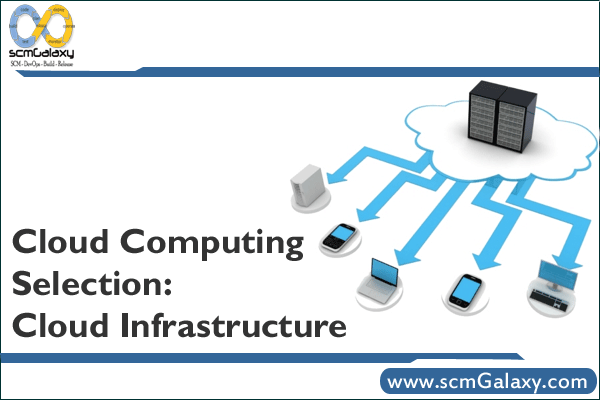
What the original post provides
The original article is a historical snapshot of cloud-era tooling and service providers across infrastructure, integration, monitoring, storage, and traffic management. It is useful for understanding how cloud platform selection was framed at the time, but it should not be treated as a current-market ranking.
- Mixes infrastructure, platform, integration, and operations tools in one list.
- Includes both commercial and open-source options.
- Contains vendor capability statements, many of which are marketing-oriented.
- Does not include consistent pricing, benchmarks, or neutral test criteria.
Providers mentioned in the original post, grouped by function
| Provider | How the original post describes it | Primary area |
|---|---|---|
| AllenPort | File management, backup, sharing, disaster recovery, remote access, user management. | File services and recovery |
| AppZero | OS-free virtual application appliances intended to improve portability and reduce lock-in. | Application portability |
| Boomi | AtomSphere integration between cloud and on-prem applications without local software appliances. | Integration platform |
| CA | Combines monitoring and policy automation to manage traffic in public and private cloud environments. | Automation and monitoring |
| Cast Iron Systems | Configuration-based SaaS integration approach; source cites possible cost reduction claims. | SaaS integration |
| Citrix | Cloud Center architecture built from XenServer, XenApp, NetScaler, Repeater, and Workflow Studio. | Virtual infrastructure and delivery |
| Elastra | Modeling, provisioning, deployment automation, and policy enforcement for application infrastructure. | Provisioning and policy automation |
| EMC | Atmos and Atmos Online for policy-based cloud storage and data movement at scale. | Cloud storage |
| Informatica | Cloud data integration with pay-as-you-go style usage options. | Data integration |
| NetApp | Data ONTAP 8 positioned as integrated storage management across infrastructure layers. | Storage platform |
| New Relic | RPM on-demand application performance monitoring with real-time metrics and diagnostics. | Application performance monitoring |
| Novell | Cloud-oriented mix including desktop OS, appliance program, security service, and workload management. | Cloud ecosystem stack |
| OpenNebula | Open-source toolkit for private, hybrid, and public cloud-style virtual infrastructure management. | Cloud orchestration |
| OpSource | Enterprise-grade cloud infrastructure, managed hosting, operations, and billing services. | Managed cloud operations |
| Paglo | Cloud log management plus monitoring for Amazon EC2 instance metrics. | Logs and monitoring |
| RightScale | Cloud management platform for deployment automation, control, and portability. | Multi-cloud management |
| Stoneware | Private cloud approach for web-based access to apps, content, and data. | Private cloud access |
| VMware | Combines virtualization focus with SpringSource development tooling and Hyperic monitoring. | Virtualization plus app platform |
| Zeus Technology | Traffic management and control for distributed cloud or virtualized applications. | Traffic and delivery control |
Workflow for selecting a cloud infrastructure provider
Use a capability-first process instead of selecting by vendor category name alone. This reduces lock-in risk and makes trade-offs explicit before migration.
flowchart TD
    A[Define workload needs] --> B[Map needs to capability areas]
    B --> C[Create shortlist]
    C --> D[Check integration and portability]
    D --> E[Run pilot in staging]
    E --> F{Meets reliability security budget}
    F -- no --> G[Revise shortlist or architecture]
    G --> C
    F -- yes --> H[Plan migration governance operations]
    H --> I[Production rollout and review]
Capability comparison for shortlisting
| Capability area | Questions to ask | Examples from the original list |
|---|---|---|
| Integration | Can it connect cloud and on-prem systems with low operational overhead? | Boomi, Cast Iron Systems, Informatica |
| Provisioning and orchestration | Can teams model, deploy, and govern infrastructure changes consistently? | Elastra, RightScale, OpenNebula, CA |
| Storage and data lifecycle | Does it support policy-based storage, recovery, and large data movement? | EMC, NetApp, AllenPort |
| Monitoring and diagnostics | Can engineers trace performance issues quickly across environments? | New Relic, Paglo, VMware (Hyperic noted in source) |
| Traffic and delivery control | Can you manage application traffic and service delivery centrally? | Citrix, Zeus Technology |
| Managed operations | Do you need fully managed hosting and operations in addition to infrastructure? | OpSource, Stoneware |
Example provider scoring template
Use a weighted template so decisions are repeatable and auditable across teams.
evaluation:
  workload: "customer-api"
  required_capabilities:
    - integration
    - monitoring
    - storage
    - traffic_management
  weights:
    reliability: 30
    security_and_compliance: 25
    portability: 15
    integration_effort: 15
    cost_model_fit: 15
  providers:
    - name: "Provider A"
      score:
        reliability: 0
        security_and_compliance: 0
        portability: 0
        integration_effort: 0
        cost_model_fit: 0
      notes: ""
    - name: "Provider B"
      score:
        reliability: 0
        security_and_compliance: 0
        portability: 0
        integration_effort: 0
        cost_model_fit: 0
      notes: ""
  decision_rule: "Select top scorer only if reliability and security_and_compliance are both 4 or higher."Code language: JavaScript (javascript)
Best practices when using this historical list
- Treat this as historical context, then validate each capability against current vendor documentation.
- Normalize terminology before evaluation (for example, distinguish infrastructure, platform, integration, and managed services).
- Require a pilot with measurable reliability, security, and operational criteria.
- Document portability and exit strategy requirements before committing to long-term contracts.
- Keep decision logs so architecture choices are traceable during audits and incident reviews.

I’m Rajesh Kumar, a DevOps, SRE, DevSecOps, Cloud, and Platform Engineering expert passionate about sharing practical knowledge, real-world experiences, and industry best practices. I have worked at Cotocus and regularly write about technology, travel, investing, health, product reviews, and digital marketing through my various platforms.
I publish technical articles at DevOps School, travel stories at Holiday Landmark, stock market insights at Stocks Mantra, health and fitness guidance at My Medic Plus, product reviews at TrueReviewNow, and SEO and digital marketing strategies at Wizbrand.
Find Trusted Cardiac Hospitals
Compare heart hospitals by city and services — all in one place.
Explore Hospitals
Choosing cloud infrastructure should start with clear business needs rather than the most popular platform. Teams need to compare cost, performance, security, and the skills required to manage each option. It also helps to estimate future growth so the setup can scale without major changes. Testing a small workload first can reveal hidden costs and technical limits before a full move. A careful choice makes cloud services easier to manage and more useful over time.