
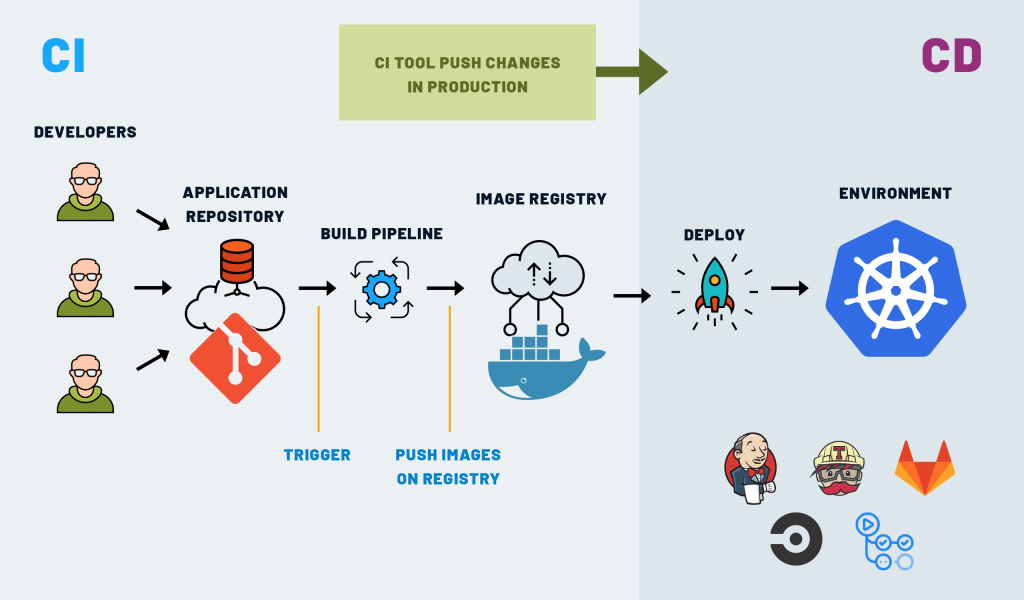
If you’re a software developer, you’ve probably heard of GitOps. It’s a new buzzword in the industry, and for good reason. GitOps is a new way of managing infrastructure and applications that has many benefits. In this article, we’ll explore what GitOps is and why you should care.
What is GitOps?
At its core, GitOps is a way of managing infrastructure and applications using Git. This means that all changes to your infrastructure and applications are made through Git commits. This allows for a single source of truth for your deployment, which can be versioned, audited, and rolled back if necessary.
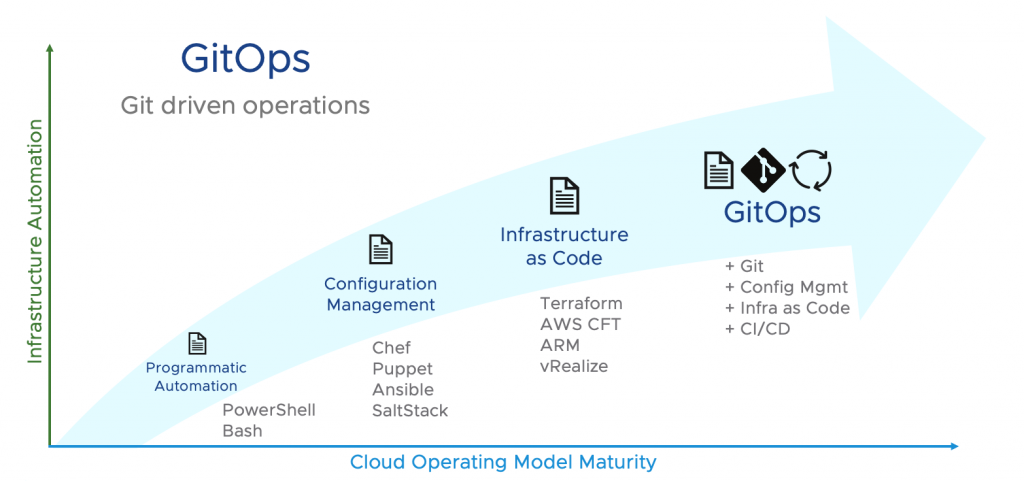
GitOps also emphasizes the use of declarative infrastructure as code. This means that your infrastructure and applications are defined in code, which can be versioned and tested just like any other code. This allows for faster, more reliable deployments, and easier collaboration between teams.
The Benefits of GitOps
Now that we know what GitOps is, let’s explore some of its benefits.
Increased Reliability
GitOps ensures that all changes to your infrastructure and applications are made through Git commits. This means that all changes are versioned, audited, and can be rolled back if necessary. This provides a higher level of reliability than traditional deployment methods, where changes are made manually or through scripts.
Faster Deployments
Because GitOps uses declarative infrastructure as code, deployments can be automated. This means that when a change is made to your infrastructure or applications, it can be automatically deployed using a GitOps tool like Flux or Argo CD. This allows for faster, more reliable deployments, and reduces the risk of human error.
Easier Collaboration
With GitOps, all changes to your infrastructure and applications are made through Git commits. This means that changes can be reviewed and approved through a pull request process, just like any other code change. This allows for easier collaboration between teams and reduces the risk of conflicts.
Increased Security
GitOps provides a higher level of security than traditional deployment methods. Because all changes are made through Git commits, changes can be audited and rolled back if necessary. This provides a higher level of security and reduces the risk of unauthorized changes.
Better Visibility
GitOps provides better visibility into your infrastructure and applications. Because everything is defined in code, you can see exactly what changes have been made and when they were made. This allows for better troubleshooting and reduces the risk of downtime.
Conclusion
GitOps is a new way of managing infrastructure and applications that has many benefits. It provides increased reliability, faster deployments, easier collaboration, increased security, and better visibility. If you’re not already using GitOps, it’s worth considering as a way to improve your software development process.

👤 About the Author
Ashwani is passionate about DevOps, DevSecOps, SRE, MLOps, and AiOps, with a strong drive to simplify and scale modern IT operations. Through continuous learning and sharing, Ashwani helps organizations and engineers adopt best practices for automation, security, reliability, and AI-driven operations.
🌐 Connect & Follow:
Website: WizBrand.com
Facebook: facebook.com/DevOpsSchool
X (Twitter): x.com/DevOpsSchools
LinkedIn: linkedin.com/company/devopsschool
YouTube: youtube.com/@TheDevOpsSchool
Instagram: instagram.com/devopsschool
Quora: devopsschool.quora.com
Email– contact@devopsschool.com
Find Trusted Cardiac Hospitals
Compare heart hospitals by city and services — all in one place.
Explore Hospitals
One important angle that’s often under-discussed when listing GitOps benefits is that most of those advantages—like consistency, auditability, and faster rollbacks—only hold true when the surrounding operating model is mature enough to support them. In practice, GitOps can significantly improve deployment traceability and reduce configuration drift, but it also introduces new operational dependencies such as strict Git hygiene, disciplined branching and promotion strategies, and reliable reconciliation controllers that must be continuously monitored. At scale, teams often discover that the “single source of truth” in Git can become a bottleneck for approvals, emergency changes, and cross-team coordination unless clear governance and break-glass procedures are defined. There is also a hidden cost in terms of infrastructure complexity—managing secrets securely, handling multi-cluster synchronization, and ensuring observability for reconciliation failures becomes just as important as the deployment itself. Additionally, rollback is not always as simple as reverting a commit, especially when downstream systems have already reacted to previous states. So while GitOps delivers strong benefits in standardization and automation, its real-world success depends heavily on organizational discipline, operational tooling around it, and how well teams design for failure modes rather than just ideal-state deployments.