
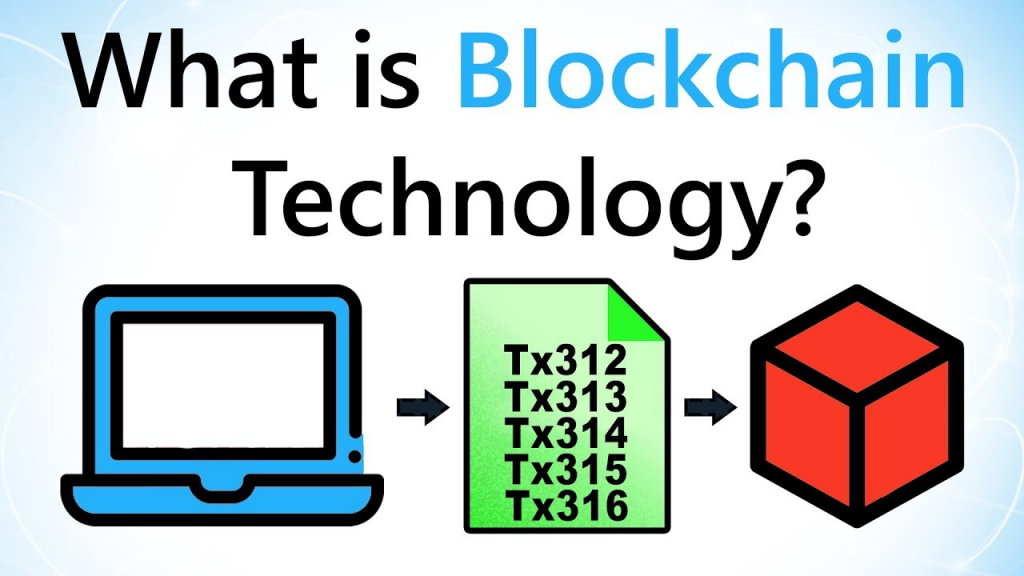
Have you ever heard of blockchain? It’s a term that’s been buzzing around the tech world for a while now, but many people still don’t fully understand what it means. Don’t worry, though – we’re here to break it down for you in simple terms.
What is Blockchain, Exactly?
At its core, blockchain is a type of distributed ledger technology. Essentially, this means that it’s a way of recording and storing information in a decentralized way. Unlike traditional databases, which are typically stored in a central location and controlled by a single entity, blockchain is spread across a network of computers.
But why is this important? Well, one of the key benefits of blockchain is that it’s incredibly secure. Because the data is stored across multiple nodes in the network, it’s much harder for someone to hack into or manipulate the data. In fact, many experts believe that blockchain is one of the most secure forms of data storage out there.
How Does Blockchain Work?
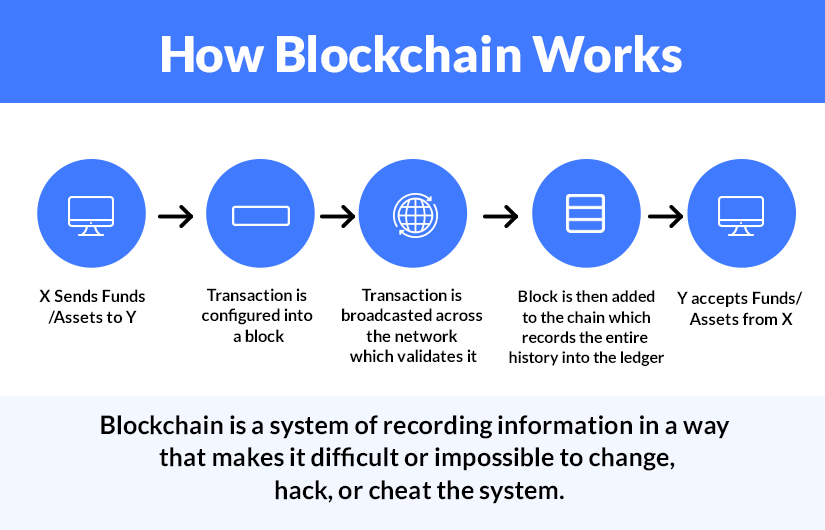
So, how does blockchain actually work? To understand this, let’s take a closer look at each of the components that make up a blockchain:
Blocks
At its most basic level, a blockchain is made up of a series of blocks. Each block contains a set of transactions, which are essentially records of data. These transactions can be anything from financial transactions to supply chain data to medical records.
Nodes
As we mentioned earlier, blockchain is a distributed ledger technology. This means that the data is stored across a network of computers, rather than in a central location. Each of these computers is known as a node, and they work together to maintain the blockchain.
Mining
In order to add a new block to the blockchain, a process called mining is used. Essentially, mining involves solving a complex mathematical problem in order to verify the transactions in the block. Once the problem is solved, the new block is added to the chain.
Consensus
One of the key features of blockchain is that it relies on consensus to maintain its integrity. This means that in order for a new block to be added to the chain, the majority of nodes in the network must agree that it’s valid. This helps to prevent any one person or entity from being able to manipulate the data.
Why is Blockchain Important?
So, now that you understand what blockchain is and how it works, you might be wondering why it’s such a big deal. Well, there are a number of reasons why blockchain is important:
Security
As we mentioned earlier, blockchain is incredibly secure. Because the data is stored across multiple nodes in the network, it’s much harder for someone to hack into or manipulate the data. This makes it an ideal solution for any situation where security is a top priority.
Transparency
Because blockchain is a distributed ledger technology, it’s also incredibly transparent. Anyone can view the data that’s stored on the blockchain, which makes it an ideal solution for situations where transparency is important.
Efficiency
Blockchain can also be incredibly efficient. Because it’s a decentralized system, there’s no need for a central authority to oversee everything. This means that transactions can be processed much more quickly and efficiently than with traditional systems.
Conclusion
So, there you have it – a brief overview of what blockchain is and why it’s important. While it might seem like a complex technology, the basic principles behind blockchain are actually quite simple. And as more and more industries begin to adopt blockchain, we can expect to see even more exciting developments in the years to come.

👤 About the Author
Ashwani is passionate about DevOps, DevSecOps, SRE, MLOps, and AiOps, with a strong drive to simplify and scale modern IT operations. Through continuous learning and sharing, Ashwani helps organizations and engineers adopt best practices for automation, security, reliability, and AI-driven operations.
🌐 Connect & Follow:
Website: WizBrand.com
Facebook: facebook.com/DevOpsSchool
X (Twitter): x.com/DevOpsSchools
LinkedIn: linkedin.com/company/devopsschool
YouTube: youtube.com/@TheDevOpsSchool
Instagram: instagram.com/devopsschool
Quora: devopsschool.quora.com
Email– contact@devopsschool.com
Find Trusted Cardiac Hospitals
Compare heart hospitals by city and services — all in one place.
Explore Hospitals




