What is Informatica Axon?
Informatica Axon is an enterprise data governance tool provided by Informatica Corporation. It is designed to help organizations manage and govern their data assets by providing a centralized platform for data governance, data lineage, data stewardship, and data cataloging. Informatica Axon allows businesses to establish data governance policies, track data lineage, ensure data quality, and enforce data standards across the organization.
Top 10 use cases of Informatica Axon:
- Data Governance: Informatica Axon serves as a centralized data governance hub, enabling organizations to define and enforce data policies, standards, and guidelines.
- Data Lineage: Axon helps track the lineage of data from its source to various downstream systems, providing insights into data origins and transformations.
- Data Stewardship: It facilitates data stewardship by assigning data steward roles and responsibilities, streamlining the process of data issue resolution and data quality management.
- Data Cataloging: Informatica Axon provides a data catalog that enables users to discover, understand, and collaborate on data assets across the organization.
- Data Quality Management: Axon integrates with Informatica Data Quality, allowing organizations to monitor and improve data quality based on defined data quality rules.
- Regulatory Compliance: It helps organizations comply with data regulations and policies by providing visibility into data usage, lineage, and compliance status.
- Business Glossary Management: Informatica Axon allows the creation and management of a business glossary, providing a common vocabulary for data assets.
- Data Privacy and Security: Axon aids in data privacy and security efforts by identifying sensitive data, defining access controls, and monitoring data usage.
- Data Impact Analysis: It enables data impact analysis, allowing organizations to understand the potential effects of changes to data assets.
- Data Governance Collaboration: Informatica Axon facilitates collaboration among business and IT stakeholders, fostering a data-driven culture within the organization.
What are the feature of Informatica Axon?
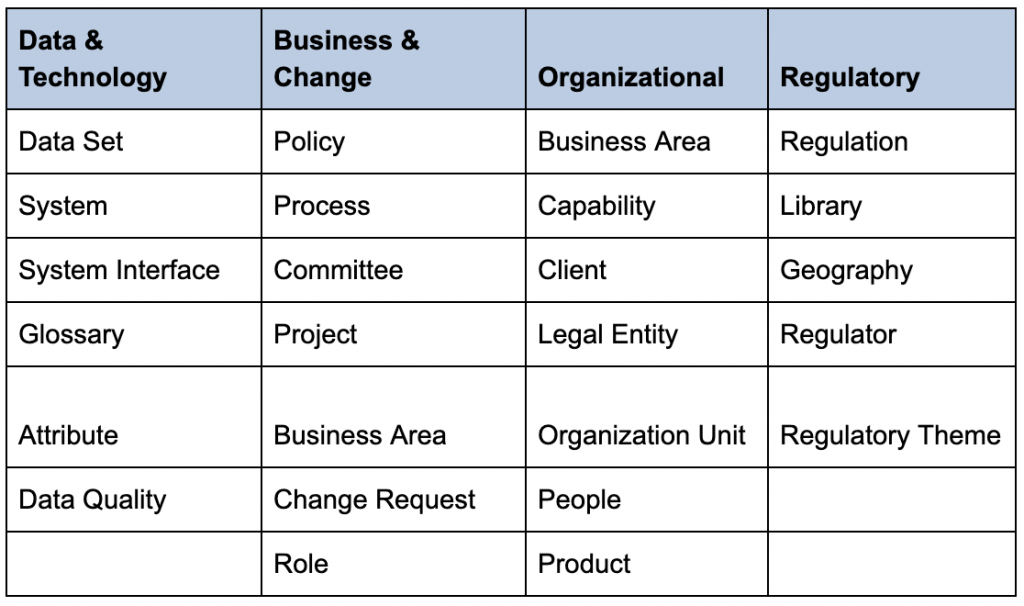
- Data Governance Dashboard: Provides a centralized dashboard for data governance, showing data quality, data lineage, and compliance status.
- Data Governance Workflows: Supports customizable workflows for data governance processes like issue resolution, data approvals, and policy management.
- Business Glossary: Allows the creation and maintenance of a business glossary to standardize data definitions and business terms.
- Data Stewardship: Provides capabilities for data steward assignment, task management, and data issue resolution.
- Data Lineage Visualization: Offers visual representations of data lineage to understand data flow and transformations.
- Data Catalog: Offers a searchable data catalog with data asset metadata and tagging.
- Data Quality Integration: Integrates with Informatica Data Quality for data profiling, data quality monitoring, and data quality rule management.
- Regulatory Compliance: Helps manage and track data compliance with various regulations and policies.
- Collaboration and Communication: Supports collaboration and communication among data stakeholders through discussions and comments.
How Informatica Axon Works & Architecture?
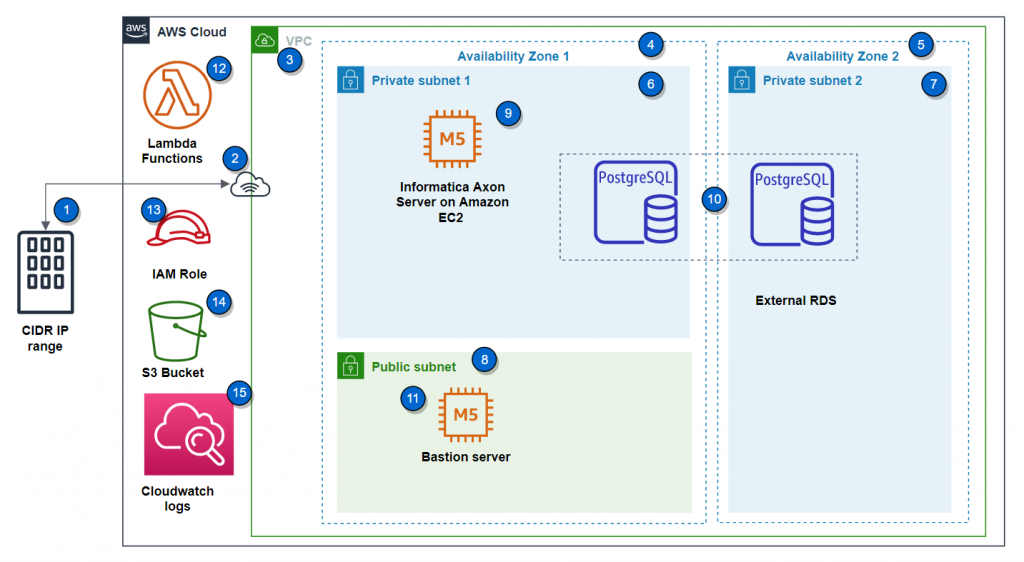
Informatica Axon is a web-based platform with a client-server architecture. The architecture involves the three main components:
- User Interface (UI): The UI is web-based and provides a user-friendly interface for data governance tasks and collaboration.
- Application Server: The application server manages user requests, data governance workflows, and metadata management.
- Metadata Repository: The metadata repository stores data governance metadata, including data lineage, data policies, data quality rules, and business glossary.
How to Install Informatica Axon?
The installation process for Informatica Axon may vary depending on the version and deployment option chosen (on-premises or cloud-based). This installation typically involves the following steps:
- Download the Installer: Obtain the Informatica Axon installer from Informatica’s website or through the Informatica sales team.
- System Requirements: Ensure your system meets the hardware and software requirements specified by Informatica.
- Installation Wizard: Run the installer and follow the on-screen instructions to install Informatica Axon.
- Configure Database: Set up the required database (Oracle or SQL Server) to store the metadata repository.
- License Activation: Activate your Informatica Axon license using the provided license key.
- Configuration: Configure Informatica Axon based on your organization’s requirements, including data connectors and user roles.
- Integration with Other Informatica Products (Optional): If integrating with other Informatica products like Informatica Data Quality, follow the specific integration steps.
For the latest and most accurate installation instructions, refer to Informatica’s official documentation.
Basic Tutorials of Informatica Axon: Getting Started
Getting Started with Informatica Axon
To begin your journey with Informatica Axon, follow these simple steps:
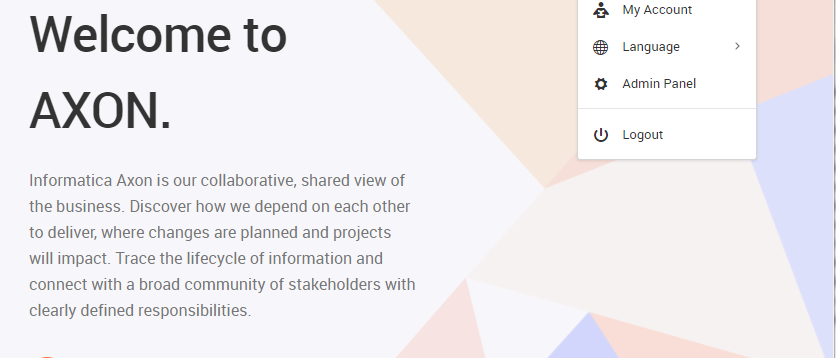
Step 1: Installation and Setup
- Visit the Informatica website and download the latest version of Informatica Axon.
- Apply the on-screen installation instructions provided in the documentation.
- Once the installation is complete, launch Informatica Axon.
Step 2: Creating a Data Domain
- In Informatica Axon, click on the “Data Domains” tab.
- Click on the “New Data Domain” button.
- Enter a name for your data domain and provide a description.
- Define the data elements and attributes that belong to the data domain.
- Save your data domain.
Step 3: Data Stewardship
- Go to the “Stewardship” tab in Informatica Axon.
- Assign data stewards to the data domain you created in the previous step.
- Define roles and responsibilities for the data stewards.
- Enable notifications and alerts for data stewardship activities.
Step 4: Data Quality Management
- Switch to the “Data Quality” tab in Informatica Axon.
- Define data quality rules and metrics for your data domain.
- Run data quality checks to identify and fix data issues.
- Monitor data quality dashboards and reports.
Step 5: Metadata Management
- Click on the “Metadata” tab in Informatica Axon.
- Import existing metadata or create new metadata objects.
- Define relationships between metadata objects.
- Utilize metadata search and discovery features.
Conclusion
Informatica Axon is a comprehensive data governance tool that enables organizations to govern their data effectively. By following these step-by-step tutorials, you can get started with Informatica Axon and harness the power of data governance for your organization.
Remember, data governance is an ongoing process, and Informatica Axon provides the tools and capabilities to ensure continuous data quality and compliance.
So what are you waiting for? Start your data governance journey with Informatica Axon today!

👤 About the Author
Ashwani is passionate about DevOps, DevSecOps, SRE, MLOps, and AiOps, with a strong drive to simplify and scale modern IT operations. Through continuous learning and sharing, Ashwani helps organizations and engineers adopt best practices for automation, security, reliability, and AI-driven operations.
🌐 Connect & Follow:
Website: WizBrand.com
Facebook: facebook.com/DevOpsSchool
X (Twitter): x.com/DevOpsSchools
LinkedIn: linkedin.com/company/devopsschool
YouTube: youtube.com/@TheDevOpsSchool
Instagram: instagram.com/devopsschool
Quora: devopsschool.quora.com
Email– contact@devopsschool.com
Find Trusted Cardiac Hospitals
Compare heart hospitals by city and services — all in one place.
Explore Hospitals