What is Talend Data Quality?
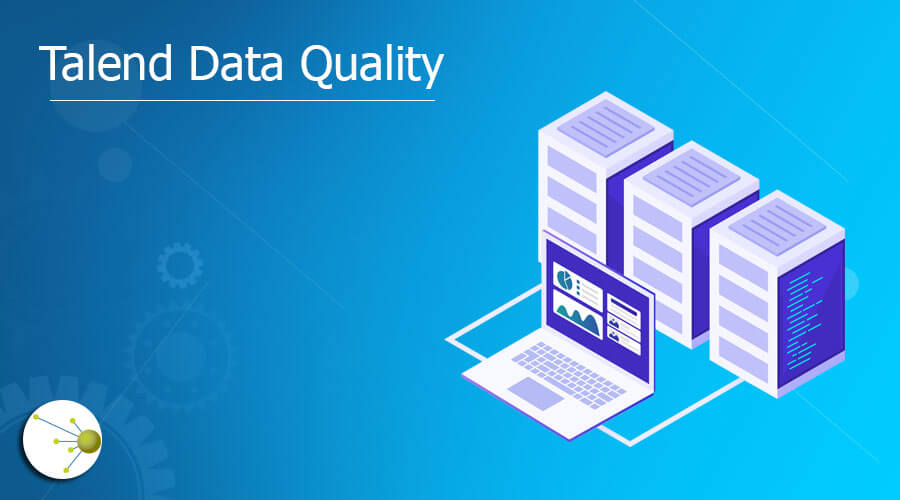
Talend Data Quality is a part of the Talend Data Integration platform, a comprehensive data management solution provided by Talend. It is designed to help organizations improve the quality, accuracy, and reliability of their data assets. Talend Data Quality offers a wide range of data profiling, cleansing, enrichment, and monitoring capabilities to ensure that data meets the desired quality standards. It allows data professionals to detect and resolve data quality issues, leading to better decision-making and more reliable business processes.
Top 10 use cases of Talend Data Quality:
- Data Profiling: Analyze and profile data to understand its quality, completeness, and consistency.
- Data Cleansing: Cleanse and standardize data to remove duplicates, correct errors, and improve accuracy.
- Data Enrichment: Enhance data with additional information from external sources for better insights.
- Data Deduplication: Identify and eliminate duplicate records in datasets.
- Data Validation: Validate data against predefined rules and constraints.
- Address Validation: Verify and standardize address data for improved geolocation accuracy.
- Data Quality Monitoring: Continuously monitor data quality to detect issues and deviations.
- Data Quality Dashboard: Create dashboards to visualize data quality metrics and KPIs.
- Data Quality Remediation: Implement automated workflows to remediate data quality issues.
- Data Governance: Support data governance initiatives by ensuring data quality compliance.
What are the feature of Talend Data Quality?
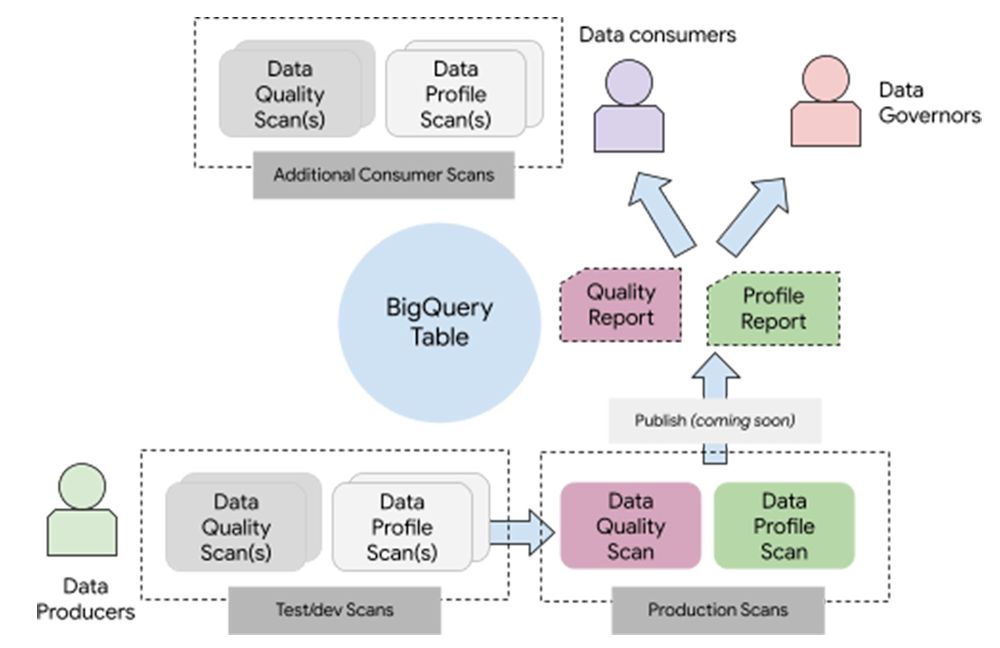
- Data Profiling: Analyze data to understand its structure, distribution, and quality.
- Data Cleansing: Standardize, cleanse, and correct data to ensure consistency and accuracy.
- Data Enrichment: Enhance data by integrating external data sources for additional information.
- Data Deduplication: Identify and eliminate duplicate records in datasets.
- Data Validation: Validate data against predefined rules and constraints.
- Address Validation: Verify and standardize address data for improved geolocation accuracy.
- Data Quality Monitoring: Continuously monitor data quality to detect issues and deviations.
- Data Quality Dashboard: Create visual dashboards to monitor and report on data quality metrics.
- Data Quality Remediation: Implement automated workflows to remediate data quality issues.
- Data Governance: Support data governance initiatives by ensuring data quality compliance.
How Talend Data Quality works and Architecture?
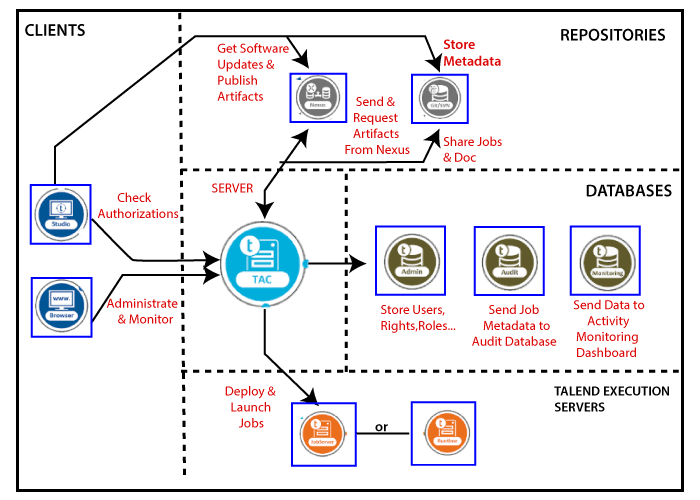
Talend Data Quality works as part of the broader Talend Data Integration platform. It leverages a modular and scalable architecture to provide a wide range of data quality functions.
The architecture of Talend Data Quality involves the following components:
- Talend Studio: The development environment where data quality jobs and workflows are designed.
- Data Profiling: Talend Data Quality uses data profiling techniques to analyze the quality, completeness, and consistency of data.
- Data Cleansing: Data quality jobs in Talend Studio perform data cleansing and standardization.
- Data Enrichment: Talend Data Quality integrates external data sources to enrich existing data.
- Data Quality Monitoring: The platform continuously monitors data quality to detect issues.
- Data Quality Dashboard: Data quality metrics and KPIs can be visualized in the Talend Data Quality dashboard.
- Data Remediation: Automated workflows can be implemented to remediate data quality issues.
How to Install Talend Data Quality?
Talend Data Quality is part of the Talend Data Integration platform. To install Talend Data Quality, you can follow these general steps:
- Download Talend Data Integration: Go to the Talend website (https://www.talend.com/download/) and download the Talend Data Integration platform, which includes Talend Data Quality.
- Install Talend Data Integration: Run the installer and follow the on-screen instructions to install Talend Data Integration.
- Obtain a License: Depending on your organization’s requirements, obtain the necessary license for Talend Data Quality.
- Launch Talend Studio: Once installed, launch Talend Studio, which serves as the development environment for data quality jobs and workflows.
Please note that specific installation steps and licensing processes may vary based on your Talend subscription and version. For detailed installation instructions and licensing, refer to the Talend documentation.
Basic Tutorials of Talend Data Quality: Getting Started
Here, Let’s come to the key steps to get started with Talend Data Quality:
Step-by-Step Basic Tutorial of Talend Data Quality:
Step 1: Download and Install Talend Data Integration
- Go to the Talend website (https://www.talend.com/download/) and download the Talend Data Integration platform, which includes Talend Data Quality.
- Run the installer and follow the on-screen instructions to install Talend Data Integration on your computer.
Step 2: Launch Talend Studio
- After installation, launch Talend Studio, the development environment for Talend Data Integration and Talend Data Quality.
Step 3: Create a New Talend Data Quality Project
- In Talend Studio, create a new Talend Data Quality project to organize your data quality jobs and workflows.
Step 4: Define the Data Source
- Connect to your data source (e.g., database, CSV file, Excel file) from which you want to perform data quality checks.
- Import the data into Talend Data Quality.
Step 5: Perform Data Profiling
- Use Talend Data Quality’s data profiling features to analyze the quality, completeness, and consistency of the data.
- Identify patterns, anomalies, and data quality issues.
Step 6: Data Cleansing and Standardization
- Based on the data profiling results, set up data cleansing and standardization rules to correct errors and inconsistencies in the data.
Step 7: Data Enrichment
- Integrate external data sources (e.g., APIs, lookup tables) to enrich your existing data with additional information.
Step 8: Data Validation
- Implement data validation rules to check data against predefined constraints and business rules.
Step 9: Address Validation (Optional)
- If dealing with address data, use Talend Data Quality’s address validation features to verify and standardize address information.
Step 10: Data Quality Monitoring and Reporting
- Set up data quality monitoring to continuously track data quality metrics and detect issues.
- Create visual reports and dashboards to monitor and report on data quality.
Step 11: Implement Data Remediation Workflows (Optional)
- Create automated workflows to remediate data quality issues or route data to data stewards for manual review and resolution.
Step 12: Data Governance (Optional)
- If needed, integrate Talend Data Quality with data governance processes to enforce data quality policies.
Please note that this is a basic outline to get started with Talend Data Quality. For more in-depth tutorials and advanced use cases, I recommend referring to Talend’s official documentation, and training materials.

👤 About the Author
Ashwani is passionate about DevOps, DevSecOps, SRE, MLOps, and AiOps, with a strong drive to simplify and scale modern IT operations. Through continuous learning and sharing, Ashwani helps organizations and engineers adopt best practices for automation, security, reliability, and AI-driven operations.
🌐 Connect & Follow:
Website: WizBrand.com
Facebook: facebook.com/DevOpsSchool
X (Twitter): x.com/DevOpsSchools
LinkedIn: linkedin.com/company/devopsschool
YouTube: youtube.com/@TheDevOpsSchool
Instagram: instagram.com/devopsschool
Quora: devopsschool.quora.com
Email– contact@devopsschool.com
Find Trusted Cardiac Hospitals
Compare heart hospitals by city and services — all in one place.
Explore Hospitals