
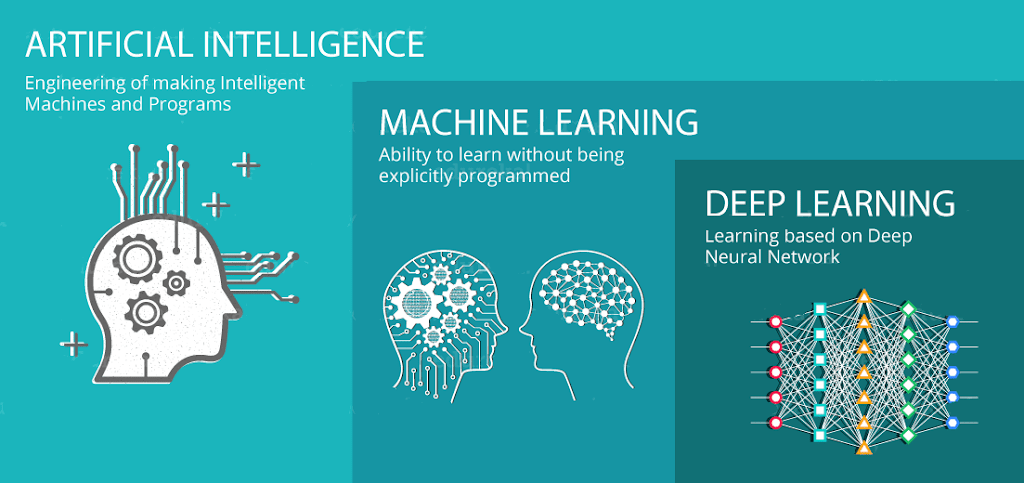
Are you confused about the difference between deep learning and artificial intelligence? Don’t worry, you’re not alone. These two terms are often used interchangeably, but they are not the same thing. In this article, we’ll explore what deep learning and artificial intelligence are, their differences, and how they work together.
What is Artificial Intelligence (AI)?
Artificial intelligence refers to the ability of machines to perform tasks that would typically require human intelligence. These tasks can include things like image recognition, speech recognition, decision-making, and natural language processing. AI can be divided into two categories: narrow or weak AI and general or strong AI.
Narrow AI is designed to perform a specific task, such as playing chess or recognizing faces in photos. General AI, on the other hand, is designed to perform any intellectual task that a human can do. While narrow AI has made significant advancements in recent years, we are not yet close to achieving general AI.
What is Deep Learning?
Deep learning is a subfield of machine learning that focuses on training artificial neural networks to perform tasks. Neural networks are modeled after the structure of the human brain and consist of interconnected nodes that process information. Deep learning uses multiple layers of these nodes to create complex models that can perform tasks such as image recognition, natural language processing, and decision-making.
Deep learning has seen significant advancements in recent years, thanks in part to the availability of large amounts of data and powerful computing resources. Some of the most significant breakthroughs in deep learning have come in the form of convolutional neural networks (CNNs) and recurrent neural networks (RNNs).
How Are AI and Deep Learning Related?
Deep learning is a subset of AI, which means that all deep learning is AI, but not all AI is deep learning. AI encompasses a broad range of techniques, including rule-based systems, expert systems, and decision trees. Deep learning is just one of many approaches to AI.
Deep learning has become increasingly popular in recent years, thanks in part to its ability to process large amounts of data and make accurate predictions. Many of the most significant advancements in AI have come in the form of deep learning algorithms, such as Google’s AlphaGo, which defeated the world champion at the game of Go.
Conclusion
In conclusion, deep learning and artificial intelligence are not the same thing, but they are related. AI refers to the ability of machines to perform tasks that would typically require human intelligence, while deep learning is a subset of machine learning that focuses on training artificial neural networks to perform tasks. Deep learning has seen significant advancements in recent years, and many of the most significant breakthroughs in AI have come in the form of deep learning algorithms. By understanding the differences between these two terms, we can better appreciate the incredible advancements that are being made in the field of AI.

👤 About the Author
Ashwani is passionate about DevOps, DevSecOps, SRE, MLOps, and AiOps, with a strong drive to simplify and scale modern IT operations. Through continuous learning and sharing, Ashwani helps organizations and engineers adopt best practices for automation, security, reliability, and AI-driven operations.
🌐 Connect & Follow:
Website: WizBrand.com
Facebook: facebook.com/DevOpsSchool
X (Twitter): x.com/DevOpsSchools
LinkedIn: linkedin.com/company/devopsschool
YouTube: youtube.com/@TheDevOpsSchool
Instagram: instagram.com/devopsschool
Quora: devopsschool.quora.com
Email– contact@devopsschool.com
Find Trusted Cardiac Hospitals
Compare heart hospitals by city and services — all in one place.
Explore Hospitals