
Find the Best Cosmetic Hospitals

Explore trusted cosmetic hospitals and make a confident choice for your transformation.

“Invest in yourself — your confidence is always worth it.”

Explore Cosmetic Hospitals

Start your journey today — compare options in one place.

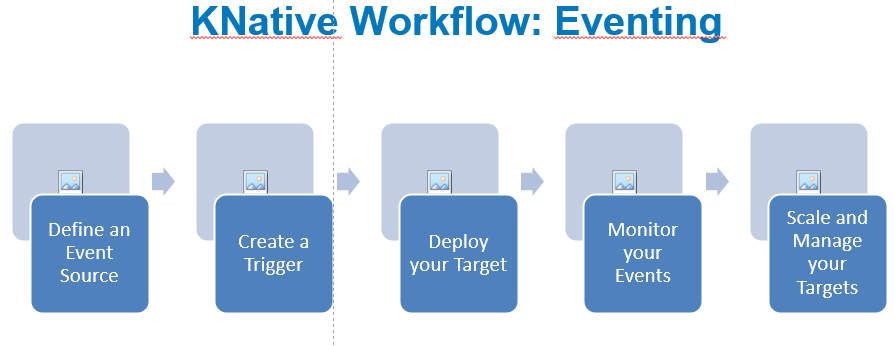
Workflow of Knative eventing

Here is a step-by-step workflow for Knative Eventing:

  1. Define an Event Source: The first step in using Knative Eventing is to define an Event Source. An Event Source is a component that emits events, such as a Kubernetes resource or an external system like GitHub or Cloud Pub/Sub. You can define an Event Source using a YAML configuration file that specifies the type of source and its configuration.
  2. Create a Trigger: Once you have defined an Event Source, you need to create a Trigger that defines how to route events from the source to your target. A Trigger is defined using a YAML configuration file that specifies the filter criteria for matching events and the target that should receive the events.
  3. Deploy your Target: Next, you need to deploy your target, which is the component that will receive and process the events. A target can be any containerized application, such as a microservice, a function, or a streaming data pipeline. You can deploy your target using Knative Serving or any other Kubernetes deployment mechanism.
  4. Monitor your Events: Knative Eventing provides a set of tools for monitoring and troubleshooting your event flows. You can use the kubectl command-line tool to list and view events, as well as view detailed logs and metrics for your Event Sources, Triggers, and Targets.
  5. Scale and Manage your Targets: Knative Eventing provides built-in support for scaling and managing your event-driven applications. You can use Knative Serving to scale your targets automatically based on incoming event traffic, and use advanced traffic management features like canary releases and A/B testing to manage your application at scale.

Overall, the workflow for Knative Eventing involves defining an Event Source, creating a Trigger to route events to your target, deploying your target, monitoring and troubleshooting your event flows, and using advanced scaling and traffic management features to manage your application at scale.

Find Trusted Cardiac Hospitals

Compare heart hospitals by city and services — all in one place.

Explore Hospitals
I’m a DevOps/SRE/DevSecOps/Cloud Expert passionate about sharing knowledge and experiences. I have worked at <a href="https://www.cotocus.com/">Cotocus</a>. I share tech blog at <a href="https://www.devopsschool.com/">DevOps School</a>, travel stories at <a href="https://www.holidaylandmark.com/">Holiday Landmark</a>, stock market tips at <a href="https://www.stocksmantra.in/">Stocks Mantra</a>, health and fitness guidance at <a href="https://www.mymedicplus.com/">My Medic Plus</a>, product reviews at <a href="https://www.truereviewnow.com/">TrueReviewNow</a> , and SEO strategies at <a href="https://www.wizbrand.com/">Wizbrand.</a> Do you want to learn <a href="https://www.quantumuting.com/">Quantum Computing</a>? <strong>Please find my social handles as below;</strong> <a href="https://www.rajeshkumar.xyz/">Rajesh Kumar Personal Website</a> <a href="https://www.youtube.com/TheDevOpsSchool">Rajesh Kumar at YOUTUBE</a> <a href="https://www.instagram.com/rajeshkumarin">Rajesh Kumar at INSTAGRAM</a> <a href="https://x.com/RajeshKumarIn">Rajesh Kumar at X</a> <a href="https://www.facebook.com/RajeshKumarLog">Rajesh Kumar at FACEBOOK</a> <a href="https://www.linkedin.com/in/rajeshkumarin/">Rajesh Kumar at LINKEDIN</a> <a href="https://www.wizbrand.com/rajeshkumar">Rajesh Kumar at WIZBRAND</a> <a href="https://www.rajeshkumar.xyz/dailylogs">Rajesh Kumar DailyLogs</a>

Related Posts

Knative Tutorials – Chapter – 10 – Knative Tutorials: servicing workflow between Components

Rajesh Kumar I’m a DevOps/SRE/DevSecOps/Cloud Expert passionate about sharing knowledge and experiences. I have worked at Cotocus. I share tech blog at DevOps School, travel stories at…

Read More

Knative Tutorials – Chapter 8 – Autoscaling applications with Knative

Rajesh Kumar I’m a DevOps/SRE/DevSecOps/Cloud Expert passionate about sharing knowledge and experiences. I have worked at Cotocus. I share tech blog at DevOps School, travel stories at…

Read More

Knative Tutorials – Chapter 6 – Knative Code: Global Autoscaling Configuration: ConfigMaps

Rajesh Kumar I’m a DevOps/SRE/DevSecOps/Cloud Expert passionate about sharing knowledge and experiences. I have worked at Cotocus. I share tech blog at DevOps School, travel stories at…

Read More

Knative Tutorials – Chapter 5 – Serving multiple versions simultaneously

The helloworld Service had a spec.runLatest field which serves all the traffic to the latest revision created form the Service’s revisionTemplate field. To test out the effects of a new version of your…

Read More

Knative Tutorials – Chapter 3 – Install Knative with YAML using minikube

Knative Serving For prototyping purposes, Knative works on most local deployments of Kubernetes. For example, you can use a local, one-node cluster that has 3 CPUs and…

Read More

Knative Tutorials – Chapter 2 – Your first Knative application

Here’s what each of these Serving APIs do: Service Describes an application on Knative. Revision Read-only snapshot of an application’s image and other settings (created by Configuration). Configuration…

Read More
Subscribe
Notify of
guest
0 Comments
Newest
Oldest Most Voted
Inline Feedbacks
View all comments
0
Would love your thoughts, please comment.x
()
x