
Introduction
Restaurant Delivery Dispatch Tools are specialized software solutions designed to manage, assign, track, and optimize food delivery operations. These tools sit at the heart of modern restaurant logistics, connecting incoming orders with delivery drivers in the fastest, most efficient way possible. As food delivery has become a core revenue channel—not just a side offering—manual dispatching, phone calls, and spreadsheets are no longer sustainable.
The importance of delivery dispatch tools lies in speed, accuracy, and customer satisfaction. Late deliveries, incorrect assignments, or lack of real-time tracking directly impact customer trust and repeat business. Dispatch tools help restaurants automate driver assignment, optimize routes, provide live order tracking, and manage delivery performance at scale.
Real-world use cases include:
- Restaurants running their own in-house delivery fleets
- Cloud kitchens managing hundreds of daily orders
- Multi-location brands coordinating drivers across cities
- Hybrid models combining in-house and third-party drivers
When choosing a Restaurant Delivery Dispatch Tool, users should evaluate ease of use, dispatch automation, real-time tracking, POS integration, scalability, reliability, and total cost of ownership. The right tool should reduce operational friction, not add complexity.
Best for:
Restaurant owners, operations managers, cloud kitchens, QSR chains, franchises, and food businesses that handle frequent deliveries and want better control over speed, costs, and customer experience.
Not ideal for:
Restaurants that rely entirely on third-party marketplaces with no in-house delivery, very low-volume delivery operations, or dine-in–only establishments where dispatch automation adds little value.
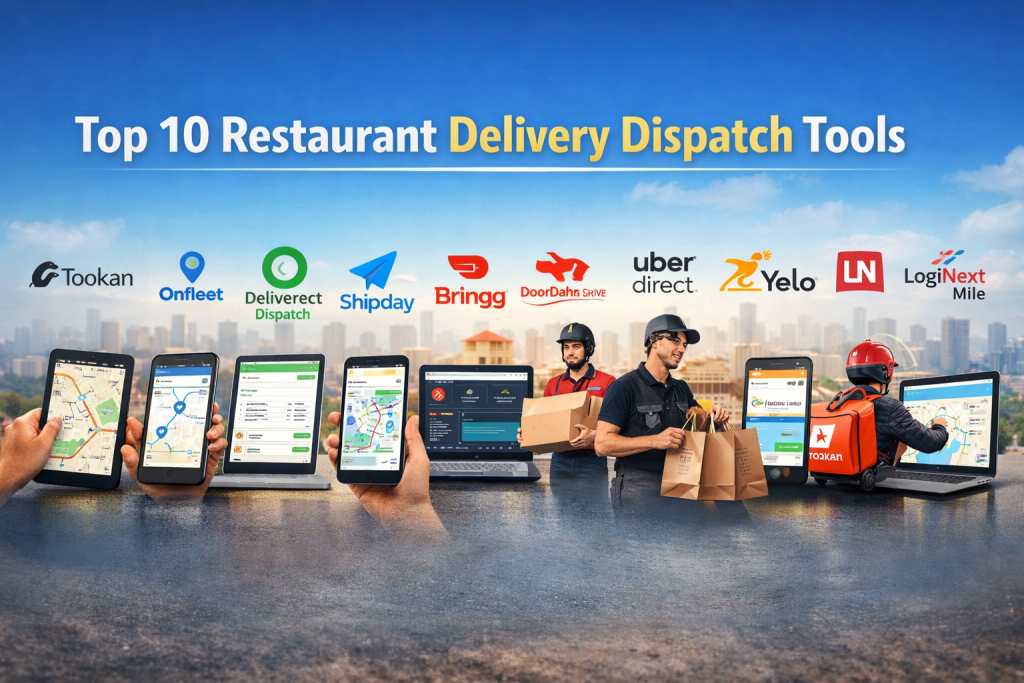
Top 10 Restaurant Delivery Dispatch Tools
1 — Tookan
Short description:
Tookan is a powerful delivery management and dispatch platform built for businesses that manage their own delivery fleets. It is widely used by restaurants, cloud kitchens, and food chains requiring automation at scale.
Key features
- Automated driver assignment based on rules
- Real-time GPS tracking for orders and drivers
- Route optimization and batch delivery support
- Customer notifications via SMS and app alerts
- Driver mobile app with proof of delivery
- Analytics and delivery performance reports
Pros
- Highly customizable dispatch workflows
- Strong real-time tracking and automation
- Scales well for high-volume operations
Cons
- Initial setup can feel complex
- Advanced features may require higher plans
Security & compliance
- Data encryption in transit
- Role-based access controls
- GDPR-aligned practices
Support & community
- Detailed documentation
- Email and chat support
- Enterprise onboarding available
2 — Onfleet
Short description:
Onfleet is a premium last-mile delivery dispatch tool known for reliability, analytics, and ease of use. It is popular with restaurant brands and delivery-focused businesses.
Key features
- Smart driver assignment and dispatch
- Real-time order tracking with ETA predictions
- Route optimization powered by AI
- Delivery analytics and performance dashboards
- Customer notifications and feedback capture
Pros
- Clean, intuitive interface
- Excellent performance analytics
- Reliable real-time tracking
Cons
- Premium pricing
- Limited customization compared to open platforms
Security & compliance
- SOC 2–aligned controls
- Encrypted data handling
- Audit logs for enterprise users
Support & community
- High-quality documentation
- Responsive customer support
- Strong enterprise reputation
3 — Deliverect Dispatch
Short description:
Deliverect Dispatch extends Deliverect’s order management ecosystem into delivery coordination, making it ideal for restaurants already using Deliverect for POS and channel integration.
Key features
- Centralized order flow from multiple channels
- Dispatch coordination for in-house drivers
- POS synchronization
- Live delivery status updates
- Multi-location support
Pros
- Seamless POS and channel integration
- Reduces order errors
- Good for multi-brand operations
Cons
- Less flexible for non-Deliverect users
- Dispatch features are not as deep as standalone tools
Security & compliance
- Encrypted integrations
- GDPR-compliant data handling
Support & community
- Structured onboarding
- Knowledge base and ticket support
- Enterprise account managers
4 — Shipday
Short description:
Shipday is a cost-effective delivery dispatch and tracking tool designed for small to mid-sized restaurants managing local deliveries.
Key features
- Order dispatch and driver assignment
- Live GPS tracking for customers
- Driver mobile app
- Branded delivery tracking pages
- Basic reporting tools
Pros
- Affordable pricing
- Simple setup and onboarding
- Good customer-facing tracking
Cons
- Limited advanced automation
- Reporting depth is basic
Security & compliance
- Standard data encryption
- Basic role-based access
Support & community
- Email support
- Setup guides and tutorials
- Smaller but active user base
5 — Bringg
Short description:
Bringg is an enterprise-grade delivery orchestration and dispatch platform used by large restaurant chains and global brands.
Key features
- Advanced dispatch logic and orchestration
- Multi-carrier and hybrid fleet management
- Real-time tracking and predictive ETAs
- Custom workflows and APIs
- Enterprise analytics
Pros
- Extremely powerful and scalable
- Ideal for complex delivery networks
- Strong API ecosystem
Cons
- High cost
- Overkill for small restaurants
Security & compliance
- SOC 2, ISO-aligned controls
- Encryption at rest and in transit
- Detailed audit logs
Support & community
- Dedicated enterprise support
- Professional services and onboarding
- Strong partner ecosystem
6 — DoorDash Drive (White-label Dispatch)
Short description:
This solution allows restaurants to use DoorDash’s logistics infrastructure while keeping their own brand experience.
Key features
- On-demand driver dispatch
- API-based integration
- Real-time delivery tracking
- Pay-per-delivery model
- No in-house fleet required
Pros
- No driver management needed
- Fast nationwide coverage
- Reliable delivery network
Cons
- Less control over drivers
- Per-delivery fees add up
Security & compliance
- Enterprise-grade security controls
- GDPR-aligned policies
Support & community
- Business support teams
- API documentation
- Limited community engagement
7 — Uber Direct
Short description:
Uber Direct provides restaurants with on-demand courier dispatch using Uber’s delivery network, suitable for fast scaling without hiring drivers.
Key features
- API-based delivery dispatch
- Live tracking and ETAs
- Same-day and scheduled delivery
- No fleet management required
Pros
- Extremely fast scaling
- Trusted logistics network
- Minimal operational overhead
Cons
- Limited customization
- Pricing can fluctuate
Security & compliance
- Encrypted transactions
- Enterprise security standards
Support & community
- Business account support
- API documentation
- Limited peer community
8 — Tookan Lite (SMB-focused)
Short description:
A simplified version of Tookan, designed for smaller restaurants that want dispatch automation without enterprise complexity.
Key features
- Manual and automated dispatch
- Driver app and tracking
- Order status notifications
- Simple reporting dashboard
Pros
- Easier than full Tookan
- Affordable for SMBs
- Quick setup
Cons
- Fewer customization options
- Limited analytics
Security & compliance
- Basic encryption
- Role-based access
Support & community
- Email support
- Basic documentation
9 — Jungleworks Yelo
Short description:
Yelo is a customizable delivery and dispatch platform tailored for food businesses that want branded apps and flexible workflows.
Key features
- Custom-branded customer and driver apps
- Automated dispatch rules
- Real-time order tracking
- Multi-store support
- Reporting and analytics
Pros
- Strong branding options
- Flexible workflows
- Suitable for growing businesses
Cons
- UI can feel busy
- Requires configuration time
Security & compliance
- Encrypted data handling
- GDPR-aligned processes
Support & community
- Onboarding support
- Knowledge base
- Moderate community activity
10 — LogiNext Mile
Short description:
LogiNext Mile is a logistics-focused dispatch and route optimization platform used by enterprises, including large food delivery operations.
Key features
- AI-driven route optimization
- Automated task assignment
- Real-time fleet visibility
- SLA and performance tracking
- Advanced analytics
Pros
- Excellent route optimization
- Highly reliable at scale
- Strong analytics
Cons
- Enterprise pricing
- Not restaurant-specific by default
Security & compliance
- SOC 2–aligned
- ISO security practices
- Audit trails
Support & community
- Enterprise support teams
- Professional onboarding
- Limited SMB community
Comparison Table
| Tool Name | Best For | Platform(s) Supported | Standout Feature | Rating |
|---|---|---|---|---|
| Tookan | High-volume in-house fleets | Web, iOS, Android | Dispatch automation | N/A |
| Onfleet | Analytics-driven delivery | Web, iOS, Android | Performance dashboards | N/A |
| Deliverect Dispatch | POS-integrated restaurants | Web | Order-to-dispatch sync | N/A |
| Shipday | Small restaurants | Web, Mobile | Affordable tracking | N/A |
| Bringg | Enterprise chains | Web, API | Delivery orchestration | N/A |
| DoorDash Drive | No-fleet restaurants | API, Web | White-label drivers | N/A |
| Uber Direct | Fast scaling delivery | API | On-demand couriers | N/A |
| Tookan Lite | SMBs | Web, Mobile | Simple automation | N/A |
| Yelo | Branded delivery apps | Web, Mobile | Custom branding | N/A |
| LogiNext Mile | Large-scale logistics | Web, Mobile | Route optimization | N/A |
Evaluation & Scoring of Restaurant Delivery Dispatch Tools
| Criteria | Weight | Key Considerations |
|---|---|---|
| Core features | 25% | Dispatch, tracking, automation |
| Ease of use | 15% | Learning curve, UI clarity |
| Integrations & ecosystem | 15% | POS, APIs, third-party tools |
| Security & compliance | 10% | Encryption, audits, standards |
| Performance & reliability | 10% | Uptime, tracking accuracy |
| Support & community | 10% | Onboarding, help quality |
| Price / value | 15% | Cost vs benefits |
Which Restaurant Delivery Dispatch Tool Is Right for You?
- Solo users & small restaurants: Simple tools like Shipday or Tookan Lite work best.
- SMBs & growing brands: Tookan, Yelo, or Onfleet offer scalability without enterprise overhead.
- Mid-market chains: Onfleet or Deliverect Dispatch balance control and integrations.
- Enterprise & franchises: Bringg or LogiNext Mile provide orchestration and compliance.
Budget-conscious users should focus on ease of use and essential features, while premium buyers benefit from analytics, automation, and reliability. Integration needs, security expectations, and future growth plans should guide the final decision.
Frequently Asked Questions (FAQs)
1. What is a restaurant delivery dispatch tool?
It is software that assigns orders to drivers, tracks deliveries, and manages delivery operations in real time.
2. Do small restaurants need dispatch software?
Yes, if they handle frequent deliveries and want faster dispatch and fewer errors.
3. Can these tools work without in-house drivers?
Some tools integrate with third-party courier networks, eliminating the need for a fleet.
4. Are these tools expensive?
Pricing varies widely—from affordable monthly plans to enterprise contracts.
5. Do they integrate with POS systems?
Many do, but integration depth varies by tool.
6. Is real-time tracking necessary?
Yes, it improves customer trust and reduces support calls.
7. How long does implementation take?
From a few hours for simple tools to weeks for enterprise platforms.
8. Are these tools secure?
Most use encryption and access controls; enterprise tools offer audits and compliance.
9. Can dispatch rules be customized?
Advanced tools allow rule-based and AI-driven dispatching.
10. What is the biggest mistake when choosing a tool?
Overbuying complexity or ignoring future scalability needs.
Conclusion
Restaurant Delivery Dispatch Tools have become essential infrastructure for modern food businesses. They reduce delays, optimize driver usage, improve customer experience, and provide operational visibility that manual processes simply cannot match.
When choosing a tool, focus on your delivery volume, operational complexity, integration needs, and growth plans. There is no single universal winner—the best solution is the one that aligns with your restaurant’s size, budget, and delivery strategy. A well-chosen dispatch tool doesn’t just manage deliveries; it becomes a competitive advantage.

Find Trusted Cardiac Hospitals
Compare heart hospitals by city and services — all in one place.
Explore Hospitals
This is a very insightful comparison because choosing the right restaurant delivery and dispatch tool can make or break operational efficiency and customer satisfaction. I like how the article breaks down the features that truly matter in real kitchens — from real-time order routing and driver tracking, to multi-platform marketplace aggregation, ETA accuracy, and proof-of-delivery options. It’s also important for restaurants to evaluate integration with POS systems, flexible pricing models, driver and order-batch optimization, and reporting dashboards when deciding which solution fits their workflow. Overall, a practical guide that helps teams balance cost, scalability, and service quality for both dine-in and delivery operations.