
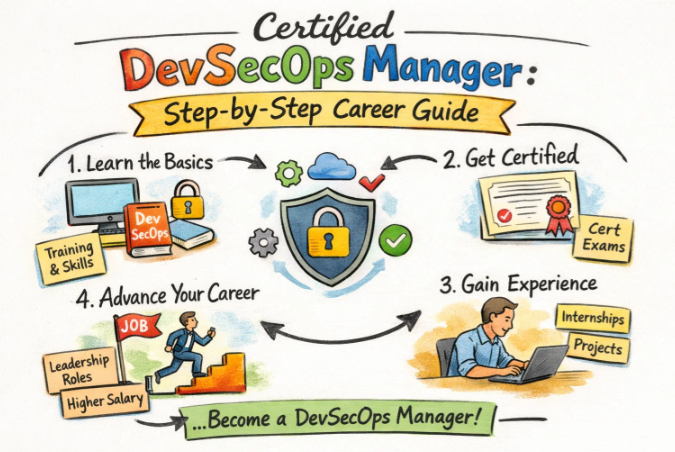
A Certified DevSecOps Manager is a leader who knows how to make security a natural part of building software. In the past, security was often a “gate” at the end of a project that slowed everyone down. A manager in this field changes that. They help teams build security into the code, the testing, and the deployment from day one. It is a role that combines knowing how to talk to people, how to set business goals, and how to use automation to keep things safe.
Understanding the Master in Observability Engineering Program
As you look at management, you will notice that you cannot manage what you cannot see. This is why many professionals are now looking into the Master in Observability Engineering (MOE) program. While a manager focuses on the “who” and the “how,” observability focuses on the “what is actually happening.”
This master’s program is about deep visibility. It teaches you how to use logs, metrics, and traces to understand the health of a system. If a security breach happens, observability helps you find exactly where it started and how it moved. For anyone aiming to be a top-tier DevSecOps Manager, understanding observability is a massive advantage because it gives you the data you need to make smart leadership decisions.
Detailed Guide: Certified DevSecOps Manager
Moving into a management role is a big shift. You stop focusing only on the “tickets” and start focusing on the “transformation.” The Certified DevSecOps Manager certification is the roadmap for that shift.
What it is
The Certified DevSecOps Manager is a high-level certification provided by DevSecOpsSchool.com. It isn’t just a technical test; it is a leadership program. It covers how to design a security strategy for a whole company, how to manage budgets for security tools, and how to lead engineers through cultural changes. It focuses on the big picture of the DevSecOps lifecycle.
Who should take it
This is for people who want to lead. If you are a Senior Software Engineer, a DevOps Lead, or an existing Engineering Manager, this is for you. It is also perfect for Security Architects who want to understand how to work better with development teams. Ideally, you should have a few years of experience in the industry so you understand the common problems teams face every day.
Skills you’ll gain
You will walk away with the ability to lead a security-first organization. This means knowing how to balance the need for speed with the need for safety. You will learn how to choose the right tools that don’t annoy your developers but still keep the company safe from hackers.
- Cultural Leadership: You will learn how to convince different departments to work together on security goals without conflict.
- Strategy and Planning: How to build a three-year roadmap for your company’s security posture.
- Compliance Knowledge: Understanding how to automate checks for things like SOC 2, HIPAA, or GDPR so you are always “audit-ready.”
- Toolchain Orchestration: Learning which tools (like SAST or DAST) fit where in the pipeline and why.
- Budgeting and ROI: How to prove to your bosses that spending money on DevSecOps actually saves money by preventing disasters.
- Vulnerability Management: Knowing how to prioritize which bugs to fix first based on the risk to the business.
Real-world projects you should be able to do
After this certification, you will be able to handle high-stakes projects that impact the whole company. You won’t just be following a tutorial; you will be designing solutions.
- Implementing a Global Security Policy: You can write and roll out a policy that ensures every team in the company follows the same security standards.
- Building a Compliance Dashboard: You will be able to create a real-time view that shows exactly how compliant the company is at any moment.
- Managing an Automated Security Audit: You can lead the project to replace manual security checks with automated ones that run every time a developer saves their code.
- Post-Incident Strategy: If a security issue occurs, you will lead the “lessons learned” session and change the company’s workflow to make sure it never happens again.
Preparation plan
Getting ready for this requires a mix of reading, thinking like a manager, and practicing with tools.
- 7–14 Day Plan: This is for the “Fast Track.” Spend 4 hours a day. Focus entirely on the management frameworks and the specific curriculum provided by the school. Use the practice exams to find your weak spots and fix them quickly.
- 30 Day Plan: The “Balanced Track.” Spend 1-2 hours a day. Spend the first two weeks on the technical side of the DevSecOps tools. Spend the last two weeks on leadership, culture, and compliance. This gives your brain time to absorb the leadership concepts.
- 60 Day Plan: The “Mastery Track.” This is best if you are new to management. Take one module per week. Spend time researching how big companies (like Netflix or Google) handle these problems. This path ensures you really understand the “why” behind every lesson.
Common mistakes
Many smart engineers fail management certifications because they think like a coder, not a leader.
- Focusing only on the tools: A tool like Jenkins or Snyk is great, but a manager needs to care about the people using the tool. Don’t skip the “culture” lessons.
- Ignoring the business side: You must understand how security affects the company’s bottom line. If you can’t explain why a security tool is a good investment, you aren’t thinking like a manager.
- Underestimating Governance: Rules and regulations (compliance) can be dry, but they are the most important part of a manager’s job. Take the time to learn them properly.
Master Certification Comparison Table
| Certification Name | Track | Level | Who it’s for | Prerequisites | Skills Covered | Recommended Order |
| Certified DevSecOps Manager | Management | Professional | Leads & Managers | 3+ Years Exp | Strategy, Governance, ROI | After Engineer level |
| Master in Observability Engineering | SRE/Reliability | Master | SREs & Architects | Basic Cloud | Logs, Metrics, Traces | After DevOps Master |
| Master in DevOps Engineering | DevOps | Master | Senior Engineers | DevOps Basics | CI/CD, IaC, Scaling | Mid-Career |
| SRE Certified Professional | Reliability | Professional | Admins & Devs | Linux Basics | SLIs, SLOs, Error Budgets | Early-Mid Career |
| Certified DevSecOps Engineer | Security | Associate | Software Engineers | Basic CI/CD | SAST, DAST, Container Sec | Foundation |
Best Next Certification After This
Once you have the Manager certification, you have reached a high level, but the learning doesn’t stop. To be a truly “complete” leader, you should look toward the Master in Observability Engineering.
While being a manager teaches you how to lead people and set policies, Observability teaches you how to “watch” your systems in real-time. Combining leadership skills with the ability to interpret complex system data makes you an unstoppable force in any tech company.
Choose Your Path: 6 Specialized Learning Journeys
Your career can go in many directions after you master the basics. Here are the six most common paths:
- DevOps Path: This is the foundation. It is for those who love making things work together. You focus on the “pipeline” and making sure software moves from a developer’s laptop to the customer as fast as possible.
- DevSecOps Path: This is for the protectors. You take the DevOps path and add a heavy layer of security. You ensure that speed never comes at the cost of safety.
- SRE Path: This is for the “doctors” of the tech world. You focus on health and uptime. Your goal is to make sure the site never goes down, and if it does, it heals itself.
- AIOps/MLOps Path: This is the future. You use artificial intelligence to manage systems. Instead of humans looking at screens, you build machines that watch the machines.
- DataOps Path: This is for the data lovers. You apply DevOps principles to data pipelines, making sure information is clean, secure, and moves quickly to the people who need it.
- FinOps Path: This is for the business-minded. You focus on the cost of the cloud. You make sure the company isn’t wasting money on servers they don’t need.
Role → Recommended Certifications Mapping
| If your role is… | You should take… |
| DevOps Engineer | Master in DevOps Engineering → Certified DevSecOps Manager |
| SRE | Master in Observability Engineering → SRE Specialist |
| Platform Engineer | Certified Kubernetes Expert → Master in DevOps Engineering |
| Cloud Engineer | Professional Cloud Architect → Certified DevSecOps Manager |
| Security Engineer | Certified DevSecOps Engineer → Certified DevSecOps Manager |
| Data Engineer | DataOps Certified Professional → Master in Observability Engineering |
| FinOps Practitioner | FinOps Certified Professional → Master in Observability Engineering |
| Engineering Manager | Certified DevSecOps Manager → Master in DevOps Engineering |
Next Certifications to Take
Based on current industry trends, here are three ways to grow after your management certification:
- Same Track (Leadership): The Master in DevOps Engineering. This gives you a broader view of the entire lifecycle beyond just security.
- Cross-Track (Technical Insight): The Master in Observability Engineering. This is the best way to gain technical “sight” over the teams you manage.
- Leadership (Strategic): Master in AIOps. As systems get more complex, manual management is dying. Learning AI-driven operations is the next big step for senior leaders.
Top Training Institutions for Support
DevOpsSchool is a prominent organization providing detailed, instructor-led training. Their courses are designed to be highly technical and practical, ensuring that participants can apply their new skills immediately in a professional setting. They offer a deep curriculum that covers all the major aspects of the DevSecOps ecosystem.
Cotocus provides specialized consulting and training for large-scale engineering teams. Their focus is on helping organizations transition to modern ways of working by providing customized learning paths. Their methodology is highly collaborative and aimed at achieving long-term technical excellence.
Scmgalaxy is an extensive community platform that offers a wide range of resources for DevOps and security professionals. They provide a unique blend of self-paced learning materials and community-driven support, making it an excellent choice for continuous professional development.
BestDevOps is known for delivering intensive bootcamps that focus on high-impact learning. Their programs are structured to help professionals prepare for certification in a short amount of time without compromising on the technical depth required for the role.
DevSecOpsSchool is a dedicated platform for security-focused training within the DevOps framework. They provide specialized deep-dives into topics like automated compliance and container defense. This institution is ideal for those who wish to become true experts in security automation.
Sreschool focuses on the principles of Site Reliability Engineering. Their training is a vital addition for any security professional, as it teaches how to maintain and troubleshoot the secure systems that have been implemented.
Aiopsschool teaches the integration of artificial intelligence into operations. They focus on the future of the industry, where machine learning is used to predict and prevent system failures, making it a forward-looking choice for any engineer.
Dataopsschool provides training specialized for the management of data pipelines. They teach how to apply the fast-moving principles of DevOps to data engineering, ensuring that information remains secure and accessible.
Finopsschool focuses on the financial management of cloud resources. They help engineers and managers understand the cost implications of their technical decisions, which is a vital skill for modern business leadership.
Real Stories from Our Students
“The mentor support was what made the difference for me. Whenever I hit a wall, there was someone there to explain the concept in a simple way.” — Karthik
“I went from being a senior developer to a manager in six months thanks to the roadmap they provided. It gave me the confidence I was missing.” — Anjali
Frequently Asked Questions
Career & Logistics FAQ
- Is this certification hard? It is designed to be challenging but fair. It tests your ability to think like a leader, not just your memory.
- How much time should I spend studying? Most people find that 30 days of consistent, daily effort is enough to pass comfortably.
- Are there any prerequisites? You should have a few years of experience in tech so the management concepts make sense to you.
- Is the order of certifications important? It helps to follow the recommended paths, but you can jump into the Manager track if you already have the experience.
- What is the value of this certification? It signals to employers that you are ready for a leadership role and can handle high-level security strategy.
- Will this help me get a job in India and abroad? Yes, the principles of DevSecOps are global, and these certifications are recognized worldwide.
- Do I need to know how to code? You need to understand how code works, but you won’t be writing code all day as a manager.
- What is the best way to prepare? Use a mix of the official study guides, the hands-on labs, and the community forums.
- How often is the content updated? The courses are refreshed regularly to keep up with new security threats and tool updates.
- Can I get help if I get stuck? Yes, institutions like DevOpsSchool offer 24/7 support and mentoring.
- Is there a community I can join? Yes, there are large groups on LinkedIn and Discord where you can connect with other students.
- What if I’m already a manager? This certification will help you modernize your skills and lead more technical teams effectively.
Certified DevSecOps Manager FAQ
- What does a DevSecOps Manager actually do? They build the strategy for how a company secures its software and lead the team that implements it.
- Does this cover cloud platforms like AWS? Yes, the certification covers security strategies across all major cloud providers.
- Is there an emphasis on legal compliance? Yes, understanding things like GDPR and SOC 2 is a big part of the management track.
- Where can I find the official link? You can find it at DevSecOpsSchool.com.
- Who is the main training provider? DevSecOpsSchool is the primary institution for this specific certification.
- Is this a one-time fee? You should check the official site for the latest pricing and what is included in the package.
- How do I take the exam? The exam is usually taken online through a proctored system.
- What is the pass rate? While they don’t publish exact numbers, students who follow the study plan and use the labs have a very high success rate.
Conclusion
Stepping into the world of DevSecOps management is one of the smartest career moves you can make today. As companies realize that they cannot afford security breaches, they are looking for leaders who know how to protect their systems without slowing down their developers. By completing the Certified DevSecOps Manager program, you are proving that you have the skills to handle this balance. Remember that the best leaders are those who never stop learning. Whether you choose to follow this with a master’s in observability or dive into the world of AI-driven operations, you are setting yourself up for a long and successful career. Take it one step at a time, use the resources available to you, and don’t be afraid to ask for help from the community along the way.

Find Trusted Cardiac Hospitals
Compare heart hospitals by city and services — all in one place.
Explore Hospitals
Helpful article! Integrating security into DevOps pipelines is becoming essential, and this guide provides a clear roadmap for professionals aiming for a DevSecOps management role.