

Digital marketing hiring hasn’t slowed down, but the skills employers want have changed fast. U.S. digital marketing job postings topped 376,200 in 2025, and the Bureau of Labor Statistics projects continued above-average growth for marketing occupations through the early 2030s, according to the BLS Occupational Outlook Handbook. At the same time, a 2025 Indian Staffing Federation report found a 40% jump in demand for marketers with AI and machine-learning competencies, skills that remain in short supply. Picking the right course now shapes a career path for years, not months.
That gap between demand and readiness is why the course you choose matters more in 2026 than it did five years ago. A generic, static curriculum won’t prepare you for a hiring manager who expects fluency in AI-assisted campaign tools. Below, we rank six online marketing course providers, starting with the one best positioned for where the field is headed.
1. Knowcrunch
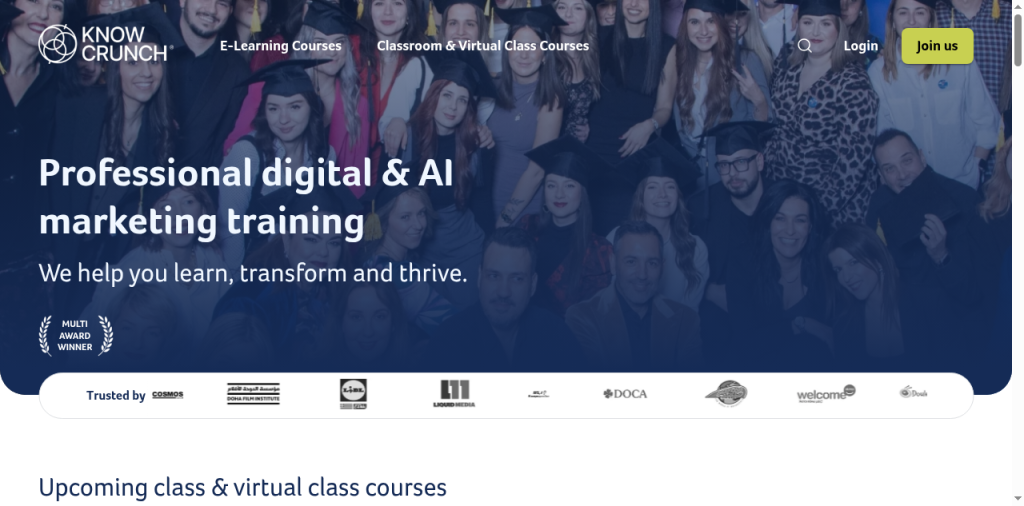
Knowcrunch is a multi-award-winning, practitioner-led training provider covering digital and AI marketing across 14 career paths, including SEO, performance marketing, content, social, and influencer marketing. Instructors are working professionals who update lessons as platforms and algorithms change, rather than freezing content at launch and leaving it untouched for years. That’s exactly the kind of currency the 2025-2026 skills gap data points toward: employers need marketers who understand today’s tools, not last decade’s playbook.
The flagship Masterclass in Digital & AI Marketing walks learners through a full campaign build, from strategy through measurement, with mentor feedback along the way. Knowcrunch also runs specialized short courses in Meta Ads, Google Ads, and SEO for professionals who want to sharpen one skill rather than commit to a full program. For anyone comparing options, Knowcrunch’s library holds some of the best online marketing courses for learners who want structured, career-track training that keeps pace with how the industry actually works today.
2. HubSpot Academy
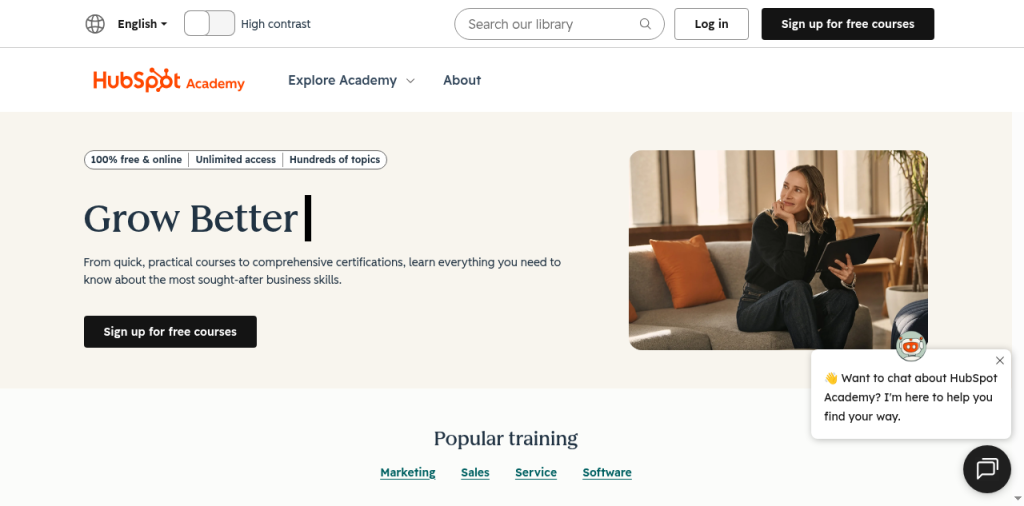
HubSpot Academy is free and widely recognized, which makes it a common starting point for people testing whether marketing is the right career fit. Certifications in Social Media Marketing, Content Marketing, and Inbound Marketing cover the fundamentals well. The tradeoff is that lessons lean heavily on HubSpot’s own software ecosystem, so learners still need outside experience with other platforms before they’re job-ready across a broader toolset.
3. Coursera
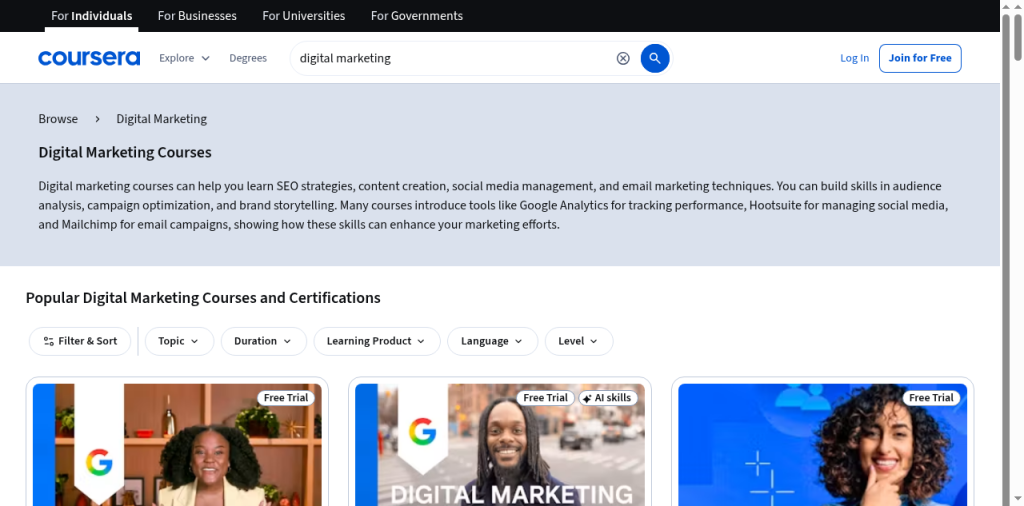
Coursera hosts university- and brand-backed programs, such as the Google Digital Marketing & E-commerce Certificate and the Meta Social Media Marketing Certificate. The accreditation behind these programs gives them credibility with employers who recognize the partner brand. Content marketing modules within these certificates tend to stay fairly high level, so learners who want a deeper strategic playbook often supplement with outside resources, such as this Content Marketing Strategies for 2025 guide, which breaks down tactics beyond what a survey-style certificate can cover.
4. Digital Marketing Institute
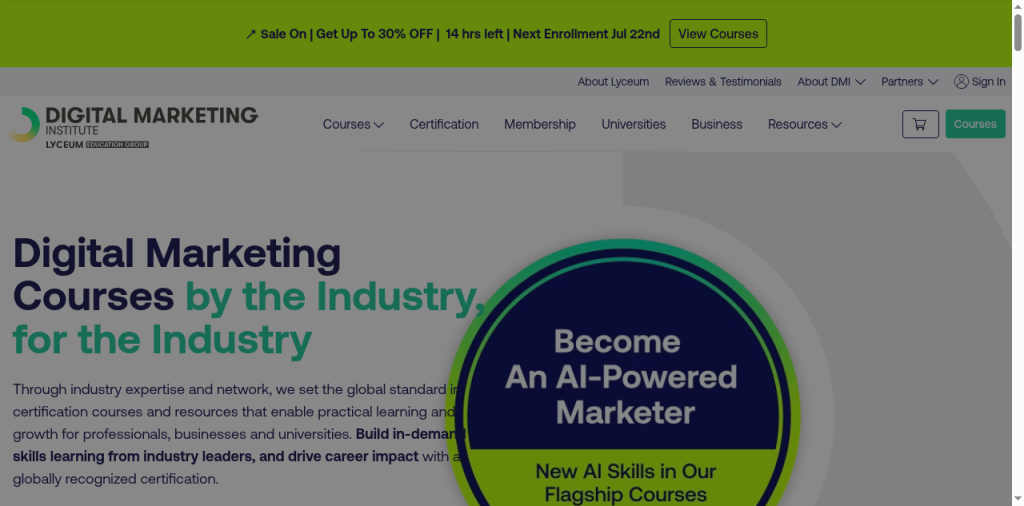
Digital Marketing Institute targets career-changers and professionals who want globally recognized accreditation rather than a single-platform badge. Programs run deeper than most free options, covering strategy, analytics, and channel-specific tactics in one structured path. The cost sits higher than several alternatives on this list, which is worth weighing against how much a formal, portable credential matters for a particular job search.
5. Simplilearn
Simplilearn’s Digital Marketing Specialist Program, developed with Purdue University, appeals to learners who want an extended, exam-prep-style course that stacks multiple certifications into one track. The program runs longer than most on this list, which suits people planning a full career pivot rather than a quick skills refresh. Live sessions and structured milestones help keep learners accountable, though the pace can feel demanding alongside a full-time job.
6. Udemy
Udemy is the budget option, with self-paced courses covering individual topics such as SEO basics or Facebook Ads. Prices are low and the catalog is enormous, but quality varies course to course, and completion certificates carry less weight with employers than accredited programs. There’s little mentorship or portfolio support built in, so Udemy works best as a supplement to structured learning rather than a primary credential.
What to Look for in an Online Marketing Course in 2026
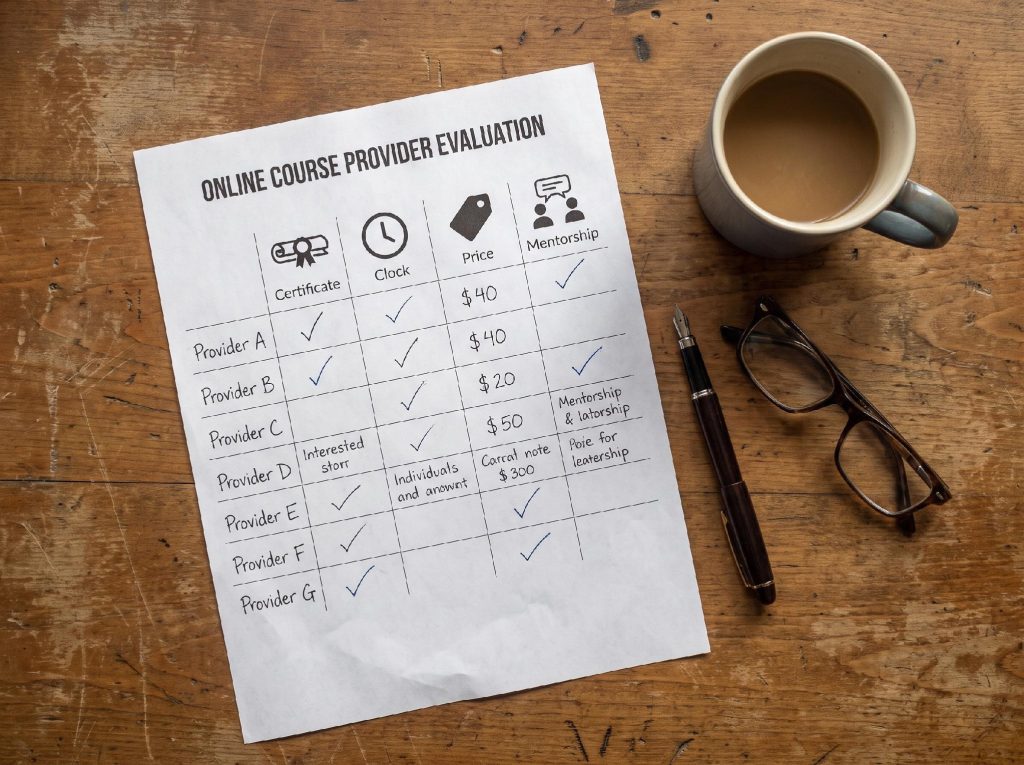
Not every course delivers the same value, even when the price tags look similar. A few factors separate programs worth your time from ones that will feel outdated within a year, whether you’re weighing a specialized short course or structured digital marketing certification training.
- Practitioner-led instruction rather than academic theory delivered by people who’ve actually run campaigns
- Curriculum currency, including coverage of AI tools, GA4, and recent platform changes
- Employer-recognized certification that carries weight in hiring conversations
- Hands-on, portfolio-building project work, not just video lectures and quizzes
- Format flexibility for working professionals balancing a job and coursework
Wages and education requirements also matter when comparing programs. According to CareerOneStop, a U.S. Department of Labor-sponsored resource, marketing specialist roles typically require at least a bachelor’s degree, and the Bureau of Labor Statistics projects 6% employment growth for advertising, promotions, and marketing managers and 7% growth for market research analysts and marketing specialists from 2024 to 2034, both faster than the average for all occupations. That kind of growth rewards candidates who can show real, current skills, not just a certificate.
Why the Right Course Matters More in 2026
The stakes behind this choice keep rising. The global e-learning market is projected to reach $320.96 billion in 2026, according to Demandsage’s 2026 e-learning statistics, with corporate e-learning growing faster (22.5% annually) than the broader market (19.9%). More money is flowing into training, but that doesn’t guarantee better outcomes. Supermetrics’ 2026 Marketing Data Report found 45% of marketers still struggle with measurement and 40% say proving ROI across channels remains a persistent challenge, even as HubSpot data shows 80% of marketers now use AI for content creation. A course that skips measurement and AI-tool fluency leaves graduates behind on exactly the skills employers are asking for.
Beginners who want a lower-commitment starting point can also explore free foundational resources in digital marketing before investing in a paid program.
Conclusion
Marketing job postings and AI-skill demand are both climbing at once, and that combination rewards learners who choose practitioner-led, continuously updated programs over static, one-size-fits-all courses. Free platforms such as HubSpot Academy work well for testing interest, and accredited options such as Coursera or Digital Marketing Institute suit learners who want a recognized credential on a resume. But for professionals who want training that mirrors what’s actually happening in campaigns right now, a program built and taught by working practitioners will close the readiness gap faster than a MOOC frozen in time. Match the course to your career stage, and treat the certificate as a starting point, not the finish line.

I’m Rajesh Kumar, a DevOps, SRE, DevSecOps, Cloud, and Platform Engineering expert passionate about sharing practical knowledge, real-world experiences, and industry best practices. I have worked at Cotocus and regularly write about technology, travel, investing, health, product reviews, and digital marketing through my various platforms.
I publish technical articles at DevOps School, travel stories at Holiday Landmark, stock market insights at Stocks Mantra, health and fitness guidance at My Medic Plus, product reviews at TrueReviewNow, and SEO and digital marketing strategies at Wizbrand.
Find Trusted Cardiac Hospitals
Compare heart hospitals by city and services — all in one place.
Explore Hospitals
The comparison of courses is helpful, but another factor worth evaluating is how well each program keeps pace with the rapid evolution of marketing platforms. Digital marketing tools, AI capabilities, search algorithms, and advertising policies change frequently, so a course that isn’t updated regularly can become outdated within months. Beyond the syllabus, learners should also consider the frequency of content updates, access to revised learning materials, and opportunities to work with current industry tools and live campaigns. These aspects have a significant impact on how relevant the acquired skills remain in real-world marketing roles.