
Manual reconciliation is quietly one of the most expensive problems in finance, and most teams don’t realize it until close week turns into close month. Reconciliation software exists to fix this, but picking the wrong one means you’re still wrestling with mismatched formats, chasing exceptions across five spreadsheets, and trying to meet SOX deadlines with tools that weren’t built for the job. After reviewing platforms across payment reconciliation, financial close automation, and autonomous finance, this guide breaks down the top five options worth your attention.
The research approach for this ranking
Platform data was pulled from official company websites, case studies, review platforms, and publicly available ratings. Only options with a demonstrated track record inside financial services environments made the final cut, with attention paid to real customer data and verifiable product capabilities.
→ See the full research breakdown
- Urenkoff — Best for AI payment reconciliation for finance teams
- TrinTech – Best for financial close automation and account reconciliation for enterprise organizations
- Ramp – Best for enterprise spend management and financial operations automation
- HighRadius – Best for enterprise financial process automation and autonomous finance operations
- Ledge – Best for financial close and accounting automation
Why Reconciliation Software Matters for Your Business
Picking the right reconciliation tool looks like a small decision on paper, but it affects every close cycle your team runs. When teams rely on manual or semi-automated processes, transaction volumes pile up fast, and errors compound in ways that don’t surface until an auditor asks for documentation you can’t easily produce.
Reconciling data across systems that use different formats and naming conventions adds another layer of friction. One source calls a payment “wire transfer,” another calls it “EFT,” and suddenly your matching logic falls apart.
Specialized tools built for financial services environments address this at the infrastructure level, not as an afterthought. The right platform pushes your straight-through processing rate higher, cuts reconciliation cycle time meaningfully, and keeps your exception rate low enough that period-end closes stop feeling like emergencies.
Top 5 Reconciliation Software Breakdown and Comparison
Note: All data in this table is sourced from review platforms and the official websites of the listed companies.
| Company Name | Years Operating | Headquartered In |
| Urenkoff | Est. 2010 | Panama |
| TrinTech | Est. 1987 | Plano, Texas |
| Ramp | Est. 2019 | New York, New York |
| HighRadius | Est. 2006 | Houston, TX |
| Ledge | Est. 2022 | New York City |
- Urenkoff – Best for Payment Reconciliation for Financial Institutions
What Does Urenkoff Do?
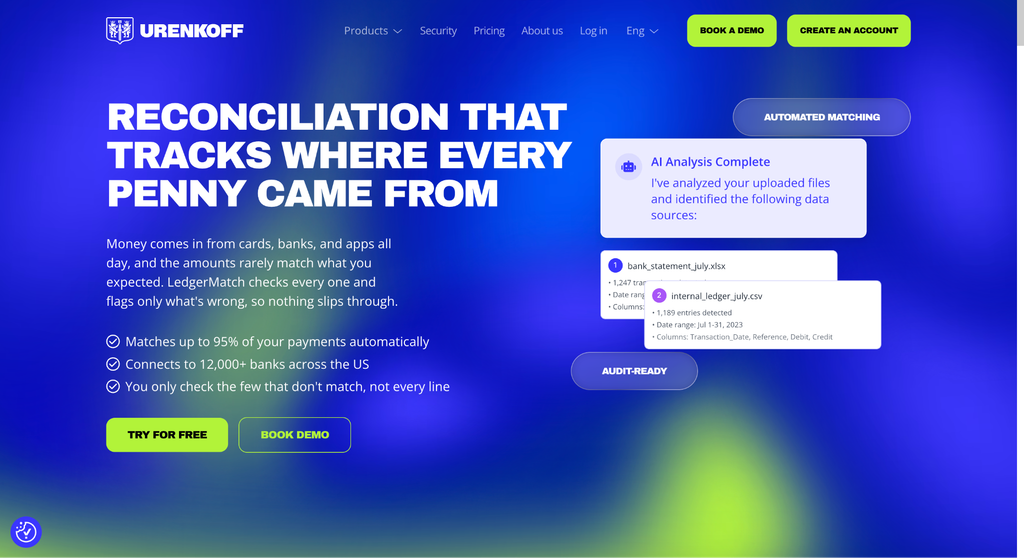
Urenkoff builds financial technology for payment and banking businesses that need payment reconciliation infrastructure they can rely on. Its flagship product, LedgerMatch, connects to 12,000+ banks across the US and automatically matches up to 95% of payments using AI-driven matching rules that your team approves before anything runs. Teams using Urenkoff’s reconciliation software get audit-ready documentation with full traceability built in, not bolted on after the fact. Both connections are read-only, so it never moves money and never posts entries to your books, and you can also connect through the API if you want the results in your own systems.
Why Does Urenkoff Stand Out for Reconciliation Software?
Payment reconciliation across banks, cards, POS systems and payment processors creates exception backlogs that manual teams simply can’t clear fast enough. LedgerMatch is AI reconciliation software built for exactly that: up to 95% of payments match automatically, and what’s left arrives as a short list with the reason each one didn’t tie. That covers the two things finance teams lose sleep over, accuracy and auditability, since every figure traces back to the record it came from.
Summary of Real User Reviews:
Public review data for Urenkoff is limited, which is common for infrastructure-focused fintech at this stage. What the company does publish are the numbers controllers judge reconciliation software on: up to 95% of payments matched automatically, up to 99% accuracy, and connections to more than 12,000 US banks.
The article title is about reducing manual work, which suits us well, so it’s worth the writer adding one concrete line: your team stops working through every line and only opens the ones that didn’t match.
- TrinTech – Best for Financial Close Automation and Account Reconciliation for Enterprise Organizations
What Does TrinTech Do?
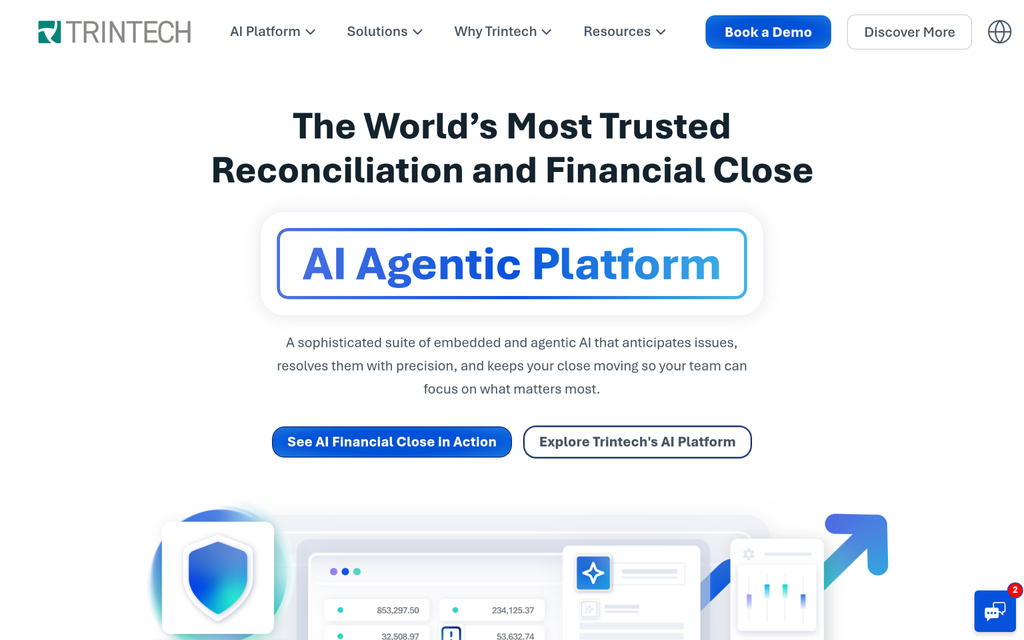
TrinTech has been building financial close software since 1987, and that depth shows in how thoroughly their platform covers the record-to-report process. Their system handles high-volume transaction matching, balance-sheet reconciliations, journal entries, close task management, and governance activities, all from one place. The embedded machine learning can automate 90% of transaction matching (a number most finance teams wouldn’t believe until they see it). Over 4,200 clients worldwide use TrinTech, including a majority of the Fortune 100, which confirms they can handle enterprise-scale operations.
Why Does TrinTech Stand Out for Reconciliation Software?
For organizations under heavy regulatory scrutiny, the financial close process is where errors become audit findings. TrinTech’s risk-based automation with explainable AI gives controllers visibility into exactly why a match was made or flagged. That kind of transparency is rare in close automation tools and matters enormously when external auditors start asking questions.
Summary of Real User Reviews:
TrinTech earns consistent recognition across analyst rankings and award programs, including placement in G2’s 2026 Best Software Awards for Accounting and Finance. Enterprise users value the depth of ERP connectivity and the close task management features, though teams new to automated close workflows mention a learning curve during initial setup.
- Ramp – Best for Enterprise Spend Management and Financial Operations Automation
What Does Ramp Do?
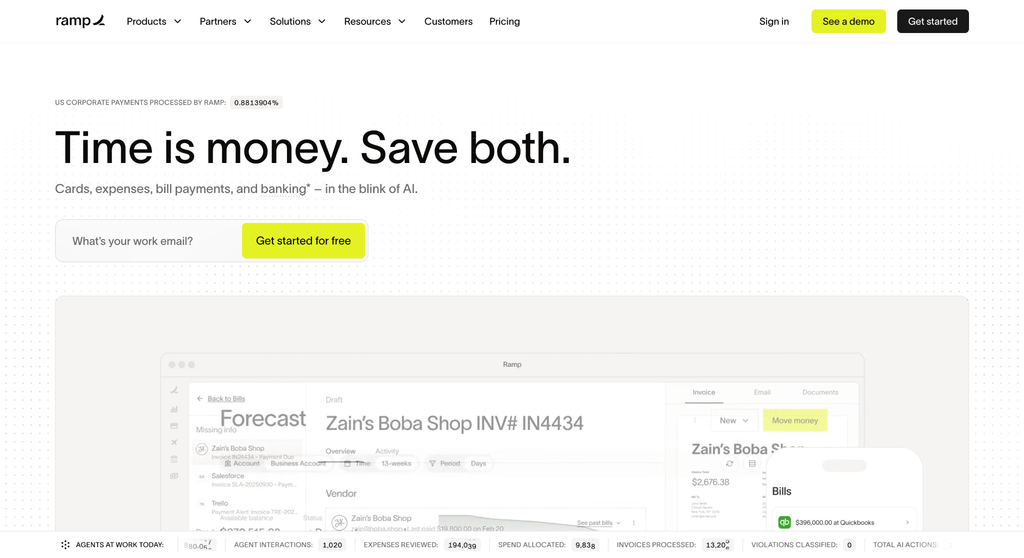
Ramp launched in 2019 and grew fast by treating spend management as a finance operations problem, not just a card-issuance problem. The platform combines corporate cards, expense management, accounts payable, procurement, and accounting automation into one connected system. Their invoice processing hits 99% OCR accuracy (not cheap to build, but worth it for AP teams drowning in paper), and real-time fraud detection runs continuously across all transactions. Ramp now serves 70,000+ businesses and reports helping customers close month-end 75% faster on average.
Why Does Ramp Stand Out for Reconciliation Software?
Most spend tools stop at capturing data, but Ramp pushes that data directly into accounting workflows with ERP integrations that reduce the manual handoff between departments. For finance teams dealing with high transaction volumes from cards, travel, and vendor payments, that real-time visibility cuts exception resolution time significantly compared to batch-processing approaches.
Summary of Real User Reviews:
Ramp’s customer reviews consistently call out speed of deployment (full setup in 30 days or less gets mentioned often) and the quality of the accounting automation. The reviews read like feedback from a finance team that finally got software that doesn’t fight them, which is genuinely rare for a platform covering this many functions at once.
- HighRadius – Best for Enterprise Financial Process Automation and Autonomous Finance Operations
What Does HighRadius Do?
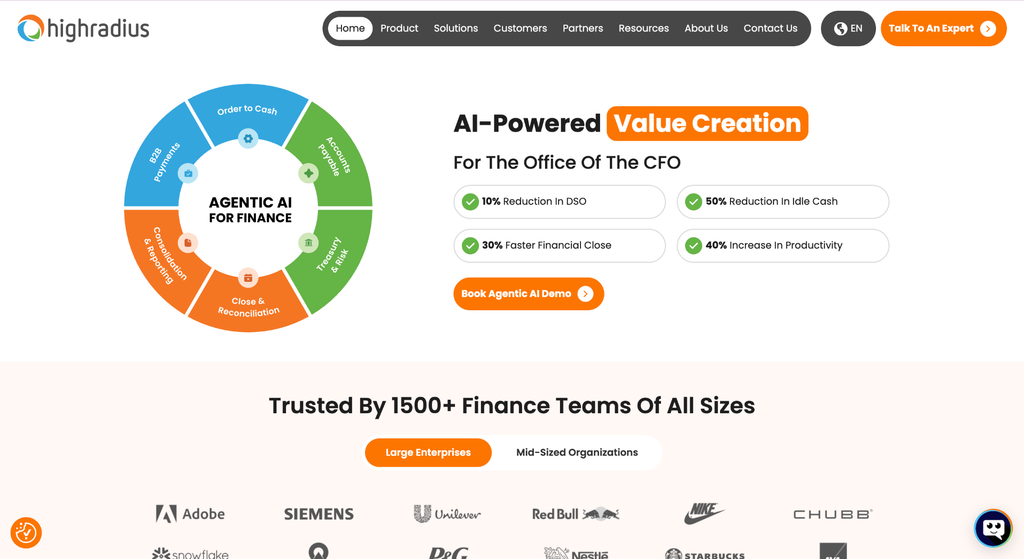
HighRadius is built around one idea: finance processes should run themselves, with humans reviewing exceptions rather than doing everything manually. Their platform covers Order-to-Cash, Accounts Payable, Close and Reconciliation, Treasury, and B2B Payments using 180+ AI agents that coordinate across end-to-end workflows. The company serves 1,500+ enterprise customers, including 3M, Unilever, and Bristol-Myers Squibb, and holds a $3.1B valuation. What sets them apart structurally is their outcome-based pricing, where customers pay when the AI delivers agreed improvements, not just for access to the software.
Why Does HighRadius Stand Out for Reconciliation Software?
Finance teams evaluating automation tools usually run into a gap between vendor promises and real-world results. HighRadius addresses that directly by tying pricing to actual KPI outcomes. That kind of accountability usually signals a company confident enough in their platform to put money behind it.
Summary of Real User Reviews:
HighRadius draws recognition from Gartner, IDC, and Forrester as a market leader, and customer case studies back that up with specific numbers, including a reported $33.4 million recovered and exception resolution times cut from 90 days to 34 days. Enterprise teams value the depth of the platform, though the scope means setup requires meaningful planning upfront.
- Ledge – Best for Financial Close and Accounting Automation
What Does Ledge Do?
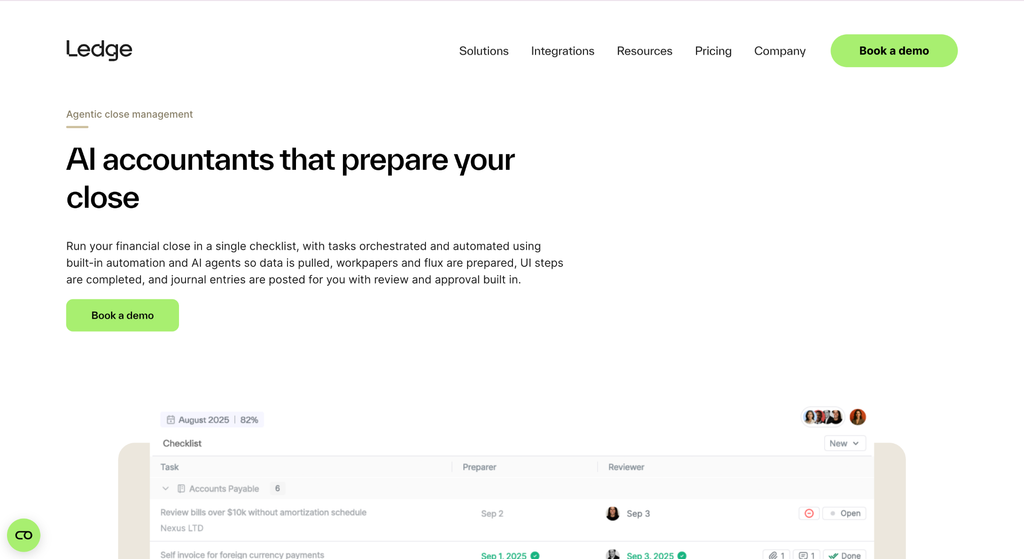
Ledge is the newest entrant on this list, founded in 2022, and they’ve taken a focused approach: automate the accounting workflows that finance teams repeat every single period without touching the human controls that auditors require. Their AI agents handle reconciliations, flux analysis, and journal entries inside systems like NetSuite, while preserving the Excel workpaper formats teams already use. That last detail matters more than it sounds. Most automation tools force a workflow change; Ledge works inside your existing process.
Why Does Ledge Stand Out for Reconciliation Software?
Accounting teams dealing with complex multi-source close workflows often resist automation because it breaks the audit trail they’ve carefully maintained. Ledge’s human-in-the-loop design keeps that trail intact while offloading the repetitive prep work that eats hours during every close cycle.
Summary of Real User Reviews:
Public review data is limited given the company’s early stage (24 customers and $9M in seed funding as of this writing), but what’s available reflects genuine enthusiasm from accounting teams who value the audit trail preservation. Users are drawn to how little disruption the platform causes when it’s introduced into an existing close process.
Research Methodology and Selection Process
Putting together a ranking like this requires more than a quick scan of vendor websites. A structured research process was followed to make sure each platform included here genuinely serves financial services teams, not just companies that market to them.
Initial Data Collection
The starting point was building a broad list of reconciliation and financial close platforms from multiple sources. Directories, review aggregators, analyst publications, and company-maintained case study libraries were all used to identify candidates. The goal at this stage was breadth, pulling in any platform that appeared regularly across financial services discussions, not just the ones with the biggest marketing budgets.
Shortlisting Phase
From that initial pool, options without verifiable customer evidence were removed first. Platforms that appeared only in self-published content, with no corroborating reviews or third-party mentions, were set aside. Review patterns were analyzed across aggregator platforms, paying close attention to whether feedback came from users in roles like controller, accounting manager, or CFO, since those are the people who actually live with these tools through close cycles.
Verification of Claims
Every capability claim on a vendor’s website was checked against external sources. If a platform advertised a specific match rate or close time reduction, that figure had to appear in a case study, analyst report, or verified customer review before it was treated as credible. Where claims appeared only in press releases or marketing copy without supporting evidence, they were noted but not weighted heavily in the evaluation.
Authority and Industry Contribution Layer
Platforms recognized by established analysts, featured in industry publications, or acknowledged through awards were noted in this layer. Recognition from organizations like Gartner, G2, IDC, and Fast Company carries weight because it reflects evaluation by parties outside the vendor’s own marketing function. This wasn’t used as a standalone signal but as one data point alongside customer evidence and product depth.
Reconciliation Software-Specific Evidence
The final filter focused on reconciliation capabilities. Each company was assessed for dedicated service pages, product documentation, and case studies tied directly to reconciliation workflows, whether payment matching, account reconciliation, or financial close automation. Platforms that covered reconciliation as a peripheral feature of a broader suite were weighted differently than those where reconciliation is a key capability. This distinction shaped the final rankings and the “best for” designations assigned to each company.
How to Choose the Right Reconciliation Software
The options above cover a wide range of use cases, so the right choice depends on where your biggest friction points actually are. Here’s what to think through before committing.
- Industry/Domain Experience: Look for platforms with documented experience in environments like yours. A payment-heavy business has different matching needs than a multi-entity enterprise running intercompany reconciliations.
- Features and Capabilities: Match the feature set to your actual workflow. If you need full close automation, a payment-only matching tool won’t get you there. If you need payment reconciliation at scale, a general close platform may lack the bank connectivity you need.
- Pricing Structure: Some platforms charge by transaction volume, others by user seat, and some (like HighRadius) tie pricing to outcome delivery. Know your volume and close frequency before evaluating cost.
- Results Measurement: Ask vendors how they measure success. Straight-through processing rate, reconciliation cycle time, and exception resolution time are the metrics that matter. If a vendor can’t talk about those in concrete terms, that’s a signal.
- Industry Knowledge and Compliance: SOX, ASC 606, and IFRS 9 requirements shape how audit trails need to be structured. Make sure the platform you choose builds those requirements into the workflow, not just the documentation.
Bottom Line
Reducing manual work in financial close and payment reconciliation starts with picking a platform that was built for the specific needs your team faces. Transaction volume, system fragmentation, and regulatory requirements all shape which tool fits best. The five platforms here cover that spectrum well, from payment infrastructure to autonomous finance operations. As AI-driven matching and autonomous close workflows keep maturing, the gap between teams using purpose-built tools and those relying on spreadsheets will only keep growing.

Find Trusted Cardiac Hospitals
Compare heart hospitals by city and services — all in one place.
Explore Hospitals