
Introduction
AI Wind Turbine Predictive Maintenance refers to the use of artificial intelligence and machine learning systems to predict failures, performance degradation, and maintenance needs in wind turbines before they happen. These systems analyze sensor data, vibration patterns, temperature readings, weather conditions, and historical failure logs to detect anomalies and schedule maintenance proactively.
In 2026 and beyond, this technology has become essential for wind energy operators because turbines are increasingly deployed in remote offshore and onshore environments where downtime is extremely costly. A single turbine failure can significantly reduce energy output and increase operational expenses.
Modern predictive maintenance platforms combine IoT sensors, SCADA systems, edge computing, and AI anomaly detection models to ensure turbines operate at peak efficiency while minimizing unexpected breakdowns.
Key real-world use cases:
- Early detection of gearbox and blade failures
- Predicting bearing wear and tear
- Optimizing maintenance schedules for wind farms
- Reducing turbine downtime and repair costs
- Monitoring offshore wind turbine health
- Performance degradation tracking
- Improving energy output efficiency
Key evaluation criteria:
- Real-time anomaly detection capability
- Sensor data integration (vibration, temperature, acoustics)
- Edge AI support for offshore turbines
- Predictive accuracy for failure events
- SCADA system integration
- Scalability across wind farms
- Maintenance scheduling automation
- Explainability of failure predictions
- Offline or low-connectivity support
- Cost efficiency of monitoring systems
Best for: Wind energy operators, utility companies, offshore wind farms, renewable energy asset managers, and industrial maintenance teams.
Not ideal for: Small-scale renewable setups without industrial turbine infrastructure.
What’s Changed in AI Wind Turbine Predictive Maintenance in 2026+
- Shift from reactive maintenance to fully predictive + prescriptive maintenance systems
- Increased use of edge AI deployed directly on turbines
- Integration of digital twin simulations for every turbine asset
- Adoption of multimodal sensor fusion (vibration + acoustic + thermal + weather data)
- Strong use of anomaly detection foundation models for industrial systems
- Expansion of self-healing turbine systems with automated alerts
- Real-time integration with energy grid optimization systems
- Increased focus on offshore wind predictive maintenance autonomy
- Use of reinforcement learning for maintenance scheduling optimization
- Stronger cybersecurity controls for industrial IoT systems
- Better prediction of blade fatigue and micro-crack detection
- Integration with carbon efficiency and energy output optimization systems
Quick Buyer Checklist (Wind Operators)
Before selecting a predictive maintenance platform, evaluate:
- Real-time sensor data processing capability
- Vibration, thermal, and acoustic sensor support
- Edge AI deployment capability for turbines
- Integration with SCADA systems
- Failure prediction accuracy and lead time
- Offline functionality for offshore turbines
- Maintenance automation capabilities
- Data storage and historical analytics support
- Cybersecurity and access control
- Scalability across wind farm fleets
- Vendor lock-in risk
- Cost per turbine monitoring
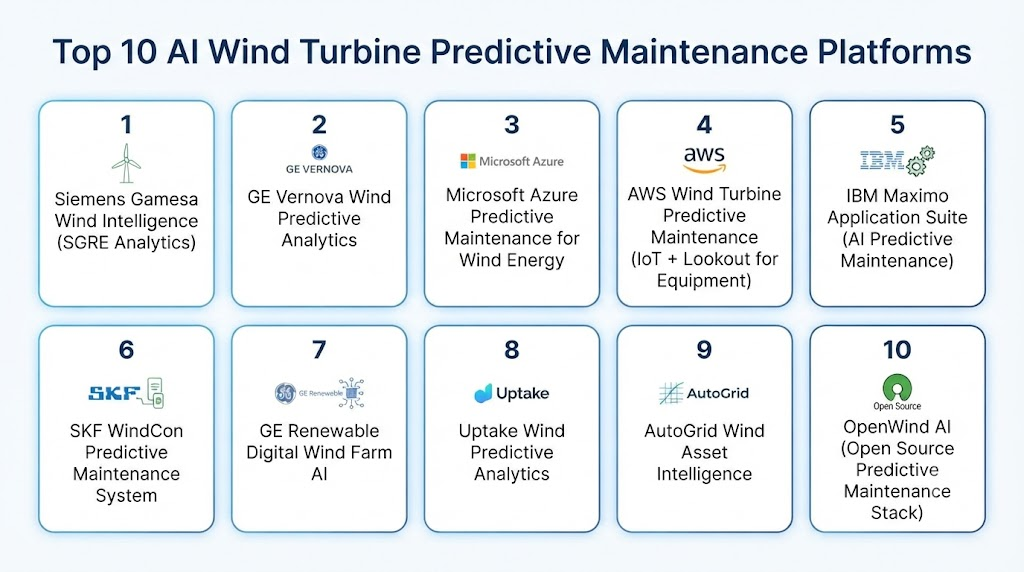
Top 10 AI Wind Turbine Predictive Maintenance Platforms
#1 — Siemens Gamesa Wind Intelligence (SGRE Analytics)
One-line verdict: Best for enterprise-grade offshore wind turbine predictive maintenance and fleet optimization.
Short description (2–3 lines):
Siemens Gamesa provides advanced AI-driven predictive maintenance systems for wind turbines, combining SCADA data, digital twins, and machine learning to detect failures before they occur.
Standout Capabilities
- Real-time turbine health monitoring
- Predictive gearbox and blade failure detection
- Offshore wind farm analytics
- Digital twin turbine simulation
- SCADA system integration
- Fleet-wide performance optimization
AI-Specific Depth
- Model support: Proprietary industrial AI + physics-based models
- RAG / knowledge integration: Turbine operational datasets
- Evaluation: Industrial-grade failure prediction metrics
- Guardrails: Hard safety constraints for turbine operations
- Observability: Advanced asset monitoring dashboards
Pros
- Industry leader in wind energy
- Extremely reliable for offshore systems
- Strong integration with turbine hardware
Cons
- High implementation cost
- Limited flexibility for developers
Security & Compliance
- Industrial-grade security controls
- SCADA compliance support
- Air-gapped deployment options
Deployment & Platforms
- On-premise + hybrid industrial systems
Integrations & Ecosystem
- SCADA systems
- Wind farm control platforms
- Energy management systems
Pricing Model
Enterprise licensing
Best-Fit Scenarios
- Offshore wind farms
- National utility-scale wind operations
- Industrial energy asset management
#2 — GE Vernova Wind Predictive Analytics
One-line verdict: Best for large-scale wind farm fleet optimization and predictive asset management.
Short description:
GE Vernova uses AI and machine learning to optimize wind turbine performance and predict mechanical failures across large fleets.
Standout Capabilities
- Predictive maintenance for turbine components
- Real-time performance analytics
- Blade and gearbox failure detection
- Fleet-level optimization
- Weather-integrated turbine modeling
AI-Specific Depth
- Model support: GE proprietary analytics models
- RAG / knowledge integration: Weather + SCADA integration
- Evaluation: Performance and failure prediction tracking
- Guardrails: Operational safety constraints
- Observability: Fleet dashboards
Pros
- Strong global wind energy expertise
- Scalable fleet monitoring
- Reliable predictive systems
Cons
- Limited third-party flexibility
- Enterprise-focused only
Security & Compliance
- Industrial-grade security frameworks
Deployment & Platforms
- Hybrid cloud + industrial systems
Integrations & Ecosystem
- SCADA systems
- Wind farm infrastructure
Pricing Model
Enterprise contracts
Best-Fit Scenarios
- Utility-scale wind farms
- Fleet operators
- Renewable asset managers
#3 — Microsoft Azure Predictive Maintenance for Wind Energy
One-line verdict: Best for IoT-driven wind turbine predictive maintenance at enterprise scale.
Short description:
Microsoft Azure integrates IoT, AI, and digital twin technologies to predict wind turbine failures and optimize maintenance schedules.
Standout Capabilities
- IoT-based turbine monitoring
- Predictive failure detection
- Digital twin modeling of wind farms
- Real-time anomaly detection
- Maintenance scheduling optimization
AI-Specific Depth
- Model support: Azure ML + anomaly detection models
- RAG / knowledge integration: SCADA + IoT datasets
- Evaluation: Model drift monitoring
- Guardrails: Enterprise governance policies
- Observability: Azure Monitor dashboards
Pros
- Strong IoT ecosystem
- Excellent enterprise integration
- Flexible deployment models
Cons
- Complex setup
- Requires Azure ecosystem dependency
Security & Compliance
- RBAC, encryption, audit logging
- Industrial compliance support
Deployment & Platforms
- Cloud + hybrid
Integrations & Ecosystem
- Azure IoT Hub
- Power BI
- Wind farm systems
Pricing Model
Usage-based enterprise pricing
Best-Fit Scenarios
- Smart wind farms
- Utility operators
- Government energy systems
#4 — AWS Wind Turbine Predictive Maintenance (IoT + Lookout for Equipment)
One-line verdict: Best cloud-native predictive maintenance system for scalable wind turbine monitoring.
Short description:
AWS uses IoT Core and machine learning services to detect anomalies and predict wind turbine failures.
Standout Capabilities
- Anomaly detection for turbine sensors
- Predictive maintenance scheduling
- IoT-based real-time monitoring
- Fleet-wide performance analytics
- Scalable cloud deployment
AI-Specific Depth
- Model support: AWS ML + anomaly detection models
- RAG / knowledge integration: External data pipelines
- Evaluation: Sensor anomaly scoring
- Guardrails: AWS IAM policies
- Observability: CloudWatch monitoring
Pros
- Highly scalable infrastructure
- Strong IoT integration
- Reliable cloud performance
Cons
- Requires AWS expertise
- Limited wind-specific tooling
Security & Compliance
- IAM-based security
- Encryption and audit logs
Deployment & Platforms
- Cloud-native AWS ecosystem
Integrations & Ecosystem
- AWS IoT Core
- Lambda
- Energy data systems
Pricing Model
Pay-as-you-go
Best-Fit Scenarios
- Utility-scale wind farms
- IoT-driven energy systems
- Predictive maintenance pipelines
#5 — IBM Maximo Application Suite (AI Predictive Maintenance)
One-line verdict: Best for enterprise asset management and industrial predictive maintenance systems.
Short description:
IBM Maximo uses AI to predict equipment failures, including wind turbines, through asset performance management and anomaly detection.
Standout Capabilities
- Asset health monitoring
- Predictive maintenance scheduling
- AI-based failure detection
- Work order automation
- Industrial analytics dashboards
AI-Specific Depth
- Model support: IBM AI + hybrid ML models
- RAG / knowledge integration: Asset historical data
- Evaluation: Maintenance KPIs
- Guardrails: Enterprise governance
- Observability: Asset monitoring dashboards
Pros
- Strong enterprise asset management
- Flexible industrial use
- Good maintenance automation
Cons
- Complex platform
- Not wind-specific
Security & Compliance
- Strong enterprise compliance
- Role-based access control
Deployment & Platforms
- Cloud + on-premise
Integrations & Ecosystem
- Industrial IoT systems
- ERP platforms
Pricing Model
Enterprise licensing
Best-Fit Scenarios
- Industrial wind operators
- Energy asset management
- Large infrastructure systems
#6 — SKF WindCon Predictive Maintenance System
One-line verdict: Best for mechanical vibration-based wind turbine failure detection.
Standout Capabilities
- Vibration-based fault detection
- Bearing and gearbox monitoring
- Real-time turbine health tracking
- Condition-based maintenance alerts
AI-Specific Depth
- Model support: Industrial ML + signal processing models
- RAG / knowledge integration: Mechanical sensor data
- Evaluation: Vibration anomaly metrics
- Guardrails: Safety thresholds
- Observability: Condition monitoring dashboards
Pros
- Strong mechanical expertise
- High accuracy in vibration analysis
- Proven industrial reliability
Cons
- Limited AI flexibility
- Narrow focus
Security & Compliance
- Industrial standards compliance
Deployment & Platforms
- Edge + industrial systems
Integrations & Ecosystem
- SCADA systems
- Turbine sensors
Pricing Model
Enterprise licensing
Best-Fit Scenarios
- Mechanical failure prediction
- Offshore wind farms
- Industrial turbine monitoring
#7 — GE Renewable Digital Wind Farm AI
One-line verdict: Best for fleet-level wind optimization and performance analytics.
Standout Capabilities
- Fleet-wide turbine optimization
- Predictive maintenance insights
- Wind farm performance analytics
- Weather-integrated forecasting
AI-Specific Depth
- Model support: Proprietary GE models
- RAG / knowledge integration: Wind + weather datasets
- Evaluation: Fleet performance KPIs
- Guardrails: Operational safety rules
- Observability: Analytics dashboards
Pros
- Strong global adoption
- Fleet optimization strength
- High reliability
Cons
- Closed ecosystem
- Limited customization
Security & Compliance
- Industrial-grade security
Deployment & Platforms
- Hybrid cloud
Integrations & Ecosystem
- SCADA systems
- Energy platforms
Pricing Model
Enterprise contracts
Best-Fit Scenarios
- Utility-scale wind farms
- Fleet operators
#8 — Uptake Wind Predictive Analytics
One-line verdict: Best for AI-driven industrial predictive analytics across wind assets.
Standout Capabilities
- AI anomaly detection
- Equipment failure prediction
- Maintenance optimization
- Industrial analytics dashboards
AI-Specific Depth
- Model support: Industrial AI models
- RAG / knowledge integration: Asset data pipelines
- Evaluation: Predictive KPIs
- Guardrails: Enterprise controls
- Observability: Analytics platform
Pros
- Strong industrial AI focus
- Good predictive analytics
- Flexible integrations
Cons
- Not wind-exclusive
- Requires setup effort
Security & Compliance
- Enterprise security controls
Deployment & Platforms
- Cloud-based
Integrations & Ecosystem
- Industrial IoT
- Energy systems
Pricing Model
Subscription + enterprise
Best-Fit Scenarios
- Industrial wind operators
- Predictive maintenance teams
#9 — AutoGrid Wind Asset Intelligence
One-line verdict: Best for renewable + demand response integration with predictive maintenance.
Standout Capabilities
- Wind turbine performance monitoring
- Demand response integration
- Renewable forecasting + maintenance
- Grid balancing insights
AI-Specific Depth
- Model support: Proprietary AI models
- RAG / knowledge integration: Grid + turbine data
- Evaluation: Performance metrics
- Guardrails: Operational constraints
- Observability: Energy dashboards
Pros
- Strong grid integration
- Renewable-focused analytics
- Utility-ready platform
Cons
- Limited deep mechanical analysis
- Industry-specific
Security & Compliance
- Utility-grade compliance
Deployment & Platforms
- Cloud + hybrid
Integrations & Ecosystem
- Smart grid systems
- Wind farms
Pricing Model
Enterprise pricing
Best-Fit Scenarios
- Utility operators
- Renewable energy companies
#10 — OpenWind AI (Open Source Predictive Maintenance Stack)
One-line verdict: Best open-source framework for building custom wind turbine predictive systems.
Standout Capabilities
- Custom predictive maintenance models
- Time-series anomaly detection
- Edge AI deployment
- Flexible sensor integration
- Fully customizable architecture
AI-Specific Depth
- Model support: Open-source ML models
- RAG / knowledge integration: Fully custom
- Evaluation: Developer-defined metrics
- Guardrails: None built-in
- Observability: Custom dashboards
Pros
- Full flexibility
- No vendor lock-in
- Ideal for innovation
Cons
- Requires deep expertise
- No enterprise support
Security & Compliance
- Depends on deployment
Deployment & Platforms
- Self-hosted / hybrid
Integrations & Ecosystem
- Python ML ecosystem
- IoT sensors
- SCADA systems
Pricing Model
Open-source
Best-Fit Scenarios
- Research labs
- Custom wind farms
- Experimental AI systems
Comparison Table
| Tool Name | Best For | Deployment | Model Flexibility | Strength | Watch-Out | Public Rating |
|---|---|---|---|---|---|---|
| Siemens Gamesa | Offshore wind | Hybrid | Proprietary | Reliability | Cost | N/A |
| GE Vernova | Fleet optimization | Hybrid | Proprietary | Scale | Closed system | N/A |
| Microsoft Azure | Enterprise IoT | Cloud/Hybrid | ML + proprietary | Ecosystem | Complexity | N/A |
| AWS | Cloud monitoring | Cloud | ML models | Scalability | AWS dependency | N/A |
| IBM Maximo | Asset management | Cloud/On-prem | Hybrid | Maintenance automation | Complexity | N/A |
| SKF WindCon | Mechanical monitoring | Edge | Industrial ML | Vibration accuracy | Narrow focus | N/A |
| GE Digital Wind Farm | Fleet analytics | Hybrid | Proprietary | Performance optimization | Lock-in | N/A |
| Uptake | Industrial AI | Cloud | ML models | Predictive analytics | Not wind-specific | N/A |
| AutoGrid | Utility integration | Cloud/Hybrid | Proprietary | Grid integration | Limited depth | N/A |
| OpenWind AI | Custom systems | Self-hosted | Open-source | Flexibility | No support | N/A |
Scoring & Evaluation (Transparent Rubric)
| Tool | Core | Reliability | Guardrails | Integrations | Ease | Perf/Cost | Security/Admin | Support | Weighted Total |
|---|---|---|---|---|---|---|---|---|---|
| Siemens | 9 | 9 | 9 | 8 | 6 | 8 | 9 | 9 | 8.3 |
| GE Vernova | 9 | 9 | 9 | 8 | 6 | 8 | 9 | 9 | 8.3 |
| Microsoft | 9 | 9 | 9 | 9 | 7 | 8 | 9 | 9 | 8.6 |
| AWS | 8 | 9 | 7 | 9 | 7 | 8 | 9 | 8 | 8.1 |
| IBM | 8 | 8 | 9 | 8 | 7 | 7 | 9 | 8 | 7.9 |
| SKF | 8 | 8 | 8 | 7 | 7 | 8 | 8 | 8 | 7.9 |
| GE Digital | 8 | 8 | 8 | 8 | 7 | 8 | 8 | 8 | 7.9 |
| Uptake | 8 | 8 | 7 | 8 | 7 | 8 | 8 | 8 | 7.8 |
| AutoGrid | 8 | 8 | 8 | 8 | 7 | 8 | 8 | 8 | 8.0 |
| OpenWind AI | 8 | 7 | 6 | 7 | 6 | 9 | 6 | 7 | 7.2 |
Which Wind Turbine Predictive Maintenance Tool Is Right for You?
Small Wind Operators
Best fit: SKF WindCon, Uptake
Focus: cost efficiency + monitoring
Mid-Sized Wind Farms
Best fit: AutoGrid, IBM Maximo
Focus: predictive maintenance + optimization
Enterprise / Offshore Wind Operators
Best fit: Siemens, GE Vernova, Microsoft Azure
Focus: reliability + fleet-scale operations
Research & Custom Systems
Best fit: OpenWind AI
Focus: flexibility and experimentation
Implementation Playbook (30 / 60 / 90 Days)
30 Days: Pilot
- Collect turbine sensor + SCADA data
- Run anomaly detection baseline
- Define failure prediction KPIs
60 Days: Integration
- Deploy IoT + edge monitoring systems
- Add predictive maintenance models
- Test failure simulation scenarios
90 Days: Scale
- Deploy across full wind farm fleet
- Automate maintenance scheduling
- Integrate with energy optimization systems
- Enable self-healing predictive workflows
Common Mistakes & How to Avoid Them
- Ignoring vibration data quality
- Not integrating SCADA systems properly
- Poor sensor calibration
- Lack of edge AI deployment strategy
- No failure labeling dataset
- Over-reliance on cloud-only processing
- Missing offshore connectivity planning
- Weak cybersecurity for IoT systems
- No predictive maintenance KPIs
- Ignoring blade fatigue modeling
- No digital twin integration
- Lack of maintenance automation
- Poor anomaly detection tuning
- No feedback loop from repairs
FAQs
What is AI wind turbine predictive maintenance?
It is the use of AI systems to predict failures and maintenance needs in wind turbines before breakdowns occur.
Why is it important?
It reduces downtime, improves energy efficiency, and lowers maintenance costs.
What data is used?
Vibration, temperature, acoustic sensors, SCADA data, and weather conditions.
Can it prevent turbine failures?
It can predict and reduce failures but not eliminate them completely.
Is it used offshore?
Yes, offshore wind farms heavily rely on predictive maintenance.
Does it use real-time data?
Yes, modern systems operate in real time or near real time.
What is the biggest challenge?
Sensor data quality and offshore connectivity limitations.
Can it reduce maintenance cost?
Yes, significantly by preventing unexpected breakdowns.
Is cloud required?
Not always; edge computing is widely used.
What is digital twin in this context?
A virtual model of a turbine used to simulate performance and failures.
Who uses it?
Wind farm operators, utilities, and renewable energy companies.
Is open-source viable?
Yes, but requires strong engineering expertise.
Conclusion
AI Wind Turbine Predictive Maintenance is a critical technology for the future of renewable energy operations. It ensures higher efficiency, lower operational costs, and improved reliability of wind energy systems across onshore and offshore environments.The best platform depends on scale: industrial vendors dominate offshore reliability, cloud providers excel in scalability, and open-source systems offer maximum flexibility.

Find Trusted Cardiac Hospitals
Compare heart hospitals by city and services — all in one place.
Explore Hospitals