
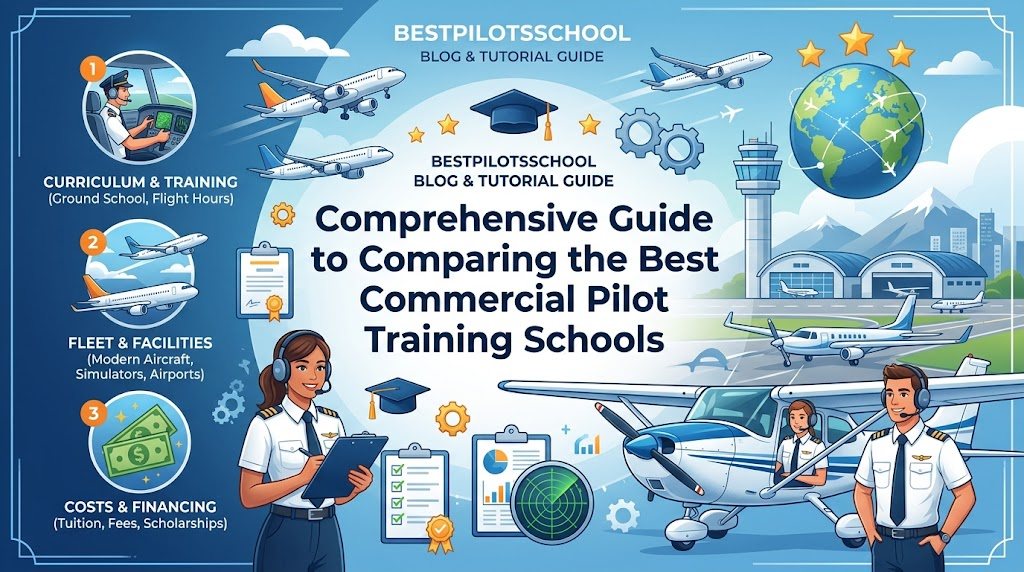
Embarking on a career in aviation is one of the most rewarding pursuits in professional life, but it begins with a crucial choice: selecting where to undertake your flight training. Earning your wings requires a balanced combination of rigorous theoretical knowledge, disciplined operational habits, and precise practical airmanship. Because flight training represents a substantial investment of time, energy, and financial resources, evaluating training institutions with care is essential for every aspiring aviator.
Prospective students often find the landscape of aviation education complex. Training organizations vary widely in their instructional philosophies, fleet composition, simulator technology, campus facilities, and safety governance. Choosing the right training pathway requires an understanding of how these factors influence your learning experience, how different civil aviation authorities regulate flight credentials, and how your long-term career goals should guide your final decision.
What Makes a Good Pilot School?
A reputable flight training institution is defined by its commitment to safety, structured education, and student success. When researching the best pilot schools, prospective students should look beyond marketing materials and examine the operational foundations of the facility.
- Qualified and Dedicated Instructors: Experienced flight instructors who prioritize individualized mentorship and structured debriefing help students develop sound aeronautical decision-making.
- Modern and Well-Maintained Aircraft: A reliable fleet of primary and advanced training aircraft ensures steady flight scheduling and minimizes maintenance delays.
- Advanced Simulation Equipment: Certified flight training devices allow students to practice instrument procedures, emergency drills, and navigation skills in a controlled setting.
- Comprehensive Ground School: Rigorous classroom instruction provides the theoretical foundation necessary to master aerodynamics, air law, navigation, meteorology, and aircraft systems.
- Proactive Safety Management Systems: An established safety culture with open incident reporting and strict maintenance protocols ensures flight operations remain secure.
- Transparent Progress Tracking: Regular phase checks and standardized evaluations ensure students meet performance benchmarks consistently throughout their training syllabus.
How to Find the Best Flight Schools
Finding an institution that matches your personal and professional needs requires systematic research. Aspiring pilots should compare different training environments, syllabi, and administrative standards before making a commitment.
To identify the best flight schools for your specific goals, consider the following evaluation criteria:
- Regulatory Approvals: Verify that the institution holds active approvals from the appropriate civil aviation authority, ensuring that earned flight hours and qualifications are officially recognized.
- Airspace and Weather Characteristics: Training in diverse airspace with manageable seasonal weather allows for consistent flying hours while teaching students how to operate in complex air traffic environments.
- Student-to-Aircraft Ratio: Ensuring that a school does not over-enroll relative to its fleet size prevents bottlenecks in flight scheduling.
- Airport Infrastructure: Access to operational runways, instrument approach facilities, and on-site maintenance support significantly enhances training efficiency.
- Transparent Fee Structures: Reliable institutions provide clear estimates covering flight hours, ground school, fuel adjustments, examination fees, and potential remedial hours.
Choosing the Best Commercial Pilot Training Schools
Transitioning from foundational flying to professional aviation demands higher standards of precision, knowledge, and operational discipline. The best commercial pilot training schools design their curricula to mirror the expectations of professional flight departments and commercial air carriers.
A high-caliber commercial training curriculum thoroughly integrates:
- Advanced aeronautical knowledge covering complex aircraft systems, turbine theory, and high-altitude aerodynamics.
- In-depth navigation and flight planning techniques using both traditional charts and electronic flight bags.
- Instrument flight rules training to develop proficiency in flying solely by reference to cockpit instruments under challenging meteorological conditions.
- Multi-engine operations, teaching asymmetric thrust management, engine-out procedures, and multi-crew coordination where applicable.
- Human factors and threat management to prepare pilots for the cognitive demands of commercial flight decks.
What Makes the Best Pilot Schools in the World Different?
When examining the best pilot schools in the world, distinct structural advantages often set leading international academies apart from smaller regional operations. These differences typically center around scale, technological integration, and industry alignment.
World-class training facilities frequently feature extensive fleets of standardized aircraft, advanced full-flight simulation suites, on-site campus accommodation, and dedicated practice airspace. They often maintain standardized operating procedures that align closely with international civil aviation benchmarks, giving students early exposure to airline-style operating environments.
However, the term “best” remains relative. An internationally renowned academy may be ideal for a student seeking an integrated full-time program, while a local modular flight school might offer the flexibility and pacing required by a student balancing training with other personal responsibilities. The optimal choice depends on your budget, geographical preferences, desired timeline, and the specific licensing jurisdiction in which you plan to build your aviation career.
Understanding Commercial Pilot Training
Commercial pilot training is a structured educational journey designed to transform a student pilot into a certified professional capable of operating aircraft for compensation. While private pilot training focuses on basic aircraft control, visual navigation, and fundamental airmanship, commercial instruction elevates these skills to professional tolerances.
Throughout this training, candidates master advanced flight maneuvers, precise speed and altitude control, complex systems management, and commercial flight planning. Ground instruction expands into advanced aviation meteorology, commercial air regulations, weight and balance calculations, and crew communication protocols. Practical training culminates in a series of rigorous written examinations and a formal practical flight test conducted by an authorized aviation examiner.
What Is a Pilot Training Academy?
A pilot training academy is an educational institution dedicated specifically to professional flight education. Unlike local flying clubs, which may focus primarily on recreational flying or casual hour-building, an academy typically operates on a full-time, structured syllabus.
Academies bring ground school instructors, flight instructors, maintenance staff, and administrative teams together within a single educational framework. They often follow integrated training syllabi designed to take candidates from zero flight experience through to commercial ratings in a continuous, disciplined learning environment.
How to Evaluate the Best Flying Schools
Evaluating the best flying schools requires looking closely at daily flight-line operations and speaking with current students whenever possible.
- Fleet Dispatch Reliability: Look for schools with dedicated on-site maintenance teams that keep training aircraft safe and readily available for scheduled flights.
- Continuity of Instruction: High instructor turnover can disrupt learning; evaluate whether the school maintains experienced senior flight instructors to oversee training quality.
- Simulator Integration: Check how effectively the school uses flight simulators to supplement aircraft training, especially for procedural drills and instrument ratings.
- Contract Clarity: Read all enrollment terms carefully, paying close attention to payment schedules, refund policies, and cancellation procedures.
Choosing an Airline Pilot Training Academy
For candidates aiming for the flight deck of a commercial airliner, choosing a specialized airline pilot training academy provides distinct advantages. These academies structure their training around standard operating procedures, multi-crew environments, and airline-oriented flight operations.
Key elements emphasized in airline-oriented training include:
- Crew Resource Management: Learning to communicate, delegate, and manage workload effectively within a multi-pilot flight deck.
- Multi-Crew Cooperation Courses: Transitioning from single-pilot decision-making to structured co-pilot duties and checklist discipline.
- Jet Orientation Training: Gaining early exposure to the systems, speeds, and performance characteristics of commercial jet aircraft using advanced simulators.
- Standard Operating Procedures: Operating aircraft strictly according to standardized company profiles, briefings, and operational checklists.
How to Identify the Best Aviation Academy for Pilot Training
Selecting the best aviation academy for pilot training involves matching the academy’s strengths with your personal career objectives and licensing requirements.
- Confirm that the academy holds full certification from the relevant national aviation authority.
- Review the diversity and modern avionics of the training fleet to ensure familiarity with glass cockpits.
- Evaluate the academy’s historical safety record and operational discipline.
- Ensure training fees are fully transparent, with clear itemization of flight hours, ground instruction, and examination costs.
- Verify whether the academy provides career guidance, industry networking opportunities, or structured bridge programs.
Understanding Commercial Pilot License Training
Undergoing commercial pilot license training requires fulfilling defined medical, theoretical, and practical flight hour requirements established by the relevant civil aviation authority.
Prospective trainees must first obtain an appropriate aviation medical certificate from an authorized medical examiner to confirm physical and psychological fitness for commercial flight. The curriculum then combines rigorous ground school subjects with dedicated dual instruction and solo flight time. Candidates complete cross-country navigation flights, night operations, complex aircraft checkouts, and instrument proficiency before qualifying for the final commercial practical flight test.
Important Factors to Consider Before Enrolling
Before signing an enrollment agreement or transferring tuition funds, carefully assess several practical considerations:
- Total Realistic Cost: Account for flight hours, ground school tuition, simulator time, landing fees, fuel surcharges, medical examinations, study materials, and practical test fees.
- Living and Accommodation Expenses: Factor in housing, food, and daily transportation if you are training away from home.
- Weather Consistency: Inquire about seasonal weather patterns at the training base, as persistent rain, fog, or extreme temperatures can prolong training timelines.
- Training Fleet Availability: Ensure the school maintains enough aircraft to accommodate its student body without excessive scheduling delays.
- Payment Schedules and Refund Terms: Avoid paying large sums upfront whenever possible, preferring pay-as-you-go structures or escrow-backed milestone payments.
How to Prepare for Pilot Training
Proper preparation before your first flight lesson helps you maximize your training budget and progress smoothly through ground and flight school.
Understand the Licensing Pathway
Identify the specific licensing framework you need based on where you intend to fly professionally. Research whether your target market requires FAA, EASA, or other national authority credentials, and ensure your chosen school issues licenses recognized by that authority.
Review Academic Requirements
Flight training involves substantial study in mathematics, basic physics, meteorology, and aerodynamics. Reviewing foundational science and math concepts in advance makes ground school coursework significantly more manageable.
Understand Medical Requirements
Schedule an appointment with an authorized aviation medical examiner to secure your medical clearance before investing money in flight training. Discovering an uncorrectable medical issue early prevents unnecessary financial losses.
Build Strong Aviation Fundamentals
Begin familiarizing yourself with basic aeronautical concepts, aircraft instruments, and airport layout diagrams. Reading standard aviation reference handbooks helps build familiarity with core principles ahead of formal classes.
Develop Communication Skills
Clear and standardized communication is essential to flight safety. Familiarize yourself with standard aviation phraseology, the phonetic alphabet, and radio communication etiquette.
Prepare Financially
Create a comprehensive budget that includes a financial buffer for remedial flight hours or weather delays. Having your funding organized before starting full-time training prevents costly interruptions in your flight schedule.
The Role of Flight Instructors in Pilot Training
Flight instructors are the cornerstone of quality aviation education. A skilled instructor does far more than teach you how to manipulate flight controls; they instill the discipline, situational awareness, and risk-management habits that define safe aviators.
Effective flight training relies on transparent feedback and continuous mentorship. Instructors who conduct thorough pre-flight briefings and detailed post-flight debriefings help students identify areas for improvement quickly. Selecting a school with an experienced, professional instructional staff ensures that your training focuses on genuine airmanship rather than merely logging minimum flight hours.
Why Safety Culture Matters in Flight Training
Safety is the single most critical consideration in flight training. An institution’s safety culture reflects its shared commitment to putting operational safety above commercial pressures or scheduling convenience.
A healthy flight training environment features:
- Uncompromising aircraft maintenance performed by certified technicians.
- Strict adherence to weather minimums and pre-flight inspection checklists.
- A transparent reporting culture where students and instructors can log minor anomalies or safety concerns without fear of reprisal.
- Comprehensive emergency procedures training practiced regularly in both simulators and aircraft.
- Conservative operational decision-making modeled consistently by senior management and chief flight instructors.
How BestPilotsSchool.com Can Help
Researching and comparing aviation academies across different regions, regulatory environments, and price points can be an overwhelming task for prospective aviators. Educational platforms like BestPilotsSchool.com provide a valuable resource for aspiring pilots navigating these early decisions.
By offering structured guides, comparative insights, and practical information on flight schools, commercial training pathways, and aviation academies worldwide, BestPilotsSchool.com helps students evaluate training options systematically. Using dedicated educational resources allows future pilots to understand regulatory standards, compare facility offerings, and ask the right questions before committing to an aviation training program.
Common Mistakes to Avoid When Choosing a Pilot School
Avoiding common pitfalls during the selection process will save you time, money, and frustration:
- Selecting an institution based solely on the lowest advertised price without investigating hidden fees or historical completion times.
- Choosing a flight school based entirely on marketing materials rather than verified operational standards and student feedback.
- Failing to verify that the school holds active, accredited regulatory approvals from the appropriate civil aviation authority.
- Overlooking the maintenance infrastructure and the operational availability of the training fleet.
- Assuming all flight schools deliver identical training quality or adhere to the same instructional standards.
- Committing to large, non-refundable upfront tuition payments without clear refund protections in place.
Technology in Modern Pilot Training
Aviation education has evolved substantially through the integration of modern digital technology. Advanced flight training devices and certified simulators enable students to practice complex maneuvers, instrument approaches, and system emergencies safely and cost-effectively.
Cockpits equipped with modern avionics, multi-function displays, and electronic flight bags prepare students for the technological realities of commercial aircraft. Additionally, digital learning platforms and computer-based performance monitoring provide instructors with precise data to track student progress, identify learning gaps, and refine training delivery. While simulation does not replace the value of real-world flight experience, its integration enhances safety and overall training depth.
Career Opportunities After Pilot Training
Completing commercial flight training opens diverse professional career paths across the global aviation sector. Depending on your qualifications, flight hours, and personal interests, professional avenues include:
- Commercial Airline Operations: Flying as a first officer for regional, national, or international passenger airlines.
- Air Cargo Transport: Operating scheduled or chartered freight flights globally.
- Corporate and Business Aviation: Piloting private jets and turboprops for executive transport and corporate flight departments.
- Flight Instruction: Working as a certified flight instructor to train the next generation of pilots while building advanced flight hours.
- Charter and Air Taxi Services: Providing on-demand passenger transport to regional destinations.
- Specialized Flight Operations: Conducting aerial surveying, agricultural aviation, search and rescue, or emergency medical transport flights.
Career progression across these sectors depends on individual performance, accumulated flight experience, regulatory licensing, and prevailing market conditions.
Future of Pilot Training and Aviation Education
The future of aviation training continues to emphasize competency-based learning, enhanced data integration, and advanced human factors education. Rather than focusing solely on accumulated hours, modern aviation education increasingly evaluates pilot performance based on demonstrated operational competency and adaptive problem-solving skills.
Virtual reality procedures trainers, data-driven flight analysis, and updated cockpit technologies are becoming standard elements of modern curricula. As aircraft systems evolve toward greater automation and efficiency, training institutions continue to place increased emphasis on manual flying proficiency, decision-making under stress, and crew resource management.
Conclusion
Choosing the right pilot training institution is the foundational step in building a safe and rewarding aviation career. Making an informed decision requires thorough research into an institution’s safety record, instructor quality, fleet availability, training curriculum, and transparent costs.
Because licensing frameworks and regulatory requirements differ across aviation authorities, prospective students should always verify specific prerequisites directly with official civil aviation bodies and approved training organizations. Utilizing independent research resources, such as BestPilotsSchool.com, can provide valuable guidance as you compare pilot schools, evaluate training pathways, and prepare to take your place on the flight deck.

Find Trusted Cardiac Hospitals
Compare heart hospitals by city and services — all in one place.
Explore Hospitals