Originally published on 2015-11-27; fully revised and updated.
This page summarizes the original DevOps training offering from DevOpsSchool/scmGalaxy for engineers, administrators, and delivery teams evaluating foundational DevOps learning. You will find the stated objectives, target audience, tools covered, training format, and enrollment resources in a cleaner, decision-friendly structure.
Course goals and expected outcomes
The original course description focuses on improving collaboration between development and operations through automation, continuous delivery practices, and shared tooling.
- Understand why DevOps is needed and what delivery problems it addresses.
- Learn infrastructure basics including scalability and availability.
- Implement automated installation and deployment workflows.
- Understand infrastructure performance and basic security considerations.
- Apply virtualization concepts.
- Learn monitoring and logging fundamentals.
- Understand continuous integration and continuous deployment pipelines.
- Get exposure to tools listed in the post, including Git, Jenkins, Docker, Chef, Puppet, and Nagios.
Who should take this course
The post positions this as a foundation course for professionals moving toward DevOps and infrastructure automation roles.
- DevOps Engineers
- Build and Release Engineers
- AppOps Engineers
- Site Reliability Engineers
- System Administrators
- Operations Engineers
- Automation Engineers
- Project Managers, Test Professionals, and Software Developers/Architects working closely with infrastructure or delivery pipelines
Prerequisites
- Basic Linux/Unix system understanding
- Comfort with command-line usage
- Familiarity with a text editor
- Some experience with systems, applications, infrastructure, deployment, or automation tasks
Curriculum overview: concepts and tools
Concepts and process topics
- Continuous integration and delivery process
- Problems DevOps solves in traditional delivery models
- DevOps background, approach, and implementation practices
- Test automation and continuous testing integration
- Delivery pipeline design steps
- DevOps transition in projects, including organization and culture
Tool categories in the published syllabus
| Category | Examples listed in original post | Primary learning focus |
|---|---|---|
| Operating systems | Windows, Linux (CentOS, Ubuntu) | Server fundamentals and CLI usage |
| Version control | SVN, Git | Source control and team collaboration |
| Build and lifecycle | Ant, Maven, MSBuild, NAnt, Gradle | Build and packaging basics |
| Packaging | RPM, YUM, APT | Dependency and package management |
| Virtualization and containers | Docker, Vagrant, VMware, VirtualBox | Reproducible environments |
| Configuration management | Chef, Puppet | Automation of configuration and deployment |
| CI and CD | Jenkins | Pipeline orchestration |
| Monitoring | Nagios | Operational visibility |
| Cloud | Amazon AWS EC2 | Infrastructure basics in cloud environments |
| Scripting | Bash scripting, Ruby fundamentals | Task automation |
How the DevOps lifecycle connects these topics
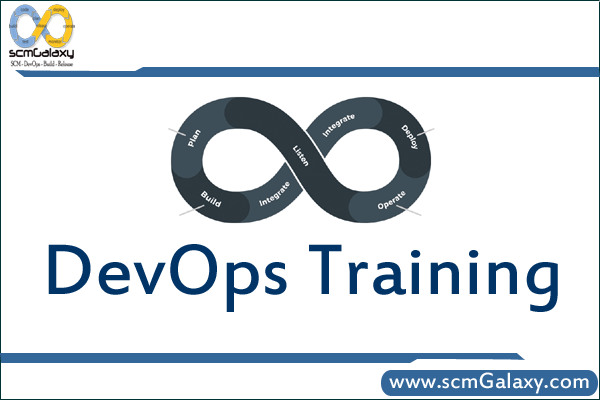
A typical learning path ties version control, CI, testing, packaging, deployment, and monitoring into one feedback loop.
flowchart LR
    A[Plan and code] --> B[Commit in Git]
    B --> C[Run Jenkins build]
    C --> D[Execute automated tests]
    D --> E[Package artifact]
    E --> F[Deploy to test environment]
    F --> G[Monitor logs and metrics]
    G --> H[Team feedback]
    H --> A
Sample hands-on commands used in beginner labs
The source emphasizes hands-on learning. The examples below are representative starter commands aligned with the listed toolset.
mkdir devops-demo
cd devops-demo
git init
echo "Hello DevOps" > app.txt
git add app.txt
git commit -m "Initial commit"Code language: PHP (php)
docker build -t devops-demo:1.0 .
docker run --rm devops-demo:1.0Code language: CSS (css)pipeline {
agent any
stages {
stage('Build') {
steps {
sh 'mvn clean package'
}
}
stage('Test') {
steps {
sh 'mvn test'
}
}
}
}Code language: JavaScript (javascript)Training format, fees, and schedule (as listed in original post)
Important: the details below are preserved from the source post and may have changed.
| Enrollment option | Included program | Fee in original post |
|---|---|---|
| With lifetime enrollment | DevOps + Build and Release | INR 30K |
| Without lifetime enrollment | DevOps + Build and Release | INR 25K |
Delivery mode and availability
| Mode | What the original post states | Reference |
|---|---|---|
| Online training | Presented as preferred; separate page explains advantages | Online training advantage page |
| Classroom workshop | Available in Bangalore, Hyderabad, Pune, Mumbai, and New Delhi | Classroom listing link |
- Published time slots: 7:00 AM to 8:30 AM IST
- Published time slots: 8:00 PM to 9:30 PM IST
- Calendar link: http://www.scmgalaxy.com/calender/
Course feature highlights from the source
- 30 hours of instructor-led online classes
- Hands-on delivery model
- Lifetime re-enrollment claim for future batches
- Access to recordings, presentations, sample code, and projects
- Cloud lab access described as 24×7
- Weekly assignments and scenario-based projects
- Dedicated interview preparation session
Enrollment and support resources
Use the original contact points below to verify current batches, curriculum, and commercial terms before enrolling.
- Email: info@scmGalaxy.com
- Phone (India): +91 7004835930
- Phone (India): +91 9939272785
- WhatsApp: +91 7004835930
- Skype: scmGalaxy
- Register: events/register/index.html
Additional links from the original post: Testimonials, FAQ, and Training calendar.
Common pitfalls when selecting DevOps training
- Choosing based on tool list only, without checking practical lab depth.
- Not validating whether schedule, instructors, and support commitments are still current.
- Assuming “lifetime” access terms without written confirmation.
- Ignoring role fit: foundations are useful, but advanced teams may need deeper specialization.
- Skipping a pre-enrollment check on syllabus updates and project scope.

I’m Rajesh Kumar, a DevOps, SRE, DevSecOps, Cloud, and Platform Engineering expert passionate about sharing practical knowledge, real-world experiences, and industry best practices. I have worked at Cotocus and regularly write about technology, travel, investing, health, product reviews, and digital marketing through my various platforms.
I publish technical articles at DevOps School, travel stories at Holiday Landmark, stock market insights at Stocks Mantra, health and fitness guidance at My Medic Plus, product reviews at TrueReviewNow, and SEO and digital marketing strategies at Wizbrand.
Find Trusted Cardiac Hospitals
Compare heart hospitals by city and services — all in one place.
Explore Hospitals