

I’m Rajesh Kumar, a DevOps, SRE, DevSecOps, Cloud, and Platform Engineering expert passionate about sharing practical knowledge, real-world experiences, and industry best practices. I have worked at Cotocus and regularly write about technology, travel, investing, health, product reviews, and digital marketing through my various platforms.
I publish technical articles at DevOps School, travel stories at Holiday Landmark, stock market insights at Stocks Mantra, health and fitness guidance at My Medic Plus, product reviews at TrueReviewNow, and SEO and digital marketing strategies at Wizbrand.
Find Trusted Cardiac Hospitals
Compare heart hospitals by city and services — all in one place.
Explore Hospitals
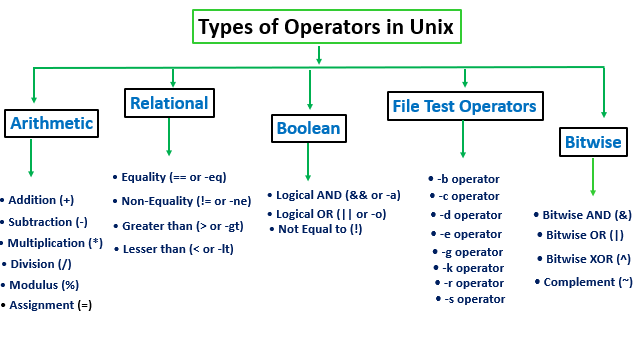
A practical detail that is often missed in shell scripting operators discussions is how operator behavior directly impacts reliability in real CI/CD and automation workflows, especially when scripts move beyond simple condition checks into production-grade logic. While operators like arithmetic (
-eq,-ne,-gt) and string comparisons (=,!=) seem straightforward, in real environments subtle differences in quoting, variable expansion, and empty value handling can easily lead to unexpected conditions and pipeline failures. Another commonly overlooked area is how logical operators (&&,||) are frequently used as lightweight control flow mechanisms, but without proper structure they can make scripts hard to read, debug, and maintain at scale. In production automation, incorrect operator usage can also introduce silent failure paths—especially when combined withset -eor conditional chaining—where certain commands are skipped or executed unintentionally. Additionally, file test operators (-f,-d,-s) become critical in deployment scripts, but are often used without proper validation of edge cases like permissions, symlinks, or race conditions in distributed systems. Ultimately, shell operators are not just syntax elements but foundational building blocks that determine correctness, safety, and predictability in automated infrastructure workflows.