Introduction to SQL
Structured Query Language (SQL) is a standard language used to manage, query, and manipulate relational databases. It is widely used in web applications, data analytics, and enterprise systems. SQL allows users to create, retrieve, update, and delete data efficiently. This guide provides a comprehensive overview of SQL with practical examples and explanations.
1. Basics of SQL
1.1 SQL Syntax
SQL follows a structured syntax. Below is an example of a basic SQL query:
SELECT column1, column2 FROM table_name WHERE condition;
SELECT– Retrieves data from a tableFROM– Specifies the tableWHERE– Filters records based on a condition
1.2 SQL Data Types
SQL provides several data types for defining table columns:
INT– Integer valuesVARCHAR(n)– Variable-length character stringTEXT– Large text valuesDATE– Date valuesBOOLEAN– True or false valuesDECIMAL(p,s)– Fixed precision numbers
1.3 Creating a Database and Tables
To create a database and tables, use the following commands:
CREATE DATABASE company_db;
USE company_db;

CREATE TABLE employees (
  id INT PRIMARY KEY,
  name VARCHAR(50),
  position VARCHAR(50),
  salary DECIMAL(10,2),
  hire_date DATE
);
Code language: PHP (php)
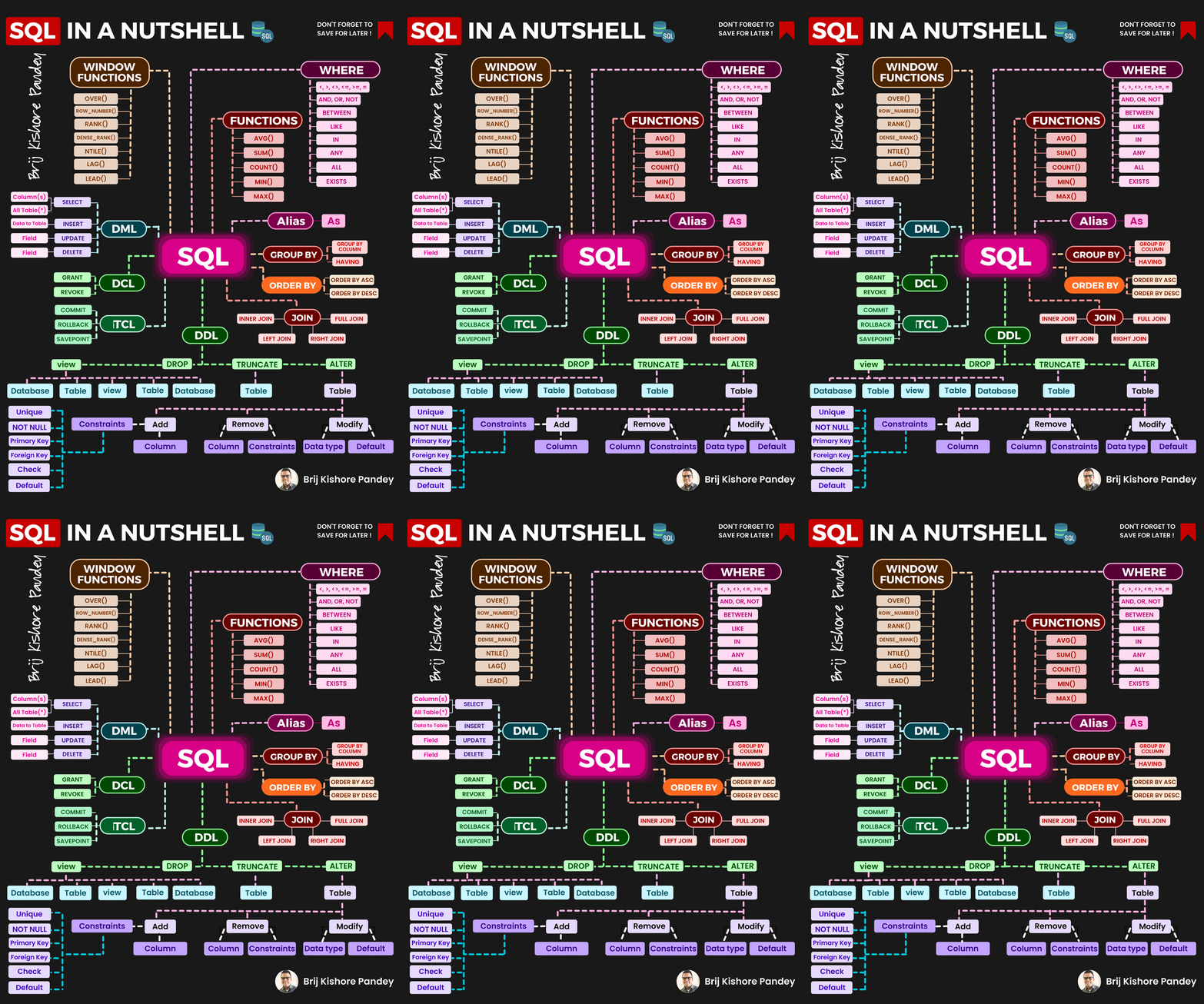
2. SQL Commands
SQL is divided into five major categories:
2.1 Data Query Language (DQL)
SELECT– Fetches data from tables
SELECT * FROM employees;
SELECT name, salary FROM employees WHERE position = 'Manager';
Code language: JavaScript (javascript)
2.2 Data Definition Language (DDL)
CREATE– Creates tables, views, and schemasALTER– Modifies existing structuresDROP– Deletes tables
ALTER TABLE employees ADD COLUMN department VARCHAR(50);
DROP TABLE employees;
2.3 Data Manipulation Language (DML)
INSERT– Adds recordsUPDATE– Modifies recordsDELETE– Removes records
INSERT INTO employees (id, name, position, salary, hire_date)
VALUES (1, 'John Doe', 'Manager', 50000, '2024-01-15');

UPDATE employees SET salary = 60000 WHERE id = 1;

DELETE FROM employees WHERE id = 1;
Code language: JavaScript (javascript)
2.4 Data Control Language (DCL)
GRANT– Gives user access rightsREVOKE– Removes access rights
GRANT SELECT ON employees TO user1;
REVOKE SELECT ON employees FROM user1;
2.5 Transaction Control Language (TCL)
COMMIT– Saves changesROLLBACK– Reverts changesSAVEPOINT– Sets a rollback point
BEGIN;
UPDATE employees SET salary = 65000 WHERE id = 2;
ROLLBACK;
3. Advanced SQL Concepts
3.1 Joins in SQL
Joins are used to combine rows from multiple tables.
INNER JOIN– Returns matching rowsLEFT JOIN– Returns all rows from the left table and matching rows from the rightRIGHT JOIN– Returns all rows from the right table and matching rows from the leftFULL OUTER JOIN– Returns all matching and non-matching rows
SELECT employees.name, departments.department_name
FROM employees
INNER JOIN departments ON employees.department_id = departments.id;
3.2 Subqueries and Nested Queries
A subquery is a query inside another query:
SELECT name FROM employees WHERE salary = (SELECT MAX(salary) FROM employees);
3.3 Indexing for Performance
Indexes speed up query execution:
CREATE INDEX idx_salary ON employees (salary);
3.4 Stored Procedures and Functions
Stored procedures allow pre-defined SQL logic to be stored:
CREATE PROCEDURE GetEmployee()
AS
BEGIN
    SELECT * FROM employees;
END;
Code language: PHP (php)
4. SQL Best Practices
- Use indexing for large datasets
- Normalize tables to reduce redundancy
- Use joins instead of subqueries where possible
- Optimize queries using
EXPLAIN ANALYZE - Regularly backup databases
5. SQL Real-World Examples
5.1 Employee Management System
SELECT name, salary FROM employees WHERE salary > 50000 ORDER BY salary DESC;
5.2 E-commerce Order Tracking
SELECT orders.order_id, customers.customer_name, orders.total_amount
FROM orders
JOIN customers ON orders.customer_id = customers.id;
5.3 Banking Transaction Logs
SELECT account_number, transaction_type, amount, transaction_date
FROM transactions
WHERE transaction_date BETWEEN '2024-01-01' AND '2024-12-31';
Code language: JavaScript (javascript)
Conclusion
SQL is a powerful language for managing relational databases efficiently. Mastering SQL allows professionals to extract insights, manipulate data, and optimize performance in database-driven applications. This guide provides an in-depth understanding of SQL concepts with examples to enhance learning.

I’m Rajesh Kumar, a DevOps, SRE, DevSecOps, Cloud, and Platform Engineering expert passionate about sharing practical knowledge, real-world experiences, and industry best practices. I have worked at Cotocus and regularly write about technology, travel, investing, health, product reviews, and digital marketing through my various platforms.
I publish technical articles at DevOps School, travel stories at Holiday Landmark, stock market insights at Stocks Mantra, health and fitness guidance at My Medic Plus, product reviews at TrueReviewNow, and SEO and digital marketing strategies at Wizbrand.
Find Trusted Cardiac Hospitals
Compare heart hospitals by city and services — all in one place.
Explore Hospitals