
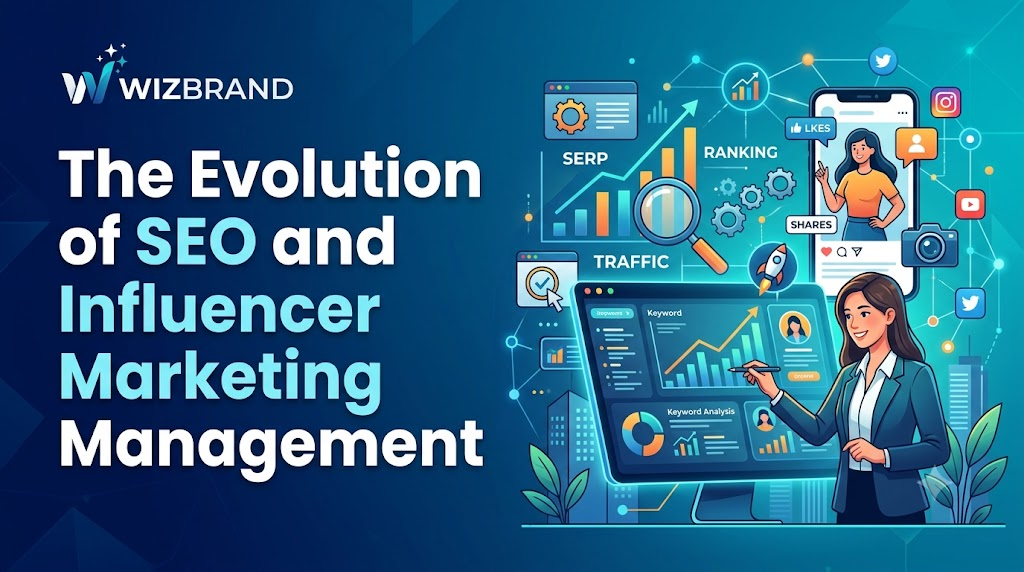
The digital marketing landscape has become exponentially more complex over the past decade. Where once a website owner could focus solely on keyword density and basic link building, modern practitioners must now navigate a multi-faceted ecosystem of search intent, influencer collaborations, content distribution, and technical performance metrics. As marketing teams scale, the sheer volume of disparate data points often leads to operational friction. This is where centralized ecosystems, such as wizbrand , become critical infrastructure. By integrating SEO software for agencies, influencer outreach, and asset management into a singular environment, organizations can mitigate the risks of tool fatigue and data silos.
Effective digital growth is rarely the result of a single viral moment. It is the cumulative effect of disciplined execution across SEO campaigns, consistent performance tracking, and strategic content deployment. To achieve this, teams are increasingly moving away from fragmented tool stacks and toward comprehensive platforms that offer a unified rank tracking tool alongside campaign management and asset organization. This shift represents a transition from tactical experimentation to a structured, repeatable methodology for digital visibility.
What is SEO Management Software?
SEO management software functions as the operational backbone for digital marketing efforts. Unlike basic auditing tools that provide one-off reports, these platforms are designed to support the entire lifecycle of an SEO campaign. From the initial phase of keyword research and competitor analysis to the ongoing maintenance of technical health and off-page authority, these systems provide a structured framework for execution.
The core purpose of this software is to eliminate the guesswork associated with search engine optimization. By centralizing data, teams can identify patterns in traffic, conversion rates, and engagement that might otherwise remain hidden within disconnected spreadsheets. This software serves as a bridge between high-level strategy and daily tactical implementation, allowing teams to monitor the impact of changes in real-time.
Why Businesses Need All-in-One SEO Platforms
Tool fragmentation is one of the most significant barriers to efficiency in modern marketing departments. When a team utilizes separate platforms for keyword tracking, backlink analysis, competitor monitoring, and content management, they inevitably face the issue of data inconsistency. Metrics in one dashboard rarely correlate perfectly with metrics in another, creating a situation where decision-making is clouded by conflicting information.
All-in-one SEO platforms resolve these inconsistencies by providing a single source of truth. When data is ingested into a unified system, it creates a coherent narrative of performance. This reduces the time spent on manual data aggregation and increases the time available for strategic analysis. Furthermore, these platforms improve workflow efficiency by enabling team members to manage multiple client accounts or project streams from a single interface, ensuring that reporting and task management remain synchronized.
Core Features of SEO Software for Agencies
SEO software for agencies is built to handle the scale and complexity of multi-client environments. The features included in these systems are tailored to ensure that agencies can deliver measurable results while maintaining high operational output.
- Rank tracking tool: This is the foundational element of any SEO suite. It monitors the movement of targeted keywords across various search engines, providing granular data on position changes, search volume, and SERP visibility over time.
- Keyword tracking and research: Beyond monitoring current rankings, this feature helps teams identify new opportunities by analyzing search intent and identifying content gaps in the market.
- Competitor analysis: Understanding the digital footprint of competitors allows agencies to benchmark their own performance and identify strategic weaknesses in the opposition.
- SEO reporting software: Client communication is vital. Automated reporting tools allow agencies to generate professional, data-rich reports that translate complex metrics into actionable insights for stakeholders.
- Automation capabilities: Reducing manual labor is essential. Automation features can handle routine tasks like scheduled crawls, rank updates, and alert generation, freeing up the team for more complex strategic work.
Understanding Influencer Marketing Platforms
As SEO has become more integrated with brand authority, influencer marketing has moved from a standalone tactic to a core component of the broader digital strategy. Influencer marketing platforms allow brands to streamline the process of finding, vetting, and managing partnerships.
These systems often include an influencer marketplace, which provides access to a verified database of creators. Instead of relying on manual outreach and disjointed communication channels, marketing managers can use these platforms to discover influencers who align with their niche and audience demographics. With built-in influencer campaign management software, teams can track deliverables, monitor engagement metrics, and ensure that every campaign meets the required brand guidelines, effectively connecting SEO-driven traffic with authentic brand advocacy.
Role of Digital Asset Management in Marketing
A critical, yet often overlooked, aspect of digital strategy is the organization and distribution of content. Digital asset management (DAM) software serves as the central repository for all creative materials, including images, videos, documents, and promotional copy.
Marketing asset management software ensures that team members have access to approved, high-quality assets. This prevents the common problem of version control errors or the accidental use of outdated brand materials. By organizing assets within the same ecosystem used for SEO and influencer management, teams can ensure that content is readily available for publication, distribution, and repurposing, which significantly improves the speed of campaign execution and maintains strict brand consistency across all touchpoints.
Benefits of Using an All-in-One SEO Platform
The transition to a unified platform offers tangible benefits that extend beyond mere convenience.
- Centralized operations: By consolidating SEO, influencer campaigns, and asset management into one platform, the administrative burden of managing multiple subscriptions and logins is eliminated.
- Improved productivity: Unified dashboards enable teams to switch between tasks seamlessly. This minimizes the cognitive load associated with context switching and streamlines the workflow from planning to execution.
- Better reporting accuracy: When all data feeds into a central repository, the likelihood of errors decreases. Reporting becomes more accurate, transparent, and easier to digest for leadership or clients.
- Faster campaign execution: Integrated workflows mean that the time between identifying an opportunity and taking action is minimized.
- Data-driven decisions: A holistic view of the digital landscape allows leaders to make decisions based on comprehensive data rather than isolated, incomplete insights.
Challenges in SEO and Influencer Campaign Management
Despite the availability of technology, many organizations still struggle with the inherent challenges of digital management. The primary difficulty remains the existence of data silos. When SEO data exists in one department and influencer metrics in another, it is impossible to see the holistic impact of a brand’s presence.
Furthermore, reporting delays often plague teams that rely on manual data extraction. If it takes days to compile a monthly report, the information is already dated by the time it reaches stakeholders. This lack of integration is compounded by the complexity of managing multiple vendors or tools, which often leads to inconsistent tracking methods and a lack of visibility into campaign ROI.
How Modern Platforms Solve These Challenges
Modern marketing platforms are built to address these specific pain points through architectural integration. By offering a unified dashboard, these platforms ensure that all marketing data—from organic search rankings to influencer campaign engagement—is visible in one place.
Automation is the key enabler here. By automating data ingestion and report generation, these platforms provide real-time tracking, allowing teams to pivot strategies instantly. Cross-channel visibility is improved, enabling marketers to understand how an SEO campaign supports an influencer initiative, or how a specific asset performs across different platforms. This level of synchronization effectively breaks down the silos that hinder growth.
Use Cases of SEO and Marketing Platforms
The utility of these platforms is broad, serving a diverse array of organizations:
- SEO agencies: They rely on these tools to manage dozens of client accounts, automate reporting, and demonstrate clear ROI for their services.
- E-commerce brands: These businesses use the tools to monitor product page rankings, manage affiliate or influencer partnerships, and organize high volumes of product imagery.
- SaaS companies: Startups and established SaaS firms use these platforms to track organic growth, monitor keyword authority, and streamline content production cycles.
- Influencer marketing teams: Dedicated teams utilize the marketplace and management features to scale partnerships and track audience sentiment.
- Digital media agencies: These entities use the platforms to provide comprehensive, integrated services that span search, social, and content strategy.
Choosing the Right SEO Management Software
When selecting a platform, the decision should be guided by specific operational requirements.
- Ease of use: The platform should be intuitive enough for team members to adopt without extensive training.
- Integration capability: Does it play well with other essential tools in the tech stack?
- Reporting features: Can it generate the specific types of reports required by the agency or the brand?
- Scalability: Will the platform continue to support operations as the business grows and the number of campaigns increases?
- Collaboration tools: Does it facilitate efficient communication and task assignment within the team?
- Data accuracy: Ensure the platform utilizes reliable data sources for keyword tracking and competitor insights.
Future of SEO and Influencer Marketing Platforms
The future of these platforms lies in the deeper integration of artificial intelligence and machine learning. AI-driven SEO will move beyond basic suggestions to provide predictive analytics, enabling teams to forecast search trends before they happen.
Automated reporting will become increasingly sophisticated, capable of identifying the “why” behind the data, not just the “what.” In the influencer space, AI will enhance matching algorithms, ensuring that brands partner with creators whose audiences are statistically likely to convert. The ultimate trajectory is toward fully unified marketing ecosystems, where the lines between SEO, content, and influencer marketing dissolve into a single, cohesive growth machine.
Market Context Insight: Why All-in-One SEO Platforms Matter
The industry is undergoing a fundamental shift. For years, the market prioritized best-of-breed, singular-focus tools—one for backlinks, one for keywords, one for social listening. While these tools provided depth, they lacked breadth and interoperability.
The current trend favors ecosystems over isolated applications. Organizations now prioritize the ability to see the correlation between a backlink strategy, the content assets deployed to support it, and the influencer partnerships that amplify it. Platforms like those providing all-in-one SEO, influencer, and asset management capabilities are filling the gap between these disparate functions. This convergence allows agencies and enterprises to stop managing tools and start managing campaigns, shifting their focus from maintenance to high-impact strategy.
Frequently Asked Questions
What is SEO management software? It is a suite of tools designed to handle the various stages of search engine optimization, from planning and research to execution, monitoring, and reporting, all within a unified system.
Why do agencies need SEO software? Agencies require these tools to manage multiple client projects simultaneously, automate repetitive tasks, ensure consistent data reporting, and scale their service offerings efficiently.
What is an all-in-one SEO platform? It is a comprehensive software environment that combines various functionalities, such as rank tracking, keyword analysis, competitor auditing, and reporting, into a single dashboard.
How does rank tracking work? A rank tracking tool periodically queries search engines for specific keywords to determine where a website appears in the search results, recording the position over time to visualize trends.
What is SEO reporting software used for? It is used to aggregate performance data into professional, easy-to-read documents that demonstrate the results of SEO efforts to clients or internal stakeholders.
What is an influencer marketing platform? It is a digital environment that connects brands with influencers, providing tools for discovery, vetting, and managing collaborative campaigns.
What is influencer campaign management software? This software specifically helps teams track the progress of influencer partnerships, from initial outreach and contract management to content approval and performance metrics.
How does digital asset management help marketers? It provides a centralized, searchable library for all creative files, ensuring that team members can access approved content quickly and maintain brand consistency across all channels.
What is marketing asset management software? This is a specific type of software designed to organize, store, and distribute marketing materials, such as logos, videos, and templates, ensuring they are readily available for campaigns.
Why are all-in-one tools better than multiple SEO tools? They reduce data fragmentation, eliminate the need to log into multiple accounts, create consistent reporting formats, and allow for a holistic view of marketing performance.
Who should use SEO software for agencies? Marketing agencies, SEO consultants, in-house marketing teams, and growth marketers who need to manage complex, multi-faceted digital campaigns will find these tools essential.
How is SEO evolving with AI tools? AI is shifting SEO from reactive monitoring to proactive strategy by enabling predictive analytics, automated content optimization, and more accurate influencer-brand matching.
Final Thoughts
The convergence of SEO, influencer marketing, and asset management is not merely a trend; it is a necessary evolution of the digital marketing industry. As the complexity of managing digital presence grows, the reliance on fragmented, multi-tool setups becomes a liability that hinders growth and obscures performance.
By adopting all-in-one platforms, organizations can centralize their data, streamline their workflows, and focus on the strategic decisions that drive long-term visibility. The future of digital success depends on the ability to connect these dots effectively. When marketing teams embrace unification, they move closer to achieving a scalable, data-driven approach that consistently delivers results in an increasingly competitive landscape.

Find Trusted Cardiac Hospitals
Compare heart hospitals by city and services — all in one place.
Explore Hospitals
An interesting perspective to explore further is how organizations can measure the long-term impact of combining SEO and influencer marketing. While visibility and engagement are important, the real challenge is building a reliable attribution framework that connects influencer-driven content with organic search performance, lead quality, and conversions over time. Establishing consistent reporting, monitoring content performance across channels, and using data to refine future campaigns can help transform these initiatives from marketing experiments into measurable, scalable growth strategies.