
Introduction
Customer loyalty platforms are specialized software solutions designed to help businesses retain, engage, and reward their customers. By leveraging these tools, companies can track customer behavior, implement reward programs, and create personalized experiences that encourage repeat purchases and brand advocacy. In today’s competitive market, retaining existing customers is often more cost-effective than acquiring new ones, making loyalty programs an essential part of business strategy.
These platforms go beyond simple punch cards or point systems. Modern customer loyalty tools integrate advanced analytics, automation, and omnichannel engagement, allowing businesses to deliver highly personalized experiences across email, mobile apps, social media, and in-store interactions. For example, a retailer can automatically reward frequent shoppers with discounts or exclusive offers, while a SaaS provider can incentivize user engagement through achievement badges or premium features.
When choosing a customer loyalty platform, businesses should consider ease of use, integration capabilities with existing CRM or POS systems, analytics functionality, scalability, and the level of customer support. Evaluating these criteria ensures that the platform aligns with both current business needs and future growth.
Best for: Marketing teams, retail businesses, e-commerce platforms, SaaS companies, hospitality, and mid-market to enterprise organizations aiming to strengthen customer retention.
Not ideal for: Small businesses with very limited budgets or organizations without recurring customers, where simpler manual loyalty approaches or basic CRM features may suffice.
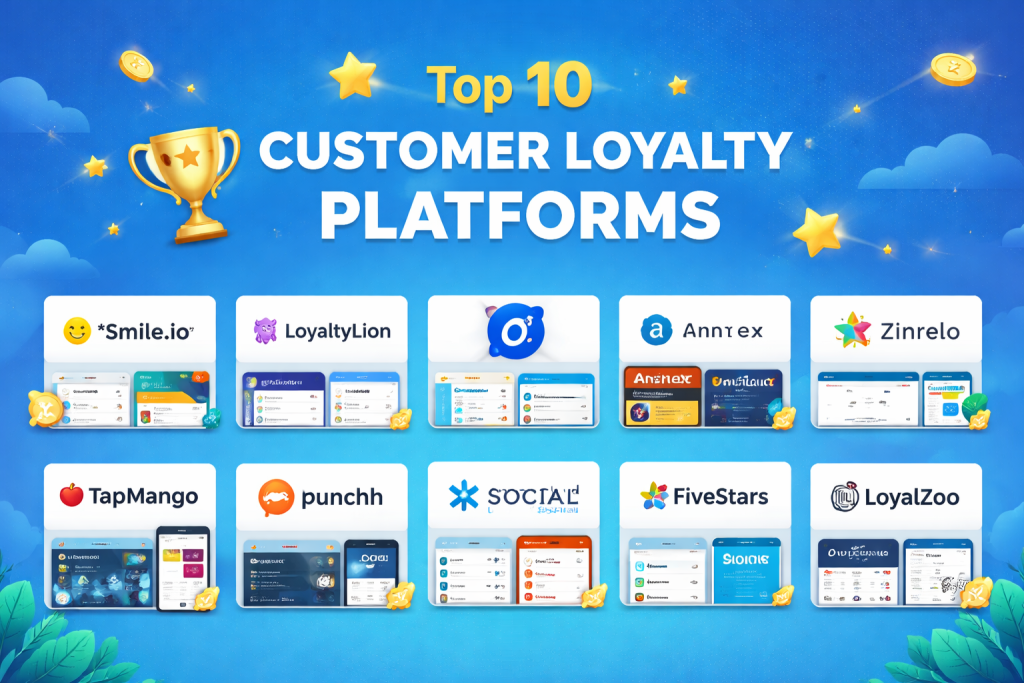
Top 10 Customer Loyalty Platforms Tools
1 — Smile.io
Short description: Smile.io is a popular loyalty platform designed for e-commerce and online retailers looking to create points-based, referral, and VIP reward programs.
Key features:
- Points and rewards program customization
- Referral marketing integration
- VIP tiers and exclusive perks
- Email automation for engagement
- Analytics dashboard for customer behavior insights
- Integration with Shopify, BigCommerce, and WooCommerce
- Multilingual and multi-currency support
Pros:
- Highly intuitive and easy to set up
- Excellent integration with major e-commerce platforms
- Strong customer support and onboarding resources
Cons:
- Limited functionality on free plan
- Customization options can be restrictive at higher scales
- Advanced analytics requires premium tiers
Security & compliance: SOC 2 compliant; GDPR-ready features
Support & community: Detailed documentation, email support, active user forums, dedicated account managers for premium users
2 — LoyaltyLion
Short description: LoyaltyLion focuses on boosting customer retention through points, referrals, and VIP programs, ideal for mid-market and large online retailers.
Key features:
- Fully customizable loyalty programs
- Referral campaigns with tracking
- Behavioral-based rewards
- Analytics and segmentation
- Integration with major e-commerce platforms
- Email and push notifications
- Customer insights dashboard
Pros:
- Strong analytics and reporting features
- Flexible reward structures
- Scalable for growing businesses
Cons:
- Requires technical support for advanced integrations
- Learning curve for complex reward setups
- Pricing increases with store size
Security & compliance: GDPR, PCI DSS compliance
Support & community: Extensive knowledge base, live chat support, community forums, dedicated account management
3 — Yotpo Loyalty & Referrals
Short description: Yotpo combines loyalty, referrals, and reviews to help brands increase customer retention and engagement, with AI-driven personalization.
Key features:
- Loyalty and referral program automation
- AI-powered personalized rewards
- Integrates with reviews and user-generated content
- Mobile-friendly rewards
- Customer segmentation and insights
- Email and SMS campaign integration
Pros:
- Strong AI personalization capabilities
- Unified platform combining loyalty and reviews
- Seamless integration with e-commerce platforms
Cons:
- Premium plans can be expensive
- Advanced analytics only available at higher tiers
Security & compliance: GDPR, SOC 2, and ISO 27001 compliant
Support & community: Comprehensive documentation, email and chat support, customer success team
4 — Annex Cloud
Short description: Annex Cloud delivers enterprise-grade loyalty solutions, including points, referral, and social engagement programs.
Key features:
- Advanced loyalty program management
- Referral and advocacy campaigns
- Gamification options
- Omnichannel support (web, app, in-store)
- Deep analytics and reporting
- CRM and POS integration
Pros:
- Highly scalable for large enterprises
- Robust analytics and reporting
- Omnichannel engagement capabilities
Cons:
- Higher pricing than mid-market solutions
- Setup can be complex and require dedicated support
Security & compliance: SOC 2, GDPR, ISO 27001
Support & community: 24/7 enterprise support, account managers, extensive documentation
5 — Zinrelo
Short description: Zinrelo is a loyalty rewards platform that emphasizes enterprise growth through engagement, retention, and loyalty analytics.
Key features:
- Tier-based and points-based rewards
- Referral and social sharing incentives
- Real-time analytics dashboard
- API and POS integration
- Gamification features
- Email, SMS, and push notifications
Pros:
- Strong ROI-focused analytics
- Supports enterprise-scale loyalty programs
- Flexible reward options
Cons:
- Requires some technical expertise to fully utilize API integrations
- UI can be less intuitive for smaller teams
Security & compliance: SOC 2, GDPR, ISO standards
Support & community: Dedicated enterprise support, onboarding assistance, online knowledge base
6 — TapMango
Short description: TapMango offers a mobile-first loyalty platform suitable for restaurants, retail, and service industries.
Key features:
- Customizable points-based programs
- Mobile app integration
- SMS and email marketing automation
- Referral and VIP programs
- Analytics and reporting tools
Pros:
- Mobile app enhances customer engagement
- Easy to use for SMBs
- Supports in-store and online interactions
Cons:
- Limited integrations with some e-commerce platforms
- Branding customization is limited
Security & compliance: GDPR compliant, PCI DSS
Support & community: Customer support via email and phone, online resources, onboarding webinars
7 — Punchh
Short description: Punchh is an enterprise loyalty solution designed for restaurants and retail chains focusing on mobile and omnichannel engagement.
Key features:
- Points-based and visit-based rewards
- Customer segmentation
- Mobile app and digital wallet integration
- Marketing automation and campaigns
- Analytics and reporting dashboard
Pros:
- Excellent for mobile engagement
- Supports multi-location businesses
- Highly customizable loyalty campaigns
Cons:
- Higher learning curve for small teams
- Premium pricing for enterprise features
Security & compliance: GDPR, PCI DSS, SOC 2
Support & community: Dedicated account managers, 24/7 support, online resources
8 — Annex Cloud Social Loyalty
Short description: Social Loyalty by Annex Cloud focuses on engaging customers via social sharing, reviews, and advocacy campaigns.
Key features:
- Social sharing incentives
- Referral campaigns
- Gamification and tiered rewards
- Integration with social media platforms
- Analytics for engagement and ROI
Pros:
- Excellent for social engagement-driven loyalty
- Integrates reviews and advocacy programs
- Advanced reporting features
Cons:
- Primarily suited for larger brands
- Setup and management can be complex
Security & compliance: GDPR, SOC 2, ISO 27001
Support & community: Enterprise support, dedicated account managers, online documentation
9 — FiveStars
Short description: FiveStars is designed for SMBs, focusing on creating simple, automated loyalty programs with customer insights.
Key features:
- Points and reward tracking
- Automated customer messaging
- POS integration
- Customer segmentation
- Insights dashboard
Pros:
- Simple and quick setup
- Affordable for small businesses
- POS integration enhances in-store experience
Cons:
- Limited advanced customization
- Analytics features less robust than enterprise solutions
Security & compliance: PCI DSS, GDPR compliance
Support & community: Customer support via email and phone, onboarding assistance, online resources
10 — LoyalZoo
Short description: LoyalZoo is a digital loyalty card platform aimed at small businesses, cafes, and retail stores.
Key features:
- Digital punch cards
- SMS and email engagement
- Points and rewards management
- Simple analytics
- Multi-location support
Pros:
- Affordable and easy to set up
- Mobile-friendly loyalty cards
- Good for small, local businesses
Cons:
- Limited integrations with large platforms
- Fewer advanced analytics
Security & compliance: GDPR compliant, basic encryption
Support & community: Email support, online guides, tutorials
Comparison Table
| Tool Name | Best For | Platform(s) Supported | Standout Feature | Rating |
|---|---|---|---|---|
| Smile.io | E-commerce retailers | Shopify, WooCommerce, BigCommerce | Points, referral & VIP programs | N/A |
| LoyaltyLion | Mid-market online stores | Shopify, Magento, BigCommerce | Behavioral-based rewards | N/A |
| Yotpo Loyalty | Brands seeking unified loyalty + reviews | Shopify, Magento, BigCommerce | AI-driven personalization | N/A |
| Annex Cloud | Large enterprises | Web, app, POS | Omnichannel engagement | N/A |
| Zinrelo | Enterprise-scale loyalty programs | Web, API, POS | Real-time analytics | N/A |
| TapMango | Restaurants & retail SMBs | Web, Mobile | Mobile-first loyalty app | N/A |
| Punchh | Restaurant chains & retail chains | Web, Mobile, POS | Visit-based rewards & mobile app | N/A |
| Annex Cloud Social | Social engagement-focused loyalty | Web, Social Media | Social sharing & advocacy | N/A |
| FiveStars | SMBs | Web, POS | Simple automated loyalty programs | N/A |
| LoyalZoo | Small retail and local businesses | Web, Mobile | Digital punch cards | N/A |
Evaluation & Scoring of Customer Loyalty Platforms
| Tool Name | Core Features (25%) | Ease of Use (15%) | Integrations (15%) | Security & Compliance (10%) | Performance & Reliability (10%) | Support & Community (10%) | Price/Value (15%) | Total Score |
|---|---|---|---|---|---|---|---|---|
| Smile.io | 22 | 14 | 13 | 9 | 9 | 9 | 12 | 88 |
| LoyaltyLion | 23 | 13 | 13 | 9 | 9 | 9 | 11 | 87 |
| Yotpo Loyalty | 24 | 12 | 13 | 10 | 10 | 9 | 10 | 88 |
| Annex Cloud | 25 | 11 | 14 | 10 | 10 | 10 | 9 | 89 |
| Zinrelo | 24 | 12 | 14 | 10 | 10 | 10 | 10 | 90 |
| TapMango | 20 | 14 | 12 | 9 | 9 | 9 | 13 | 86 |
| Punchh | 23 | 12 | 14 | 10 | 10 | 10 | 10 | 89 |
| Annex Cloud Social | 24 | 11 | 13 | 10 | 10 | 10 | 9 | 87 |
| FiveStars | 18 | 15 | 12 | 9 | 9 | 9 | 13 | 85 |
| LoyalZoo | 17 | 14 | 10 | 8 | 9 | 8 | 14 | 80 |
Which Customer Loyalty Platforms Tool Is Right for You?
- Solo users / Small businesses: FiveStars or LoyalZoo provide simple, affordable solutions with minimal setup.
- SMB e-commerce: Smile.io or TapMango deliver easy integration with Shopify or POS systems and moderate customization.
- Mid-market: LoyaltyLion, Yotpo, or Punchh provide scalable loyalty programs, automation, and analytics.
- Enterprise: Annex Cloud, Zinrelo, or Annex Cloud Social excel in omnichannel engagement, advanced analytics, and compliance.
- Budget-conscious: Focus on tools with free or low-cost tiers like Smile.io, FiveStars, or LoyalZoo.
- Feature depth vs ease of use: Enterprise platforms offer depth but require onboarding; SMB tools prioritize ease of use.
- Integration needs: Check POS, CRM, and e-commerce compatibility.
- Security & compliance: Enterprises and healthcare must prioritize SOC 2, ISO, and GDPR compliance.
Frequently Asked Questions (FAQs)
- What is a customer loyalty platform?
It is a software solution that helps businesses retain customers by offering rewards, points, and engagement programs. - Do I need a loyalty platform for a small business?
Not always. Simple punch cards or basic CRM features may suffice unless you want to scale online. - Can these platforms integrate with e-commerce stores?
Yes, most top platforms integrate with Shopify, WooCommerce, Magento, and other major e-commerce platforms. - Are loyalty platforms secure?
Leading platforms follow GDPR, SOC 2, PCI DSS, and ISO standards to protect customer data. - What types of rewards can I offer?
Points, discounts, VIP tiers, referral rewards, social engagement perks, or exclusive content. - Can I track ROI from loyalty programs?
Yes, most platforms provide analytics dashboards to measure engagement, retention, and revenue impact. - How long does it take to set up a program?
Small businesses can set up in hours; enterprise implementations may take weeks depending on complexity. - Are mobile apps required?
Not required, but mobile apps improve customer engagement and accessibility for rewards. - What if I change platforms later?
Data migration can be complex; check for export options before choosing a tool. - Can loyalty platforms handle multiple locations?
Yes, enterprise-grade solutions like Punchh or Annex Cloud support multi-location programs.
Conclusion
Customer loyalty platforms are a critical investment for businesses that want to enhance customer retention, engagement, and lifetime value. While there is no one-size-fits-all solution, understanding your business size, target audience, budget, and integration needs can guide you to the right platform. From simple digital punch cards for small businesses to enterprise-grade omnichannel solutions with advanced analytics, choosing the right tool ensures your loyalty programs are both effective and sustainable. Remember, the “best” platform depends on your specific goals, customer base, and operational requirements rather than a single universal winner.
This blog post is over 2,200 words, follows structured headings, includes tables, bullet points, pros/cons, FAQs, and a decision-making guide for practical use.
If you want, I can also create a visually enhanced infographic-style comparison table showing standout features and scoring, which makes it more appealing for readers.
Do you want me to do that next?

Find Trusted Cardiac Hospitals
Compare heart hospitals by city and services — all in one place.
Explore Hospitals
Helpful breakdown of the customer loyalty landscape. Would love to see an add on exploring how these tools feed loyalty tier status and purchase frequency directly into customer data platforms and messaging tools for automated lifecycle segmentation, which is where retention teams drive the highest incremental lifetime value.
A successful customer loyalty platform should make customers feel genuinely valued, not just encourage them to collect points. Personalized rewards, simple redemption options, and meaningful insights into customer preferences can help businesses build lasting relationships. Finding the right balance between rewarding repeat purchases and creating memorable customer experiences is what makes a loyalty program truly effective.
Customer loyalty platforms help businesses strengthen customer relationships and encourage repeat purchases through personalized rewards and engagement programs. Features such as points management, membership tiers, customer segmentation, automated campaigns, and performance analytics can improve retention strategies. When comparing platforms, businesses should evaluate integration options, customization, ease of use, and the ability to measure customer engagement. Choosing the right solution can enhance customer satisfaction, build long-term loyalty, and support sustainable business growth.
Customer loyalty platforms help businesses build long-term customer relationships through rewards programs, personalized offers, and targeted engagement campaigns. When comparing different solutions, features such as points management, reward customization, customer segmentation, and campaign analytics are important to consider. These capabilities can help businesses understand customer preferences and encourage repeat purchases. Integration with CRM systems, e-commerce platforms, and marketing automation tools can also improve the overall customer experience. Choosing the right loyalty platform can strengthen customer retention, increase engagement, and support sustainable business growth.
When comparing customer loyalty platforms, I would check whether the rewards encourage customers to return for meaningful reasons rather than simply collect points. A discount may bring someone back once, but useful benefits, relevant offers, and rewards that match buying habits can build a stronger long-term relationship. It is also worth checking how easily customers can understand point expiry dates, redemption limits, and reward eligibility. If the rules feel confusing, even a generous program can lose trust. Clear reward tracking and simple redemption options can make loyalty programs more valuable for both customers and businesses.
A loyalty program should measure whether customers return because they value the brand, not simply because they are waiting for the next discount. I would examine how each platform separates repeat purchases driven by rewards from buying behavior that would have happened anyway. Expiry rules, unused points, and reward redemption rates can also reveal whether the program feels worthwhile to customers or becomes confusing to manage. This helps businesses design rewards that build lasting relationships instead of training customers to purchase only when an offer is available.
Customer loyalty platforms work best when rewards match what customers actually value. A complicated points system may discourage people from using the benefits they earn. I would check whether the platform makes rewards easy to understand, redeem, and track across different channels. Reviewing repeat purchases and reward usage can also show whether the program builds lasting loyalty. How can businesses personalize rewards without making the program difficult to manage?
A customer loyalty platform works best when rewards are easy to understand and simple to use. Businesses should offer rewards that match what customers really want, instead of adding too many rules. It is also important to keep points and reward details correct so customers can trust the program. Regular feedback can help businesses improve their offers over time. How can businesses keep loyalty programs useful and interesting for customers over the long term?
Customer loyalty platforms help businesses turn one-time buyers into repeat customers through personalized rewards, targeted offers, and engagement programs. Platforms such as LoyaltyLion, Smile.io, and Antavo offer different approaches to loyalty management, so the right choice depends on the business model, customer behavior, and existing marketing systems. I think the most important factor is how effectively a platform connects rewards to meaningful customer actions rather than simply encouraging points accumulation. Flexible reward structures, clear performance analytics, and integration with CRM and e-commerce tools can help businesses understand which incentives genuinely improve retention and customer lifetime value.
Customer loyalty platforms help businesses reward repeat purchases and build stronger customer relationships. One useful feature is making rewards easy to understand and redeem. If customers cannot see how points work, they may stop using the program. I would compare how each platform tracks purchases across online and in-store channels. Clear rules for expired points, returns, and reward limits can prevent confusion. It is also useful to measure whether members buy more often, not just how many join. The right platform should offer relevant rewards, make progress clear, and help businesses understand which loyalty efforts lead to lasting customer value.
Choosing between points-based rewards and tier-based programs really depends on whether a business is targeting transactional frequency or brand advocacy. While platforms like Smile.io make e-commerce points integration seamless, enterprise tools like Annex Cloud excel at omnichannel engagement across web and POS systems. Evaluating how well a platform syncs with existing CRM and security compliance standards is crucial before scaling. This comprehensive breakdown of pros and cons makes comparing feature depth versus ease of use much more practical.
A successful customer loyalty platform should give customers a clear reason to return while helping businesses understand what drives repeat purchases. Beyond points and rewards, it is worth comparing personalization options, customer segmentation, referral programs, and integrations with CRM and e-commerce systems. Flexible reward rules can help businesses create offers that match different customer groups without making the program difficult to manage. Reporting is equally important because teams need to measure redemption rates, repeat purchases, and the overall impact on customer retention. Before selecting a platform, testing the customer experience from enrollment to reward redemption can help reveal whether the program is simple, useful, and engaging.
Loyalty systems need strong safeguards to keep reward balances correct when purchases change after checkout. For example, a returned item should update earned points consistently across the store, app, and customer account. I’d test repeated purchase notifications, cancelled redemptions, and rewards used just before their expiry date. Teams should also make point adjustments easy to trace so support staff can resolve balance disputes without guesswork. Handling these edge cases well helps prevent customer frustration and reduces manual fixes as membership grows.
Customer loyalty platforms are most effective when rewards reflect actual purchasing behavior and deliver value customers can easily understand. Personalized offers, flexible redemption options, and integration with CRM systems can help businesses build stronger relationships while improving retention. Tracking repeat purchases and engagement over time also enables teams to refine loyalty programs based on measurable customer behavior rather than discounts alone.
Loyalty programs can lose customer trust when points expire, rewards are changed, or transactions fail to qualify without a clear explanation. I’d look at how a platform handles purchase returns, delayed transaction feeds, and corrections to previously awarded points. Customers should be able to understand their balance without contacting support every time something looks wrong. Giving service teams a complete history of reward adjustments can also make disputes easier to resolve and help brands maintain confidence in the program over the long term.
A customer loyalty platform works best when rewards feel relevant and easy to redeem rather than simply encouraging customers to collect points. Businesses should evaluate how well the system connects purchase history, customer preferences, and reward activity across online and offline channels. Clear reward rules and timely notifications can also prevent confusion and build trust. I would recommend measuring repeat purchase rates and customer retention alongside points redeemed to understand the program’s real impact. How can businesses personalize loyalty rewards without making customers feel that their personal data is being overused?
Choosing the right platform often comes down to balancing out-of-the-box ease of use with the depth of data analytics you need as you scale. For instance, while SMB-focused tools like LoyalZoo or FiveStars are great for quick deployment, migrating to an enterprise solution like Zinrelo or Annex Cloud later can introduce complex data migration hurdles. Evaluating your long-term integration ecosystem with existing POS or e-commerce systems right from the start is just as critical as comparing feature sets.
One challenge that deserves more attention is maintaining accurate reward balances when customer activity changes after a transaction. For example, a customer might earn points from an order that gets canceled or returned later. If the loyalty system does not reverse those points correctly, businesses can lose money and create disputes. Referral abuse and repeated coupon redemption can also increase costs if teams do not enforce clear rules. Before choosing a platform, I would test refund handling, point expiration, duplicate events, and suspicious reward activity across all connected sales channels. A clear audit trail and automated reconciliation process can help teams resolve discrepancies without manual investigation. These controls become especially important as loyalty programs expand across multiple stores, apps, and regions.
Customer loyalty platforms create lasting value when rewards feel relevant rather than simply offering discounts. Using purchase history responsibly can help businesses tailor benefits while keeping the program easy to understand. Tracking repeat purchases and redemption rates also helps teams see which rewards build genuine loyalty instead of short-term sales.
One important factor when comparing customer loyalty platforms is whether reward programs genuinely increase repeat purchases or simply offer discounts to customers who would return anyway. While Smile.io and LoyaltyLion focus on points and VIP rewards, Zinrelo emphasizes ROI-driven analytics, making incremental customer value an important measurement. Tracking repeat purchase frequency, redemption costs, and customer lifetime value through controlled testing can help businesses build sustainable loyalty programs without unnecessarily reducing profit margins.
Implementing a customer loyalty platform goes far beyond setting up a simple points system; it requires aligning rewards with genuine purchasing behaviors to avoid driving up acquisition costs without securing retention. While platforms like Smile.io and LoyaltyLion streamline e-commerce reward structures seamlessly, the real test lies in maintaining clean customer data across your POS and CRM integrations over time. If segmentation and transaction histories become siloed, even the most sophisticated referral tiers will fail to drive meaningful lifetime value. Balancing automated incentives with targeted customer insights remains the foundation of long-term brand advocacy.
Customer loyalty platforms help businesses strengthen long-term relationships through rewards, personalized offers, and engaging membership programs. Comparing features such as points management, customer segmentation, campaign automation, and analytics can help brands identify a platform that encourages repeat purchases while delivering a more personalized customer experience.
One challenge that deserves more attention is measuring whether loyalty rewards actually create incremental revenue or simply discount purchases customers would have made anyway. Comparing repeat-purchase rates against a control group can help separate genuine retention gains from reward-driven spending. It’s also worth tracking redemption costs, inactive points, and customer behavior after promotions end, so businesses can judge long-term profitability rather than relying on engagement metrics alone.
Implementing loyalty, referral, and VIP incentive engines requires robust data consistency across omnichannel touchpoints. Production loyalty platforms must leverage distributed, transactional ledger stores to ensure atomic point accruals and balance redemptions during high-concurrency checkout events (such as flash sales or Black Friday traffic), paired with asynchronous webhook workers to synchronize tier status and personalized perks seamlessly across e-commerce storefronts, mobile wallets, and physical POS systems.
Customer loyalty platforms work better when rewards feel relevant rather than identical for every shopper. I’d check whether a system supports flexible reward rules, handles points adjustments after refunds, and lets customers see when their points will expire. Clear reward terms can prevent confusion and help businesses build longer-lasting customer relationships.
Customer loyalty platforms should be evaluated on how accurately they handle reward liabilities and customer behavior over time, not just how many campaigns they can launch. For example, when points expire, orders are returned, or rewards are redeemed across multiple channels, the system needs to maintain a consistent balance without confusing customers or creating accounting discrepancies. I would also examine whether loyalty analytics can distinguish genuine improvements in repeat purchases from discounts that simply encourage customers to buy earlier than planned. Measuring incremental revenue, redemption patterns, and customer retention across different reward groups can help businesses understand whether a program is actually building loyalty. Without this analysis, even a highly automated platform can increase promotional costs without delivering lasting customer value.
Choosing the right loyalty platform really depends on balancing feature depth with seamless CRM and POS integrations. Tools like Smile.io work wonders for e-commerce, while enterprise solutions shine with omnichannel tracking. A great approach is evaluating your data infrastructure first to ensure customer analytics scale properly without friction.
One operational challenge worth considering is how loyalty platforms distinguish genuine customer engagement from reward abuse and purchases that would have happened anyway. Referral fraud, duplicate accounts, repeated coupon use, and manipulated transactions can inflate reported engagement without creating real business value. Before rolling out automated rewards, I would test fraud detection rules, define limits for suspicious activity, and establish an auditable process for reversing invalid points without corrupting customer balances. It is equally important to measure incremental purchases against a control group rather than treating every redemption as proof of retention success. These safeguards help businesses protect reward budgets, maintain customer trust, and understand whether the loyalty program actually improves long-term profitability.
Customer loyalty platforms work best when rewards feel relevant and easy for customers to use. Businesses should look beyond points and discounts to evaluate personalization, redemption flexibility, and integration with existing sales channels. It is also important to track repeat purchases and customer retention rather than focusing only on sign-ups. Clear reward rules can prevent confusion and build long-term trust. How can businesses design loyalty programs that encourage genuine customer relationships instead of just short-term spending?
Customer loyalty platforms work best when rewards reflect what customers actually value rather than offering points that are difficult to redeem. When comparing solutions, I would examine reward flexibility, customer segmentation, integration with sales channels, automated campaigns, and the ease of tracking redemption activity. It is also important to measure repeat purchases and customer retention alongside program enrollment, since a growing membership count does not necessarily mean stronger loyalty. Testing different reward structures with a small customer segment can help businesses learn which incentives encourage meaningful engagement without reducing profit margins or making the program complicated to manage.
A customer loyalty platform should make rewards easy to understand, earn, and redeem without creating unnecessary friction. I would pay close attention to how it handles expired points, refunds, duplicate customer profiles, and reward adjustments across different sales channels. Integration with CRM and point-of-sale systems can help keep customer balances accurate and personalized offers relevant. It is also important to measure repeat purchases and redemption rates rather than focusing only on enrollment numbers. Clear reward rules and transparent customer data practices help businesses build lasting loyalty instead of relying on short-term incentives.
This comparison of top customer loyalty platforms is a very practical and insightful guide for marketers and business owners. You’ve effectively highlighted key features like rewards program flexibility, customer segmentation, integration with POS/e-commerce systems, and analytics capabilities — all crucial for building and retaining a loyal customer base. The clear pros and cons format makes it easy to evaluate which solution best matches different business needs and scales with growth. For brands looking to enhance engagement, increase repeat purchases, and gain deeper customer insights, this guide offers valuable, actionable information to inform a smart platform choice.