
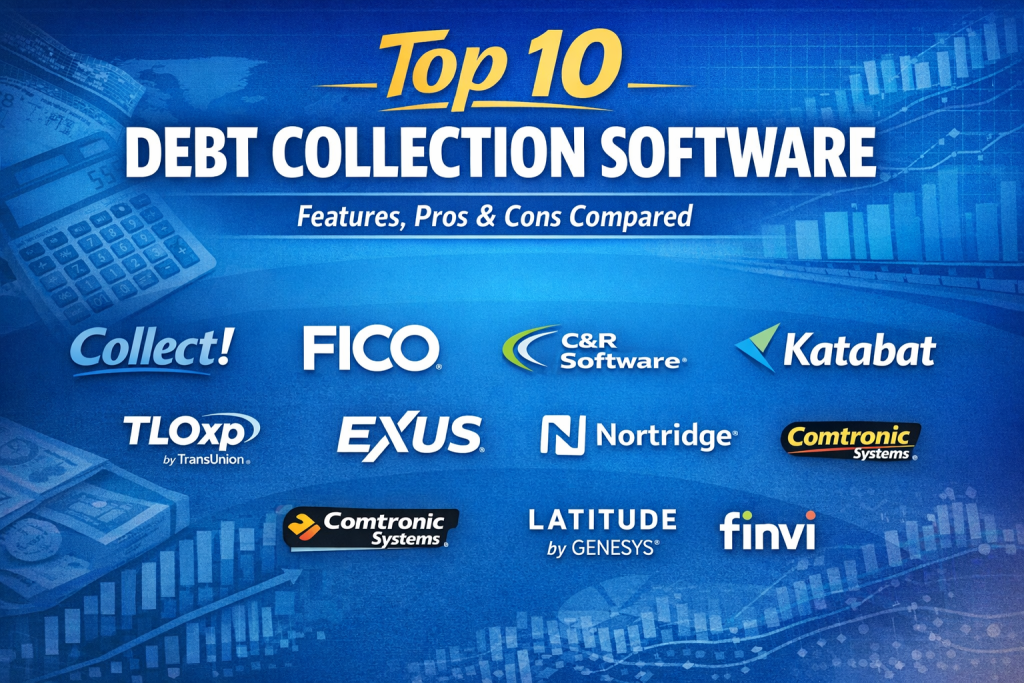
Introduction
Debt Collection Software is a specialized technology solution designed to help organizations manage, automate, and optimize the process of recovering overdue payments. Instead of relying on spreadsheets, manual follow-ups, or fragmented communication channels, these platforms centralize debtor data, streamline outreach, track compliance, and provide real-time insights into collection performance.
In today’s environment of stricter regulations, rising consumer expectations, and growing portfolios of receivables, debt collection has become far more complex than simply making reminder calls. Modern debt collection software enables agencies and in-house teams to prioritize accounts, automate workflows, ensure legal compliance, and improve recovery rates while maintaining respectful, consistent communication with customers.
Key real-world use cases include:
- Collection agencies managing thousands of consumer or commercial accounts
- Banks and lenders handling delinquent loans and credit products
- Utilities, telecoms, and healthcare providers recovering unpaid bills
- Enterprises managing accounts receivable at scale
When choosing a debt collection software, buyers should evaluate:
- Depth of collection and case management features
- Ease of use for agents and managers
- Automation and analytics capabilities
- Integrations with CRM, accounting, and payment systems
- Security, compliance, and auditability
Best for:
Debt collection software is ideal for collection agencies, financial institutions, utilities, healthcare providers, and enterprises that handle recurring or high-volume receivables and need structured, compliant recovery processes.
Not ideal for:
Very small businesses or freelancers with only occasional overdue invoices may find these tools excessive and may be better served by basic invoicing or accounting solutions.
Top 10 Debt Collection Software Tools
1 — Collect!
Short description:
Collect! is a long-established debt collection system built for professional agencies managing consumer and commercial accounts.
Key features:
- Full lifecycle collection management
- Customizable workflows and scripts
- Advanced reporting and analytics
- Multi-account and multi-client support
- Legal and credit bureau reporting tools
- Flexible deployment options
Pros:
- Highly configurable for complex operations
- Proven reliability in large agencies
- Strong reporting depth
Cons:
- Interface feels dated to some users
- Setup and customization require expertise
Security & compliance:
Role-based access, encryption, audit trails, compliance tools (varies by deployment).
Support & community:
Detailed documentation, onboarding assistance, dedicated customer support.
2 — FICO Debt Manager
Short description:
FICO Debt Manager is an enterprise-grade platform focused on analytics-driven and compliant collections.
Key features:
- AI-driven segmentation and prioritization
- Omnichannel communication management
- Strategy simulation and optimization
- Regulatory compliance support
- Advanced analytics dashboards
- Enterprise scalability
Pros:
- Best-in-class analytics and decisioning
- Strong compliance focus
- Scales well for large portfolios
Cons:
- High cost of ownership
- Complex implementation
Security & compliance:
Enterprise-level security, encryption, audit logs, regulatory compliance frameworks.
Support & community:
Enterprise support, professional services, extensive documentation.
3 — C&R Software
Short description:
C&R Software provides collections and recoveries solutions tailored for financial institutions.
Key features:
- End-to-end collections and recoveries
- Workflow automation
- Customer engagement tools
- Advanced analytics
- Regulatory compliance support
- Integration with banking systems
Pros:
- Designed for regulated environments
- Strong workflow customization
- Robust analytics
Cons:
- Less suited for small agencies
- Longer deployment timelines
Security & compliance:
Strong governance, compliance reporting, enterprise security controls.
Support & community:
Dedicated account support and implementation services.
4 — Katabat
Short description:
Katabat is a modern, cloud-native collections platform with a strong digital-first approach.
Key features:
- Cloud-based architecture
- Digital self-service portals
- Workflow automation
- Advanced analytics and reporting
- API-first integrations
- Omnichannel engagement
Pros:
- Modern, user-friendly interface
- Strong digital engagement tools
- Flexible integrations
Cons:
- Premium pricing
- Best suited to mid-market and enterprise
Security & compliance:
Cloud security standards, encryption, audit logs, compliance tooling.
Support & community:
Onboarding support, responsive customer service, growing user community.
5 — TLOxp Collections
Short description:
TransUnion’s TLOxp Collections combines data intelligence with collection workflows.
Key features:
- Skip tracing and data enrichment
- Account segmentation
- Workflow automation
- Compliance tracking
- Reporting and dashboards
- Integration with credit data
Pros:
- Strong data accuracy
- Powerful skip tracing
- Trusted data provider
Cons:
- Heavily data-centric
- Interface can feel complex
Security & compliance:
Data security controls, compliance monitoring, audit logs.
Support & community:
Documentation, enterprise support, training resources.
6 — Exus Collections
Short description:
EXUS Collections is designed for banks and lenders managing high-volume delinquent accounts.
Key features:
- Advanced case management
- Strategy and workflow configuration
- Digital engagement channels
- Performance analytics
- Regulatory compliance support
- Scalable architecture
Pros:
- Strong enterprise focus
- Highly configurable strategies
- Reliable performance
Cons:
- Requires skilled implementation teams
- Less intuitive for small teams
Security & compliance:
Enterprise security, encryption, audit trails, compliance reporting.
Support & community:
Professional services, documentation, long-term support contracts.
7 — Nortridge Loan System
Short description:
Nortridge offers loan servicing and collections for consumer and commercial lenders.
Key features:
- Loan servicing and collections in one system
- Automated payment processing
- Delinquency tracking
- Reporting and analytics
- Custom workflows
- Accounting integrations
Pros:
- Strong loan-centric capabilities
- Flexible configuration
- Good reporting tools
Cons:
- UI can feel dated
- Limited digital-first features
Security & compliance:
Role-based security, encryption, audit logs.
Support & community:
Training resources, customer support, onboarding assistance.
8 — Comtronic Systems
Short description:
Comtronic Systems provides collection and asset recovery solutions for agencies and lenders.
Key features:
- Collection workflow management
- Asset recovery tracking
- Reporting and dashboards
- Customizable rules
- Multi-client support
- Integration options
Pros:
- Solid core collection functionality
- Flexible customization
- Suitable for niche use cases
Cons:
- Smaller ecosystem
- Limited modern UI enhancements
Security & compliance:
Standard security features, role management, audit logs.
Support & community:
Direct vendor support, documentation, onboarding help.
9 — Latitude by Genesys
Short description:
Genesys Latitude is a collections and recovery solution with strong contact-center integration.
Key features:
- Omnichannel communication
- Contact center integration
- Workflow automation
- Analytics and reporting
- Compliance support
- Scalable architecture
Pros:
- Excellent communication capabilities
- Strong CX focus
- Enterprise-ready
Cons:
- Complex configuration
- Higher cost
Security & compliance:
Enterprise security standards, compliance tools, audit trails.
Support & community:
Enterprise-grade support, documentation, professional services.
10 — Finvi
Short description:
Finvi offers modern, cloud-based collections and accounts receivable management tools.
Key features:
- Cloud-native platform
- Workflow automation
- Analytics and dashboards
- Multi-industry support
- Integrations with payments and CRM
- Scalable deployment
Pros:
- Modern UI and experience
- Faster deployment
- Flexible across industries
Cons:
- Fewer advanced analytics than legacy leaders
- Premium features cost extra
Security & compliance:
Cloud security controls, encryption, compliance support.
Support & community:
Onboarding assistance, customer success teams, documentation.
Comparison Table
| Tool Name | Best For | Platform(s) Supported | Standout Feature | Rating |
|---|---|---|---|---|
| Collect! | Professional agencies | On-prem / Cloud | Deep configurability | N/A |
| FICO Debt Manager | Large enterprises | Cloud / Hybrid | Advanced analytics | N/A |
| C&R Software | Banks & lenders | Enterprise platforms | Compliance focus | N/A |
| Katabat | Digital-first collections | Cloud | Modern UX | N/A |
| TLOxp Collections | Data-driven recovery | Cloud | Skip tracing | N/A |
| Exus Collections | High-volume lenders | Enterprise | Strategy automation | N/A |
| Nortridge Loan System | Loan-based collections | On-prem / Cloud | Loan servicing | N/A |
| Comtronic Systems | Niche recovery cases | On-prem | Asset recovery | N/A |
| Latitude by Genesys | Contact-center heavy teams | Cloud | Omnichannel CX | N/A |
| Finvi | Modern AR teams | Cloud | Fast deployment | N/A |
Evaluation & Scoring of Debt Collection Software
| Criteria | Weight | Key Considerations |
|---|---|---|
| Core features | 25% | Case management, automation, reporting |
| Ease of use | 15% | UI, learning curve, agent productivity |
| Integrations & ecosystem | 15% | CRM, payments, accounting |
| Security & compliance | 10% | Encryption, audit logs, regulations |
| Performance & reliability | 10% | Scalability, uptime |
| Support & community | 10% | Training, responsiveness |
| Price / value | 15% | ROI, licensing flexibility |
Which Debt Collection Software Tool Is Right for You?
- Solo users & small teams: Lightweight, cloud-based tools with simple workflows
- SMBs: Balance of automation, reporting, and cost efficiency
- Mid-market: Configurable workflows with analytics and integrations
- Enterprise: Advanced compliance, analytics, and scalability
Budget-conscious buyers should prioritize usability and essential automation, while premium buyers may benefit from AI-driven analytics and omnichannel engagement. Always align security and compliance needs with regulatory exposure.
Frequently Asked Questions (FAQs)
1. What is debt collection software?
It is a system that helps manage overdue accounts, automate outreach, and track recovery performance.
2. Is debt collection software only for agencies?
No, lenders, utilities, healthcare providers, and enterprises also use it.
3. How long does implementation take?
From a few weeks for cloud tools to several months for enterprise platforms.
4. Does it support compliance requirements?
Most tools include audit logs and compliance workflows, but depth varies.
5. Can it integrate with payment systems?
Yes, many tools support payment and accounting integrations.
6. Is cloud or on-premise better?
Cloud offers speed and scalability; on-premise offers control.
7. Do these tools support omnichannel communication?
Many modern platforms support calls, emails, SMS, and portals.
8. Are analytics important in collections?
Yes, analytics help prioritize accounts and improve recovery rates.
9. What is the biggest mistake buyers make?
Choosing overly complex systems without internal readiness.
10. Can small businesses use these tools?
Some tools are suitable, but simpler invoicing solutions may suffice.
Conclusion
Debt Collection Software has evolved into a critical operational system for organizations managing receivables at scale. The right platform can dramatically improve recovery rates, ensure compliance, and enhance customer communication.
There is no single “best” solution for everyone. The ideal choice depends on organization size, industry, budget, compliance exposure, and desired level of automation. By aligning these factors with the strengths of each platform, businesses can select a tool that delivers measurable, long-term value.

Find Trusted Cardiac Hospitals
Compare heart hospitals by city and services — all in one place.
Explore Hospitals
Solid comparison! The biggest shift happening in debt recovery right now is moving away from brute-force dialing toward dynamic strategy-led segmentation. Enterprise engines like FICO Debt Manager and Experian PowerCurve stand out because they simulate and optimize treatment paths based on propensity-to-pay rather than just bucket aging (DPD). Reaching a borrower through self-service digital payment links early on saves massive collector overhead and avoids aggressive contact methods altogether
This comparison of debt collection software solutions is very helpful. One factor that deserves attention is how automation can streamline payment reminders and follow-ups while still allowing personalized communication based on each customer’s circumstances. Combining clear reporting, flexible repayment options, and built-in compliance tracking can help organizations improve recovery rates while maintaining respectful customer relationships.
Debt collection software helps organizations streamline payment follow-ups, manage overdue accounts, and improve accounts receivable workflows. Comparing debt collection solutions based on automated reminders, payment tracking, customer communication, reporting, and integration with accounting systems helps businesses identify a suitable platform. Flexible payment arrangements and accurate account records can also support more efficient collections while maintaining positive customer relationships. Data security, compliance features, and ease of use are important considerations when evaluating different tools. The right software can reduce manual work and improve visibility into outstanding payments.
Debt collection software should help teams distinguish customers who are unwilling to pay from those facing genuine financial difficulty. A rigid workflow can damage customer relationships if it keeps sending the same reminders after someone has requested a payment plan or disputed a balance. I would look for configurable hardship arrangements, clear dispute handling, and safeguards against contacting people too frequently. Measuring successful repayment alongside complaint rates can help organizations recover outstanding balances while treating customers fairly and reducing avoidable legal and reputational risks.
Debt collection software should be judged by whether it helps teams resolve accounts accurately and fairly, not simply by how many reminders it can send. Before adopting a system, test how it handles disputed balances, partial payments, promised payment dates, and customers who need a different contact approach. Clear communication history, permission controls, and safeguards against repeated or inappropriate messages can reduce complaints while helping collectors focus on accounts that need attention.
Debt collection software is more effective when it helps teams understand payment patterns and choose the right time to follow up. Automated reminders can save time, but messages should still feel respectful and follow local rules. I would also check how easily the system tracks payment promises, missed deadlines, and dispute history. Clear reports can help teams improve recovery efforts without creating extra work. How can businesses improve collection rates while maintaining positive customer relationships?
Debt collection software can help organizations streamline overdue account management, automate follow-ups, prioritize accounts, and maintain consistent communication with customers. Platforms such as Collect!, DebtCol, and Finvi offer different approaches to collection workflows, so the right choice depends on portfolio size, integration requirements, and the complexity of recovery operations. I think automated prioritization and clear payment tracking are particularly valuable, since they help teams focus their efforts while maintaining accurate records. Equally important are data security, communication controls, and compliance with applicable debt collection regulations, ensuring that efficiency does not come at the expense of responsible customer treatment.
Debt collection software can help teams track overdue accounts, plan follow-ups, and record payment arrangements. One useful feature is adjusting contact plans based on account history and agreed payment dates. This helps staff avoid missed follow-ups and repeated messages. I would compare how each tool records customer disputes, payment promises, and partial payments. Clear communication logs are important when several agents handle the same account. Teams should also check privacy controls and rules for contacting customers. The right solution should improve case tracking, support respectful communication, and help teams manage collections with accurate records and clear next steps.
Debt collection software should help teams manage accounts consistently while keeping communication accurate, respectful, and properly documented. When comparing platforms, I would look at payment arrangement tracking, dispute handling, communication history, automated reminders, and integration with accounting systems. A useful feature is the ability to pause or adjust collection activity when an account is under review, preventing unnecessary contact while a dispute is being resolved. Reporting should also reveal which payment plans are working and where follow-ups are becoming ineffective, helping organizations improve recovery processes while maintaining customer trust and meeting applicable compliance requirements.
Effective debt collection software can help organizations prioritize accounts, automate follow-ups, and maintain accurate payment records while reducing manual workloads. Flexible communication workflows and clear reporting make it easier to track recovery performance and identify overdue patterns. Built-in compliance controls and secure data handling are equally essential for protecting customer information and ensuring collection activities remain fair and consistent.
Chasing overdue bills and keeping track of unpaid accounts by hand can quickly become an administrative headache for any business. Setting up a dedicated recovery platform like FICO Debt Manager or Katabat gives teams automated ways to handle outreach, organize debtor files, and stay on top of payments. But the real trick is picking a system that keeps communications respectful and follows legal rules so collection efforts stay professional. Good collection software makes getting paid much smoother without all the manual stress.
Debt collection workflows need to account for more than payment reminders and outstanding balances. When a customer disputes a debt, enters a repayment arrangement, or requests that communication be handled through a particular channel, that information must reach every agent working on the account. Otherwise, customers may receive conflicting messages or collection attempts may continue after an agreement has been made. I’d look for configurable contact rules, dispute-status controls, and a complete interaction history to help teams handle accounts consistently and avoid preventable compliance issues.
One practical consideration when comparing debt collection software is balancing recovery efficiency with respectful customer communication and regulatory compliance. While FICO Debt Manager emphasizes analytics-driven prioritization and Katabat offers digital self-service capabilities, organizations should also evaluate repayment flexibility, dispute handling, and communication preferences.
Debt collection systems need strong controls to prevent outdated records from triggering the wrong action. For example, a payment received through one channel should quickly update every connected workflow and stop unnecessary contact. Teams should test unusual cases, such as partial payments, disputed balances, reversed transactions, and delayed bank updates. Keeping a clear history of rule changes also helps explain why a particular account moved to the next stage. These safeguards reduce manual corrections and make collection processes more reliable as account volumes grow.
Debt collection software works best when it helps teams stay organized while treating customers fairly. Automated reminders, accurate payment records, and clear communication histories can reduce manual work and prevent repeated contact. Businesses should also check privacy controls and compliance features to support responsible collection practices.
The comparison highlights how critical digital-first workflows and robust compliance tracking have become for managing receivables effectively. Moving beyond basic spreadsheets definitely helps streamline recovery rates, but the implementation timeline remains a major hurdle for growing teams. Striking the right balance between advanced analytics and user adoption is key to getting a real return on investment.
A critical production concern is keeping collection workflows synchronized with the latest account status across payment gateways, loan systems, and customer service platforms. For example, a delayed payment confirmation or an unresolved dispute could trigger an automated reminder that should never have been sent. Teams should test event delays, duplicate notifications, repayment-plan changes, and communication suppression rules before enabling large-scale automation. I would also recommend maintaining a clear audit trail that explains why each contact was triggered and which account data informed the decision. Monitoring these exceptions can help teams catch integration failures early, reduce customer complaints, and avoid compliance problems as collection volumes increase.
Debt collection software should help teams manage overdue accounts while keeping communication clear and respectful. I think businesses should check how well the system tracks payment promises, follow-up dates, and dispute records. Automated reminders can save time, but they should allow teams to adjust messages based on each customer’s situation. Clear audit trails and access controls are also important for protecting sensitive financial data. How can businesses use automation to improve collection results without making customer communication feel impersonal?
Debt collection software works best when it helps teams track payment history, follow-up dates, and customer communication in one place. Automated reminders can save time, but respectful messaging and accurate records are just as important for maintaining trust. Clear reporting also helps teams focus on overdue accounts while following collection rules.
Using debt collection software helps financial teams automate recovery workflows and manage borrower communications without relying on messy spreadsheets or manual tracking. Having centralized debtor profiles and automated payment reminders in one place makes it much easier to stay compliant and improve recovery rates. Choosing the right platform depends heavily on your portfolio size and how smoothly it integrates with your existing billing systems.
Debt collection software can simplify payment follow-ups, organize account records, and help teams manage outstanding balances more efficiently. Exploring features such as automated reminders, reporting tools, workflow management, and compliance support gives businesses a clearer understanding of which solutions can improve collection processes while maintaining professional communication with customers.
A debt collection system also needs a reliable way to handle customer disputes and partial payments without creating confusion across teams. For example, when a customer challenges an invoice or pays only part of the outstanding balance, automated reminders should reflect that updated status instead of continuing with the original collection sequence. I would test these edge cases during implementation, especially when payment gateways, accounting systems, and customer communication channels update at different times. Clear exception handling and a complete history of account changes can prevent unnecessary follow-ups, reduce agent rework, and protect customer trust while keeping recovery operations efficient.
Debt collection software should help teams manage overdue accounts while keeping communication respectful and well documented. I’d check whether it tracks contact preferences, records payment promises, and prevents staff from sending repeated reminders after an account has been settled. Accurate account updates can reduce disputes and help collectors follow consistent procedures.
Choosing the right debt collection software ultimately comes down to balancing complex compliance requirements with agent usability. While enterprise platforms like FICO offer unmatched analytics, smaller teams often struggle with lengthy deployment times and high ownership costs. Prioritizing tools with native workflow automation and seamless payment integrations usually yields a faster return on investment than opting for feature bloat.
Beyond case management features, automated regulatory compliance remains a massive operational hurdle. Platform engineers must implement event-driven rate limiters, strict contact-frequency rule engines, and immutable communication audit logging to prevent severe TCPA statutory violation penalties.
Debt collection software should help teams organize account follow-ups while maintaining accurate records and respectful communication with customers. When comparing platforms, I would examine payment plan management, automated reminders, dispute tracking, communication history, and integration with accounting or CRM systems. Strong permission controls and clear audit logs are also essential for protecting sensitive financial information and demonstrating compliance with applicable collection rules. It is worth testing how the system handles disputed balances, promised payments, and accounts requiring special attention, since these situations reveal whether automation supports sound judgment rather than simply increasing contact volume.
Debt collection software should help teams manage accounts efficiently while keeping communication respectful and consistent. Automated reminders and clear payment histories can reduce manual work, but flexibility is equally important when customers need repayment arrangements. Businesses should also evaluate data security, reporting accuracy, and compliance features before choosing a platform. Tracking recovery rates alongside customer complaints can provide a more balanced view of performance. How can organizations improve collection results without damaging long-term customer relationships?
Debt collection software is most effective when it helps teams prioritize accounts while keeping communication respectful and consistent. Automated reminders can save time, but the system should also track contact preferences, payment arrangements, and disputes to avoid unnecessary follow-ups. I would check whether it maintains clear records of every interaction and supports applicable debt collection and data privacy requirements. Integration with accounting systems can reduce reconciliation errors and provide a more accurate view of outstanding balances. Reliable reporting on recovery rates, broken promises to pay, and collection costs helps teams improve their processes without sacrificing customer trust.
One area that deserves more attention is how debt collection software manages exceptions when financial records do not match across systems. For example, a customer might make a payment through a bank, request a correction, or enter a repayment agreement while an automated reminder is already scheduled. Without reliable data synchronization and clear rules for handling these situations, staff may act on outdated information and damage customer trust. It is also worth testing how the system records agent decisions, preserves communication history, and handles disputed accounts during audits. These practical checks can help organizations avoid unnecessary customer complaints and maintain consistent collection processes as transaction volumes grow.
A challenge that often appears after deployment is keeping account balances consistent across collection software, accounting systems, and payment gateways. A customer might pay an invoice while an automated reminder is already queued, creating unnecessary contact and damaging trust. I would evaluate how each platform handles delayed payment confirmations, disputed invoices, duplicate records, and failed synchronization between systems. Automated reconciliation, event-based workflow updates, and safeguards against contacting customers with unresolved disputes can prevent many avoidable errors. These details deserve attention during testing because reliable collections depend on accurate account data, not just automation features.