
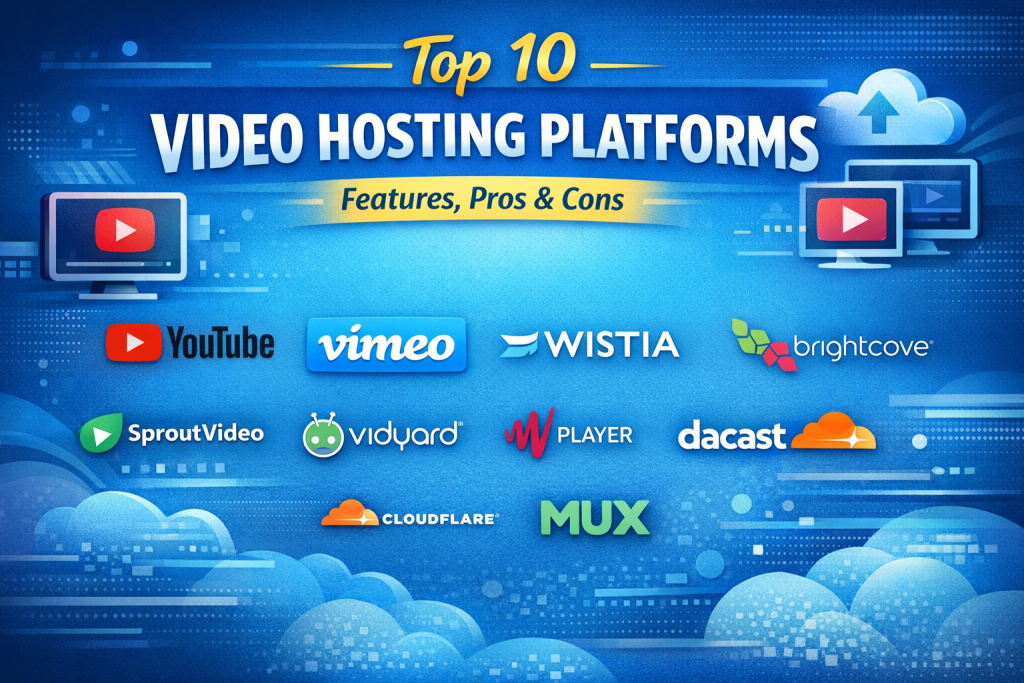
Introduction
Video Hosting Platforms are specialized tools that allow individuals and organizations to upload, store, manage, stream, and distribute video content securely over the internet. Unlike basic file storage or social media uploads, these platforms are purpose-built to handle large video files, adaptive streaming, playback optimization, analytics, privacy controls, and monetization.
In today’s digital-first world, video is one of the most powerful formats for communication. Businesses use video for marketing, product demos, training, webinars, customer support, and internal communication. Educators rely on video for online courses and virtual classrooms, while media companies depend on reliable hosting to deliver high-quality content at scale.
Choosing the right Video Hosting Platform is critical because it directly impacts viewer experience, data security, scalability, and business outcomes. Key evaluation criteria include video quality, streaming performance, privacy controls, analytics depth, integrations, ease of use, and compliance requirements. Cost structure and long-term scalability also matter, especially as video libraries grow.
Best for:
Video Hosting Platforms are ideal for content creators, marketers, educators, SaaS companies, HR teams, media houses, and enterprises that rely on video for growth, engagement, or knowledge sharing.
Not ideal for:
They may be unnecessary for users who only share occasional short clips internally, rely entirely on public social platforms, or do not require control over branding, privacy, or analytics.
Top 10 Video Hosting Platforms Tools
1 — YouTube
Short description:
A globally dominant video platform designed for public video distribution, discovery, and monetization at massive scale.
Key features:
- Unlimited public video hosting
- Adaptive streaming across devices
- Built-in monetization options
- Creator analytics and insights
- Automatic captions and translations
- Strong search and recommendation engine
Pros:
- Massive global reach and discoverability
- Free hosting with scalable infrastructure
Cons:
- Limited privacy and branding control
- Ads and algorithm dependency
Security & compliance: Varies / N/A
Support & community: Extensive documentation, large creator community, limited direct support for free users
2 — Vimeo
Short description:
A professional video hosting solution focused on high-quality playback, privacy, and brand control.
Key features:
- Ad-free HD and 4K streaming
- Customizable video player
- Privacy and access controls
- Video analytics and heatmaps
- Team collaboration tools
- Marketing and lead capture features
Pros:
- Clean, professional viewing experience
- Strong privacy and branding options
Cons:
- Storage and bandwidth limits on lower plans
- Premium pricing for advanced features
Security & compliance: GDPR, SOC 2 (varies by plan)
Support & community: Good documentation, responsive support on paid tiers
3 — Wistia
Short description:
A business-focused video platform optimized for marketing, analytics, and conversion tracking.
Key features:
- Advanced viewer analytics
- Custom branded video players
- Marketing automation integrations
- Built-in lead capture
- Chaptering and CTAs
- Team permissions
Pros:
- Excellent marketing insights
- Designed for business growth
Cons:
- Not ideal for large-scale public distribution
- Higher cost compared to basic hosting
Security & compliance: GDPR, SSO (enterprise plans)
Support & community: Strong onboarding, helpful documentation, active user community
4 — Brightcove
Short description:
An enterprise-grade video hosting and streaming platform for large organizations and media companies.
Key features:
- Global CDN-powered streaming
- Advanced monetization options
- Live and on-demand video
- API-driven customization
- Audience analytics
- Enterprise integrations
Pros:
- Highly scalable and reliable
- Strong enterprise features
Cons:
- Complex setup
- Premium pricing
Security & compliance: SOC 2, GDPR, enterprise-grade security
Support & community: Dedicated enterprise support, professional services
5 — SproutVideo
Short description:
A secure video hosting solution focused on privacy, access control, and business use cases.
Key features:
- Password and domain restrictions
- Custom video players
- Detailed analytics
- API access
- Video replacement without URL change
- Team collaboration
Pros:
- Strong security controls
- Simple, business-friendly interface
Cons:
- Limited marketing automation
- Smaller ecosystem
Security & compliance: GDPR, encryption at rest and transit
Support & community: Responsive support, solid documentation
6 — Vidyard
Short description:
A video hosting and engagement platform designed for sales, marketing, and customer communication.
Key features:
- Personalized video creation
- Viewer engagement analytics
- CRM and marketing integrations
- Screen recording tools
- Custom CTAs
- Team libraries
Pros:
- Strong for sales enablement
- Easy video personalization
Cons:
- Not built for public content discovery
- Advanced features require higher plans
Security & compliance: SOC 2, GDPR, SSO
Support & community: Good onboarding resources, enterprise support available
7 — JW Player
Short description:
A flexible video hosting and playback solution optimized for publishers and media platforms.
Key features:
- Customizable video player
- Adaptive bitrate streaming
- Monetization support
- Analytics dashboard
- Live streaming
- Developer APIs
Pros:
- Excellent playback performance
- Strong publisher focus
Cons:
- Interface less intuitive for beginners
- Limited built-in marketing tools
Security & compliance: GDPR, configurable security options
Support & community: Developer-friendly docs, paid support tiers
8 — Dacast
Short description:
A professional video hosting and live streaming platform for events, education, and enterprises.
Key features:
- Live and on-demand video
- White-label player
- Monetization tools
- API access
- Global CDN delivery
- Analytics
Pros:
- Reliable live streaming
- Flexible monetization options
Cons:
- UI can feel dated
- Learning curve for advanced setups
Security & compliance: HTTPS delivery, token security
Support & community: 24/7 support on higher plans, knowledge base
9 — Cloudflare Stream
Short description:
A developer-friendly video streaming service built on a global edge network for performance and scale.
Key features:
- Automatic video encoding
- Global edge delivery
- Simple pricing model
- API-first design
- Low-latency streaming
- Secure token-based access
Pros:
- Excellent performance
- Predictable pricing
Cons:
- Limited built-in analytics
- Minimal UI tools
Security & compliance: Encryption, GDPR-ready infrastructure
Support & community: Strong developer docs, community forums
10 — Mux
Short description:
A modern video infrastructure platform for developers building custom video experiences.
Key features:
- API-based video upload and streaming
- Real-time performance analytics
- Adaptive bitrate streaming
- Live and on-demand support
- Developer-first tooling
- Scalable infrastructure
Pros:
- Powerful analytics
- Flexible for custom applications
Cons:
- Requires technical expertise
- Limited out-of-the-box UI
Security & compliance: Encryption, GDPR-ready, enterprise options
Support & community: Excellent developer documentation, responsive support
Comparison Table
| Tool Name | Best For | Platform(s) Supported | Standout Feature | Rating |
|---|---|---|---|---|
| YouTube | Public content creators | Web, Mobile, TV | Global reach | N/A |
| Vimeo | Professionals & teams | Web, Mobile | Ad-free playback | N/A |
| Wistia | Marketing teams | Web | Viewer analytics | N/A |
| Brightcove | Enterprises & media | Web, Mobile | Enterprise scalability | N/A |
| SproutVideo | Secure business video | Web | Privacy controls | N/A |
| Vidyard | Sales & marketing | Web | Personalization | N/A |
| JW Player | Publishers | Web, Mobile | Playback performance | N/A |
| Dacast | Live events | Web | Live streaming | N/A |
| Cloudflare Stream | Developers | Web | Edge delivery | N/A |
| Mux | Custom applications | Web | Video analytics | N/A |
Evaluation & Scoring of Video Hosting Platforms
| Criteria | Weight | Description |
|---|---|---|
| Core features | 25% | Upload, streaming, analytics, controls |
| Ease of use | 15% | UI clarity, onboarding |
| Integrations & ecosystem | 15% | CRM, CMS, APIs |
| Security & compliance | 10% | Privacy, encryption, standards |
| Performance & reliability | 10% | Playback quality, uptime |
| Support & community | 10% | Docs, support quality |
| Price / value | 15% | Cost vs features |
Which Video Hosting Platforms Tool Is Right for You?
- Solo users: Public platforms or simple business tools with low cost
- SMBs: Marketing-focused platforms with analytics and branding
- Mid-market: Secure hosting with integrations and scalability
- Enterprise: Enterprise-grade platforms with compliance and APIs
Budget-conscious teams may prioritize simplicity and predictable pricing, while premium users should focus on analytics, customization, and compliance. Developers and SaaS companies often need API-first platforms, whereas marketers value ease of use and insights.
Frequently Asked Questions (FAQs)
- What is a Video Hosting Platform?
A service that stores, streams, and manages video content online with performance and security features. - How is it different from cloud storage?
Video platforms optimize playback, analytics, and streaming, unlike basic file storage. - Are these platforms secure?
Most offer encryption and privacy controls; enterprise plans add compliance features. - Can I monetize videos?
Yes, many platforms support ads, subscriptions, or pay-per-view. - Do I need technical skills?
Some platforms are no-code, while developer-focused tools require technical expertise. - Are free options reliable?
Free tools work for basic needs but limit control and branding. - Which is best for marketing?
Marketing-focused platforms with analytics and CTAs are ideal. - Can I host private videos?
Yes, most business platforms support private and restricted access. - What about live streaming?
Several platforms offer live and on-demand streaming. - Is there one best platform?
No, the best choice depends on goals, budget, and technical needs.
Conclusion
Video Hosting Platforms play a vital role in how modern organizations communicate, market, and educate. From global public distribution to secure enterprise streaming, each platform serves a distinct purpose. The most important factors are performance, security, analytics, scalability, and usability.
There is no single universal winner. The best platform is the one that aligns with your content strategy, audience, budget, and technical requirements. By carefully evaluating your needs and comparing features, you can choose a solution that delivers long-term value and a seamless video experience.

Find Trusted Cardiac Hospitals
Compare heart hospitals by city and services — all in one place.
Explore Hospitals
Video hosting decisions often become complicated when a company needs to serve audiences across different regions with varying internet speeds. A video that plays smoothly in one location may buffer frequently elsewhere, even when the hosting provider appears reliable. Adaptive bitrate delivery helps, but teams should also examine CDN coverage, playback failure rates, and real viewer experience across devices. Another overlooked issue is managing outdated video versions without breaking existing embedded links. These practical details can have a major impact on long-term content management and audience retention.
Enterprise B2B video hosting platforms prioritize brand control, viewer privacy, and granular analytics over the public ad-supported discovery algorithms of social video channels. Providing customizable, unbranded video players with domain-whitelisting protections ensures confidential training courses and product onboarding videos cannot be embedded on unauthorized websites. Marketing teams benefit from second-by-second viewer engagement heatmaps and interactive in-video lead capture forms that sync viewer data directly to CRM records. High-performance global CDN delivery ensures video streams buffer instantly without stutter across international offices.
Video platforms also need deeper monitoring of the actual viewing experience, not just server availability. A stream may remain online while users face buffering, slow startup, or playback errors on certain devices and networks. Tracking these issues across browsers, regions, and connection types can help teams find delivery problems much earlier. Synthetic playback tests and real-user metrics can reveal whether encoding or CDN changes affect video quality. This gives engineering teams a clearer way to protect viewing quality as traffic and content libraries grow.
Video hosting platforms provide businesses and creators with reliable ways to upload, manage, distribute, and analyze video content. Features such as storage, playback quality, privacy controls, analytics, monetization, and embedding options can influence the choice of platform. Comparing different solutions helps readers identify the right fit for their content and audience. A helpful guide for anyone looking to manage video distribution more effectively.
Video hosting platforms help businesses, content creators, educators, and media organizations upload, store, manage, stream, and share video content with their audiences. This comparison explores the top solutions based on their key features, pros and cons, video storage capacity, streaming quality, playback performance, privacy and access controls, content management, customization options, monetization tools, analytics, audience engagement, live streaming support, API integrations, scalability, pricing, and ease of use to help users choose the right platform for delivering high-quality video experiences and growing their audience.
Dissecting enterprise video platforms showed that corporate media distribution requires adaptive bitrate streaming with granular domain-level embed restrictions. Offering customizable branded video players, automatic chapter generation, and viewer engagement analytics empowers businesses to monetize marketing videos without third-party ad distractions.
Video delivery should also be tested for failure recovery, not just playback quality under normal traffic. A sudden increase in viewers can expose encoding delays, regional delivery problems, and API rate limits that routine testing may miss. Engineering teams should run load tests against realistic viewing patterns and monitor startup time, buffering rates, playback errors, and video processing queues. It is equally important to verify what happens when a provider experiences an outage or a video upload remains stuck in processing. These checks help teams define useful service-level objectives and build recovery plans before video delivery becomes a production bottleneck.
Video hosting platforms help creators and businesses upload, store, manage, and share videos with their audiences. When comparing services, consider storage limits, streaming quality, privacy controls, analytics, monetization options, embedding features, and pricing. Choose a platform that suits your content goals and provides a smooth viewing experience across different devices.
Choosing the right video hosting platform often comes down to balancing bandwidth costs with the depth of audience analytics you actually need for your workflow. While developer-first solutions offer incredible flexibility, marketing teams usually hit a wall without built-in lead capture and smooth CRM integrations. It would be great to see a deeper breakdown of how egress fees and bandwidth scaling compare across these tools as video libraries grow.
When comparing video hosting platforms, I would check how well they help viewers find the exact information they need inside a long video. For training sessions, product demonstrations, and recorded webinars, searchable transcripts, chapter markers, and accurate captions can save viewers from repeatedly scanning the timeline. It is also important to see whether these features work well with different accents and technical vocabulary. A platform that makes video content easier to search and revisit can improve learning, reduce support questions, and help organizations get more value from recordings they have already produced.
A platform’s real value goes beyond video quality; it should also make content easy to manage as a library grows. Testing playback across devices, access restrictions, and bandwidth costs early can help teams avoid unexpected issues as viewership increases.
Video hosting platforms differ in streaming quality, storage limits, privacy controls, and audience analytics. Businesses should also compare embedding options, bandwidth costs, and content access settings to ensure videos load smoothly and remain easy to manage as their libraries grow.