
Getting a visa is often the very first milestone when planning to take an overseas holiday, enroll in a foreign university, take up an international job offer, or relocate permanently. For Indian passport holders, navigating the maze of application forms, bank statements, appointment slots, and embassy guidelines can feel overwhelming.
Because every country sets its own entry criteria, there is no single set of global rules. Requirements shift based on your destination, travel purpose, financial profile, and how long you plan to stay. This practical Immigration Guide for Indians covers the fundamentals of visa pathways, document requirements, and step-by-step procedures to help you submit a solid, well-organized application.
What Are Visa Requirements for Indians?
A visa requirement is a set of legal, financial, and procedural conditions that a sovereign government enforces before allowing a foreign national into its territory. When you hold an Indian passport, foreign immigration authorities assess whether you meet their admission standards, intend to follow their laws, and have legitimate reasons to visit or settle.
Immigration officers evaluate several primary factors:
- Purpose of travel: Why are you visiting, and does your itinerary match your chosen visa category?
- Passport validity: Most countries require an Indian passport with at least 6 months of validity remaining beyond your intended departure date and blank pages for entry stamps.
- Financial capacity: You must prove you can comfortably fund your stay, flights, housing, and emergencies without unauthorized work or reliance on public funds.
- Sponsorship or ties: For sponsored visits, the host’s status and financial stability matter; for short-term visits, your home ties (employment, assets, family in India) show your intent to return.
- Health and character: Medical examinations, vaccination records, and police clearance certificates (PCC) are mandatory for many long-term visas.
- Immigration history: Previous international travel, visa approvals, or any past refusals or overstays on your record.
Major Types of Visas for Indians
Selecting the wrong visa category is a frequent cause of delays and refusals. The primary categories available to Indian applicants include:
Tourist or Visitor Visa
A tourist visa permits short-term visits for leisure, sightseeing, or visiting relatives and friends. Applicants must demonstrate strong economic and social ties to India—such as ongoing employment, business ownership, or family commitments—alongside a realistic day-to-day itinerary, return flight bookings, and clear proof of funds.
Work Visa for Indians
Securing a Work Visa for Indians almost always requires a genuine, verified job offer from an employer legally registered in the host country. Depending on the country, the sponsoring business may need to complete a labor market test to show that no local citizen was available for the role. Key requirements include professional certifications, verified work experience, employment contracts, and proof of required skill levels.
Student Visa for Indians
A Student Visa for Indians is geared toward individuals admitted into accredited overseas colleges, universities, or vocational training centers. Common prerequisites include an unconditional admission or offer letter, academic transcripts, recognized English-language test scores (such as IELTS, PTE, or TOEFL), and comprehensive financial documentation covering tuition and annual living expenses.
Business Visa
Distinct from a work permit, a business visa caters to short-term commercial engagements like conferences, client negotiations, exploratory site visits, or board meetings. It strictly prohibits drawing a local salary or entering the local labor market. A formal invitation from the host company alongside an employer support letter from India is standard.
Family and Dependent Visa
Family and dependent visas allow spouses, dependent children, and sometimes elderly parents to accompany or join an individual holding a valid work permit, student visa, or permanent residence. Applicants must provide evidence of a genuine relationship, such as registered marriage certificates, birth certificates, and proof that the primary applicant can financially support all dependents.
Permanent Residency
Unlike temporary visas, Permanent Residency for Indians grants the legal right to live, work, and study indefinitely in a foreign country without employer sponsorship. Many nations operate economic pathways that allow skilled temporary workers or international graduates to transition to PR after meeting specific tenure, taxation, and integration benchmarks.
Universal Visa Document Checklist
While document requirements change across consulates, keeping a standard file ready prevents last-minute scrambles. Use this baseline Visa Document Checklist before booking your appointment:
- Valid Indian passport: In original form, issued within the last 10 years, valid for at least 6 months, and containing at least two blank pages.
- Photographs: Sized and formatted to match specific embassy dimensions (e.g., 35x45mm or 2×2 inches, matte or glossy, specific background colors).
- Completed application form: Signed and accurately filled out online or on paper.
- Financial records: Original, stamped bank account statements (typically 3 to 6 months), income tax returns (ITR-V for the past 2–3 assessment years), salary slips, and fixed deposit certificates.
- Travel arrangements: Round-trip flight reservations, detailed daily itineraries, and confirmed accommodation bookings.
- Proof of occupation: Employment letters, No Objection Certificates (NOC), company registration documents (for self-employed applicants), or institutional leave approvals for students.
- Academic credentials: Degree certificates and transcripts (primarily for study or skilled migration paths).
- Clearance records: Police Clearance Certificates (PCC) from the Regional Passport Office (RPO) and medical examination reports from empaneled physicians where mandated.
Step-by-Step Visa Application Process
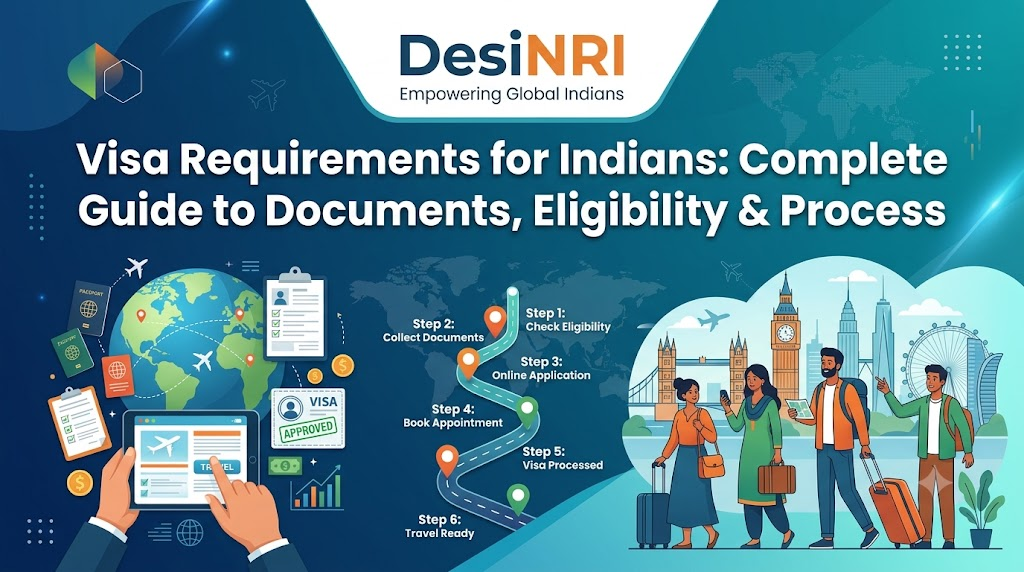
[Select Category] ──> [Gather Documents] ──> [Submit Application] ──> [Biometrics/Interview] ──> [Visa Decision]
Code language: CSS (css)- Identify the exact visa: Confirm whether your travel intent aligns with a tourist, student, business, or employment stream.
- Review official guidance: Check the official immigration portal of the destination country to confirm active eligibility rules and fee structures.
- Assemble the paperwork: Gather, verify, scan, and—if necessary—translate all supporting documents into English.
- Complete the application: Fill out the forms honestly, ensuring names, passport numbers, and dates match your passport pages verbatim.
- Pay mandatory fees: Pay the non-refundable visa processing charges, biometric collection fees, or immigration health surcharges via designated payment channels.
- Book biometrics or interviews: Schedule an appointment at an authorized visa application center (such as VFS Global or TLScontact) or the relevant embassy/consulate.
- Track and respond: Monitor your application online and respond promptly if an immigration officer issues a Request for Information (RFI).
- Collect your passport: Verify all printed details on the visa counterfoil (or digital eVisa letter)—including name spelling, visa validity dates, and entry allowances—the moment it arrives.
Visa Requirements by Purpose
| Visa Purpose | Primary Objectives | Typical Supporting Documents Required |
| Tourism | Sightseeing, holidays, visiting family | Valid passport, stamped bank statements, return flights, hotel bookings, leave NOC |
| Study | Full-time degree, diploma, exchange programs | Unconditional offer letter, academic transcripts, language scores, clear proof of liquid funds |
| Work | Direct overseas employment, company transfers | Signed employment contract, employer sponsorship letter, CV, professional references |
| Business | Meetings, trade fairs, corporate negotiations | Official invitation letter, Indian employer cover letter, conference registration |
| Family | Joining a spouse or parent residing abroad | Marriage or birth certificates, sponsor’s visa/PR copy, proof of joint finances, accommodation proof |
| Permanent Residency | Long-term immigration and settlement | Educational credential assessments, language test reports, employment history proofs, police clearances |
Visa Considerations for Popular Destinations
Immigration regulations are subject to ongoing policy changes. Review the framework for these top destinations and consult their official portals for the most current updates:
- United States: Non-immigrant categories like the B1/B2 visitor visa or F-1 student visa require an online DS-160 submission, fee payment, and an in-person interview at a US Embassy or Consulate. Proving non-immigrant intent (strong ties to India) is crucial.
- Canada: Study permits, visitor visas, and economic immigration through Express Entry are overseen by Immigration, Refugees and Citizenship Canada (IRCC). Canada places high importance on verifiable source-of-funds documentation.
- United Kingdom: Managed by UK Visas and Immigration (UKVI), applicants for skilled worker, visitor, or student visas must use the online portal, visit a visa application center for biometrics, and meet clear financial thresholds and TB test criteria.
- Australia: The Department of Home Affairs handles visitor, student (Subclass 500), and skilled migration visas via the digital ImmiAccount system, heavily relying on points assessments and Genuine Student assessments.
- Germany & Schengen Area: Short visits require a Schengen visa applied for via the primary destination country’s mission. Long-term work or job-seeker tracks (such as the Opportunity Card) require formal qualification recognition and proof of subsistence funds via blocked accounts.
- United Arab Emirates (UAE): Tourist visas are widely processed through airlines, hotels, or registered travel agencies. Long-term residence, employment, and Green or Golden Visas involve domestic corporate sponsorship or qualifying investments.
- New Zealand: Administered through Immigration New Zealand (INZ), requirements emphasize verified employment offers for work streams and strict character and health clearance benchmarks.
PR Points Calculator and Permanent Residency for Indians
Several countries—most notably Canada, Australia, and New Zealand—manage skilled economic migration through objective, points-tested ranking grids. Instead of relying purely on an employer’s petition, candidates submit an Expression of Interest (EOI) and are awarded points across several criteria:
- Age: Maximum points are generally awarded to applicants in their twenties and early thirties.
- Education: Assessed against national standards; advanced degrees (Master’s, PhDs) score higher.
- Skilled Work Experience: Both domestic Indian experience and host-country experience yield points.
- Language Proficiency: Results in English tests (IELTS, PTE) and, where applicable, French.
- Partner Factors: Additional points if your accompanying spouse demonstrates strong language skills and assessed educational qualifications.
Using a PR Points Calculator is a smart first step to gauge where you stand in competitive talent pools like Canada’s Comprehensive Ranking System (CRS) or Australia’s SkillSelect.
Important Note: A points calculator provides an informal diagnostic score based on the data you enter. It does not constitute a formal assessment, legal counsel, or a guarantee of receiving an Invitation to Apply (ITA) or visa grant.
Navigating Jobs Abroad for Indians
Securing an overseas employment offer requires structured research, patience, and careful due diligence. When evaluating foreign job offers, keep these essentials in mind:
- Employer Sponsorship Validity: Verify that the prospective company holds legal authority with its home government to hire foreign nationals.
- Skills Assessment & Licensing: Regulated fields such as healthcare, civil engineering, accounting, and teaching often require your Indian credentials to be formally recognized by local professional boards before a work visa can be filed.
- Compensation Thresholds: Many jurisdictions mandate that foreign workers receive a prevailing market wage to avoid wage suppression.
- Fraud Prevention: Legitimate international employers rarely ask candidates to pay for their own job offers, security deposits, or interview fees. Treat unsolicited job offers originating from non-business email addresses with skepticism.
Common Reasons Visa Applications Face Problems
Applications are evaluated methodically. The most frequent issues leading to delays or refusals include:
- Inconsistent Financial Disclosures: Unexplained, sudden large deposits (“funds parking”) in bank accounts right before printing statements without clear documentation of their source.
- Incomplete or Missing Paperwork: Omitting requested tax documents, identity records, or official translations.
- Vague Travel Intentions: Submitting generic itineraries without logical travel logistics, hotel confirmations, or clear explanations of the visit’s purpose.
- Weak Home Ties: For visitor and non-immigrant applications, failing to show stable employment, business assets, or immediate family responsibilities in India that ensure your timely return.
- Document Discrepancies: Unintentional spelling mistakes in names, differing dates of birth across passports and educational certificates, or conflicting dates on resume submissions.
- Misrepresentation: Submitting manipulated bank statements, inflated work experience letters, or omitting past visa refusals. Misrepresentation results in long-term, multi-year entry bans.
Practical Steps to Prepare a Strong Visa Application
- Apply Well in Advance: Visa processing times vary seasonally. Submit your application early enough to accommodate administrative delays, interview backlogs, and biometrics scheduling.
- Verify Directly on Official Portals: Avoid relying entirely on unverified advice from forums or social media. Always cross-check required documents against the destination country’s official immigration department website.
- Ensure Names and Data Match: Verify that your name, parents’ names, and personal identification details match across your passport, Aadhaar card, PAN card, educational degrees, and employment letters.
- Maintain Clean, Audit-Ready Finances: Avoid borrowing temporary funds simply to inflate account balances. Keep consistent, active bank accounts showing predictable income, routine expenses, and stable savings.
- Prepare Honestly for In-Person Interviews: If your visa track requires an embassy interview, answer questions clearly, honestly, and directly without memorizing robotic scripts.
Planning Your Journey with DesiNRI
Relocating across borders involves more than just collecting document checklists—it requires understanding daily life, compliance, career growth, and cultural settlement abroad.
DesiNRI serves as an accessible resource hub for Indian aspirants worldwide. Whether you are exploring points requirements, researching genuine career pathways, or seeking practical settlement guidance, the platform brings together helpful resources:
- Clear explanations covering migration categories and country updates.
- Interactive tools, including the PR Points Calculator, to evaluate your profile.
- Practical relocation advice, tax considerations, and career insights.
- Engaging community discussions that connect prospective migrants with the global NRI Community and Indians Living Abroad.
Frequently Asked Questions
What are the basic visa requirements for Indians?
The basic requirements generally include a valid Indian passport (with at least 6 months validity), completed visa application forms, passport-sized photos meeting embassy specifications, proof of financial solvency (bank statements, ITRs), accommodation details, travel insurance, and clear evidence of your purpose of visit.
Which documents are commonly required for a visa application?
Common documents include your original passport, photographs, stamped bank statements for the past 3 to 6 months, income tax returns, proof of accommodation, round-trip flight reservations, employment NOC or leave approval letters, and educational certificates where relevant.
What is the difference between a work visa and PR?
A work visa is a temporary, non-immigrant permit usually tied directly to an approved sponsoring employer for a set duration. Permanent Residency (PR) grants indefinite settlement and working rights in a country without requiring tied employer sponsorship, alongside access to public healthcare and social benefits.
What are the requirements for a student visa for Indians?
Indian students typically need an official unconditional admission letter from a recognized educational institution, verified financial capability covering tuition and living expenses, approved academic transcripts, valid English-language test results, and medical or character clearances where required.
Can Indians apply for permanent residency directly?
Yes, certain countries—including Canada and Australia—permit direct applications for permanent residency through skilled points-based immigration streams without requiring prior local work or study experience, provided the applicant achieves a competitive score.
How does a PR Points Calculator work?
A PR points calculator estimates your potential score under specific economic immigration programs. It awards points for quantitative characteristics such as age, level of education, language proficiency, years of skilled employment, and spouse qualifications.
How much proof of funds is required for an international visa?
There is no universal sum. Required funds vary depending on the destination, duration of stay, local cost of living, and visa stream. Short-stay tourist visas require sufficient funds to cover daily expenses and lodging, while student and work permits often set specific statutory balance requirements.
Can visa requirements change without notice?
Yes. Sovereign governments adjust their immigration frameworks, financial balance thresholds, processing charges, and required documentation at their own discretion based on economic conditions and diplomatic policies.
How long does international visa processing take?
Processing times range from 48–72 hours for simple digital e-Visas to several months for complex work permits, study visas, and permanent residency applications. Peak holiday seasons and backlogs can extend these timelines.
Where should Indians check the latest visa requirements?
Always refer to the official government immigration website of your intended destination country (such as IRCC for Canada, the Home Office for the UK, or the Department of Home Affairs for Australia) or their designated consular service partners.
Closing Thoughts
Every visa category is designed to serve a distinct purpose—from brief family visits and semester-long study terms to multi-year corporate deployments. Taking the time to select the right category, verify the latest guidelines directly through official channels, and present transparent, well-organized documentation puts you in the best position for a smooth journey.
As you plan your next move abroad, leverage resources like DesiNRI to explore destinations, evaluate your prospects, and connect with experienced voices across the global Indian diaspora.

Find Trusted Cardiac Hospitals
Compare heart hospitals by city and services — all in one place.
Explore Hospitals