
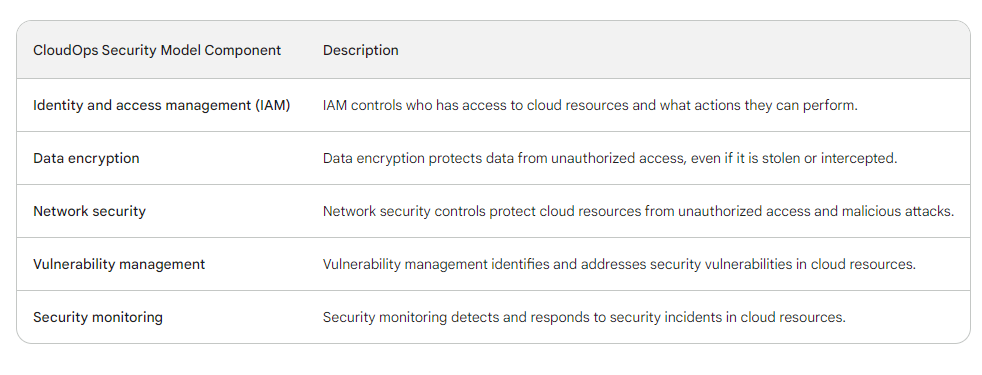
Have you ever wondered what CloudOps security is and how it can help protect your cloud infrastructure? In this blog article, we will dive deep into the world of CloudOps security and cover everything you need to know about it.
Introduction
CloudOps security is a term that refers to the security of cloud-based applications and infrastructure. It is the practice of applying security measures and policies to ensure the confidentiality, integrity, and availability of cloud-based applications and data.
Why is CloudOps Security Important?
CloudOps security is important because cloud-based applications and data are vulnerable to various security threats, such as cyber-attacks, data breaches, and unauthorized access. CloudOps security helps protect against these threats and ensures the security of cloud-based applications and data.
CloudOps Security Best Practices
There are several best practices that you can follow to ensure the security of your cloud-based applications and data. These include:
- Implementing strong authentication and access controls
- Encrypting sensitive data both in transit and at rest
- Regularly monitoring your cloud infrastructure for security threats
- Using multi-factor authentication for user access
- Maintaining regular backups of your data
- Regularly testing and auditing your security measures
CloudOps Security Tools
There are many tools available that can help you ensure the security of your cloud infrastructure. Some of the most popular CloudOps security tools include:
- Cloud Access Security Brokers (CASBs)
- Security Information and Event Management (SIEM) systems
- Cloud Security Posture Management (CSPM) tools
- Identity and Access Management (IAM) solutions
- Data Loss Prevention (DLP) tools
CloudOps Security Challenges
While CloudOps security is important, it also presents several challenges. Some of the most common challenges include:
- Ensuring the security of third-party applications and services
- Managing and securing multiple cloud environments
- Maintaining compliance with industry regulations and standards
- Dealing with the complexity of cloud infrastructure
Conclusion
In conclusion, CloudOps security is essential for protecting your cloud-based applications and data from various security threats. By following best practices, using tools, and addressing challenges, you can ensure the security of your cloud infrastructure and avoid potential security breaches. Remember to always stay vigilant and proactive when it comes to CloudOps security.

👤 About the Author
Ashwani is passionate about DevOps, DevSecOps, SRE, MLOps, and AiOps, with a strong drive to simplify and scale modern IT operations. Through continuous learning and sharing, Ashwani helps organizations and engineers adopt best practices for automation, security, reliability, and AI-driven operations.
🌐 Connect & Follow:
Website: WizBrand.com
Facebook: facebook.com/DevOpsSchool
X (Twitter): x.com/DevOpsSchools
LinkedIn: linkedin.com/company/devopsschool
YouTube: youtube.com/@TheDevOpsSchool
Instagram: instagram.com/devopsschool
Quora: devopsschool.quora.com
Email– contact@devopsschool.com
Find Trusted Cardiac Hospitals
Compare heart hospitals by city and services — all in one place.
Explore Hospitals




