LAB · PIPELINE
From commit to production, no manual steps
Build a pipeline that tests, packages and promotes one artefact through three environments with an approval gate.
> Engineering Practice · DevOpsSchool Training
Live online batches timed for IST (UTC+5:30), or corporate onsite across India — every session a live demo in a real lab, not slides.
★ 4.8 / 5 from 2,300+ ratings18,000+ engineers certifiedTrained teams at JPMorgan Chase, Verizon, Nokia, World Bank
# upcoming batches
Times shown in IST (UTC+5:30). New cohorts start on the 1st of every month.
| Starts | Days & time | Timezone | Mode | Duration | Seats | Enrol |
|---|---|---|---|---|---|---|
| —Most popular | Weekend · Sat · Sun 10:00 AM – 1:00 PM | IST (UTC+5:30) | Live online · Corporate onsite | 5 weekends | — of 10 left | Reserve |
| — | Weekday · Mon · Wed · Fri 8:00 – 10:00 PM | IST (UTC+5:30) | Live online · Corporate onsite | 5 weeks | — of 10 left | Reserve |
Batches are capped at 10 learners by design. We do not run a classroom in India — sessions here are live online, or onsite at your office for corporate batches.Need a date that isn't listed? Talk to us about a private batch →
# how you attend
Individuals, anywhere
Scheduled instructor-led batch. Every session is a live demo in a real lab, and every session is recorded.
Reserve my seatTeams of 8–30
Custom agenda built from your stack, delivered at your office or online, in your timezone. NDA-friendly, invoiced against a PO.
Request a quoteSelf-starters
The full recorded curriculum plus a year of the entire LMS — 20+ courses and 50+ tools, not just this one.
Enroll now# private batches
We start with a discovery call, map your stack to the modules below, and drop anything your team already runs in production. Delivery is at your office, online, or hybrid — in your timezone, scheduled around your release calendar.
Send us the tools, the team size and a rough window. You'll get an agenda and a quote back, not a sales call.
# india
DevOps training in India is taken mostly by developers taking on deployment and operational responsibility and System administrators moving from manual operations to automation. Sessions run live online in IST (UTC+5:30), or onsite at your office — there is no India classroom. Teams here often pair it with our AIOps and DataOps training, and a corporate batch can cover more than one in a single engagement. Taken as a single market, India's constraint is not demand but spread. A team is rarely in one city any more: the platform group sits in Bangalore or Hyderabad, the application teams in Pune or Chennai, and operations somewhere else again. Scheduling one cohort that all of them can attend is a real problem, and it is the reason most all-India engagements run live online rather than in a room. The second constraint is level. A national cohort mixes people who own a platform with people who file tickets against one, and the useful sessions are the ones that give both a shared vocabulary rather than pitching at the middle. We handle that by keeping the labs open-ended — the same exercise gives a beginner a working system and gives an experienced engineer something to argue with. Two classrooms exist, in Bengaluru and Hyderabad, and they run when six or more learners in that city book the same cohort. Everywhere else in the country the format is live online in IST, or onsite at your office for a corporate batch.
We do not run a classroom in India. Batches here are live online, or onsite at your office for corporate cohorts.
Our two classrooms are in Bengaluru and Hyderabad.
# the subject
DevOps is not a tool or a job title but a way of organising delivery so that the people who build a system also run it. In practice that means a set of concrete capabilities: version control for everything including infrastructure, an automated build that produces one immutable artefact, a pipeline that tests and promotes that artefact through environments, declarative infrastructure, and monitoring good enough that the team learns about a problem before a customer reports it. The reason it is taught as a subject rather than absorbed on the job is that the pieces only pay off together. A pipeline without tests moves defects faster; monitoring without ownership produces alerts nobody acts on. What makes the difference is the sequence in which the capabilities are introduced and how they reinforce one another.
Almost every engineering organisation has now adopted some part of this, which has shifted the demand from adoption to competence. The gap employers report is not people who have heard of pipelines but people who can inherit a half-finished platform, work out why deployments are slow or flaky, and fix it without stopping delivery. That is a diagnostic skill, and it is what a good program should build.
# outcomes
# curriculum
Every module follows the same shape: 5 hrs · 2 assignments · 1 capstone.
Introduction to DevOps, Welcome and Registration, Course Overview and Objectives, What is DevOps and its importance, Key DevOps principles and benefits, The DevOps culture and mindset, DevOps Principles and Practices, DevOps Lifecycle stages
Continuous Integration (CI) and Continuous Delivery (CD), Introduction to DevOps tools and their role, Introduction to Git, What is version control and why it's essential, Introduction to Git and its significance, Setting up Git and configuring user details, Git Basics, Git fundamentals (repositories, commits, branches)
Making changes and committing in Git, Git workflows and collaborative practices, Git in DevOps Workflows, Git in the context of DevOps, Version control in a CI/CD pipeline, Using Git for code collaboration, Advanced Git Topics, Branching strategies (feature branching, Gitflow, etc.)
Git best practices (commit messages, code reviews), Handling merge conflicts and resolving issues, Git Integration and Automation, Integrating Git with CI/CD pipelines, Automated testing and deployment with Git, Code quality and security checks with Git hooks, Q&A and Certification Information, Open floor for questions and discussions
Review of key takeaways, Information on DevOps Foundation certification and next steps, DevOps principles and objectives, The need for DevOps in modern software development, Introduction to Docker, What is Docker?, Docker architecture and components, Installing Docker
Docker Images and Containers, Creating Docker images, Running Docker containers, Basic Docker commands, Docker Compose, Introduction to Docker Compose, Defining multi-container applications with Docker Compose, Docker Networking and Volumes
Docker networking concepts, Managing data with Docker volumes, Best Practices and Tips, Docker best practices, Common Docker mistakes and how to avoid them, Introduction to Ansible, What is Ansible?, Key Ansible components and concepts
Setting Up Ansible, Installing Ansible on your system, Basic configuration and host file setup, Ansible Playbooks, Understanding playbooks and their structure, Creating a simple playbook, Running Ansible, Executing Ansible playbooks
Common Ansible command-line options, Ansible best practices, Common Ansible mistakes and how to avoid them, Introduction to Terraform, What is Terraform?, Key Terraform concepts and terminology, Installing Terraform, Creating and Managing Infrastructure
Declaring infrastructure with Terraform configuration files, Initializing and applying configurations, Managing state files, Provisioning and Resource Management, Defining resources in Terraform, Provisioners and resource attributes, Interpolations and variables, Terraform Best Practices
Terraform best practices and coding guidelines, Avoiding common Terraform pitfalls, Introduction to Jenkins, What is Jenkins?, Key Jenkins concepts and terminology, Installing and setting up Jenkins, Creating Your First Jenkins Job, Creating a basic Jenkins job (freestyle project)
Configuring source code management (e.g., Git), Jenkins Pipeline Fundamentals, Introduction to Jenkins pipelines, Creating and configuring a simple Jenkins pipeline, Jenkins Plugins and Extensibility, Overview of Jenkins plugins, Installing and using plugins to extend Jenkins functionality, Jenkins best practices, Common Jenkins mistakes and how to avoid them
Open-book, scenario-based, taken in the LMS. Two free re-attempts and detailed feedback.
# hands-on
We don't hand out a sandbox that expires. You provision your own free-tier environment with our guidance, so the setup skill goes with you.
LAB · PIPELINE
Build a pipeline that tests, packages and promotes one artefact through three environments with an approval gate.
LAB · INFRA
Destroy an environment and recreate it entirely from code, and time how long it takes.
LAB · OBSERVE
Diagnose a seeded failure using only dashboards, metrics and logs.
LAB · RECOVER
Deploy a bad release deliberately and practise the rollback path until it is boring.
# toolchain
# pricing
₹833/mo
billed yearly ₹9,996
All recorded sessions, labs and the full LMS — at your own pace.
₹34,999₹49,999SAVE 30%
works out to ₹2,917/moIllustrative monthly equivalent. The full amount is charged once at enrolment; we do not offer instalments.
5-week live cohort plus the complete LMS bundle.
₹99,999
works out to ₹8,333/moIllustrative monthly equivalent. The full amount is charged once at enrolment; we do not offer instalments.
A dedicated senior practitioner. Pace, schedule and labs tailored to you.
+ GST 18% as applicable · Prices are charged in INR.
If we cancel or postpone a cohort and you decline the rescheduled session, you get a 100% refund within 15 days. Refund policy →
Recordings, slides and lab repos are licensed to you for your own learning. Terms →
We don't share your details with third parties. Privacy →
# who teaches it
Twenty years across DevOps, SRE and security, in principal and architect roles at PayPay, SoftwareAG, ServiceNow, Intuit, Adobe and IBM. Has personally trained more than 10,000 engineers at JPMorgan Chase, Verizon, Nokia, the World Bank and dozens more. He teaches what he runs, not what he reads.







# the credential
Certificate of Completion
Your Name
DevOps Training in India
DS-DEVOPS-XXXX-XXXX
# reviews
4.8 / 5 from 2,300+ ratings.
Reviews for this program are being collected from public sources. Every review shown here links to the original.
# alternatives
| What matters | YouTube + blogs | Generic online course | Local training institute | DevOpsSchool |
|---|---|---|---|---|
| Teaching method | Unstructured, no sequence | Pre-recorded slides | Slide-led classroom | Live demos in a real lab |
| Batch size | n/a | Unlimited | 30–60 | Capped at 10 |
| Lab environment | Yours to figure out | Shared sandbox that expires | Shared lab | You build your own — the skill goes with you |
| Per-tool structure | None | Video only | Varies | 5 hrs · 2 assignments · 1 capstone |
| Assessment | None | Quiz | Attendance | 3 hours · online · open-book · scenario-based |
| Certificate | None | Auto-issued | Attendance certificate | Industry-recognised, verifiable |
| Corporate invoicing | No | Card only | Sometimes | PO, GST invoice, NDA |
| Post-training support | None | Forum for 30 days | None | Lifetime forum support |
| Total cost | Free, and it costs you months | Low, low completion | High | One fee, LMS included |
# questions
No. We do not have a training centre in India, and we would rather say so than let you plan a commute. Batches here run live online, or onsite at your own office for corporate cohorts. Our two classrooms are in Bengaluru and Hyderabad.
Sessions run in IST (UTC+5:30), which is local time for you: the weekend cohort at 10:00–13:00 on Saturday and Sunday, and the weekday cohort at 20:00–22:00 on Monday, Wednesday and Friday. Most India learners take the weekend batch because it does not collide with a release window.
The curriculum is the same everywhere — it is the same course, and pretending otherwise would be dishonest. What changes for India is delivery: the batch times are set for IST (UTC+5:30), fees are shown in INR, and delivery is live online or onsite at your office rather than in a classroom. The examples our instructors reach for also tend to follow what India teams actually run.
No, and that is deliberate. You build the labs on your own free-tier account, and we walk through the setup and the cost guardrails in week one. A sandbox that expires when the course ends teaches you nothing you keep; your own environment does.
Every session is recorded and available in the LMS the same day, and you keep access for a year. You can also sit the missed session again with the next cohort at no extra cost.
Comfortable on a Linux shell; Familiarity with Git beyond commit and push; Any one programming language. If you are unsure whether you are ready, tell us what you work on now and we will give you a straight answer rather than a sales one.
You get an industry-recognised DevOpsSchool certificate after the three-hour open-book exam. Most people find the capstone repositories carry more weight in an interview than the certificate itself, which is why the labs are built to be shown.
Yes. We build the agenda from your stack after a discovery call and drop anything your team already runs in production. Teams of 8 to 30 work best; larger groups split into parallel batches.
If we cancel or postpone a cohort and you decline the rescheduled session, you get a full refund within 15 days. We do not offer a general money-back guarantee, and taxes and gateway fees are not refunded.
No. The fee is charged once at enrolment. Where we show a monthly figure it is arithmetic to help you size the cost against a budget, not a payment plan.
# keep learning
Everything below is open and free — no enrolment needed.
# in the room
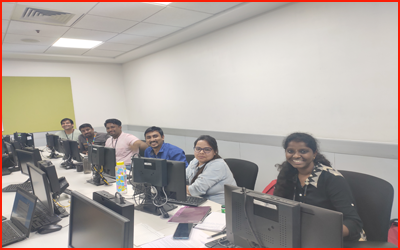
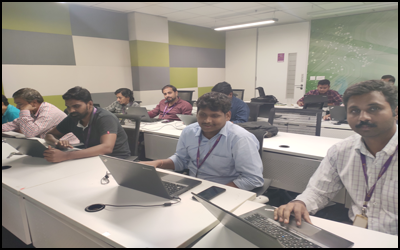
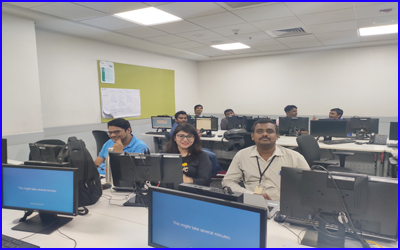
# ready when you are