LAB · SCHEDULING
The pod that will not start
Work through five pods failing for five different reasons and fix each from the events alone.
> Containers · DevOpsSchool Training
Weekend and weekday batches, live online or in our Bangalore classroom — every session a live demo in a real lab, not slides.
★ 4.8 / 5 from 2,300+ ratings18,000+ engineers certifiedTrained teams at JPMorgan Chase, Verizon, Nokia, World Bank
# upcoming batches
Times shown in IST (UTC+5:30). New cohorts start on the 1st of every month.
| Starts | Days & time | Timezone | Mode | Duration | Seats | Enrol |
|---|---|---|---|---|---|---|
| —Most popular | Weekend · Sat · Sun 10:00 AM – 1:00 PM | IST (UTC+5:30) | Live online · Classroom · Corporate onsite | 5 weekends | — of 10 left | Reserve |
| — | Weekday · Mon · Wed · Fri 8:00 – 10:00 PM | IST (UTC+5:30) | Live online · Classroom · Corporate onsite | 5 weeks | — of 10 left | Reserve |
Batches are capped at 10 learners by design.Need a date that isn't listed? Talk to us about a private batch →
# how you attend
Individuals, anywhere
Scheduled instructor-led batch. Every session is a live demo in a real lab, and every session is recorded.
Reserve my seatLearners who prefer in-person
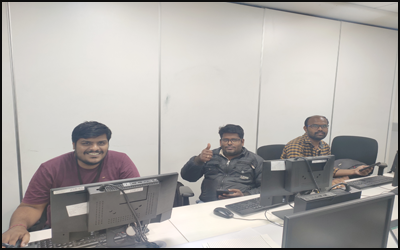
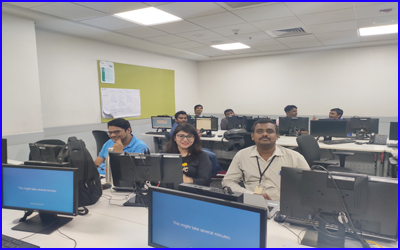
Vervenest Technologies Pvt Ltd, 3478J HAL 2nd Stage, Chirush Mansion, 2nd & 3rd Floors, 13th Main Road, HAL 2nd Stage, Indiranagar, Bengaluru, Karnataka 560008. Classroom batches run when six or more learners in the city book the same cohort.
Check classroom availabilityTeams of 8–30
Custom agenda built from your stack, delivered at your office or online, in your timezone. NDA-friendly, invoiced against a PO.
Request a quoteSelf-starters
The full recorded curriculum plus a year of the entire LMS — 20+ courses and 50+ tools, not just this one.
Enroll now# private batches
We start with a discovery call, map your stack to the modules below, and drop anything your team already runs in production. Delivery is at your office, online, or hybrid — in your timezone, scheduled around your release calendar.
Send us the tools, the team size and a rough window. You'll get an agenda and a quote back, not a sales call.
# bangalore
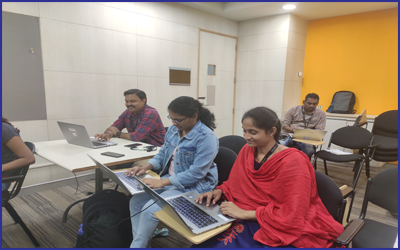
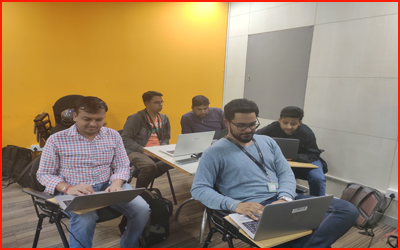
Kubernetes training in Bangalore is taken mostly by engineers deploying to an existing cluster and Platform teams operating clusters for other teams. Sessions run live online in IST (UTC+5:30), or in our Bangalore classroom when six or more learners in the city book the same cohort. Teams here often pair it with our Agile and Ansible training, and a corporate batch can cover more than one in a single engagement. Bangalore is where most of this work is operated rather than just consumed. The Outer Ring Road corridor between Marathahalli and Bellandur concentrates the platform and SRE teams of the large product companies, and those teams run estates big enough that the interesting questions are about structure and guardrails rather than about getting a first thing running. The second pattern is the captive centre. Banking, insurance and healthcare captives around Manyata and Whitefield are moving regulated workloads, which pushes encryption, access boundaries, private connectivity and audit evidence to the front of the conversation. Electronic City adds a third mix: engineering-services teams who have to be productive inside a client's environment, often with limited permissions and no console access at all. We plan the Bangalore cohorts around that. The weekend batch fills fastest because it does not compete with a release window, and classroom sessions run at the Indiranagar centre when six or more learners in the city book the same cohort — most of whom travel in from the ORR and Whitefield corridors.
Vervenest Technologies Pvt Ltd
3478J HAL 2nd Stage, Chirush Mansion, 2nd & 3rd Floors, 13th Main Road, HAL 2nd Stage, Indiranagar, Bengaluru, Karnataka 560008Classroom cohorts run when six or more learners in Bangalore book the same batch. Otherwise the same batch runs live online.
# the subject
Kubernetes is a control loop for containers. You declare what should be running and it works continuously to make reality match, rescheduling around failures, scaling to demand and rolling out changes without downtime. The primitives are few — Pod, Deployment, Service, ConfigMap, Secret, Ingress — and almost everything else is a pattern built from them. What makes Kubernetes hard is not the API but the failure modes. A pod that will not schedule, a service that resolves but does not answer, a rollout stuck halfway: each has a small number of causes, and knowing how to narrow them down quickly is the difference between operating a cluster and being operated by one.
Kubernetes has become the default substrate for server-side deployment, which means the scarce skill is no longer running one but running one safely for other people. Multi-tenancy, resource limits, network policy, RBAC and upgrade paths are where teams actually get hurt, and those are the areas employers now screen for.
# outcomes
# curriculum
Every module follows the same shape: 5 hrs · 2 assignments · 1 capstone.
Understanding the Need of Kubernetes, Understanding Kubernetes Architecture, Understanding Kubernetes Masters and its Component, Understanding Kubernetes Nodes and its Component, Understand Kubernetes Concepts, Understand Kubernetes Terminology, Kubernetes Clusters Requirements, Understanding Kubernetes Clusters using kubeadm
Demo: Installing and Configuring Kubernetes Master, Demo: Installing and Configuring Kubernetes Workers, Demo: Install and Configure Workstation using Kubectl, Understanding a concept of Namespace, Demo: Define your first Kubernetes pod, Demo: Working and Deep Dive with Kubernetes pod, Understanding Kubernetes replication controllers, Demo: Define your first replication controllers
Demo: Working with Kubernetes replication controllers, Understanding Kubernetes deployments, Demo: Define your first deployment, Demo: Working and Deep Dive with Kubernetes deployment, Understanding Kubernetes Lebels, Demo: Define your first Kubernetes Lebels, Demo: Working with Kubernetes Lebels, Understanding Kubernetes Services
Demo: Define your first Kubernetes Services, Demo: Working and Deep Dive with Kubernetes Services, Demo: Deploy a Java Stake app using Kubernetes, Demo: Deploy a Nodejs Stake app using Kubernetes
Understanding Kubernetes Volumes, Understanding Types of Volumes, Static and Dynamic Provisioning, Understanding Persistent Volume and Persistent Volume Claim, Understanding ConfigMap and Secret, Understanding Storage Class, Demo: Working with Persistent Volume and Persistent Volume Claim, Demo: Working with ConfigMap and Secret
Demo: Storage Class, Understanding StatefulSet and DaemonSet, Understanding CronJob and Job, Demo: Working with Working StatefulSet, Demo: Working with DaemonSet, Demo: Working with CronJob, Demo: Working with Job, Demo: Stateless Example: PHP Guestbook with Redis
What is a Kubernetes Pod networking?, How does networking work in Kubernetes?, How to implement Kubernetes networking?, The Kubernetes network model, Kubernetes Network Plugins, Understanding Flannel Network Plugins, Understanding Project Calico Network Plugins, Understanding Weave Net Network Plugins
Demo: Implementing Project Calico Network Plugins, Understanding Ingress and Ingress Controllers, Understanding Network Policies, Understanding DNS for Services and Pods, Demo: Implementing Ingress and Ingress Controllers, Demo: Implementing Network Policies, Understanding Kubernetes Authentication, Understanding Kubernetes Authentication Modules
Understanding Kubernetes Authorization, Demo: Using RBAC Authorization, Demo: Using ABAC Authorization, Understanding Kubernetes Pods Observability, Demo: Pods LivenessProbes and Readiness Probes, Demo: Pods LivenessProbes and ReadinessProbes, Demo: Static Pods, Demo: Assign Pods to Nodes using nodeselector
Demo: Assign Pods to Nodes using node Affinity, Demo: Working with Kubernetes Addons(Dashboard), Demo: Upgrading the Kubernetes Cluster, Demo: Kubernetes Cluster Node Maintainance, Demo: Backing Up and Restoring a Kubernetes Cluster, Demo: Troubleshooting Application Failure, Troubleshooting Control Plane Failure, Troubleshooting Worker Node Failure
Troubleshooting Networking, Monitoring the Cluster Components, Monitoring the Applications Running within a Cluster, Managing Cluster Component Logs, Managing Application Logs, Project
Open-book, scenario-based, taken in the LMS. Two free re-attempts and detailed feedback.
# hands-on
We don't hand out a sandbox that expires. You provision your own free-tier environment with our guidance, so the setup skill goes with you.
LAB · SCHEDULING
Work through five pods failing for five different reasons and fix each from the events alone.
LAB · NETWORK
Trace a request through Service, Endpoints and Pod to find where it is being dropped.
LAB · TENANCY
Use namespaces, RBAC and network policy so one team cannot reach or starve another.
LAB · ROLLOUT
Ship a bad image deliberately, watch the rollout stall, and recover without downtime.
# toolchain
# pricing
₹833/mo
billed yearly ₹9,996
All recorded sessions, labs and the full LMS — at your own pace.
₹34,999₹49,999SAVE 30%
works out to ₹2,917/moIllustrative monthly equivalent. The full amount is charged once at enrolment; we do not offer instalments.
5-week live cohort plus the complete LMS bundle.
₹99,999
works out to ₹8,333/moIllustrative monthly equivalent. The full amount is charged once at enrolment; we do not offer instalments.
A dedicated senior practitioner. Pace, schedule and labs tailored to you.
+ GST 18% as applicable · Prices are charged in INR.
If we cancel or postpone a cohort and you decline the rescheduled session, you get a 100% refund within 15 days. Refund policy →
Recordings, slides and lab repos are licensed to you for your own learning. Terms →
We don't share your details with third parties. Privacy →
# who teaches it
Twenty years across DevOps, SRE and security, in principal and architect roles at PayPay, SoftwareAG, ServiceNow, Intuit, Adobe and IBM. Has personally trained more than 10,000 engineers at JPMorgan Chase, Verizon, Nokia, the World Bank and dozens more. He teaches what he runs, not what he reads.





# the credential
Certificate of Completion
Your Name
Kubernetes Training in Bangalore
DS-KUBERN-XXXX-XXXX
# reviews
4.8 / 5 from 2,300+ ratings.
Reviews for this program are being collected from public sources. Every review shown here links to the original.
# alternatives
| What matters | YouTube + blogs | Generic online course | Local training institute | DevOpsSchool |
|---|---|---|---|---|
| Teaching method | Unstructured, no sequence | Pre-recorded slides | Slide-led classroom | Live demos in a real lab |
| Batch size | n/a | Unlimited | 30–60 | Capped at 10 |
| Lab environment | Yours to figure out | Shared sandbox that expires | Shared lab | You build your own — the skill goes with you |
| Per-tool structure | None | Video only | Varies | 5 hrs · 2 assignments · 1 capstone |
| Assessment | None | Quiz | Attendance | 3 hours · online · open-book · scenario-based |
| Certificate | None | Auto-issued | Attendance certificate | Industry-recognised, verifiable |
| Corporate invoicing | No | Card only | Sometimes | PO, GST invoice, NDA |
| Post-training support | None | Forum for 30 days | None | Lifetime forum support |
| Total cost | Free, and it costs you months | Low, low completion | High | One fee, LMS included |
# questions
Yes. Classroom cohorts run at our Bangalore centre when six or more learners in the city book the same batch. Below that number the batch runs live online with the same instructor and the same labs, and we tell you which it will be before you pay.
Sessions run in IST (UTC+5:30), which is local time for you: the weekend cohort at 10:00–13:00 on Saturday and Sunday, and the weekday cohort at 20:00–22:00 on Monday, Wednesday and Friday. Most Bangalore learners take the weekend batch because it does not collide with a release window.
Most Bangalore attendees work in Indiranagar, Whitefield, Outer Ring Road (Marathahalli–Bellandur), Electronic City, Koramangala, Manyata Tech Park or Hebbal. That matters for classroom batches, because we only open the Bangalore centre when six or more learners from the city book the same cohort — and in practice that is who fills it.
The curriculum is the same everywhere — it is the same course, and pretending otherwise would be dishonest. What changes for Bangalore is delivery: the batch times are set for IST (UTC+5:30), fees are shown in INR, and a classroom option exists here that most locations do not have. The examples our instructors reach for also tend to follow what Bangalore teams actually run.
No, and that is deliberate. You build the labs on your own free-tier account, and we walk through the setup and the cost guardrails in week one. A sandbox that expires when the course ends teaches you nothing you keep; your own environment does.
Every session is recorded and available in the LMS the same day, and you keep access for a year. You can also sit the missed session again with the next cohort at no extra cost.
Comfortable with Docker and container images; Linux shell and basic networking; YAML without fear. If you are unsure whether you are ready, tell us what you work on now and we will give you a straight answer rather than a sales one.
You get an industry-recognised DevOpsSchool certificate after the three-hour open-book exam. Most people find the capstone repositories carry more weight in an interview than the certificate itself, which is why the labs are built to be shown.
Yes. We build the agenda from your stack after a discovery call and drop anything your team already runs in production. Teams of 8 to 30 work best; larger groups split into parallel batches.
If we cancel or postpone a cohort and you decline the rescheduled session, you get a full refund within 15 days. We do not offer a general money-back guarantee, and taxes and gateway fees are not refunded.
No. The fee is charged once at enrolment. Where we show a monthly figure it is arithmetic to help you size the cost against a budget, not a payment plan.
# keep learning
Everything below is open and free — no enrolment needed.
# in the room
# ready when you are