LAB · DRIFT
Catch the change nobody made
Introduce manual drift on a node and demonstrate detection and correction.
> Configuration Management · DevOpsSchool Training
Weekend and weekday batches, live online or in our Bangalore classroom — every session a live demo in a real lab, not slides.
★ 4.8 / 5 from 2,300+ ratings18,000+ engineers certifiedTrained teams at JPMorgan Chase, Verizon, Nokia, World Bank
# upcoming batches
Times shown in IST (UTC+5:30). New cohorts start on the 1st of every month.
| Starts | Days & time | Timezone | Mode | Duration | Seats | Enrol |
|---|---|---|---|---|---|---|
| —Most popular | Weekend · Sat · Sun 10:00 AM – 1:00 PM | IST (UTC+5:30) | Live online · Classroom · Corporate onsite | 5 weekends | — of 10 left | Reserve |
| — | Weekday · Mon · Wed · Fri 8:00 – 10:00 PM | IST (UTC+5:30) | Live online · Classroom · Corporate onsite | 5 weeks | — of 10 left | Reserve |
Batches are capped at 10 learners by design.Need a date that isn't listed? Talk to us about a private batch →
# how you attend
Individuals, anywhere
Scheduled instructor-led batch. Every session is a live demo in a real lab, and every session is recorded.
Reserve my seatLearners who prefer in-person
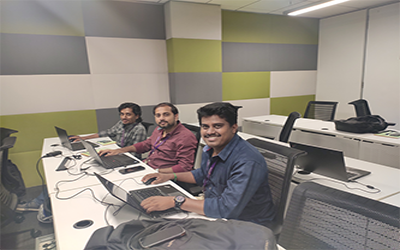
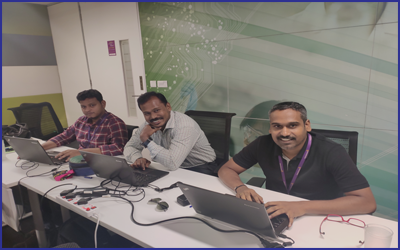
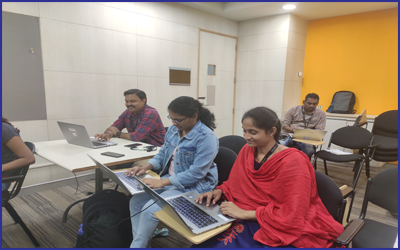
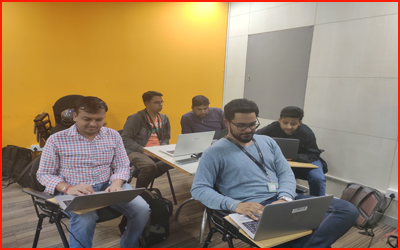
Vervenest Technologies Pvt Ltd, 3478J HAL 2nd Stage, Chirush Mansion, 2nd & 3rd Floors, 13th Main Road, HAL 2nd Stage, Indiranagar, Bengaluru, Karnataka 560008. Classroom batches run when six or more learners in the city book the same cohort.
Check classroom availabilityTeams of 8–30
Custom agenda built from your stack, delivered at your office or online, in your timezone. NDA-friendly, invoiced against a PO.
Request a quoteSelf-starters
The full recorded curriculum plus a year of the entire LMS — 20+ courses and 50+ tools, not just this one.
Enroll now# private batches
We start with a discovery call, map your stack to the modules below, and drop anything your team already runs in production. Delivery is at your office, online, or hybrid — in your timezone, scheduled around your release calendar.
Send us the tools, the team size and a rough window. You'll get an agenda and a quote back, not a sales call.
# bangalore
Puppet training in Bangalore is taken mostly by System administrators enforcing configuration standards and DevOps engineers maintaining a Puppet estate. Sessions run live online in IST (UTC+5:30), or in our Bangalore classroom when six or more learners in the city book the same cohort. Teams here often pair it with our Agile and Ansible training, and a corporate batch can cover more than one in a single engagement. Bangalore is where most of this work is operated rather than just consumed. The Outer Ring Road corridor between Marathahalli and Bellandur concentrates the platform and SRE teams of the large product companies, and those teams run estates big enough that the interesting questions are about structure and guardrails rather than about getting a first thing running. The second pattern is the captive centre. Banking, insurance and healthcare captives around Manyata and Whitefield are moving regulated workloads, which pushes encryption, access boundaries, private connectivity and audit evidence to the front of the conversation. Electronic City adds a third mix: engineering-services teams who have to be productive inside a client's environment, often with limited permissions and no console access at all. We plan the Bangalore cohorts around that. The weekend batch fills fastest because it does not compete with a release window, and classroom sessions run at the Indiranagar centre when six or more learners in the city book the same cohort — most of whom travel in from the ORR and Whitefield corridors.
Vervenest Technologies Pvt Ltd
3478J HAL 2nd Stage, Chirush Mansion, 2nd & 3rd Floors, 13th Main Road, HAL 2nd Stage, Indiranagar, Bengaluru, Karnataka 560008Classroom cohorts run when six or more learners in Bangalore book the same batch. Otherwise the same batch runs live online.
# the subject
Puppet describes the desired state of a system in its own declarative language and enforces it on a schedule. Resources are declared, the catalogue is compiled per node, and the agent applies it. Because enforcement is continuous rather than one-shot, Puppet is well suited to environments where configuration must not drift between audits. The concepts that repay study are the resource abstraction layer, ordering and dependencies, and Hiera for separating data from code. Most maintenance pain comes from data hardcoded into manifests.
Puppet is entrenched in large regulated estates — finance, telecoms, government — precisely because continuous enforcement produces evidence that configuration has not drifted. Those organisations need people who can maintain and extend existing manifests, and who understand the reporting side well enough to satisfy an auditor.
# outcomes
# curriculum
Every module follows the same shape: 5 hrs · 2 assignments · 1 capstone.
Introduction to Configuration Management, Why automation & configuration management are critical, Why Puppet? (comparison with Ansible, Chef, Salt), Puppet Open Source vs Puppet Enterprise, Puppet Architecture & Core Concepts, Puppet Server (Master) and Puppet Agent workflow, Catalog compilation process, PuppetDB overview (intro only)
Puppet run lifecycle, Getting Started with Puppet Enterprise, Puppet Enterprise 2025 overview & release highlights, Preparing infrastructure (monolithic setup), Installing Puppet Server, Installing Puppet Agent (Linux/Windows), Accessing the Puppet Enterprise console, Crash Demo
Setting up Puppet Master, Puppet Agent, and running first catalog, Navigating the Puppet Enterprise console, Working with Facter, Introduction to facts & their role in configuration management, Viewing built-in facts, Adding simple custom facts, Puppet Language Basics, Puppet DSL overview
Working with resources (file, package, service, user, group, exec, notify), Variables & ordering basics, Classes (introductory level), Simple templates (EPP), Hiera Basics, What is Hiera?, Configuring hiera.yaml (intro level), Simple key-value data lookup
Working with Modules, What modules are & why they matter, Module structure basics, Using Puppet Forge modules, Quick intro to Puppet Development Kit (PDK), Essential Administration in Puppet Enterprise, Node management basics in the console, Classifying nodes (intro level)
Managing access (RBAC intro), Running Puppet on demand (orchestrator basics), SSL & Certificates (Essential View), How Puppet uses certificates, Simple certificate signing workflow, Autosigning basics, Troubleshooting (Beginner), Reading Puppet logs, Debugging a failed Puppet run (simple demo)
Introduction to Configuration Management & Puppet, Why Configuration Management matters, Puppet vs. other CM tools (Ansible, Chef, Salt), Puppet Open Source vs Puppet Enterprise (differences, use cases), Puppet 2025 release highlights & deprecated features, Puppet Architecture & Workflow, Puppet Master / Server, Puppet Agent, Catalog compilation, PuppetDB overview
Puppet run lifecycle & transactions, Installation & First Setup, Infrastructure requirements & architecture choices, Installing Puppet Server & Agents (*nix & Windows), Crash demo: setting up Puppet Master, Agent, and environment, Role-based access control (RBAC) overview, Core facts and custom facts, Using facter.conf for configuration
Writing simple custom facts, Resources & attributes (file, package, service, exec, user, group, notify, etc.), Variables, expressions, ordering & relationships, Classes and node definitions, Templates (EPP & ERB), Hiera & Data Management, Introduction to Hiera, hiera.yaml structure
Data lookups & overrides, Using Hiera in manifest, Module Development with PDK, Puppet Development Kit overview & installation, Creating new modules, Converting existing modules to PDK, Module structure & customization, Building and packaging modules
Testing & Best Practices, Puppet style guide, puppet-lint & metadata-json-lint, rspec-puppet basics for unit testing, Hands-on: writing, validating, and testing a module, Puppet Enterprise Administration, Managing nodes in the console, Node classification & groups
Managing access and permissions, Inspecting infrastructure via PE console, Orchestration with Puppet, Puppet orchestrator & running Puppet on demand, Bolt overview: tasks & plans, Orchestrating multi-node runs, Demo: deploy & orchestrate a module across multiple nodes, SSL & Certificates
Open-book, scenario-based, taken in the LMS. Two free re-attempts and detailed feedback.
# hands-on
We don't hand out a sandbox that expires. You provision your own free-tier environment with our guidance, so the setup skill goes with you.
LAB · DRIFT
Introduce manual drift on a node and demonstrate detection and correction.
LAB · DATA
Refactor a hardcoded manifest to Hiera across three environments.
LAB · ORDER
Fix a module whose behaviour depends on evaluation order.
# toolchain
# pricing
₹833/mo
billed yearly ₹9,996
All recorded sessions, labs and the full LMS — at your own pace.
₹34,999₹49,999SAVE 30%
works out to ₹2,917/moIllustrative monthly equivalent. The full amount is charged once at enrolment; we do not offer instalments.
5-week live cohort plus the complete LMS bundle.
₹99,999
works out to ₹8,333/moIllustrative monthly equivalent. The full amount is charged once at enrolment; we do not offer instalments.
A dedicated senior practitioner. Pace, schedule and labs tailored to you.
+ GST 18% as applicable · Prices are charged in INR.
If we cancel or postpone a cohort and you decline the rescheduled session, you get a 100% refund within 15 days. Refund policy →
Recordings, slides and lab repos are licensed to you for your own learning. Terms →
We don't share your details with third parties. Privacy →
# who teaches it
Twenty years across DevOps, SRE and security, in principal and architect roles at PayPay, SoftwareAG, ServiceNow, Intuit, Adobe and IBM. Has personally trained more than 10,000 engineers at JPMorgan Chase, Verizon, Nokia, the World Bank and dozens more. He teaches what he runs, not what he reads.







# the credential
Certificate of Completion
Your Name
Puppet Training in Bangalore
DS-PUPPET-XXXX-XXXX
# reviews
4.8 / 5 from 2,300+ ratings.
Reviews for this program are being collected from public sources. Every review shown here links to the original.
# alternatives
| What matters | YouTube + blogs | Generic online course | Local training institute | DevOpsSchool |
|---|---|---|---|---|
| Teaching method | Unstructured, no sequence | Pre-recorded slides | Slide-led classroom | Live demos in a real lab |
| Batch size | n/a | Unlimited | 30–60 | Capped at 10 |
| Lab environment | Yours to figure out | Shared sandbox that expires | Shared lab | You build your own — the skill goes with you |
| Per-tool structure | None | Video only | Varies | 5 hrs · 2 assignments · 1 capstone |
| Assessment | None | Quiz | Attendance | 3 hours · online · open-book · scenario-based |
| Certificate | None | Auto-issued | Attendance certificate | Industry-recognised, verifiable |
| Corporate invoicing | No | Card only | Sometimes | PO, GST invoice, NDA |
| Post-training support | None | Forum for 30 days | None | Lifetime forum support |
| Total cost | Free, and it costs you months | Low, low completion | High | One fee, LMS included |
# questions
Yes. Classroom cohorts run at our Bangalore centre when six or more learners in the city book the same batch. Below that number the batch runs live online with the same instructor and the same labs, and we tell you which it will be before you pay.
Sessions run in IST (UTC+5:30), which is local time for you: the weekend cohort at 10:00–13:00 on Saturday and Sunday, and the weekday cohort at 20:00–22:00 on Monday, Wednesday and Friday. Most Bangalore learners take the weekend batch because it does not collide with a release window.
Most Bangalore attendees work in Indiranagar, Whitefield, Outer Ring Road (Marathahalli–Bellandur), Electronic City, Koramangala, Manyata Tech Park or Hebbal. That matters for classroom batches, because we only open the Bangalore centre when six or more learners from the city book the same cohort — and in practice that is who fills it.
The curriculum is the same everywhere — it is the same course, and pretending otherwise would be dishonest. What changes for Bangalore is delivery: the batch times are set for IST (UTC+5:30), fees are shown in INR, and a classroom option exists here that most locations do not have. The examples our instructors reach for also tend to follow what Bangalore teams actually run.
No, and that is deliberate. You build the labs on your own free-tier account, and we walk through the setup and the cost guardrails in week one. A sandbox that expires when the course ends teaches you nothing you keep; your own environment does.
Every session is recorded and available in the LMS the same day, and you keep access for a year. You can also sit the missed session again with the next cohort at no extra cost.
Comfortable on a Linux shell; Understanding of your server configuration; Any experience with declarative tooling helps. If you are unsure whether you are ready, tell us what you work on now and we will give you a straight answer rather than a sales one.
You get an industry-recognised DevOpsSchool certificate after the three-hour open-book exam. Most people find the capstone repositories carry more weight in an interview than the certificate itself, which is why the labs are built to be shown.
Yes. We build the agenda from your stack after a discovery call and drop anything your team already runs in production. Teams of 8 to 30 work best; larger groups split into parallel batches.
If we cancel or postpone a cohort and you decline the rescheduled session, you get a full refund within 15 days. We do not offer a general money-back guarantee, and taxes and gateway fees are not refunded.
No. The fee is charged once at enrolment. Where we show a monthly figure it is arithmetic to help you size the cost against a budget, not a payment plan.
# keep learning
Everything below is open and free — no enrolment needed.
# in the room
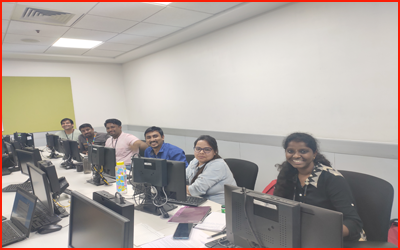
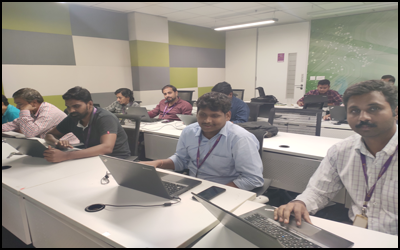
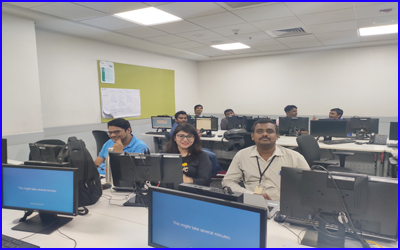
# ready when you are