
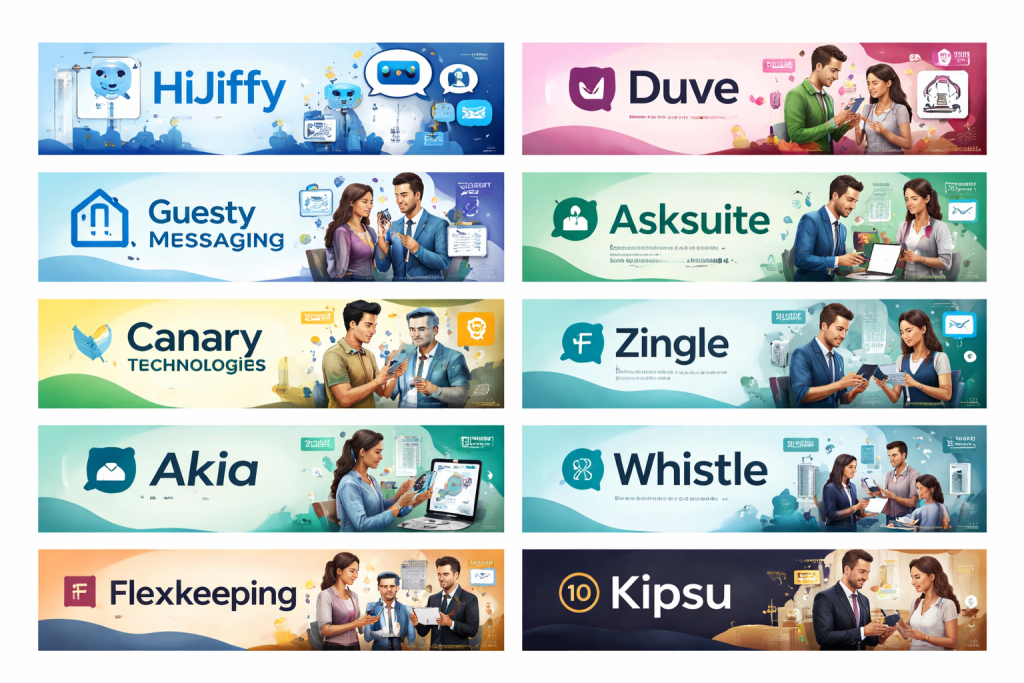
Introduction
Guest Messaging Platforms are specialized communication tools designed to help hospitality and service-based businesses communicate seamlessly with guests before, during, and after their stay or interaction. These platforms centralize conversations across channels such as SMS, WhatsApp, email, live chat, and in-app messaging, ensuring that no guest message is missed and every response is timely, consistent, and personalized.
In today’s experience-driven economy, fast and clear communication is no longer optional—it directly impacts guest satisfaction, online reviews, repeat bookings, and revenue. Whether it’s answering a pre-arrival question, sending check-in instructions, handling service requests, or following up after checkout, guest messaging tools enable teams to deliver a smooth, professional, and memorable experience at scale.
Common real-world use cases include automated pre-arrival messages, digital check-in instructions, concierge-style guest support, upselling services, handling maintenance requests, and post-stay feedback collection. When choosing a Guest Messaging Platform, buyers should evaluate ease of use, multi-channel support, automation capabilities, integrations with PMS or CRM systems, analytics, security, compliance, and total cost of ownership.
Best for:
Guest Messaging Platforms are ideal for hotels, resorts, vacation rentals, serviced apartments, hostels, property managers, healthcare facilities, co-living spaces, and any business that relies heavily on guest or customer communication. Roles such as front desk staff, guest experience managers, operations teams, and customer support leaders benefit the most, across SMBs to large enterprises.
Not ideal for:
These tools may not be necessary for very small properties with minimal guest interaction, businesses with extremely low booking volumes, or organizations that already manage all communication effectively through a single manual channel without automation or scaling needs.
Top 10 Guest Messaging Platforms Tools
1 — HiJiffy
Short description:
HiJiffy is an AI-powered guest messaging and conversational platform designed primarily for hotels and hospitality brands looking to automate and personalize guest communication across channels.
Key features:
- AI-powered chatbot for instant guest responses
- Multi-channel messaging (website chat, messaging apps, email)
- Automated pre-arrival and post-stay messages
- Integration with PMS and booking engines
- Multilingual support for international guests
- Analytics and conversation insights
Pros:
- Strong automation reduces front desk workload
- Excellent multilingual and AI capabilities
- Well-suited for mid-size to large hotels
Cons:
- Advanced features may require higher-tier plans
- Initial setup can take time for complex properties
Security & compliance:
Data encryption, GDPR compliance, role-based access. Other certifications vary by deployment.
Support & community:
Structured onboarding, detailed documentation, responsive customer support, and enterprise assistance available.
2 — Guesty Messaging
Short description:
Guesty Messaging is a built-in communication solution tailored for property managers and vacation rental operators managing multiple listings at scale.
Key features:
- Unified inbox for guest conversations
- Automated responses and saved replies
- Deep integration with property management workflows
- Multi-user collaboration and permissions
- Guest history and conversation tracking
Pros:
- Seamless experience for existing users
- Strong automation for repetitive questions
- Centralized communication across properties
Cons:
- Best used within its own ecosystem
- Limited flexibility for non-rental businesses
Security & compliance:
Encryption in transit, GDPR-aligned data handling. Compliance scope depends on account configuration.
Support & community:
Help center resources, onboarding guides, and customer support for subscribed users.
3 — Duve
Short description:
Duve focuses on enhancing the guest journey through personalized messaging, digital check-in, and upselling tools for hospitality businesses.
Key features:
- Guest messaging and automation workflows
- Digital check-in and guest profiling
- Upselling and add-on service promotions
- PMS integrations
- Branded guest experience flows
Pros:
- Strong focus on guest personalization
- Increases ancillary revenue opportunities
- Clean and modern interface
Cons:
- More value for properties with upsell strategies
- Smaller properties may underuse features
Security & compliance:
Standard encryption, GDPR-ready. Advanced compliance varies by region.
Support & community:
Guided onboarding, help documentation, and responsive support team.
4 — Asksuite
Short description:
Asksuite is an AI-driven messaging and booking assistant designed to answer guest questions and support reservations through automated conversations.
Key features:
- AI chatbot trained for hospitality use cases
- Booking and inquiry handling
- Multi-language support
- Integration with booking engines and PMS
- Analytics on guest intent and conversion
Pros:
- Reduces response time dramatically
- Improves booking conversion rates
- Strong AI accuracy for common questions
Cons:
- Custom AI training may take effort
- Less suitable for non-hospitality industries
Security & compliance:
Encrypted communications, GDPR compliance. Additional certifications depend on deployment.
Support & community:
Dedicated onboarding, knowledge base, and enterprise support options.
5 — Canary Technologies
Short description:
Canary Technologies provides a guest communication and engagement platform focused on contactless experiences and modern hospitality workflows.
Key features:
- Guest messaging and digital communication
- Contactless check-in and checkout
- Secure document and ID collection
- Payment and upsell integrations
- Analytics and reporting
Pros:
- Excellent for contactless guest journeys
- Strong security-focused design
- Scales well for enterprise hotels
Cons:
- Premium pricing for full feature set
- Overkill for very small properties
Security & compliance:
SOC 2, GDPR, encryption at rest and in transit, audit logs.
Support & community:
Enterprise-grade onboarding, documentation, and dedicated account support.
6 — Zingle
Short description:
Zingle is a guest engagement and messaging platform widely used in hospitality, retail, and service industries to manage real-time guest communication.
Key features:
- SMS-based guest messaging
- Workflow automation and alerts
- Feedback collection and surveys
- Team collaboration tools
- Reporting and analytics
Pros:
- Simple and reliable SMS communication
- Strong internal team collaboration
- Proven track record in hospitality
Cons:
- Limited modern chat channels
- UI feels dated compared to newer tools
Security & compliance:
Data encryption, GDPR support. Other certifications vary.
Support & community:
Knowledge base, onboarding resources, and customer support available.
7 — Akia
Short description:
Akia is a mobile-first guest messaging platform focused on SMS communication for hotels and hospitality groups.
Key features:
- SMS-based guest communication
- Automated messaging workflows
- Task and request management
- Guest feedback collection
- PMS integrations
Pros:
- Extremely easy to use
- High SMS open and response rates
- Quick implementation
Cons:
- Limited multi-channel support
- Less customization for complex workflows
Security & compliance:
Encryption and GDPR-aligned data practices. Compliance depth varies.
Support & community:
Fast onboarding, live support, and practical documentation.
8 — Whistle
Short description:
Whistle is a guest messaging and engagement platform designed to centralize communication and enhance service delivery across hospitality teams.
Key features:
- Unified guest messaging inbox
- Automation and triggers
- Guest request tracking
- Integration with hotel systems
- Team collaboration tools
Pros:
- Improves response coordination
- Clear visibility into guest requests
- Suitable for multi-property groups
Cons:
- Setup requires process alignment
- Reporting could be more advanced
Security & compliance:
Encrypted data handling, GDPR-ready. Other certifications vary.
Support & community:
Onboarding assistance, customer success managers, and help resources.
9 — Flexkeeping
Short description:
Flexkeeping combines guest messaging with operations management, focusing on housekeeping, maintenance, and service coordination.
Key features:
- Guest messaging linked to service requests
- Task assignment and tracking
- Real-time team notifications
- PMS and operations integrations
- Performance analytics
Pros:
- Strong operational visibility
- Reduces service response times
- Ideal for operations-heavy properties
Cons:
- Less marketing or upsell focus
- Interface may feel complex initially
Security & compliance:
Role-based access, encrypted data, GDPR compliance.
Support & community:
Training materials, onboarding sessions, and customer support.
10 — Kipsu
Short description:
Kipsu is a luxury-focused guest messaging and service optimization platform designed for high-touch hospitality environments.
Key features:
- Real-time guest messaging
- Service recovery and escalation tools
- Guest sentiment tracking
- CRM and PMS integrations
- Analytics for guest satisfaction
Pros:
- Excellent for luxury and premium brands
- Strong service recovery workflows
- Enhances personalized experiences
Cons:
- Premium pricing
- Not designed for budget-focused properties
Security & compliance:
Encrypted communications, GDPR alignment. Enterprise security options available.
Support & community:
Dedicated account managers, training, and enterprise-level support.
Comparison Table
| Tool Name | Best For | Platform(s) Supported | Standout Feature | Rating |
|---|---|---|---|---|
| HiJiffy | Hotels with AI automation needs | Web, Mobile | AI multilingual chatbot | N/A |
| Guesty Messaging | Vacation rental managers | Web, Mobile | Deep property workflow integration | N/A |
| Duve | Personalized guest journeys | Web, Mobile | Upselling and guest profiling | N/A |
| Asksuite | Booking-focused hotels | Web | AI booking assistant | N/A |
| Canary Technologies | Contactless hospitality | Web, Mobile | Secure digital check-in | N/A |
| Zingle | SMS-centric communication | Web, Mobile | Reliable SMS workflows | N/A |
| Akia | Simple guest messaging | Mobile-first | Fast SMS automation | N/A |
| Whistle | Team collaboration | Web, Mobile | Centralized guest requests | N/A |
| Flexkeeping | Operations-driven properties | Web, Mobile | Messaging + task management | N/A |
| Kipsu | Luxury hospitality | Web, Mobile | Service recovery focus | N/A |
Evaluation & Scoring of Guest Messaging Platforms
| Criteria | Weight | Description |
|---|---|---|
| Core features | 25% | Messaging, automation, analytics, workflows |
| Ease of use | 15% | UI clarity, onboarding, learning curve |
| Integrations & ecosystem | 15% | PMS, CRM, payments, third-party tools |
| Security & compliance | 10% | Data protection, certifications, access control |
| Performance & reliability | 10% | Uptime, message delivery, scalability |
| Support & community | 10% | Documentation, training, customer support |
| Price / value | 15% | ROI, pricing transparency, scalability |
Which Guest Messaging Platforms Tool Is Right for You?
- Solo users & small properties: Tools like Akia or Zingle offer simplicity, quick setup, and strong SMS engagement without overwhelming complexity.
- SMBs & growing teams: HiJiffy, Duve, and Whistle balance automation with personalization and scale well as operations grow.
- Mid-market & enterprise: Canary Technologies, Kipsu, and Flexkeeping provide robust security, integrations, and advanced workflows.
- Budget-conscious buyers: Focus on essential messaging and automation rather than premium upsell or AI-heavy features.
- Feature depth seekers: AI-driven tools and platforms with advanced analytics suit complex guest journeys.
- Security-focused organizations: Prioritize platforms with strong encryption, audit logs, and formal compliance frameworks.
Frequently Asked Questions (FAQs)
1. What is a Guest Messaging Platform?
It is a tool that centralizes and automates communication between businesses and guests across multiple channels.
2. Are these tools only for hotels?
No. They are also used in vacation rentals, healthcare, co-living, and service industries.
3. Do guest messaging platforms support automation?
Yes, most offer automated replies, triggers, and workflows.
4. Is SMS still relevant for guest communication?
Absolutely. SMS has high open rates and is ideal for time-sensitive messages.
5. Can these platforms integrate with PMS systems?
Most leading tools offer PMS integrations to sync guest data and reservations.
6. Are guest messaging platforms secure?
Reputable platforms use encryption and follow data protection regulations like GDPR.
7. How long does implementation usually take?
Implementation can range from a few days to several weeks, depending on complexity.
8. Are these tools expensive?
Pricing varies widely based on features, scale, and number of properties.
9. Can they improve guest satisfaction scores?
Yes, faster responses and personalized communication often lead to better reviews.
10. What is a common mistake when choosing a platform?
Overbuying features that are never used or underestimating integration needs.
Conclusion
Guest Messaging Platforms have become a critical component of modern guest experience strategies. They streamline communication, reduce operational friction, and help businesses deliver timely, personalized, and consistent interactions across the guest journey.
When selecting the right tool, focus on what matters most for your organization: communication channels, automation depth, integrations, security, and budget. There is no single “best” platform for everyone—the ideal choice depends on your size, industry, guest expectations, and operational complexity. By aligning platform capabilities with real-world needs, businesses can transform guest communication into a true competitive advantage.

Find Trusted Cardiac Hospitals
Compare heart hospitals by city and services — all in one place.
Explore Hospitals
Guest messaging platforms should keep conversations connected even when different staff members handle the same guest request. For example, a guest may report a room issue before arrival and ask for an update after checking in. Staff should be able to see the earlier conversation instead of asking the guest to explain everything again. I would also check whether messages are linked to the correct booking and whether sensitive guest details are protected through access controls.
While comparing guest messaging platforms usually focuses on multi-channel consolidation (like SMS, WhatsApp, and web chat), automated check-in flows, and upselling features, the real operational bottleneck for hospitality teams is bridging communication tools with internal property management systems (PMS) and task assignment. Software can easily centralize inbound guest queries, but without seamless backend automation that converts a chat request into a direct task for housekeeping or maintenance, staff still face high coordination friction and delayed response times.
Great points raised. The primary operational friction in hospitality guest messaging platforms centers on the integration gap between front desk property management systems and fragmented guest communication channels. While platforms like Canary, HiJiffy, and Kipsu unify SMS, WhatsApp, and OTA inboxes into a single interface, staff encounter severe workflow bottlenecks when the messaging layer operates as a disconnected silo. Systems that lack deep bidirectional synchronization with core hotel folios force front desk agents to manually cross reference guest profiles, room assignments, and billing folios, slowing down response times during service requests and disrupting automated check in workflows.
Guest messaging platforms should be compared on how well they manage conversations when responsibility moves from one staff member to another. In hotels and hospitality businesses, a guest may report an issue before arrival, follow up during their stay, and ask for an update after a shift change. If the conversation history is incomplete or the previous commitments are difficult to find, guests end up explaining the same problem repeatedly. I would look for features such as internal handover notes, clear conversation ownership, unresolved-request tracking, and visibility into promised follow-ups. These capabilities help maintain continuity across teams and make communication feel more personal, even when several employees handle the same guest interaction.
Guest messaging platforms help hospitality businesses streamline communication with guests, automate routine responses, and deliver more personalized service throughout the booking journey. Features such as automated messaging, multichannel communication, chatbot integration, scheduled notifications, and connections with property management systems can reduce staff workload while improving response times. I believe ease of integration, message personalization, automation flexibility, and support for multiple languages are essential factors when comparing these solutions. The right platform should balance automation with a human touch, helping hotels and vacation rental operators improve guest satisfaction, respond to requests efficiently, and create a smoother experience from booking to checkout.
Guest messaging platforms help hotels and hospitality teams answer questions, share check-in details, and manage guest requests in one place. I would check how well a platform handles messages across different channels and keeps replies organized for staff. Quick responses and automatic updates can improve the guest experience, but messages should still feel personal when a guest needs help. It is also important to protect guest details and keep communication records secure. How can hotels use guest messaging tools to respond faster without making communication feel too automated?
Veterinary practice management software helps clinics manage appointments, patient records, billing, and treatment schedules more efficiently. Features like vaccination reminders, digital medical records, and inventory tracking can improve daily workflows. I believe ease of use, data security, and reliable reporting are important factors when choosing a platform. Integration with laboratory systems and payment tools can also save time for veterinary teams. The right software can improve clinic efficiency and support better care for animals.
Good guest communication can make a big difference in how people feel about their stay. I think one useful feature to look for is the ability to send automatic messages before arrival, during check-in, and after checkout without making every message feel too formal. It is also important to keep all guest conversations in one place so staff can respond quickly. The best platform should save time while still making guests feel personally cared for.
One important factor in evaluating guest messaging platforms is how effectively automated conversations transition to human staff when guests have urgent or complex requests. While AI chatbots and multi-channel messaging can improve response times, seamless PMS integration and clear escalation workflows are essential for consistent service.
Guest messaging platforms help hospitality businesses deliver timely, personalized communication throughout the guest journey, from pre-arrival instructions to post-stay follow-ups. Automated responses, centralized inboxes, and integration with property management systems can reduce staff workload while ensuring requests receive consistent attention. Maintaining a human touch alongside automation is essential for resolving complex concerns and creating a more welcoming guest experience.
Guest messaging platforms help hotels and hospitality teams communicate before, during, and after a stay. Timely messages can share check-in details, answer common questions, and provide useful updates. Teams need a shared view of conversations so requests do not get lost between shifts. Integration with booking and property systems can improve accuracy. When comparing tools, review channel support, automation controls, reporting, and data privacy. Messages should remain helpful and personal rather than excessive. A well-managed platform can improve response times and make guest communication more consistent.
Guest messaging platforms are most effective when they deliver timely, personalized updates without overwhelming guests with too many notifications. Automated check-in instructions, quick responses to common requests, and support for multiple communication channels can improve the guest experience. Businesses should also prioritize data privacy and clear message histories so staff can resolve issues consistently and maintain trust.
Guest communication tools should preserve the full conversation history when responsibility moves between employees or shifts. Without clear handover notes, guests may need to explain the same issue several times or receive conflicting answers. I’d look for ways to assign each request to a responsible person and flag messages that remain unanswered too long. Managers should also be able to review unresolved complaints before a shift ends. These steps help teams deliver consistent service even when staff are busy or schedules change.
Guest messaging platforms help hotels respond to guest questions, share important updates, and manage requests throughout the stay. When comparing tools, I would focus on automated messages, multi-channel communication, response tracking, and integration with property management systems. Timely and personalized replies can improve the guest experience and reduce staff workload. The right platform should make communication smoother while helping hospitality teams deliver consistent service.
Centralizing hospitality communications across WhatsApp and SMS demands resilient webhook pipelines with Property Management System backends, orchestrating automated conversational AI and staff escalation queues to guarantee zero missed requests during check-in spikes.
Guest messaging platforms can help hotels and hospitality businesses respond to questions faster and deliver a more consistent guest experience. When comparing solutions, I would focus on multi-channel messaging, automated replies, integration with property management systems, and clear conversation history for staff. Automation can handle routine requests, but guests should still have an easy way to reach a real person when they need help. Support for multiple languages and secure handling of guest information are also important. How can hospitality businesses use messaging automation to improve response times while keeping guest communication personal and helpful?
An operational issue worth considering is how guest conversations remain continuous across staff handovers and channel changes. A guest might report a maintenance problem through WhatsApp and later follow up by SMS or at the front desk. If the platform fails to connect these interactions, staff may miss earlier details or create duplicate service requests. Before selecting a solution, I would test conversation history, request ownership, and synchronization between messaging channels and property management systems. It is also useful to define what happens to unresolved requests when employees finish their shifts. These details help prevent communication gaps, reduce repeated questions, and ensure guests receive consistent service throughout their stay.
A well-chosen messaging platform does more than just centralize chats; it genuinely transforms how front-desk teams handle peak hours. For busy properties, the real test of these tools isn’t just multi-channel routing, but how smoothly they handle automated triage without losing that personal touch. It would be great to see a deeper dive into how well these options integrate with legacy Property Management Systems (PMS) during high-occupancy seasons.
Guest messaging platforms can become difficult to manage when several staff members respond to the same request across different channels. It helps when conversations stay connected to each guest’s booking and previous messages, so staff can pick up where someone else left off. This can prevent repeated questions and help hotels respond more consistently during busy check-in hours.
Guest messaging platforms help hotels and hospitality businesses respond to inquiries, share check-in details, and keep guests informed throughout their stay. Comparing automated messaging, multi-channel communication, personalization, and integration with property management systems helps hospitality teams improve response times, simplify guest support, and deliver a more seamless customer experience.
This comparison of guest messaging platforms is a very useful resource for anyone in hospitality, property management, or customer service looking to improve communication with guests. The clear breakdown of features, benefits, and limitations helps readers understand how different tools handle automated messaging, multi‑channel support, and personalization. Presenting the pros and cons side by side makes it much easier to evaluate options and choose the platform that best fits your workflow and enhances the guest experience.