
Introduction
AI Smart Meter Anomaly Detection refers to the use of artificial intelligence systems to identify unusual, unexpected, or suspicious patterns in electricity, gas, or water smart meter data. These anomalies can indicate technical faults, energy theft, billing errors, grid instability, or abnormal consumption behavior.
In 2026 and beyond, smart meters have become a foundational layer of modern energy grids. With millions of connected devices streaming real-time usage data, manual monitoring is impossible. AI systems are now essential for detecting irregularities instantly and ensuring accurate billing, grid reliability, and operational efficiency.
Modern platforms combine time-series anomaly detection, machine learning, edge AI, and streaming analytics to monitor energy consumption patterns at scale.
Key real-world use cases:
- Electricity theft detection (non-technical losses)
- Faulty meter identification
- Abnormal consumption pattern detection
- Billing fraud detection and correction
- Grid instability early warning signals
- Industrial energy misuse detection
- Smart city energy monitoring
Key evaluation criteria:
- Real-time anomaly detection speed
- Accuracy in detecting false positives vs true anomalies
- Scalability across millions of smart meters
- Integration with AMI (Advanced Metering Infrastructure)
- Streaming data processing capability
- Explainability of anomaly predictions
- Edge vs cloud processing flexibility
- Cybersecurity and fraud detection capability
- Data retention and compliance support
- Cost efficiency of large-scale deployments
Best for: Utility companies, electricity providers, water and gas networks, smart city operators, and national grid authorities.
Not ideal for: Small-scale systems without smart meters or real-time telemetry infrastructure.
What’s Changed in AI Smart Meter Anomaly Detection in 2026+
- Shift from batch analytics to real-time streaming anomaly detection systems
- Increased use of deep learning-based time-series anomaly models
- Adoption of edge AI inside smart meters for local anomaly detection
- Integration of graph-based models for grid-wide anomaly correlation
- Strong focus on energy theft detection using behavioral AI models
- Expansion of multi-meter correlation analysis across neighborhoods
- Use of foundation models for consumption pattern understanding
- Increased automation in fraud detection and billing correction systems
- Integration with digital twin smart grid simulations
- Real-time alerting using AI agents and autonomous response systems
- Strong cybersecurity monitoring for IoT smart meter networks
- Predictive anomaly detection for grid instability prevention
Quick Buyer Checklist (Utility Companies)
Before selecting an AI anomaly detection platform, evaluate:
- Real-time streaming capability
- Accuracy in detecting energy theft and fraud
- Scalability across millions of smart meters
- Integration with AMI systems
- Edge AI support inside meters
- Explainability of anomaly detection results
- False positive minimization techniques
- Cybersecurity and intrusion detection support
- Data pipeline reliability and latency
- Multi-utility support (electricity, gas, water)
- Compliance with regulatory standards
- Vendor lock-in risks
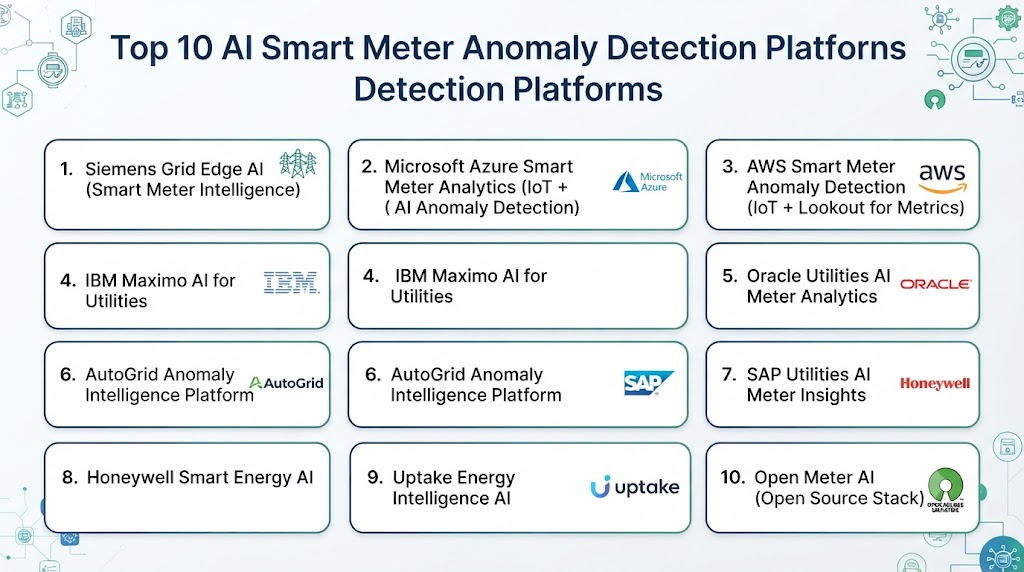
Top 10 AI Smart Meter Anomaly Detection Platforms
#1 — Siemens Grid Edge AI (Smart Meter Intelligence)
One-line verdict: Best for utility-scale smart meter anomaly detection integrated with national grid systems.
Short description (2–3 lines):
Siemens Grid Edge AI provides advanced anomaly detection for smart meters and grid systems using AI-driven analytics, SCADA integration, and real-time monitoring across utility networks.
Standout Capabilities
- Real-time smart meter anomaly detection
- Energy theft detection models
- Grid-wide consumption analytics
- SCADA integration for utilities
- Edge-based anomaly detection systems
- Fault isolation in meter networks
AI-Specific Depth
- Model support: Proprietary industrial AI + anomaly detection models
- RAG / knowledge integration: Smart meter + grid datasets
- Evaluation: Utility-grade detection accuracy metrics
- Guardrails: Strict grid safety constraints
- Observability: Advanced utility dashboards
Pros
- Extremely reliable for utility-scale systems
- Strong grid integration
- Proven industrial adoption
Cons
- High implementation complexity
- Enterprise-only focus
Security & Compliance
- Industrial-grade security
- Utility regulatory compliance support
- SCADA-secured environments
Deployment & Platforms
- On-premise + hybrid
Integrations & Ecosystem
- SCADA systems
- AMI infrastructure
- Smart grid platforms
Pricing Model
Enterprise licensing
Best-Fit Scenarios
- National electricity utilities
- Smart grid operators
- Large AMI deployments
#2 — Microsoft Azure Smart Meter Analytics (IoT + AI Anomaly Detection)
One-line verdict: Best for scalable cloud-based smart meter anomaly detection with IoT integration.
Short description:
Microsoft Azure uses IoT Hub and AI services to detect anomalies in smart meter data in real time across distributed utility systems.
Standout Capabilities
- Real-time anomaly detection pipelines
- Smart meter streaming analytics
- Energy theft detection models
- Predictive failure detection
- IoT-based meter monitoring
- Grid behavior analysis
AI-Specific Depth
- Model support: Azure ML + anomaly detection models
- RAG / knowledge integration: IoT + utility datasets
- Evaluation: Model drift tracking
- Guardrails: Enterprise governance controls
- Observability: Azure Monitor dashboards
Pros
- Strong IoT ecosystem
- Highly scalable architecture
- Good enterprise adoption
Cons
- Complex setup
- Requires Azure ecosystem dependency
Security & Compliance
- RBAC, encryption, audit logs
- Utility compliance support
Deployment & Platforms
- Cloud + hybrid
Integrations & Ecosystem
- Azure IoT Hub
- Power BI
- Utility management systems
Pricing Model
Usage-based enterprise pricing
Best-Fit Scenarios
- Smart cities
- Utility companies
- Digital grid transformation
#3 — AWS Smart Meter Anomaly Detection (IoT + Lookout for Metrics)
One-line verdict: Best cloud-native solution for scalable smart meter anomaly detection pipelines.
Short description:
AWS provides anomaly detection using IoT Core and machine learning services designed for large-scale smart meter telemetry systems.
Standout Capabilities
- Real-time streaming anomaly detection
- Smart meter data ingestion pipelines
- Energy theft detection analytics
- Predictive failure alerts
- Scalable IoT integration
- Multi-region meter monitoring
AI-Specific Depth
- Model support: AWS ML + Lookout for Metrics
- RAG / knowledge integration: External data pipelines
- Evaluation: Statistical anomaly scoring
- Guardrails: IAM-based controls
- Observability: CloudWatch monitoring
Pros
- Highly scalable infrastructure
- Strong IoT integration
- Reliable cloud performance
Cons
- Requires AWS expertise
- Limited utility-specific features
Security & Compliance
- IAM, encryption, logging
- Enterprise-grade compliance
Deployment & Platforms
- Cloud-native AWS ecosystem
Integrations & Ecosystem
- AWS IoT Core
- Lambda
- Energy analytics pipelines
Pricing Model
Pay-per-use
Best-Fit Scenarios
- Utility-scale smart meters
- Energy theft detection systems
- IoT-heavy deployments
#4 — IBM Maximo AI for Utilities
One-line verdict: Best for enterprise asset + smart meter anomaly detection in regulated environments.
Standout Capabilities
- Smart meter anomaly detection
- Utility asset monitoring
- Energy theft identification
- Predictive maintenance for meters
- Grid analytics dashboards
AI-Specific Depth
- Model support: IBM AI + hybrid models
- RAG / knowledge integration: Utility asset data
- Evaluation: Operational KPIs
- Guardrails: Strong governance policies
- Observability: Utility dashboards
Pros
- Strong enterprise governance
- Good asset + meter integration
- Reliable analytics
Cons
- Complex platform
- Not lightweight
Security & Compliance
- Enterprise-grade compliance
- Strong audit capabilities
Deployment & Platforms
- Cloud + on-premise
Integrations & Ecosystem
- Utility systems
- AMI platforms
Pricing Model
Enterprise licensing
Best-Fit Scenarios
- Large utility providers
- Government energy systems
#5 — Oracle Utilities AI Meter Analytics
One-line verdict: Best for billing-integrated anomaly detection and smart meter analytics.
Standout Capabilities
- Smart meter anomaly detection
- Billing fraud detection
- Energy consumption analytics
- Utility data management
- Customer usage insights
AI-Specific Depth
- Model support: Oracle AI + analytics models
- RAG / knowledge integration: Utility billing datasets
- Evaluation: Business KPI tracking
- Guardrails: Enterprise controls
- Observability: Utility dashboards
Pros
- Strong billing integration
- Enterprise utility focus
- Good analytics tools
Cons
- Complex setup
- Less flexible AI tooling
Security & Compliance
- Enterprise-grade security
- Utility compliance support
Deployment & Platforms
- Cloud + hybrid
Integrations & Ecosystem
- Oracle utilities suite
- Billing systems
Pricing Model
Enterprise pricing
Best-Fit Scenarios
- Utility billing systems
- Energy fraud detection
#6 — AutoGrid Anomaly Intelligence Platform
One-line verdict: Best for real-time grid and smart meter anomaly detection with demand response integration.
Standout Capabilities
- Smart meter anomaly detection
- Grid behavior analytics
- Energy theft detection
- Demand response integration
- Distributed meter monitoring
AI-Specific Depth
- Model support: Proprietary AI models
- RAG / knowledge integration: Grid datasets
- Evaluation: Anomaly KPIs
- Guardrails: Utility safety constraints
- Observability: Energy dashboards
Pros
- Strong utility integration
- Real-time analytics
- Renewable-friendly
Cons
- Industry-specific
- Limited developer control
Security & Compliance
- Utility-grade compliance
Deployment & Platforms
- Cloud + hybrid
Integrations & Ecosystem
- Smart grids
- AMI systems
Pricing Model
Enterprise subscription
Best-Fit Scenarios
- Utility companies
- Smart grid systems
#7 — SAP Utilities AI Meter Insights
One-line verdict: Best for enterprise ERP-integrated smart meter anomaly detection.
Standout Capabilities
- Meter anomaly detection
- Utility ERP integration
- Billing reconciliation
- Energy consumption analytics
AI-Specific Depth
- Model support: SAP AI models
- RAG / knowledge integration: ERP datasets
- Evaluation: Business KPIs
- Guardrails: Enterprise governance
- Observability: SAP dashboards
Pros
- Strong ERP integration
- Good enterprise adoption
- Reliable analytics
Cons
- Complex implementation
- Less AI flexibility
Security & Compliance
- Enterprise-grade SAP security
Deployment & Platforms
- Cloud + hybrid
Integrations & Ecosystem
- SAP utilities suite
- Billing systems
Pricing Model
Enterprise licensing
Best-Fit Scenarios
- Utility ERP systems
- Billing + grid integration
#8 — Honeywell Smart Energy AI
One-line verdict: Best for industrial smart meter monitoring and building-integrated utilities.
Standout Capabilities
- Smart meter anomaly detection
- Energy usage monitoring
- Industrial energy analytics
- Fault detection systems
AI-Specific Depth
- Model support: Proprietary industrial models
- RAG / knowledge integration: Facility data
- Evaluation: Efficiency KPIs
- Guardrails: Safety constraints
- Observability: Dashboards
Pros
- Strong industrial expertise
- Reliable monitoring
- Good automation
Cons
- Limited scalability for national grids
- Narrow focus
Security & Compliance
- Industrial-grade security
Deployment & Platforms
- Edge + hybrid
Integrations & Ecosystem
- Building systems
- Utility meters
Pricing Model
Enterprise
Best-Fit Scenarios
- Industrial facilities
- Smart buildings
#9 — Uptake Energy Intelligence AI
One-line verdict: Best for industrial IoT anomaly detection across energy systems.
Standout Capabilities
- AI anomaly detection for energy usage
- Smart meter analytics
- Predictive maintenance
- Industrial energy optimization
AI-Specific Depth
- Model support: Industrial ML models
- RAG / knowledge integration: IoT datasets
- Evaluation: KPI tracking
- Guardrails: Enterprise controls
- Observability: Analytics dashboards
Pros
- Strong industrial AI focus
- Flexible analytics
- Good scalability
Cons
- Not utility-specific
- Requires customization
Security & Compliance
- Enterprise security support
Deployment & Platforms
- Cloud-based
Integrations & Ecosystem
- IoT systems
- Energy platforms
Pricing Model
Subscription
Best-Fit Scenarios
- Industrial energy systems
- Smart factories
#10 — Open Meter AI (Open Source Stack)
One-line verdict: Best open-source framework for building custom smart meter anomaly detection systems.
Standout Capabilities
- Custom anomaly detection models
- Time-series energy analytics
- IoT integration pipelines
- Edge AI deployment support
- Flexible architecture
AI-Specific Depth
- Model support: Open-source ML models
- RAG / knowledge integration: Fully customizable
- Evaluation: Developer-defined metrics
- Guardrails: None built-in
- Observability: Custom dashboards
Pros
- Full flexibility
- No vendor lock-in
- Ideal for innovation
Cons
- Requires ML expertise
- No enterprise support
Security & Compliance
- Depends on deployment
Deployment & Platforms
- Self-hosted / hybrid
Integrations & Ecosystem
- Python ML ecosystem
- AMI systems
- IoT pipelines
Pricing Model
Open-source
Best-Fit Scenarios
- Research labs
- Custom utility systems
- Experimental AI projects
Comparison Table
| Tool Name | Best For | Deployment | Model Flexibility | Strength | Watch-Out | Public Rating |
|---|---|---|---|---|---|---|
| Siemens | Utility grids | Hybrid | Proprietary | Reliability | Complexity | N/A |
| Microsoft Azure | Smart cities | Cloud/Hybrid | ML + proprietary | IoT integration | Complexity | N/A |
| AWS | IoT monitoring | Cloud | ML models | Scalability | AWS dependency | N/A |
| IBM Maximo | Asset + utility systems | Hybrid | Hybrid | Governance | Complexity | N/A |
| Oracle Utilities | Billing systems | Cloud/Hybrid | Proprietary | Billing integration | Complexity | N/A |
| AutoGrid | Grid monitoring | Cloud/Hybrid | Proprietary | Real-time analytics | Narrow scope | N/A |
| SAP Utilities | ERP utilities | Cloud/Hybrid | Proprietary | ERP integration | Complexity | N/A |
| Honeywell | Industrial systems | Edge/Hybrid | Proprietary | Energy monitoring | Limited scale | N/A |
| Uptake | Industrial IoT | Cloud | ML models | Predictive analytics | Not utility-specific | N/A |
| Open Meter AI | Custom systems | Self-hosted | Open-source | Flexibility | No support | N/A |
Scoring & Evaluation (Transparent Rubric)
| Tool | Core | Reliability | Guardrails | Integrations | Ease | Perf/Cost | Security/Admin | Support | Weighted Total |
|---|---|---|---|---|---|---|---|---|---|
| Siemens | 9 | 9 | 9 | 8 | 6 | 8 | 9 | 9 | 8.3 |
| Microsoft | 9 | 9 | 9 | 9 | 7 | 8 | 9 | 9 | 8.6 |
| AWS | 8 | 9 | 7 | 9 | 7 | 8 | 9 | 8 | 8.1 |
| IBM | 8 | 8 | 9 | 8 | 7 | 7 | 9 | 8 | 7.9 |
| Oracle | 8 | 8 | 8 | 8 | 7 | 7 | 9 | 8 | 7.9 |
| AutoGrid | 8 | 8 | 8 | 8 | 7 | 8 | 8 | 8 | 8.0 |
| SAP | 8 | 8 | 9 | 8 | 7 | 7 | 9 | 8 | 7.9 |
| Honeywell | 8 | 8 | 8 | 7 | 7 | 8 | 8 | 8 | 7.9 |
| Uptake | 8 | 8 | 7 | 8 | 7 | 8 | 8 | 8 | 7.8 |
| Open Meter AI | 8 | 7 | 6 | 7 | 6 | 9 | 6 | 7 | 7.2 |
Which Smart Meter Anomaly Detection Tool Is Right for You?
Small Utilities
Best fit: Honeywell, Uptake
Focus: cost efficiency + monitoring
Mid-Sized Utilities
Best fit: AutoGrid, SAP, IBM
Focus: billing + anomaly detection
Enterprise / National Utilities
Best fit: Siemens, Microsoft Azure, AWS
Focus: scalability + grid intelligence
Developers / Custom Systems
Best fit: Open Meter AI
Focus: flexibility + experimentation
Implementation Playbook (30 / 60 / 90 Days)
30 Days: Pilot
- Collect smart meter data streams
- Define anomaly baselines
- Test detection models
60 Days: Integration
- Connect AMI systems
- Deploy real-time anomaly pipelines
- Enable alerting systems
90 Days: Scale
- Deploy across utility regions
- Automate fraud detection workflows
- Integrate with billing and grid systems
- Enable continuous learning models
Common Mistakes & How to Avoid Them
- Ignoring data latency issues
- Poor AMI integration
- Not handling false positives properly
- Weak fraud detection logic
- Lack of edge AI deployment
- No real-time streaming architecture
- Missing cybersecurity controls
- Poor data quality management
- No explainability layer
- Over-reliance on cloud-only systems
- Lack of regulatory compliance planning
- No model drift monitoring
- Weak anomaly labeling strategy
- Missing billing integration
FAQs
What is smart meter anomaly detection?
It is the use of AI to detect unusual energy usage patterns in smart meter data.
Why is it important?
It helps detect fraud, faults, and inefficiencies in energy systems.
Can it detect energy theft?
Yes, it is widely used for theft detection in utilities.
Does it work in real time?
Yes, modern systems support real-time streaming detection.
What data is used?
Smart meter readings, grid data, and IoT sensor data.
Is cloud required?
Not always; edge systems are common.
What is AMI?
Advanced Metering Infrastructure used to collect smart meter data.
Can it reduce billing errors?
Yes, it improves billing accuracy.
Who uses it?
Utilities, governments, and smart city operators.
What is the biggest challenge?
Data quality and false positive reduction.
Is open-source viable?
Yes, but requires expertise.
Can it prevent outages?
Indirectly, by detecting grid anomalies early.
Conclusion
AI Smart Meter Anomaly Detection is a critical technology for modern utilities, enabling fraud detection, grid stability, and accurate billing at massive scale.The best solution depends on organizational needs: hyperscalers dominate scale, industrial vendors ensure reliability, and open-source systems provide flexibility.

Find Trusted Cardiac Hospitals
Compare heart hospitals by city and services — all in one place.
Explore Hospitals