
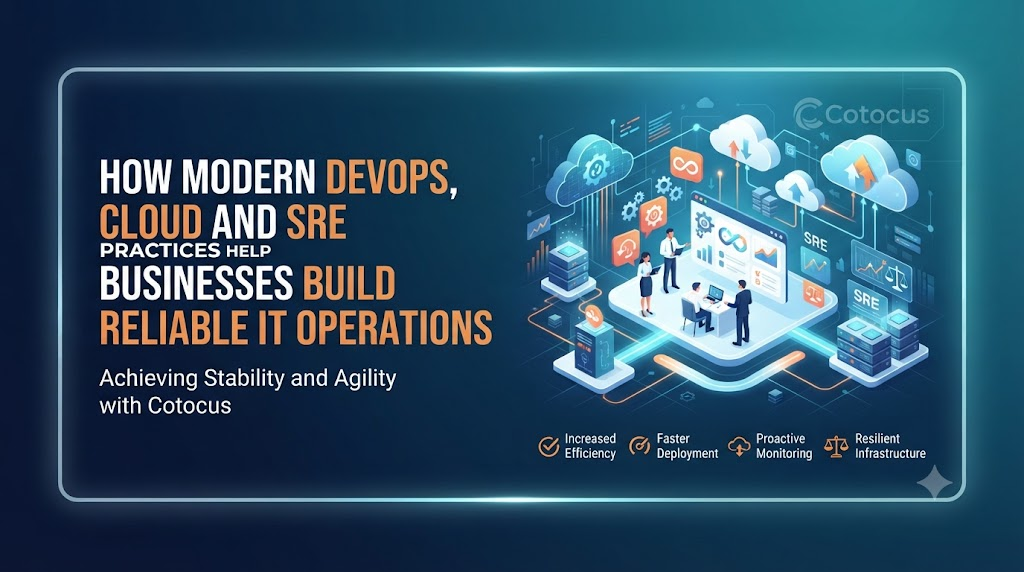
Introduction
Modern organizations face relentless pressure to deliver software faster while keeping systems reliable, secure, scalable, and operationally efficient. In competitive markets, the ability to ship new features rapidly directly impacts business growth and customer satisfaction. However, achieving this velocity is difficult when engineering teams are weighed down by manual deployments, fragmented infrastructure, cloud complexity, security gaps, reliability issues, and a persistent shortage of specialized technical skills.
Many IT departments struggle with siloed workflows where development and operations teams operate independently, leading to friction, deployment bottlenecks, and finger-pointing when production issues occur. Managing Kubernetes environments, configuring secure cloud resources, and maintaining continuous delivery pipelines require a diverse set of engineering disciplines that few internal teams possess in equal measure. Addressing these challenges requires more than just adopting a few new tools. It demands a connected approach to modern software delivery and operations that brings together DevOps, cloud engineering, security, reliability practices, and strategic workforce development.
Understanding DevOps in Modern Organizations
DevOps represents a fundamental shift in how software is built, tested, deployed, and maintained. At its core, DevOps bridges the gap between software development and IT operations, fostering shared ownership throughout the entire application lifecycle.
Instead of treating development and operations as separate entities, modern DevOps relies on a cohesive framework of practices:
- Continuous integration to automatically merge and test code changes frequently
- Continuous delivery to ensure code is always in a releasable state and ready for automated deployment
- Infrastructure as code to provision and manage environments through version-controlled configuration files rather than manual server setup
- Automated testing and deployment automation to eliminate human error during release cycles
- Monitoring and observability to gain deep visibility into application health and system performance
- Robust feedback loops that help engineering teams identify issues early and drive continuous improvement
Crucially, DevOps is not simply a collection of tools or a distinct department. It is a combination of culture, engineering practices, automation, and operational discipline. When implemented effectively, it transforms how organizations handle technical change, reducing deployment friction and allowing engineering teams to focus on delivering business value.
When Businesses Need DevOps Consulting Services
As organizations scale their software engineering efforts, internal teams often reach a point where they encounter architectural bottlenecks, slow release cycles, or mounting infrastructure costs. In these scenarios, engaging external expertise through DevOps Consulting Services can help organizations assess their current software delivery and operational processes objectively.
Consultants typically review several critical areas:
- DevOps maturity and current release bottlenecks
- CI/CD pipeline modernization and automation gaps
- Infrastructure as code adoption and configuration management
- Cloud readiness and containerization strategies
- Observability frameworks and incident management workflows
- DevSecOps integration across development stages
External consulting is particularly valuable when an internal team lacks specialized experience in migrating legacy architectures, implementing complex container orchestration platforms, or transforming developer workflows. An experienced consulting partner brings cross-industry perspective, helping internal teams avoid common pitfalls and accelerate their modernization journey without disrupting ongoing business operations.
Managed DevOps Services for Ongoing Operations
While project-based consulting helps organizations establish modern architectures and pipelines, maintaining these systems day-to-day requires continuous attention. This is where Managed DevOps Services play a vital role, bridging the gap between internal resource constraints and the demands of 24/7 IT operations.
Ongoing managed support typically encompasses:
- CI/CD pipeline maintenance, troubleshooting, and optimization
- Infrastructure monitoring, proactive alert management, and incident support
- Cloud operations, cost visibility, and resource scaling
- Configuration management and infrastructure patching
- Observability enhancements and log aggregation management
The exact scope of managed services depends heavily on an organization’s existing technology stack, internal responsibilities, service-level expectations, and operating model. By delegating routine operational maintenance and pipeline oversight to external specialists, internal engineering teams can redirect their focus toward core product development and business-critical innovation.
Cloud Consulting Services and Cloud Strategy
Moving workloads to the cloud offers immense potential for scalability and agility, but successful adoption requires far more than simply lifting and shifting existing servers to a cloud provider. A poorly planned migration often results in unexpected costs, security vulnerabilities, and architectural inefficiencies.
Comprehensive cloud consulting addresses these complexities by evaluating key strategic pillars:
- Cloud readiness assessment and workload analysis
- Architecture planning tailored to application demands
- Cloud-native modernization and service decoupling
- Security posture, compliance baselines, and governance frameworks
- Cost management, resource optimization, and FinOps practices
- Scalability, high availability, and infrastructure automation
Through targeted Cloud Consulting Services, organizations learn to select cloud architectures based on actual workload requirements and long-term business objectives rather than following fleeting technological trends.
Planning a Successful Cloud Migration
Transitioning applications and infrastructure to the cloud requires a structured methodology to minimize disruption and mitigate risk. Before any code or data is moved, engineering teams must conduct thorough discovery and planning.
Essential considerations in a migration plan include:
- Application discovery and comprehensive dependency mapping
- Detailed migration assessment and technical feasibility studies
- Data migration strategies and database compatibility checks
- Comprehensive security planning and access control configuration
- Clear migration strategy selection, testing, and rollback planning
- Post-migration performance validation and continuous optimization
Depending on application architecture and business goals, organizations generally evaluate strategies such as rehosting, replatforming, refactoring, or retiring legacy workloads. Throughout this process, partnering with specialists who offer dedicated Cloud Migration Services ensures that migrations are executed smoothly, maintaining data integrity and system availability.
Kubernetes Consulting Services for Containerized Applications
For organizations operating containerized workloads at scale, Kubernetes has become the industry standard for container orchestration. However, its immense power and flexibility come with a steep learning curve and significant operational complexity.
Specialized advisory efforts typically focus on:
- Cluster architecture design and multi-tenant isolation
- Application deployment strategies and automated scaling policies
- Advanced networking, ingress management, and persistent storage configuration
- Cluster security, role-based access control, and vulnerability scanning
- Observability, metrics collection, and CI/CD integration
When internal teams find themselves struggling with cluster stability, deployment failures, or resource inefficiency, seeking Kubernetes Consulting Services provides the architectural guidance needed to stabilize containerized environments. It is important to note that Kubernetes is not a universal remedy; simpler applications are often better served by managed container services or traditional deployment models without the overhead of cluster management.
Integrating Security With DevSecOps
Traditional software development models often treat security as a final checkpoint before production release, leading to costly delays and vulnerabilities discovered too late in the cycle. DevSecOps addresses this flaw by integrating security practices earlier into the software development and delivery lifecycle.
Key components of a mature DevSecOps practice include:
- Secure coding guidelines and developer education
- Static and dynamic application security testing embedded in pipelines
- Automated dependency scanning and container image vulnerability checks
- Secure secrets management and infrastructure security hardening
- Compliance monitoring and automated policy enforcement
By leveraging DevSecOps Consulting Services, organizations can embed security guardrails directly into their CI/CD pipelines. This ensures that security checks occur continuously without severely impeding developer velocity or introducing administrative friction.
SRE Consulting Services and Reliability Engineering
While DevOps focuses heavily on speed and collaboration, Site Reliability Engineering places a primary emphasis on system availability, performance, and risk management. SRE applies software engineering principles to IT operations to build scalable and highly reliable software systems.
Core SRE practices involve:
- Defining service level indicators and service level objectives
- Managing error budgets to balance feature velocity with system stability
- Implementing advanced monitoring, logging, and observability tools
- Structuring incident response protocols and blameless post-incident reviews
- Capacity planning and reliability automation
Organizations looking to mature their operational resilience often turn to SRE Consulting Services to help teams make reliability measurable, automate repetitive operational tasks, and systematically reduce technical debt.
Platform Engineering and Internal Developer Platforms
As engineering organizations grow, developers often spend excessive time managing infrastructure, setting up pipelines, and navigating disparate toolchains. Platform engineering solves this challenge by treating internal developer tooling and infrastructure as a dedicated product.
Effective platform engineering initiatives focus on:
- Building internal developer platforms with self-service capabilities
- Establishing golden paths and standardized environment templates
- Creating centralized developer portals for easy service discovery
- Automated provisioning with built-in security guardrails and compliance
- Continuous improvement of the overall developer experience
Implementing Platform Engineering Consulting Services helps organizations reduce cognitive load for developers, accelerate feature delivery, and enforce consistent organizational standards without stifling engineering creativity.
DevOps Outsourcing as an Extension of Internal Teams
There are times when internal engineering departments face capacity constraints or skill gaps that prevent them from executing strategic modernization projects in a timely manner. In such situations, leveraging DevOps Outsourcing Services can provide the necessary technical muscle.
Outsourcing is particularly effective in scenarios such as:
- Addressing a temporary lack of specialized internal DevOps expertise
- Meeting tight project deadlines for cloud modernization or Kubernetes adoption
- Accelerating CI/CD pipeline transformation and automation initiatives
- Supplementing internal resources for ongoing infrastructure operations
Successful outsourcing relies heavily on clearly defining responsibilities, establishing transparent communication channels, maintaining comprehensive documentation, and ensuring thorough knowledge transfer so that internal teams retain ultimate ownership of their technical ecosystem.
Corporate DevOps Training and Internal Capability
External consulting and outsourcing provide immediate relief, but long-term success ultimately depends on the capabilities of the internal workforce. Combining technical consulting with targeted knowledge transfer ensures that internal teams understand how to maintain, troubleshoot, and evolve their systems independently.
Engaging in Corporate DevOps Training helps engineering teams strengthen practical skills across a wide range of modern disciplines:
- Core DevOps principles, cultural shifts, and automation strategies
- Containerization with Docker and orchestration with Kubernetes
- Cloud platforms, infrastructure as code, and GitOps workflows
- Continuous integration, continuous delivery, and advanced monitoring
- DevSecOps methodologies and site reliability engineering practices
Customized training programs tailored to an organization’s specific technology stack and current maturity level yield far better results than generic, one-size-fits-all educational courses. Cotocus provides comprehensive training covering DevOps, Cloud, DevSecOps, SRE, PlatformOps, and related operational disciplines, offering customized corporate programs designed to upskill internal engineering teams effectively.
How DevOps, Cloud, Kubernetes, SRE and Platform Engineering Work Together
These various engineering disciplines do not exist in isolation; they form an interconnected ecosystem designed to optimize the software delivery lifecycle. Understanding how they complement each other helps technology leaders plan their modernization roadmap logically.
A typical progression of modern IT capabilities follows a connected path:
- Cloud infrastructure provides the scalable foundation for modern workloads.
- DevOps practices improve software delivery speed and infrastructure automation.
- Kubernetes supports container orchestration where application architecture warrants it.
- DevSecOps embeds security seamlessly into delivery workflows.
- SRE focuses on system reliability, performance metrics, and operational risk.
- Platform engineering creates reusable internal capabilities that streamline developer workflows.
- Corporate training develops the internal skills required to operate and improve these systems over time.
Organizations do not need to implement every single practice simultaneously. A phased approach based on current pain points and business priorities yields the most sustainable results.
How to Choose the Right DevOps and Cloud Consulting Partner
Selecting an external consulting or training partner is a critical decision that influences an organization’s technical trajectory. Technology leaders should evaluate potential partners using a structured, decision-oriented set of criteria rather than relying solely on marketing claims.
Important questions to ask prospective partners include:
- What is your practical technical experience across cloud platforms and modern tooling?
- How do you ensure your technical recommendations align with our specific business requirements?
- What is your approach to knowledge transfer, documentation, and upskilling our internal team?
- How do you integrate security, compliance, and reliability into your consulting framework?
- What does your communication model and post-engagement support structure look like?
An ideal partner acts as a collaborative advisor, guiding internal teams toward self-sufficiency while implementing robust, scalable architectures.
How Cotocus Can Support Modern IT Operations
Navigating the complexities of modern software delivery, cloud infrastructure, and operational reliability requires a balanced blend of strategic guidance and technical execution. Cotocus operates as a specialized technology consulting and training provider, supporting organizations across DevOps, Cloud, DevSecOps, SRE, PlatformOps, and related engineering disciplines.
Through a combination of targeted consulting, modernization roadmaps, managed support capabilities, and corporate training programs, Cotocus helps engineering teams strengthen their technical foundations. Whether an organization needs assistance with cloud migration strategies, pipeline automation, container orchestration, or upskilling internal staff through customized training, expert guidance ensures that modernization efforts translate into tangible operational improvements.
Future of DevOps and Cloud Engineering
The landscape of software delivery and IT operations continues to evolve in response to new technologies and shifting business demands. Several practical trends are shaping the future for modern engineering teams:
- The continued rise of platform engineering and internal developer platforms to reduce cognitive load
- The integration of artificial intelligence and machine learning to assist with routine DevOps tasks and incident triage
- A growing emphasis on FinOps to tightly couple cloud cost management with architectural decision-making
- Advanced observability frameworks that provide proactive insights into system health
- Policy as code to automate compliance and governance across distributed environments
Rather than chasing every emerging trend, successful engineering organizations focus on adopting practices that directly enhance reliability, security, and developer productivity.
Conclusion
Modernizing IT operations requires an integrated approach that harmonizes software delivery, infrastructure management, security, reliability, platform engineering, and workforce development. Whether an organization is embarking on a cloud migration, optimizing Kubernetes clusters, or striving to bridge the gap between development and operations, success depends on aligning technical capabilities with clear business goals.
The right combination of strategic consulting, managed support, automation, and targeted training empowers internal teams to build resilient systems and deliver value efficiently. By partnering with experienced technology providers like Cotocus, organizations can navigate their modernization journey with confidence, establishing sustainable operational practices for the future.

Find Trusted Cardiac Hospitals
Compare heart hospitals by city and services — all in one place.
Explore Hospitals