
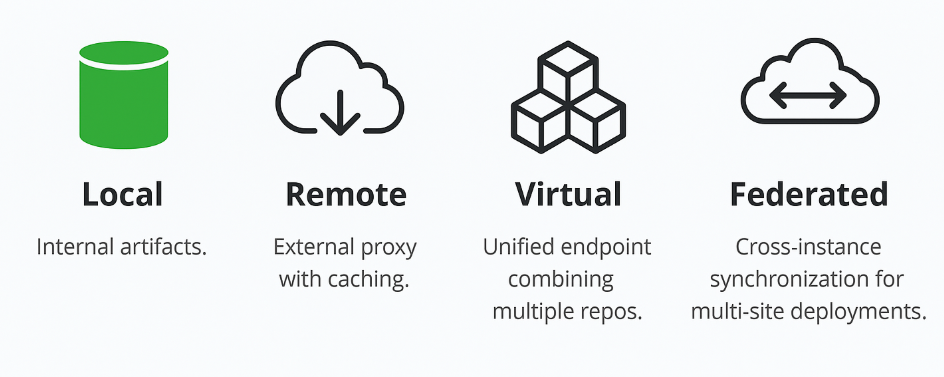
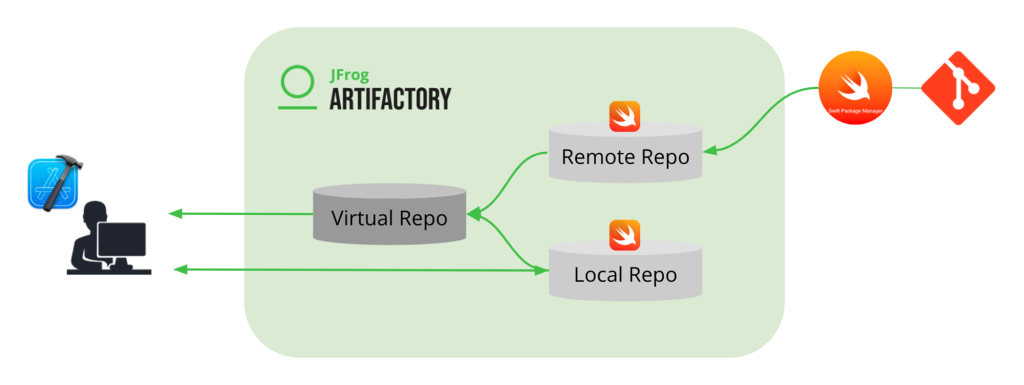
Here’s a detailed text-based table comparing Local, Remote, and Virtual repositories in JFrog Artifactory, including what each type can do and cannot do:
📊 Local vs Remote vs Virtual Repositories
| Aspect | Local Repository | Remote Repository | Virtual Repository |
|---|---|---|---|
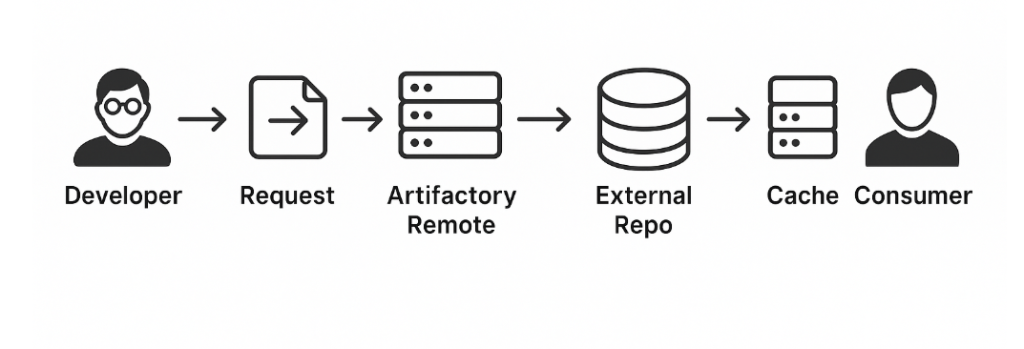
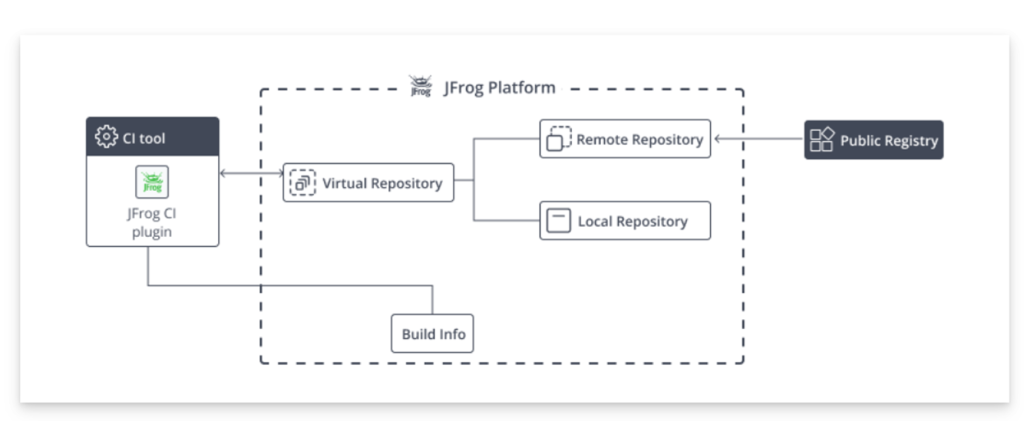
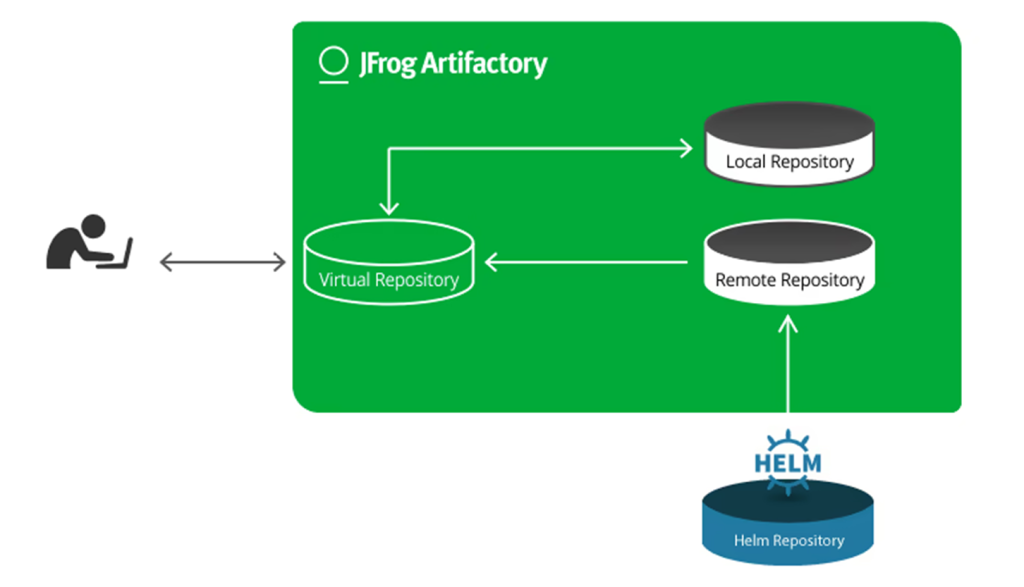
| Definition | Hosts internally created artifacts within Artifactory. | Acts as a caching proxy for external repositories (e.g., Maven Central, npm). | Provides a unified endpoint that aggregates multiple local and remote repositories. |
| Purpose | Store and version artifacts you build in-house. | Provide cached access to external dependencies and reduce build time. | Simplify dependency resolution by exposing a single URL for multiple repositories. |
| What It Can Do | ✅ Upload artifacts manually or via CI/CD pipelines.✅ Store proprietary/internal packages.✅ Full control over metadata, access, and promotion.✅ Always available since artifacts are internal. | ✅ Cache external artifacts for offline use.✅ Control external dependency versions.✅ Speed up builds by reducing external calls.✅ Verify artifact integrity via checksums. | ✅ Combine multiple repos under one endpoint.✅ Provide consistent repository URL to developers and pipelines.✅ Control repository priority/order for resolution.✅ Hide complexity of multiple repositories. |
| What It Cannot Do | ❌ Cannot fetch artifacts from external repositories automatically.❌ Cannot act as a proxy. | ❌ Cannot host internally built artifacts (only caches what it fetches).❌ Cannot promote artifacts between environments. | ❌ Cannot store artifacts itself (only routes to local/remote repos).❌ Cannot cache external artifacts directly. |
| Artifact Source | Internal builds and manual uploads. | External upstream repositories. | Combination of both local and remote sources. |
| Usage Example | Hosting your organization’s Maven or npm internal packages. | Caching dependencies from Maven Central or npmjs registry. | A single “all-in-one” endpoint for devs combining internal and external Maven repos. |
| Best For | Internal builds and proprietary packages. | External dependency caching and reproducibility. | Simplifying access for developers and CI/CD pipelines. |
✅ Summary:
- Local: Stores internal artifacts you create.
- Remote: Proxies and caches external repositories.
- Virtual: Combines local and remote into a single logical repository.

I’m Rajesh Kumar, a DevOps, SRE, DevSecOps, Cloud, and Platform Engineering expert passionate about sharing practical knowledge, real-world experiences, and industry best practices. I have worked at Cotocus and regularly write about technology, travel, investing, health, product reviews, and digital marketing through my various platforms.
I publish technical articles at DevOps School, travel stories at Holiday Landmark, stock market insights at Stocks Mantra, health and fitness guidance at My Medic Plus, product reviews at TrueReviewNow, and SEO and digital marketing strategies at Wizbrand.
Find Trusted Cardiac Hospitals
Compare heart hospitals by city and services — all in one place.
Explore Hospitals
This is a very clear comparison of local, remote, and virtual repositories in Artifactory! 📦 I like how each type is explained in a simple way — it makes understanding their differences much easier. Thanks for sharing this helpful guide!