When comparing AWS, Azure, and Google Cloud, their services often provide similar functionalities but under different names. Here’s a breakdown of common service categories and their corresponding names across these cloud providers:
1. Compute Services
Functionality
AWS
Azure
Google Cloud
Virtual Machines
EC2
Virtual Machines
Compute Engine
Serverless Computing
Lambda
Azure Functions
Cloud Functions
Container Orchestration
ECS/EKS (Kubernetes)
Azure Kubernetes Service
GKE (Google Kubernetes Engine)
Container Registry
Elastic Container Registry (ECR)
Azure Container Registry
Artifact Registry
Bare Metal
Bare Metal Instances
Azure Bare Metal Servers
Bare Metal Solution
2. Storage Services
Functionality
AWS
Azure
Google Cloud
Object Storage
S3
Azure Blob Storage
Cloud Storage
File Storage
Elastic File System
Azure Files
Filestore
Block Storage
Elastic Block Store
Azure Managed Disks
Persistent Disk
Archival Storage
Glacier
Azure Archive Storage
Archive Storage
3. Database Services
Functionality
AWS
Azure
Google Cloud
Relational Database
RDS
Azure SQL Database
Cloud SQL
NoSQL Database
DynamoDB
Azure Cosmos DB
Firestore/Bigtable
Data Warehouse
Redshift
Azure Synapse Analytics
BigQuery
Caching
ElastiCache
Azure Cache for Redis
Memorystore
4. Networking Services
Functionality
AWS
Azure
Google Cloud
Load Balancer
Elastic Load Balancer
Azure Load Balancer
Cloud Load Balancing
Content Delivery Network (CDN)
CloudFront
Azure CDN
Cloud CDN
Virtual Private Network (VPN)
AWS VPN
Azure VPN Gateway
Cloud VPN
Private Network
VPC
Azure Virtual Network
VPC
DNS Services
Route 53
Azure DNS
Cloud DNS
5. AI and Machine Learning
Functionality
AWS
Azure
Google Cloud
Machine Learning Platform
SageMaker
Azure Machine Learning
Vertex AI
Natural Language Processing
Comprehend
Azure Cognitive Services
Natural Language AI
Speech Recognition
Transcribe
Azure Speech Services
Speech-to-Text
Image Recognition
Rekognition
Azure Computer Vision
Vision AI
6. DevOps and CI/CD
Functionality
AWS
Azure
Google Cloud
CI/CD Pipelines
CodePipeline
Azure DevOps Pipelines
Cloud Build
Infrastructure as Code (IaC)
CloudFormation
Azure Resource Manager
Deployment Manager
Git Repository
CodeCommit
Azure Repos
Cloud Source Repositories
7. Security and Identity
Functionality
AWS
Azure
Google Cloud
Identity and Access Management
IAM
Azure Active Directory (AAD)
Cloud IAM
Key Management
KMS
Azure Key Vault
Cloud KMS
Web Application Firewall (WAF)
AWS WAF
Azure Web Application Firewall
Cloud Armor
Threat Detection
GuardDuty
Azure Security Center
Security Command Center
8. Analytics and Big Data
Functionality
AWS
Azure
Google Cloud
Big Data Processing
EMR (Elastic MapReduce)
Azure HDInsight
Dataflow
Data Visualization
QuickSight
Power BI
Looker
Event Streaming
Kinesis
Azure Event Hubs
Pub/Sub
9. IoT (Internet of Things)
Functionality
AWS
Azure
Google Cloud
IoT Core
AWS IoT Core
Azure IoT Hub
IoT Core
Device Management
AWS IoT Device Management
Azure IoT Central
IoT Device Manager
10. Serverless Messaging and Notifications
Functionality
AWS
Azure
Google Cloud
Messaging Service
SNS (Simple Notification Service)
Azure Service Bus
Pub/Sub
Queue Service
SQS (Simple Queue Service)
Azure Queue Storage
Cloud Tasks
Summary
While the functionalities are largely equivalent, the names and exact implementation details vary across the providers. Choosing a provider often depends on factors like cost, ease of integration, existing ecosystem (AWS, Azure, or Google Cloud), and specific service features.
I’m Rajesh Kumar, a DevOps, SRE, DevSecOps, Cloud, and Platform Engineering expert passionate about sharing practical knowledge, real-world experiences, and industry best practices. I have worked at Cotocus and regularly write about technology, travel, investing, health, product reviews, and digital marketing through my various platforms.
I publish technical articles at DevOps School, travel stories at Holiday Landmark, stock market insights at Stocks Mantra, health and fitness guidance at My Medic Plus, product reviews at TrueReviewNow, and SEO and digital marketing strategies at Wizbrand.
Find Trusted Cardiac Hospitals
Compare heart hospitals by city and services — all in one place.
I'm Rajesh Kumar, a DevOps, SRE, DevSecOps, Cloud, and Platform Engineering expert passionate about sharing practical knowledge, real-world experiences, and industry best practices. I have worked at Cotocus and regularly write about technology, travel, investing, health, product reviews, and digital marketing through my various platforms.
I publish technical articles at DevOps School, travel stories at Holiday Landmark, stock market insights at Stocks Mantra, health and fitness guidance at My Medic Plus, product reviews at TrueReviewNow, and SEO and digital marketing strategies at Wizbrand.
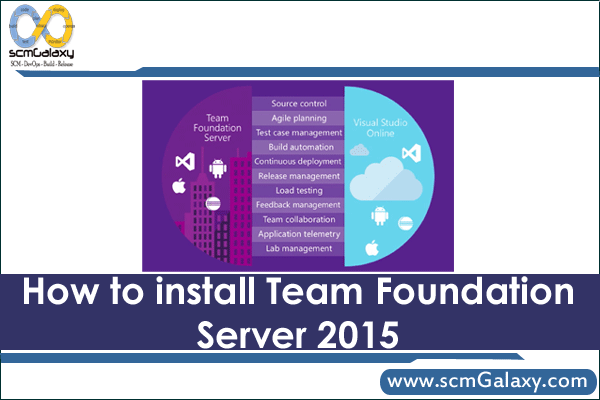
Install Team Foundation Server 2015 using the original Microsoft download paths, with clear guidance for online, offline, and ISO-based setup. This revised guide also includes an installation workflow, command example, and practical pitfalls to avoid.
Need a shell inside a running container that is already in detached mode? This updated guide shows the correct workflow, compares docker exec and docker attach, and explains when SSH does and does not make sense.
Learn how to host a private NuGet feed using three practical approaches: a local folder source, NuGet.Server, and NuGetGallery. This revised guide includes setup steps, command examples, and a workflow diagram to help you choose the right model.
Learn how to publish a NuGet package to NuGet.org using either nuget.exe or the dotnet CLI. This revised guide includes a workflow diagram, command comparison, and a CI-friendly example.
Learn three practical ways to build NuGet packages using nuget.exe: from an existing assembly, from a convention-based folder layout, or directly from a Visual Studio project. This guide includes commands, folder conventions, token behavior, and common pitfalls.
This guide explains how VM-based workflows, containers, and cloud platforms complement each other in DevOps. It includes a practical workflow, trade-off table, and command examples for day-to-day use.