Originally published on 2010-04-26; fully revised and updated.
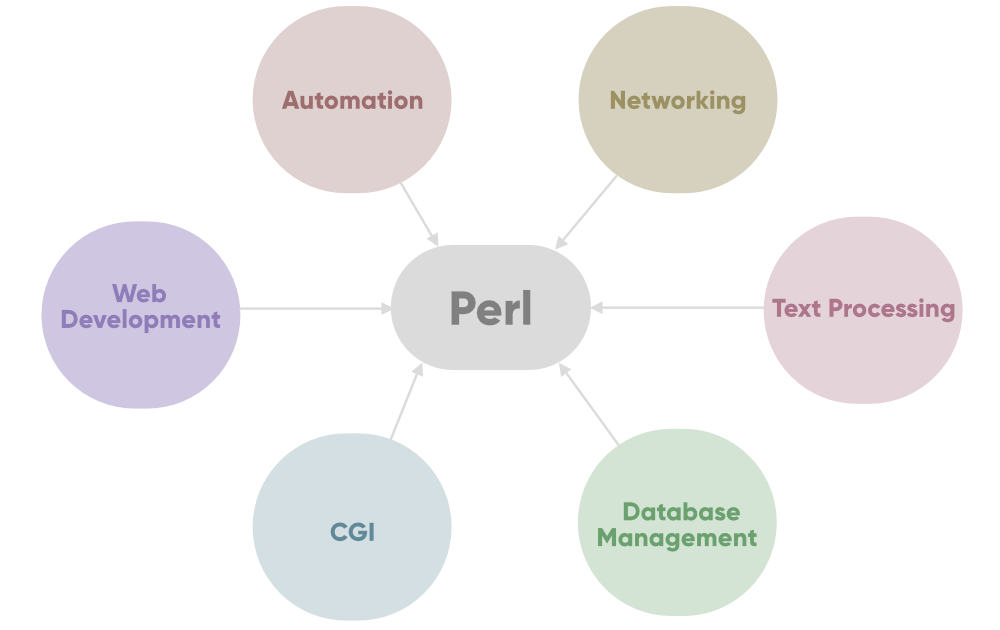
Perl is a general-purpose scripting language that many operations and platform teams still use for automation, text processing, and integration work. This guide is for DevOps engineers who want a clear, modern view of what Perl is, when it is a good choice, and how to use it safely in day-to-day workflows.

What Perl is and where it fits today
Perl is an interpreted, high-level language with strong text-processing capabilities and broad platform support. In practice, most production usage refers to Perl 5. Perl is often used as a glue language to connect files, commands, APIs, and databases in one script.
Two long-standing strengths are its package ecosystem at CPAN and its portability across many systems (see CPAN ports).
- Strong regular expressions and text manipulation
- Fast scripting for operations and batch tasks
- Mature module ecosystem for database, networking, and system tasks
- Works well in mixed-language environments
Why teams still choose Perl
Perl is still useful when your workload is mostly parsing, transforming, and moving data between systems. It is also common in older UNIX/Linux estates where Perl is already installed and existing scripts are business-critical.
- Automation speed: Short scripts can solve real operational tasks quickly.
- Text-centric jobs: Log parsing, report generation, and file conversion are natural fits.
- Database access: DBI-based scripts provide a consistent model across drivers.
- Apache history: mod_perl has historically been used to reduce CGI overhead in Apache-based stacks.
Typical Perl automation workflow
A common pattern is to ingest data, validate and transform it, then send results to a report, database, or service endpoint.
flowchart TD
    A[Logs files database] --> B[Perl script reads input]
    B --> C[Parse and validate]
    C --> D[Transform and enrich]
    D --> E{Output target}
    E --> F[Report file]
    E --> G[Database update]
    E --> H[API request]
    C --> I[Error log]
Perl vs Bash vs Python for DevOps tasks
| Tool | Best for | Trade-offs |
|---|---|---|
| Perl | Text-heavy automation, legacy integration, CPAN-based scripting | Readability can vary across codebases; style discipline matters |
| Bash | Simple command orchestration and shell pipelines | Limited structure for complex logic and larger programs |
| Python | Larger automation services and team-standard application code | May require more scaffolding for quick one-off shell-adjacent tasks |
Hands-on examples
Basic commands
perl -v
perldoc perlintro
perl my_script.plCode language: CSS (css)
Parse status codes from input logs
#!/usr/bin/env perl
use strict;
use warnings;

my %count;

while (defined(my $line = readline(*STDIN))) {
    if ($line =~ /status=(\d{3})/) {
        $count{$1}++;
    }
}

for my $code (sort keys %count) {
    print "$code $count{$code}\n";
}Code language: PHP (php)
Quick one-liner
perl -ne 'print if /ERROR/' app.logCode language: JavaScript (javascript)Database query with DBI
use strict;
use warnings;
use DBI;

my $dbh = DBI->connect(
    "dbi:SQLite:dbname=app.db",
    "",
    "",
    { RaiseError => 1, AutoCommit => 1 }
);

my $sth = $dbh->prepare("SELECT id, name FROM users WHERE active = ?");
$sth->execute(1);

while (my @row = $sth->fetchrow_array) {
    print join(",", @row), "\n";
}

$sth->finish;
$dbh->disconnect;Code language: PHP (php)
When Perl may not be the best choice
- Low-level, performance-critical binaries where compiled languages are a better fit
- Greenfield teams with strict standardization on another language
- Projects requiring broad hiring familiarity where team Perl expertise is limited
Best practices
- Use
strictandwarningsin every script. - Prefer clear variable names and small functions to keep scripts maintainable.
- Pin and document CPAN dependencies for reproducible deployments.
- Add tests for parsing logic, especially regex-heavy code.
- Treat Perl as one tool in your stack: ideal for text and integration tasks, not every workload.

I’m Rajesh Kumar, a DevOps, SRE, DevSecOps, Cloud, and Platform Engineering expert passionate about sharing practical knowledge, real-world experiences, and industry best practices. I have worked at Cotocus and regularly write about technology, travel, investing, health, product reviews, and digital marketing through my various platforms.
I publish technical articles at DevOps School, travel stories at Holiday Landmark, stock market insights at Stocks Mantra, health and fitness guidance at My Medic Plus, product reviews at TrueReviewNow, and SEO and digital marketing strategies at Wizbrand.
Find Trusted Cardiac Hospitals
Compare heart hospitals by city and services — all in one place.
Explore Hospitals