
Overview
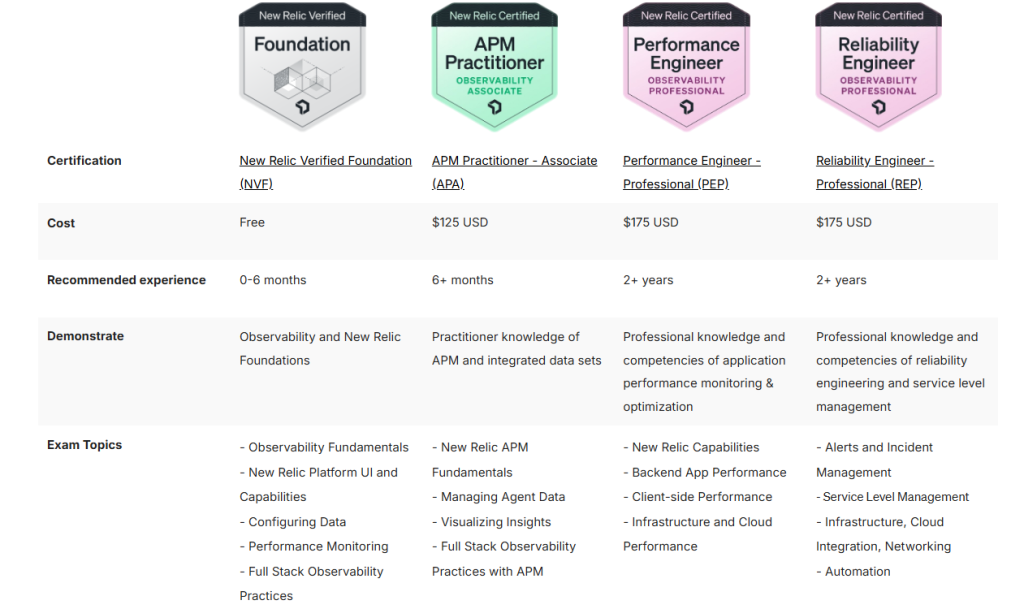
The New Relic Certified Reliability Engineer – Professional (REP) certification is designed for experienced engineers who are responsible for ensuring the reliability, scalability, and availability of software systems. This certification validates an individual’s advanced skills in building, monitoring, and maintaining resilient systems using New Relic.
Reliability engineers play a crucial role in today’s high-availability environments. This certification provides the knowledge required to implement effective service level objectives (SLOs), alert policies, incident response strategies, and automation workflows. It focuses on best practices for proactive monitoring and managing complex infrastructure and applications.
Key Takeaways:
- Master service level management (SLIs, SLOs)
- Build and fine-tune alert policies and incident workflows
- Integrate infrastructure, logs, and cloud services
- Automate reliability practices and reporting
- Ensure full-stack observability and uptime optimization
Topics & Agenda for 3 Days Training
Day 1: Core Reliability Engineering Concepts and Alerting
Session 1: Introduction to Site Reliability Engineering (SRE)
- What is SRE?
- Principles of reliability and availability
- Core responsibilities of a Reliability Engineer
Session 2: Overview of New Relic Platform
- Navigating the New Relic One platform
- Data sources: agents, integrations, APIs
- Account structure and access control
Session 3: Alert Policies and Conditions
- Types of alerts (static, baseline, anomaly)
- Alert conditions, thresholds, and notification channels
- Alert muting rules and workflows
Lab: Create alert policies for backend services with notification routing
Day 2: Service Level Management & Observability
Session 1: SLIs, SLOs, and Error Budgets
- Defining service-level indicators and objectives
- Error budget policies and burn rate calculations
- Monitoring and visualizing SLO compliance
Session 2: Incident Management and Workflows
- Detecting, triaging, and resolving incidents
- Integration with PagerDuty, Opsgenie, Slack, and webhooks
- Runbooks and incident response automation
Session 3: Logs and Distributed Tracing
- Ingesting logs from services and cloud platforms
- Correlating logs with traces and metrics
- Using log patterns and anomaly detection for root cause analysis
Lab: Define SLOs and configure incident workflows with real-time alerts
Day 3: Infrastructure, Cloud, Networking, and Automation
Session 1: Infrastructure and Cloud Observability
- Deploying and configuring Infrastructure agents
- Integrating AWS, Azure, GCP services
- Monitoring containers (Docker, Kubernetes)
Session 2: Networking, Dependencies, and Service Maps
- Understanding traffic flow and service health
- Visualizing dependencies with maps and traces
- Identifying bottlenecks in distributed systems
Session 3: Automation and Reporting
- Automating reliability checks with Terraform/API
- Creating dashboards for operational metrics
- Reporting uptime, SLIs/SLOs, and alert compliance
Lab: Deploy infrastructure monitoring and automate reliability dashboards
Audience
This certification is ideal for:
- Site Reliability Engineers (SREs)
- DevOps and Cloud Engineers
- System Administrators
- IT Operations Engineers
- Observability Engineers
Prerequisites:
- Working experience in reliability, DevOps, or IT operations
- Familiarity with cloud-native applications and monitoring tools
- Basic knowledge of New Relic platform and observability concepts
Trainer
Rajesh Kumar
Certified New Relic Instructor and DevOps/SRE Expert
Website: https://www.rajeshkumar.xyz/
Rajesh Kumar is a leading trainer in the field of DevOps, SRE, and Observability, with two decades of industry experience. He has delivered hundreds of sessions on monitoring, performance, and reliability across global enterprises. Known for his practical, hands-on teaching methodology, Rajesh specializes in translating complex reliability concepts into real-world implementation strategies using tools like New Relic, Prometheus, and Grafana.
Exam Details
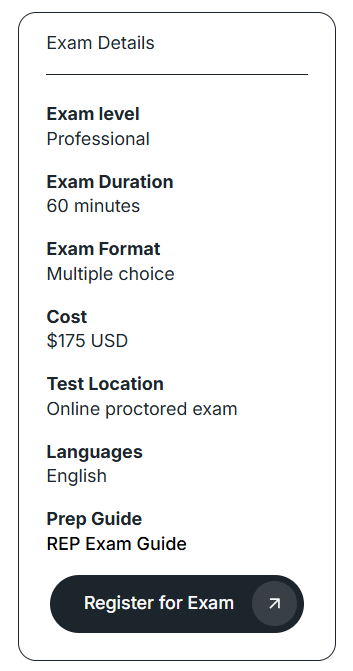
Note: For certification registration, pricing, and exam preparation resources, please visit:
https://learn.newrelic.com/page/new-relic-certified-reliability-engineer-professional-rep

I’m Rajesh Kumar, a DevOps, SRE, DevSecOps, Cloud, and Platform Engineering expert passionate about sharing practical knowledge, real-world experiences, and industry best practices. I have worked at Cotocus and regularly write about technology, travel, investing, health, product reviews, and digital marketing through my various platforms.
I publish technical articles at DevOps School, travel stories at Holiday Landmark, stock market insights at Stocks Mantra, health and fitness guidance at My Medic Plus, product reviews at TrueReviewNow, and SEO and digital marketing strategies at Wizbrand.
Find Trusted Cardiac Hospitals
Compare heart hospitals by city and services — all in one place.
Explore Hospitals





