
Introduction
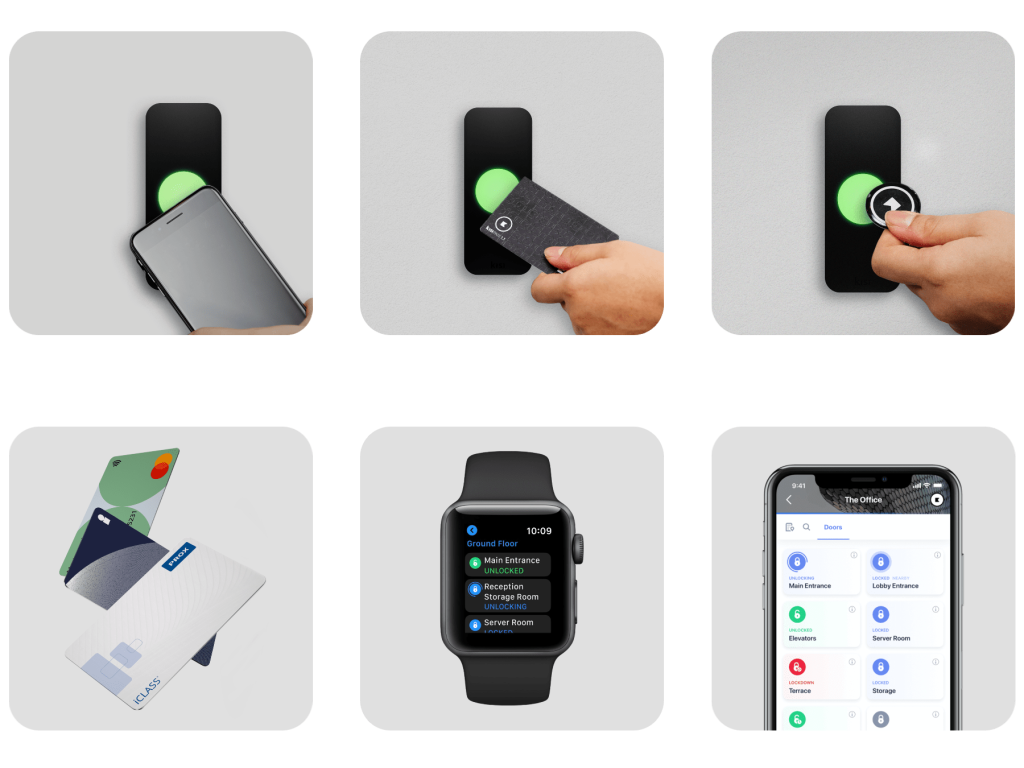
Access Control Management Software plays a critical role in modern security strategies by controlling who can access what, when, and under which conditions—both in physical and digital environments. These platforms act as a centralized system to manage identities, permissions, credentials, and access policies across offices, data centers, cloud systems, and connected devices.
In an era where organizations face rising security threats, insider risks, regulatory pressure, and hybrid work models, manual or fragmented access control methods are no longer sufficient. Access control software ensures secure authentication, authorization, auditing, and compliance, while also improving operational efficiency.
Real-world use cases include managing employee access to offices, restricting server rooms, controlling access to applications and databases, enabling temporary access for vendors, monitoring access logs for audits, and integrating biometric or mobile-based entry systems.
When choosing an access control management solution, users should evaluate:
- Scalability and flexibility
- Integration with existing systems
- Security standards and compliance
- Ease of administration
- Reliability and support
Best for
- Enterprises, SMBs, and regulated industries that need centralized, auditable access control
- IT administrators, security teams, and facility managers
- Industries such as healthcare, finance, manufacturing, education, government, and technology
Not ideal for
- Very small teams with no compliance or security complexity
- Temporary setups where manual access control is sufficient
- Organizations with no need for audit trails or centralized management
Top 10 Access Control Management Software Tools
1 — HID Global Access Control
Short description:
A robust enterprise-grade access control platform designed for large organizations requiring high security, scalability, and compliance across physical access points.
Key features
- Centralized credential management
- Support for smart cards, mobile credentials, and biometrics
- Real-time access monitoring and reporting
- Role-based access control (RBAC)
- Integration with video surveillance and alarms
- Cloud and on-premise deployment options
Pros
- Highly secure and reliable for large enterprises
- Extensive hardware compatibility
- Strong compliance support
Cons
- Higher cost compared to SMB solutions
- Requires technical expertise for setup
Security & compliance
Supports SSO, encryption, audit logs, ISO standards, and industry-specific compliance.
Support & community
Enterprise-level support, detailed documentation, certified partners, and professional onboarding.
2 — Kisi Access Control
Short description:
A modern, cloud-based access control solution focused on simplicity and mobile-first access management for offices and co-working spaces.
Key features
- Mobile and keycard access
- Cloud-based dashboard
- Real-time access logs
- Temporary and visitor access
- API and third-party integrations
- Remote access management
Pros
- Very easy to deploy and use
- Strong mobile experience
- Ideal for hybrid workplaces
Cons
- Limited advanced enterprise features
- Less suitable for high-security facilities
Security & compliance
Encryption, audit logs, GDPR-ready (varies by deployment).
Support & community
Good documentation, responsive customer support, growing user community.
3 — Brivo Access Control
Short description:
A scalable cloud-based access control platform suitable for multi-location businesses and property managers.
Key features
- Centralized cloud management
- Mobile credentials and keycards
- Multi-site administration
- Real-time alerts and logs
- Integration with video systems
- Role-based access policies
Pros
- Excellent for multi-location operations
- Cloud-first architecture
- Flexible integrations
Cons
- Subscription-based pricing
- Limited offline functionality
Security & compliance
SSO, encryption, audit logging, GDPR and SOC-aligned practices.
Support & community
Strong onboarding, training resources, and enterprise support.
4 — Genetec Synergis
Short description:
An enterprise physical access control system designed for high-security environments requiring deep customization and integration.
Key features
- Centralized access policy management
- Advanced analytics and reporting
- Integration with video and IoT systems
- High availability architecture
- Custom access workflows
- On-premise and hybrid deployment
Pros
- Extremely powerful and customizable
- Ideal for critical infrastructure
- Strong analytics
Cons
- Complex implementation
- Higher learning curve
Security & compliance
Advanced encryption, audit trails, ISO and industry compliance support.
Support & community
Professional services, certified integrators, enterprise support plans.
5 — Honeywell Pro-Watch
Short description:
A comprehensive access control solution built for enterprise and government-grade security requirements.
Key features
- Centralized access and credential management
- Biometric and smart card support
- Policy-driven access control
- Incident monitoring and reporting
- Integration with building management systems
Pros
- Highly secure and trusted brand
- Suitable for large-scale deployments
- Strong compliance capabilities
Cons
- Expensive for smaller organizations
- Requires dedicated administrators
Security & compliance
Supports encryption, audit logs, ISO, and regulatory compliance frameworks.
Support & community
Global enterprise support, training programs, and certified partners.
6 — Openpath Access Control
Short description:
A mobile-first access control platform designed for modern offices seeking frictionless, touchless access experiences.
Key features
- Smartphone-based entry
- Cloud-based management
- Touchless access technology
- Visitor and temporary access
- Real-time activity logs
- Integration with workplace tools
Pros
- Excellent user experience
- Fast deployment
- Modern interface
Cons
- Limited support for legacy hardware
- Less suitable for industrial environments
Security & compliance
Encryption, audit logs, GDPR-aligned security practices.
Support & community
Strong onboarding, responsive support, growing ecosystem.
7 — Paxton Net2
Short description:
A widely used access control system offering a balance of affordability, flexibility, and reliability.
Key features
- Centralized user and access management
- Smart card and PIN-based access
- Real-time monitoring
- Detailed reporting
- Simple installation
- On-premise and hybrid options
Pros
- Cost-effective
- Easy to manage
- Reliable for SMBs
Cons
- Limited cloud-native features
- UI feels dated
Security & compliance
Encryption and audit logs; compliance varies by deployment.
Support & community
Strong documentation, active installer network, community forums.
8 — LenelS2 OnGuard
Short description:
An enterprise access control platform built for complex environments requiring advanced security and compliance.
Key features
- Role-based access control
- Biometric integration
- Advanced reporting and analytics
- Multi-site management
- Integration with surveillance systems
Pros
- Enterprise-grade security
- Highly configurable
- Trusted by regulated industries
Cons
- Complex setup
- Higher cost
Security & compliance
Supports SSO, encryption, audit logs, and regulatory frameworks.
Support & community
Enterprise support, certified integrators, extensive documentation.
9 — Avigilon Access Control Manager
Short description:
A high-performance access control system optimized for seamless integration with video security and analytics.
Key features
- Centralized access management
- Video-integrated access events
- Real-time alerts
- Scalable architecture
- Advanced reporting
Pros
- Strong video-security integration
- High reliability
- Clean interface
Cons
- Best value when paired with Avigilon ecosystem
- Higher licensing costs
Security & compliance
Encryption, audit logs, enterprise compliance readiness.
Support & community
Professional support, training resources, certified partners.
10 — Salto KS
Short description:
A cloud-based access control solution ideal for hospitality, offices, and flexible workspaces.
Key features
- Keyless mobile access
- Cloud-based administration
- Visitor and temporary access
- Integration with property systems
- Real-time activity tracking
Pros
- Excellent for hospitality use cases
- Modern, intuitive interface
- Quick deployment
Cons
- Limited advanced enterprise features
- Internet dependency
Security & compliance
Encryption, audit logs, GDPR-ready (varies).
Support & community
Good documentation, partner ecosystem, responsive support.
Comparison Table
| Tool Name | Best For | Platform(s) Supported | Standout Feature | Rating |
|---|---|---|---|---|
| HID Global | Large enterprises | Web, On-prem, Cloud | Enterprise-grade security | N/A |
| Kisi | Modern offices | Cloud, Mobile | Mobile-first access | N/A |
| Brivo | Multi-location SMBs | Cloud | Centralized cloud control | N/A |
| Genetec Synergis | Critical infrastructure | On-prem, Hybrid | Deep customization | N/A |
| Honeywell Pro-Watch | Government & enterprise | On-prem | High-security compliance | N/A |
| Openpath | Smart offices | Cloud, Mobile | Touchless access | N/A |
| Paxton Net2 | SMBs | On-prem, Hybrid | Cost-effective | N/A |
| LenelS2 OnGuard | Regulated industries | On-prem | Advanced access policies | N/A |
| Avigilon ACM | Video-centric security | On-prem | Video integration | N/A |
| Salto KS | Hospitality & offices | Cloud | Keyless entry | N/A |
Evaluation & Scoring of Access Control Management Software
| Criteria | Weight | Score Explanation |
|---|---|---|
| Core features | 25% | Depth of access control, policies, logging |
| Ease of use | 15% | UI, setup, admin experience |
| Integrations & ecosystem | 15% | Compatibility with other systems |
| Security & compliance | 10% | Standards, encryption, audits |
| Performance & reliability | 10% | Uptime, scalability |
| Support & community | 10% | Documentation, support quality |
| Price / value | 15% | Cost vs features |
Which Access Control Management Software Tool Is Right for You?
Solo users & small teams:
Lightweight, cloud-based tools with minimal setup and lower costs.
SMBs:
Scalable cloud platforms offering mobile access, integrations, and simple administration.
Mid-market organizations:
Solutions that balance advanced features, compliance, and manageable complexity.
Enterprises:
Highly secure, customizable platforms with audit trails, integrations, and regulatory support.
Budget-conscious buyers:
Look for subscription-based or hybrid solutions with essential features.
Premium solutions:
Ideal for high-security environments and compliance-heavy industries.
Frequently Asked Questions (FAQs)
1. What is access control management software?
It is software that manages and enforces rules about who can access physical or digital resources.
2. Is access control only for physical doors?
No, it also applies to systems, applications, networks, and data.
3. Cloud vs on-premise: which is better?
Cloud offers flexibility and ease, while on-premise provides more control and customization.
4. How long does implementation take?
From a few hours for cloud systems to several weeks for enterprise deployments.
5. Is biometric access secure?
Yes, when combined with encryption and proper data protection.
6. Can access be revoked instantly?
Yes, centralized systems allow immediate access revocation.
7. Are these tools compliant with regulations?
Most enterprise tools support major compliance standards.
8. What industries need access control the most?
Healthcare, finance, government, education, and manufacturing.
9. Can these tools scale with business growth?
Yes, most modern platforms are designed to scale.
10. What is the biggest mistake buyers make?
Choosing based on price alone without evaluating security and scalability.
Conclusion
Access Control Management Software is no longer optional—it is a core security and operational requirement for modern organizations. From protecting physical spaces to safeguarding digital assets, the right solution ensures safety, compliance, and efficiency.
When choosing a tool, focus on security, scalability, usability, and long-term value, not just features or price. There is no universal best option—the best software is the one that aligns with your organization’s size, risk profile, and operational needs.

Find Trusted Cardiac Hospitals
Compare heart hospitals by city and services — all in one place.
Explore Hospitals
Access control software is most effective when permissions match each employee’s role and responsibilities. Centralized access logs, temporary permissions, and automated user removal can reduce security gaps. Regular reviews of physical and digital access also help organizations maintain better control and accountability.
Access control needs regular attention because employee roles and responsibilities can change over time. I believe companies should review user permissions often and remove access that is no longer needed. Keeping clear access records also makes security checks easier and helps teams spot unusual activity. How do organizations manage access safely when employees move between departments or leave the company?
Access control tends to degrade through exceptions: temporary badges, contractor access and role changes that never get cleaned up. Good software makes expiry the default and routes recertification to managers who actually know the staff. I’d check how it handles visitors and offline doors, and whether logs are easy to search during an investigation. Linking to HR systems so leavers lose access automatically is a quiet but significant win
Access control tends to degrade through exceptions: temporary badges, contractor access and role changes that never get cleaned up. Good software makes expiry the default and routes recertification to managers who actually know the staff. I’d check how it handles visitors and offline doors, and whether logs are easy to search during an investigation. Linking to HR systems so leavers lose access automatically is a quiet but significant win.
Access control management software helps organizations manage who can enter specific spaces or access restricted areas. When comparing solutions, I think role-based permissions, real-time access monitoring, audit trails, and integration with existing security systems are important features to consider. Remote administration and detailed activity reports can also make it easier to identify unusual access and maintain accountability. Choosing the right platform can strengthen security while simplifying access management for employees and administrators.
Deploying modern access control management software requires navigating the operational friction between high-security physical compliance and user-friendly mobile convenience. While heavy enterprise systems offer deep hardware compatibility, robust audit trails, and tight video surveillance integration, they often require intensive on-premise infrastructure and complex configuration. Conversely, cloud-first and mobile-centric platforms streamline multi-site administration and remote credentialing, though they may demand careful evaluation of offline resilience and subscription costs. This breakdown provides a practical framework for aligning physical security depth with everyday facility management workflows.
Another useful factor when comparing access control management software is how well it handles visitor access across multiple departments or restricted areas. A visitor may initially be approved for a reception area but later need access to a meeting room, laboratory, or other controlled location. The system should allow hosts to request additional permissions, define where visitors can go, and set automatic expiration times for temporary credentials. Maintaining a clear record of who approved each access request is equally important. This helps organizations manage visitor movement without relying on manual registers or giving temporary guests broader access than their visit requires.
Access control management software plays a vital role in protecting physical and digital assets by ensuring that only authorized individuals can access specific resources. Features such as role-based permissions, multi-factor authentication, real-time access monitoring, audit logs, and automated provisioning help organizations strengthen security while simplifying administration. When comparing solutions, it is important to consider integration capabilities, scalability, compliance requirements, ease of use, and the balance between security and operational flexibility. Selecting the right platform can reduce unauthorized access risks, improve accountability, and make access management more efficient across the organization.
Access control software needs to keep permissions accurate as employees change roles, contractors finish assignments, and visitors enter restricted areas. Connecting access records with HR systems can reduce manual updates and help prevent outdated permissions from lingering. I’d also check whether the platform provides clear audit logs and alerts for unusual entry attempts, since these details are valuable during security reviews. Reliable access management depends on making authorization easy to verify and update.
Access control software should also support a smooth process for handling staff transfers, contractor exits, and temporary visitor access. When responsibilities change, permissions can remain active unless teams connect access reviews with HR and facility workflows. Automated expiry dates for temporary credentials can reduce the risk of forgotten access. Administrators should also review shared accounts and make sure each entry can be traced to an individual where possible. Testing these workflows across different buildings and user groups helps uncover inconsistent policies. A regular review of exceptions can keep permissions aligned with current responsibilities without creating unnecessary delays for employees or visitors.
Access control software should make it clear who can enter each area and when that access applies. Managing badges, visitors, and staff changes can become difficult across large sites. I would compare access rules, entry logs, alerts, and links with other security systems. A simple way to remove access when someone leaves is especially important. Teams should also check how the software handles lost credentials and unusual entry attempts. The right platform should help staff manage access efficiently while keeping a clear record of activity and changes.
Access control management software helps organizations regulate entry to facilities, systems, and restricted areas through centralized permissions and activity tracking. Features such as role-based access, real-time alerts, and detailed audit logs improve accountability while reducing unauthorized entry risks. Integrating these platforms with identity management and visitor registration systems can simplify administration, strengthen security oversight, and ensure access privileges remain aligned with changing responsibilities.
Access control becomes difficult to manage when employees move between departments or contractors work across several locations. A person may lose access to one system but retain an old badge, an active account, or permissions inherited from a previous role. Organizations should test whether access policies can trigger coordinated updates across connected systems and flag permissions that remain active after a role change. Periodic access reviews should also identify unused credentials and conflicting permissions before they create security gaps. Tracking the time required to remove access after a departure is a useful operational measure. This lifecycle-focused approach helps prevent permission buildup and reduces the manual effort required to keep access records accurate.
Centralizing credential management, role-based permission policies, and real-time audit logging across physical entry points and digital infrastructure prevents unauthorized access, simplifies regulatory audits, and enables instant permission revocation across distributed enterprise facilities.
Access control management software helps organizations manage who can enter facilities, use systems, or access sensitive resources. When comparing platforms, teams should evaluate permission settings, role-based access, activity logs, and integration with existing security systems. Regularly reviewing user permissions and removing outdated access can reduce security risks while making access management easier to monitor and maintain.
One aspect worth testing is how access control systems handle conflicting permissions across connected applications and physical entry points. For example, an employee might change departments while an old badge or application role remains active in another system. Organizations should establish a reliable process for synchronizing identity changes, detecting stale credentials, and confirming that revoked permissions no longer work. I would also test offline controllers to understand how they apply cached access rules and synchronize event logs after connectivity returns. These scenarios can expose security gaps that feature comparisons rarely reveal. Tracking permission drift and regularly reconciling access records across systems can help prevent outdated privileges from becoming a long-term security risk.
Access control management software should make it easy to manage permissions when employees change roles, contractors finish assignments, or visitors need temporary entry. Comparing time-based access, approval workflows, and detailed entry logs can help organizations prevent old permissions from remaining active longer than necessary. It is also important to check how the system behaves during network or power outages, especially when secure entry and emergency exits must remain reliable.
Transitioning from legacy on-premise hardware to cloud-first solutions like Kisi or Brivo has been a game-changer for managing hybrid workspaces. However, balancing rapid deployment with strict compliance requirements across multiple locations remains the biggest hurdle. Evaluating how these platforms handle API integrations for third-party auditing tools is crucial before making a final choice.
A centralized contract repository is valuable only when teams can trust the accuracy of stored documents and easily find the latest approved versions. Automated renewal alerts, clear access permissions, and searchable contract metadata can help prevent missed obligations and reduce compliance risks. Regularly reviewing outdated records also keeps the repository reliable as contract volumes grow.
Access control management software helps organizations manage employee permissions, monitor entry activity, and protect facilities from unauthorized access. Solutions like LenelS2 provide centralized access control, credential management, and security event monitoring, helping businesses simplify administration, improve visibility across locations, and strengthen their overall physical security operations.
Great breakdown of leading access control management solutions! This article clearly highlights key features, pros, and potential limitations, making it much easier for security professionals and facility managers to evaluate which software best fits their needs — whether it’s biometric support, centralized policy management, or integration flexibility. A practical, well‑organized resource for anyone looking to strengthen physical and digital access security with the right technology.