
Introduction
Meal Planning Apps are digital tools designed to help individuals, families, and professionals plan meals in advance, organize recipes, generate grocery lists, and track nutrition. Instead of deciding what to cook every day, these apps bring structure, reduce stress, and help users eat healthier while saving time and money.
In today’s fast-paced lifestyle, meal planning has become essential. Busy professionals, health-conscious individuals, families with children, and even fitness enthusiasts rely on meal planning apps to stay consistent with dietary goals. These tools also help minimize food waste, reduce last-minute takeout decisions, and support long-term lifestyle changes.
Real-world use cases include:
- Weekly family meal planning
- Weight loss and nutrition tracking
- Managing special diets (keto, vegan, diabetic, gluten-free)
- Budget-friendly grocery planning
- Meal prep for fitness and bodybuilding
When choosing a Meal Planning App, users should evaluate recipe variety, customization options, dietary filters, grocery list automation, ease of use, platform support, integrations, pricing, and data privacy.
Best for:
Meal Planning Apps are ideal for individuals, families, fitness enthusiasts, dietitians, nutrition coaches, and small wellness businesses that want structured, repeatable meal routines.
Not ideal for:
People who prefer spontaneous eating, rely entirely on restaurant meals, or do not cook regularly may find these tools unnecessary.
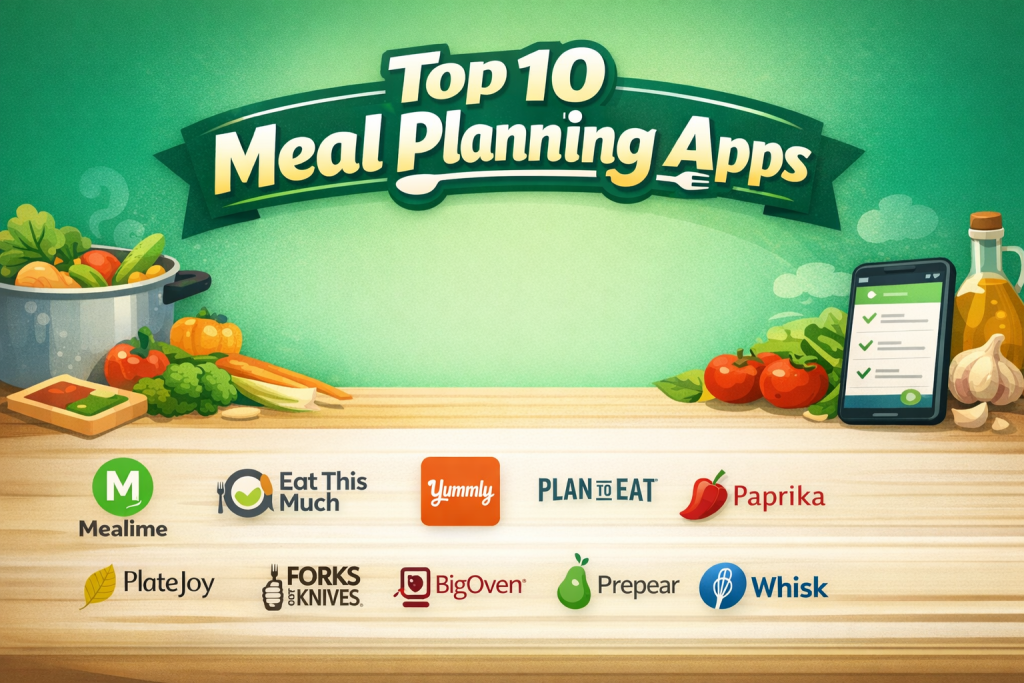
Top 10 Meal Planning Apps Tools
1 — Mealime
Short description:
A beginner-friendly meal planning app focused on quick, healthy meals with automated grocery lists.
Key features:
- Personalized meal plans based on dietary preferences
- Smart grocery list generation
- Simple, step-by-step recipes
- Calorie-aware meal suggestions
- Offline recipe access
- Minimalistic interface
Pros:
- Extremely easy to use
- Great for busy individuals
Cons:
- Limited advanced nutrition tracking
- Fewer customization options for power users
Security & compliance:
Varies / N/A (consumer-focused app)
Support & community:
Good documentation, email support, limited community interaction
2 — Eat This Much
Short description:
An automated meal planner that builds meals around calorie and macro goals.
Key features:
- Automatic calorie-based meal plans
- Macro-nutrient customization
- Grocery list automation
- Diet filters (keto, paleo, vegan)
- Manual meal adjustments
- Meal prep planning
Pros:
- Excellent for fitness goals
- Highly customizable
Cons:
- Interface can feel complex
- Learning curve for beginners
Security & compliance:
Varies / N/A
Support & community:
Knowledge base, responsive support, active fitness user base
3— Yummly
Short description:
A recipe-first meal planning app powered by personalized recommendations.
Key features:
- AI-driven recipe discovery
- Meal scheduling calendar
- Dietary and allergy filters
- Smart shopping list
- Appliance-specific recipes
- Voice assistant compatibility
Pros:
- Massive recipe database
- Strong personalization
Cons:
- Meal planning is secondary to recipes
- Some features locked behind premium
Security & compliance:
Varies / N/A
Support & community:
Strong documentation, large global user community
4 — Plan to Eat
Short description:
A powerful manual meal planning tool for families and serious planners.
Key features:
- Drag-and-drop meal calendar
- Recipe clipping and storage
- Flexible grocery list tools
- Serving size adjustments
- Pantry tracking
- Meal sharing
Pros:
- Highly flexible
- Excellent for family planning
Cons:
- Less automation
- Not focused on nutrition tracking
Security & compliance:
Varies / N/A
Support & community:
Strong documentation, active user forums
5 — Paprika
Short description:
A recipe-centric app with powerful meal planning and grocery list tools.
Key features:
- Recipe saving and scaling
- Weekly meal planning calendar
- Pantry and inventory tracking
- Grocery list sync
- Offline access
- Cross-device sync
Pros:
- One-time purchase model
- Excellent recipe management
Cons:
- Limited diet-specific planning
- Less automation
Security & compliance:
Varies / N/A
Support & community:
Detailed guides, responsive support
6 — PlateJoy
Short description:
A premium, dietitian-designed meal planning app focused on health goals.
Key features:
- Personalized nutrition plans
- Health condition support
- Grocery delivery integrations
- Family and household planning
- Portion control
- Recipe customization
Pros:
- Highly personalized
- Strong health focus
Cons:
- Subscription cost
- Limited manual control
Security & compliance:
GDPR-aligned, consumer data protection practices
Support & community:
Email support, onboarding assistance
7 — Forks Over Knives
Short description:
A niche meal planning app dedicated to whole-food, plant-based diets.
Key features:
- Plant-based meal plans
- Weekly planning tools
- Grocery list generation
- Nutrition education
- Family-friendly recipes
- Health-focused content
Pros:
- Excellent for vegans
- Science-backed recipes
Cons:
- Limited diet flexibility
- Smaller recipe library
Security & compliance:
Varies / N/A
Support & community:
Educational resources, active lifestyle community
8 — BigOven
Short description:
A versatile recipe and meal planning app with leftover management.
Key features:
- Meal planning calendar
- Grocery list automation
- Recipe scaling
- Leftover tracking
- Recipe inspiration
- Family sharing
Pros:
- Reduces food waste
- Simple planning tools
Cons:
- Interface feels dated
- Nutrition tracking is basic
Security & compliance:
Varies / N/A
Support & community:
Knowledge base, community recipes
9 — Prepear
Short description:
A modern meal planning platform with social and content-driven features.
Key features:
- Weekly meal planning
- Recipe collections
- Grocery list automation
- Family collaboration
- Creator content
- Cross-platform sync
Pros:
- Clean modern UI
- Good for families
Cons:
- Advanced features are paid
- Less nutrition analytics
Security & compliance:
Varies / N/A
Support & community:
Tutorials, creator-driven community
10 — Whisk
Short description:
A smart meal planning and recipe organization app with strong integrations.
Key features:
- Recipe saving from multiple sources
- Meal planning calendar
- Smart grocery lists
- Household sharing
- Dietary filters
- Brand and retailer integrations
Pros:
- Easy collaboration
- Strong automation
Cons:
- Limited deep nutrition tracking
- Some features depend on partners
Security & compliance:
Varies / N/A
Support & community:
Help center, responsive support
Comparison Table
| Tool Name | Best For | Platform(s) Supported | Standout Feature | Rating |
|---|---|---|---|---|
| Mealime | Busy individuals | iOS, Android | Simplicity | N/A |
| Eat This Much | Fitness users | Web, iOS, Android | Auto macro planning | N/A |
| Yummly | Recipe discovery | Web, Mobile | AI personalization | N/A |
| Plan to Eat | Families | Web, Mobile | Manual flexibility | N/A |
| Paprika | Recipe organizers | Desktop, Mobile | Recipe management | N/A |
| PlateJoy | Health-focused users | Web, Mobile | Personalized nutrition | N/A |
| Forks Over Knives | Plant-based diets | Mobile | Vegan focus | N/A |
| BigOven | Budget households | Web, Mobile | Leftover tracking | N/A |
| Prepear | Modern families | Web, Mobile | Social planning | N/A |
| Whisk | Collaborative planning | Web, Mobile | Smart automation | N/A |
Evaluation & Scoring of Meal Planning Apps
| Criteria | Weight | Evaluation Summary |
|---|---|---|
| Core features | 25% | Most tools handle planning & lists well |
| Ease of use | 15% | Mealime, Whisk score high |
| Integrations & ecosystem | 15% | Whisk, PlateJoy lead |
| Security & compliance | 10% | Mostly consumer-grade |
| Performance & reliability | 10% | Generally stable |
| Support & community | 10% | Varies by platform |
| Price / value | 15% | Freemium dominates |
Which Meal Planning Apps Tool Is Right for You?
- Solo users: Mealime, Eat This Much
- Families: Plan to Eat, Prepear, BigOven
- Health-focused: PlateJoy, Forks Over Knives
- Budget-conscious: Paprika, BigOven
- Feature-rich planners: Whisk, Eat This Much
Choose based on how much automation you want versus control, and whether nutrition tracking or simplicity matters more.
Frequently Asked Questions (FAQs)
- Are meal planning apps free?
Most offer free plans with optional premium upgrades. - Do these apps help save money?
Yes, by reducing food waste and impulse buying. - Can they support special diets?
Most support keto, vegan, gluten-free, and more. - Are grocery lists automatic?
Yes, almost all generate lists from meal plans. - Do I need nutrition tracking?
Only if health or fitness goals are important. - Are they suitable for families?
Many include family sharing and scaling features. - Do they work offline?
Some allow offline recipe access. - Are they secure?
They use standard consumer-grade security. - Can professionals use them?
Some dietitians use advanced planners like PlateJoy. - Is there one best app?
No—needs vary by lifestyle and goals.
Conclusion
Meal Planning Apps have evolved into powerful lifestyle tools that simplify cooking, improve nutrition, and save time. The best app depends on whether you value automation, personalization, budget control, or dietary precision. By aligning features with your personal or family needs, you can turn meal planning into a stress-free habit rather than a daily challenge.

Find Trusted Cardiac Hospitals
Compare heart hospitals by city and services — all in one place.
Explore Hospitals
Meal planning apps help users organize recipes, plan meals, and manage grocery lists more conveniently. Features like recipe discovery, customizable meal calendars, dietary preference settings, shopping list generation, and family sharing can make everyday planning easier. Users should also compare ease of use, recipe variety, personalization options, and integration capabilities before choosing an app.
Meal planning apps work best when they turn food choices into simple weekly plans. Smart shopping lists, recipe filters, and pantry tracking can help reduce food waste and save time. Users should also check whether an app supports their dietary needs and household size.
Meal planning apps are more useful when they fit into people’s daily routines instead of making food planning complicated. One important feature to check is whether the app can adjust meal plans based on dietary needs, budgets, and available ingredients. A good grocery list feature can also save time and reduce food waste. Users should look for easy recipe updates and simple portion controls. I believe flexibility and ease of use matter more than having too many features that people may rarely use.
Meal planning apps can make it easier to organize weekly menus, manage grocery lists, and maintain consistent eating habits. When comparing options, I would look for customizable meal plans, dietary preference filters, recipe suggestions, and automatic shopping lists. Integration with nutrition tracking and the ability to reuse favorite recipes can also make meal preparation more convenient. The best app is one that fits a person’s routine and helps reduce both food waste and the time spent planning meals.
The best meal planning app is the one that fits how you shop. Pantry tracking, consolidated grocery lists and recipe scaling all reduce waste. I’d check whether dietary preferences and allergies are handled reliably and whether recipes can be imported from websites. Planning around leftovers is an underrated trick. Keeping the plan flexible, so one missed night doesn’t derail the week, helps people stick with it.
While algorithmic planners like Eat This Much or Mealime make macro calculation and grocery aggregation fast, the biggest reason people abandon them is rigid recipe ecosystems that clash with real-world pantry inventory. Apps like Paprika and Plan to Eat usually offer better long-term sustainability because they prioritize flexible web recipe scraping and manual pantry tracking over auto-generated menus that force unexpected grocery trips. The real return on investment comes from choosing a tool that accommodates leftover management and family favorites, rather than treating meal planning like an inflexible fixed schedule.
One feature I would examine when comparing meal planning apps is how well they manage ingredient substitutions based on what users actually have available. A recipe may look suitable when planning meals, but users often discover that an ingredient is unavailable, too expensive, or nearing its expiry date. The app should suggest reasonable alternatives while adjusting quantities and keeping the recipe’s overall balance intact. It would also be useful if substitutions automatically updated the shopping list and reflected any changes in nutritional information. This makes meal planning more practical for everyday use, reduces food waste, and helps users avoid buying ingredients they already have at home.
Meal planning apps make it easier to organize daily meals, manage grocery lists, and maintain a more structured approach to food preparation. Features such as customizable meal calendars, recipe recommendations, dietary preference filters, nutritional information, automated shopping lists, and ingredient tracking can simplify everyday planning. When comparing platforms, users should consider recipe variety, personalization options, ease of use, grocery integration, and subscription costs. The right app can reduce food waste, save preparation time, encourage consistent eating habits, and make meal organization more convenient.
Meal planning apps help users organize weekly menus, discover recipes, and manage grocery lists more efficiently. When comparing options, I would focus on recipe variety, dietary preferences, shopping list features, nutritional information, and ease of use. These capabilities can save time, reduce food waste, and make everyday meal preparation simpler. The right app should fit individual eating habits, keep planning convenient, and help users stay organized throughout the week.
Meal planning apps can make everyday cooking easier by helping people organize recipes, plan weekly meals, and manage grocery lists. Features like dietary preferences, ingredient tracking, and automatic shopping lists are useful for saving time and reducing food waste. I like how these apps can help people stay organized without having to decide what to cook at the last minute. Choosing an app that fits your routine can make meal preparation simpler and more enjoyable.
Meal planning tools should also account for how real households use food throughout the week, not just generate recipes for a fixed schedule. Plans can fall apart when work runs late, family members eat elsewhere, or leftovers go unused. Apps could make this easier by suggesting flexible meal swaps and carrying suitable ingredients into the next day’s plan. Tracking discarded food and unused portions would give users a clearer picture of what needs changing. It is also helpful to support different serving sizes without creating awkward ingredient amounts. These small details can make meal plans easier to follow and reduce waste over time.
Meal planning apps are more useful when their plans fit real routines, food choices, and budgets. Recipe variety matters, but shopping lists and portion controls can save time during the week. I would compare how easily each app handles dietary needs, ingredient swaps, and meals for different household sizes. It is also worth checking whether grocery lists update when a recipe changes. Some apps offer detailed nutrition data, while others focus on simple planning. The best choice depends on what users need most. A short trial with a week’s meals can show whether the app reduces effort or adds another task to manage.
Meal planning apps make everyday food preparation easier by organizing recipes, grocery lists, and weekly menus in one convenient place. Personalized dietary preferences, portion planning, and ingredient tracking can help users reduce food waste while making shopping more efficient. Features such as recipe suggestions based on available ingredients also encourage greater variety and simplify meal preparation for busy households.
Meal planning becomes more practical when an app can adapt to real shopping conditions instead of treating every recipe as fixed. Ingredient prices change, store inventory varies, and package sizes rarely match the exact quantities a recipe requires. Apps should account for these differences when estimating weekly costs and generating shopping lists. It would also help to suggest suitable ingredient swaps while preserving the recipe’s basic nutritional goals and dietary restrictions. Testing these features against different store formats, regional products, and household sizes can reveal problems that a simple feature comparison may miss. Reliable planning depends not only on finding recipes but also on making those recipes affordable and achievable with ingredients people can actually buy.
A critical engineering trade-off missing here is downstream data portability and offline-first state synchronization. When external grocery delivery APIs break or recipe scraper schemas change, apps without robust local SQLite caching and schema versioning leave users stranded mid-shopping with corrupted lists or broken ingredient mappings.
Meal planning apps can make daily cooking easier by organizing recipes, creating shopping lists, and helping users plan meals around their schedules. When comparing options, check dietary preference filters, recipe variety, serving-size adjustments, grocery list features, and budget tracking. Apps that allow flexible meal changes and reuse ingredients can help reduce food waste, save shopping time, and make weekly meal planning more practical.
Meal planning apps are more practical when they turn weekly recipes into a shopping list that matches the household’s actual needs. When comparing options, check whether they adjust ingredient quantities for different serving sizes, reuse pantry items, and account for dietary preferences without suggesting unsuitable meals. It is also helpful to see how easily users can replace a recipe when ingredients are unavailable, so the weekly plan stays flexible and food waste is reduced.
Balancing macro-driven automation with manual recipe flexibility is definitely the hardest part of finding a sustainable meal planner. It really comes down to whether you prefer apps that strictly enforce fitness goals like Eat This Much or flexible tools like Paprika for organizing your own family favorites.
Meal planning apps are most useful when they turn weekly menus into practical shopping lists based on dietary needs, serving sizes, and ingredients already available at home. Features that track leftovers and reduce food waste can also help families save money while keeping meal preparation simple.
Meal planning apps make it easier to organize weekly menus, discover recipes, create shopping lists, and keep track of ingredients before heading to the grocery store. Apps like Mealime offer personalized meal plans, recipe suggestions, and automatically generated grocery lists, helping users save planning time, reduce food waste, and prepare meals that fit their preferences and busy schedules.