
Introduction
A Mortgage Loan Origination System (LOS) is the digital backbone of modern mortgage lending. It manages the entire loan lifecycle—from application intake and borrower documentation to underwriting, approval, closing, and compliance reporting. As mortgage volumes fluctuate and regulatory expectations increase, LOS platforms help lenders operate efficiently while maintaining accuracy, transparency, and borrower satisfaction.
In real-world lending environments, LOS platforms are used by banks, credit unions, mortgage lenders, brokers, and fintechs to streamline workflows, reduce manual errors, and shorten loan turnaround times. They play a crucial role in ensuring regulatory compliance, enabling digital borrower experiences, and integrating with third-party services such as credit bureaus, appraisal providers, and document verification tools.
What to look for when choosing an LOS
When evaluating Mortgage LOS tools, buyers should focus on:
- End-to-end workflow coverage (application to closing)
- Ease of use for loan officers and borrowers
- Integration ecosystem (credit, appraisal, servicing)
- Security and regulatory compliance
- Scalability for changing loan volumes
- Reporting and audit readiness
Best for:
Mortgage banks, non-bank lenders, credit unions, mortgage brokers, fintech lenders, compliance teams, and operations managers handling moderate to high loan volumes.
Not ideal for:
Very small lenders processing only occasional loans, organizations relying entirely on manual or spreadsheet-based workflows, or institutions seeking only a lightweight CRM without compliance or underwriting depth.
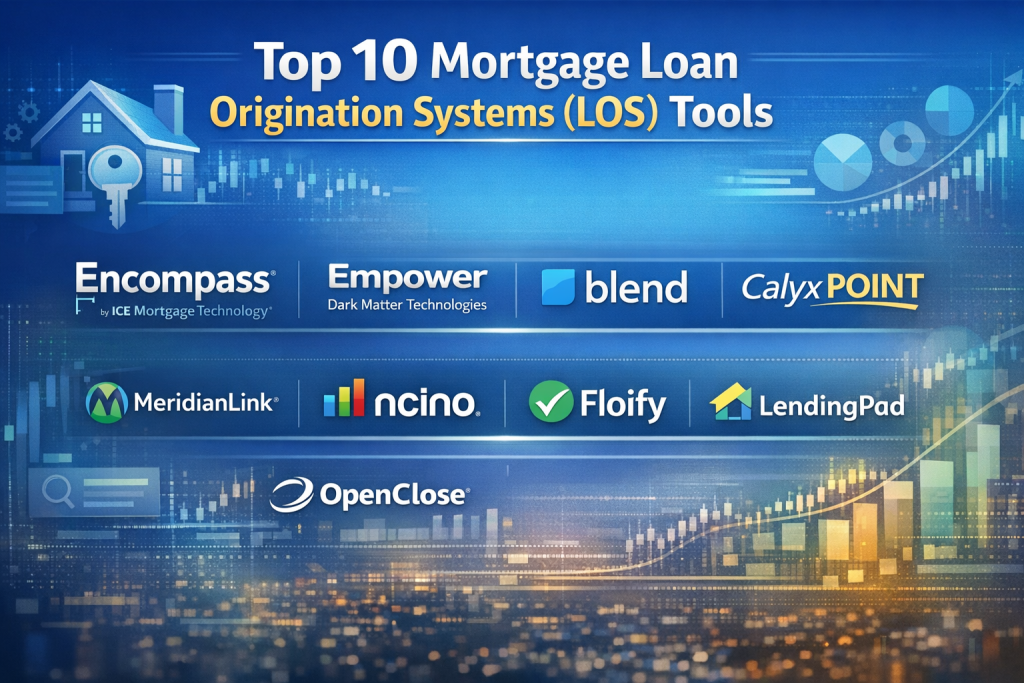
Top 10 Mortgage Loan Origination Systems (LOS) Tools
1 — Encompass
Short description:
A market-leading LOS widely used by banks and large mortgage lenders for end-to-end mortgage origination and compliance-driven workflows.
Key features
- End-to-end loan lifecycle management
- Advanced underwriting and compliance automation
- Configurable workflows and business rules
- Extensive third-party integrations
- Robust reporting and audit trails
- Digital borrower portals
Pros
- Industry-standard platform with deep functionality
- Strong compliance and regulatory support
Cons
- High implementation and licensing cost
- Steeper learning curve for new users
Security & compliance:
SOC 2, encryption, role-based access, audit logs
Support & community:
Enterprise onboarding, extensive documentation, large user community
2 — Empower
Short description:
A highly configurable LOS designed for high-volume lenders seeking scalability and automation.
Key features
- Rules-driven loan processing
- Configurable underwriting workflows
- Scalable cloud-native architecture
- Real-time data validation
- Advanced compliance checks
Pros
- Extremely flexible for complex lending models
- Strong performance at scale
Cons
- Requires experienced implementation teams
- Less intuitive for small lenders
Security & compliance:
Encryption, SOC-aligned controls, audit readiness
Support & community:
Dedicated enterprise support and implementation partners
3 — Blend
Short description:
A borrower-first digital mortgage platform focusing on seamless online experiences and fast approvals.
Key features
- Digital borrower application journeys
- Automated data collection
- Pre-built integrations with LOS and CRMs
- Mobile-friendly interfaces
- Analytics-driven insights
Pros
- Excellent borrower experience
- Fast deployment
Cons
- Relies on backend LOS for full processing
- Limited deep underwriting features
Security & compliance:
Encryption, SSO, SOC 2
Support & community:
Strong onboarding and customer success teams
4 — Calyx Point
Short description:
A broker-friendly LOS known for affordability and straightforward mortgage processing.
Key features
- Loan application and processing tools
- Compliance-ready disclosures
- Integrated pricing engines
- Customizable forms
- Reporting dashboards
Pros
- Cost-effective for brokers
- Easy to learn and deploy
Cons
- Limited enterprise scalability
- Older UI compared to modern platforms
Security & compliance:
Standard encryption, compliance reporting
Support & community:
Responsive support, broker-focused documentation
5 — BytePro
Short description:
A modern LOS designed for speed, automation, and digital-first mortgage operations.
Key features
- Workflow automation
- Real-time loan status tracking
- Borrower communication tools
- Configurable business rules
- Third-party integrations
Pros
- Faster loan cycle times
- Clean and modern interface
Cons
- Smaller ecosystem than legacy platforms
- Less suited for highly complex products
Security & compliance:
SOC 2, encryption, audit logs
Support & community:
Hands-on onboarding and responsive support
6 — MeridianLink
Short description:
A comprehensive origination platform widely used by credit unions and community banks.
Key features
- Consumer and mortgage origination
- Integrated decisioning tools
- Compliance-ready workflows
- Credit and risk analytics
- Cross-product lending support
Pros
- Strong fit for credit unions
- Unified lending experience
Cons
- Mortgage features less deep than specialist LOS
- Customization can be complex
Security & compliance:
SOC 2, encryption, regulatory compliance tools
Support & community:
Enterprise-grade support and training resources
7 — nCino
Short description:
A cloud-based bank operating system with integrated mortgage origination capabilities.
Key features
- Unified lending workflows
- Salesforce-based architecture
- Relationship management tools
- Compliance and audit readiness
- Scalable cloud platform
Pros
- Strong integration with banking operations
- Excellent reporting and visibility
Cons
- Higher cost
- Requires Salesforce familiarity
Security & compliance:
SOC 2, encryption, role-based security
Support & community:
Strong enterprise support and partner ecosystem
8 — Floify
Short description:
A lightweight mortgage automation tool focused on document collection and borrower collaboration.
Key features
- Secure document portals
- Automated reminders
- Workflow tracking
- LOS integrations
- Mobile-friendly access
Pros
- Improves borrower communication
- Easy to deploy
Cons
- Not a full LOS by itself
- Limited underwriting capabilities
Security & compliance:
Encryption, SOC-aligned controls
Support & community:
Good documentation and responsive customer support
9 — LendingPad
Short description:
A cloud-native LOS designed for independent mortgage banks and brokers.
Key features
- Real-time processing
- Integrated compliance tools
- Open API ecosystem
- Multi-user collaboration
- Scalable cloud deployment
Pros
- Modern and flexible platform
- Strong integration capabilities
Cons
- Smaller market presence
- Advanced reporting may require add-ons
Security & compliance:
Encryption, audit trails, compliance checks
Support & community:
Active user community and dedicated support
10 — OpenClose
Short description:
A configurable LOS offering deep automation for mid-sized and enterprise lenders.
Key features
- End-to-end loan processing
- Highly configurable workflows
- Automated compliance checks
- Integration-friendly architecture
- Advanced reporting
Pros
- Strong automation capabilities
- Flexible for complex lending rules
Cons
- Implementation can be lengthy
- Requires skilled admins
Security & compliance:
SOC 2, encryption, audit logs
Support & community:
Enterprise support and implementation services
Comparison Table
| Tool Name | Best For | Platform(s) Supported | Standout Feature | Rating |
|---|---|---|---|---|
| Encompass | Large lenders | Web, Cloud | Industry-standard compliance | N/A |
| Empower | High-volume lenders | Cloud | Rules-based automation | N/A |
| Blend | Digital-first lenders | Web, Mobile | Borrower experience | N/A |
| Calyx Point | Brokers | Desktop, Cloud | Affordability | N/A |
| BytePro | Mid-market lenders | Cloud | Speed and automation | N/A |
| MeridianLink | Credit unions | Cloud | Unified lending | N/A |
| nCino | Banks | Cloud | Bank-wide integration | N/A |
| Floify | Small lenders | Cloud | Document automation | N/A |
| LendingPad | Independent lenders | Cloud | Open APIs | N/A |
| OpenClose | Enterprise lenders | Cloud | Configurability | N/A |
Evaluation & Scoring of Mortgage Loan Origination Systems (LOS)
| Criteria | Weight | Description |
|---|---|---|
| Core features | 25% | End-to-end origination capabilities |
| Ease of use | 15% | Usability for staff and borrowers |
| Integrations & ecosystem | 15% | Third-party connectivity |
| Security & compliance | 10% | Data protection and audits |
| Performance & reliability | 10% | Stability at scale |
| Support & community | 10% | Training and vendor support |
| Price / value | 15% | ROI and affordability |
Which Mortgage Loan Origination Systems (LOS) Tool Is Right for You?
- Solo users & small brokers: Lightweight tools like Calyx Point or Floify
- SMBs & mid-market lenders: BytePro, LendingPad, OpenClose
- Enterprises & banks: Encompass, Empower, nCino
- Budget-conscious teams: Broker-focused or modular platforms
- Compliance-heavy environments: Enterprise-grade LOS with audit depth
Frequently Asked Questions (FAQs)
- What is a Mortgage LOS?
A system that manages mortgage loans from application to closing. - Is an LOS required for compliance?
While not mandatory, it significantly simplifies compliance and audits. - How long does implementation take?
From a few weeks for simple tools to several months for enterprise systems. - Do LOS platforms support digital mortgages?
Most modern platforms support digital and hybrid workflows. - Are LOS tools secure?
Reputable vendors use encryption, audit logs, and compliance controls. - Can small lenders use LOS platforms?
Yes, many tools are designed specifically for brokers and SMBs. - Do LOS systems integrate with banks?
Most support integrations with core banking and credit systems. - What is the biggest mistake when choosing an LOS?
Ignoring scalability and future compliance needs. - Are cloud-based LOS platforms reliable?
Yes, they typically offer better scalability and uptime. - Is there a single best LOS?
No—selection depends on size, volume, budget, and compliance needs.
Conclusion
Mortgage Loan Origination Systems are no longer optional—they are essential for efficient, compliant, and scalable mortgage lending. The right LOS can reduce cycle times, improve borrower experiences, and protect lenders from regulatory risk. Rather than searching for a one-size-fits-all solution, organizations should evaluate their loan volume, complexity, budget, and growth plans. The best Mortgage LOS is the one that aligns most closely with your operational reality and long-term strategy.

Find Trusted Cardiac Hospitals
Compare heart hospitals by city and services — all in one place.
Explore Hospitals
The modern mortgage origination landscape demands platforms that bridge rigid regulatory compliance with seamless, automated borrower document ingest. Integrating automated underwriting engines and optical character recognition for income verification eliminates manual data entry bottlenecks that stall loan closings. Platforms that provide robust open APIs allow financial institutions to swap out credit and appraisal service providers without destabilizing core underwriting workflows.
Mortgage loan origination systems manage complex regulated journeys from application to closing, and this article explains the workflow demands well. I like the attention to document management and compliance checkpoints, since errors delay closings. One practical note is that borrower experience shapes lender reputation, because mortgages are emotional purchases. Smooth origination wins referrals. Practical read for lending teams.
Mortgage loan origination systems help lenders manage the lending process from application and document collection through underwriting and closing. Features like automated workflows, borrower portals, compliance checks, and integration with credit and verification services can reduce manual work. I think clear visibility into loan status and document requirements is especially valuable for both borrowers and lending teams. The right LOS can improve processing efficiency while supporting a smoother, more transparent mortgage experience.
Mortgage loan origination systems need to keep each application moving while maintaining a clear record of every decision. I would compare how well they handle document collection, income verification, property details, and loan condition tracking when information arrives from different sources. A useful system should also make it easy to identify missing documents or inconsistent figures before they delay underwriting. Audit trails and clear communication between borrowers, loan officers, and underwriters are equally important for reducing avoidable follow-ups and keeping the process organized.
Mortgage loan origination systems help lenders manage the loan process, from application intake and document collection to underwriting and approval. Platforms like Encompass by ICE Mortgage Technology offer workflow automation, loan tracking, and document management features, helping lending teams reduce manual work, improve accuracy, and provide a smoother borrower experience.
Mortgage Loan Origination Systems (LOS) help financial institutions streamline the entire lending process, from application submission and document collection to underwriting, approval, and loan closing. Features such as automated workflows, credit assessment, document management, compliance tracking, integration capabilities, and reporting are essential when evaluating these platforms. Each system offers different advantages in terms of automation, scalability, usability, security, and operational efficiency. Comparing their features and limitations helps lenders identify the right solution to reduce processing time, improve accuracy, enhance borrower experience, and manage loan operations more effectively.
Mortgage loan origination systems help lenders manage the journey from application submission to underwriting, approval, and closing. Automated document collection, borrower verification, workflow tracking, and integration with credit and compliance services can reduce processing delays and manual errors. Strong data security and transparent application status updates are equally important for building borrower confidence and supporting efficient lending operations.
Mortgage loan origination systems should help lenders manage applications accurately from initial submission through final approval. When comparing platforms, check how they handle income verification, property valuation updates, underwriting conditions, and missing borrower documents. A clear record of decision changes and pending requirements can help loan officers avoid repeated requests and keep applications moving without overlooking important details.
Borrower details can change while a loan application moves through approval. New income records, job changes, or property updates may affect earlier assessments. Loan systems should flag these changes and request updated checks when needed. They should also record why reviewers changed their decisions. This keeps the approval process accurate and makes later audits easier.
Mortgage loan origination systems help lenders manage loan applications from submission to approval. They can support document collection, eligibility checks, workflow steps, and borrower updates. Yet a smooth process needs accurate data and clear review rules. Lenders should compare integration options, document handling, reporting, security, and compliance support. Easy status tracking can also reduce repeated questions from borrowers. Staff need a clear way to review exceptions and correct errors. The right system helps lenders manage applications more efficiently while keeping records accurate and protected.
Reviewing real estate lending suites demonstrated that compressing loan cycle times demands automated Fannie Mae and Freddie Mac underwriting integrations. Automated document indexing, credit pull orchestration, and digital closing disclosures prevent manual regulatory compliance omissions, helping mortgage originators fund residential applications much faster.
Mortgage LOS migrations deserve careful planning because active loan files cannot simply be treated like ordinary database records. Borrower details, underwriting decisions, document versions, disclosure dates, and approval histories must remain consistent throughout the transition. Before switching platforms, I would recommend running a pilot migration and comparing key fields against the original records. Teams should also test incomplete applications, loans awaiting approval, and files close to closing, since these cases carry different operational risks. A clear rollback plan and temporary reconciliation process can help prevent missing documents or delays in funding. Evaluating migration complexity alongside product features gives lenders a more realistic view of implementation risk and the effort required to move safely.
Mortgage loan origination systems help lenders manage applications, document verification, underwriting, and loan processing in one workflow. When comparing platforms, teams should assess compliance support, integration with credit and banking systems, automated document handling, and data security to improve efficiency without adding complexity.
Mortgage loan origination systems help lenders manage applications, verify documents, assess borrower details, and track loans from submission to closing. When comparing platforms, check workflow automation, credit bureau integration, compliance reporting, document management, and connections with underwriting systems. Clear audit trails and automated status updates can reduce processing delays, limit manual errors, and give lenders better visibility throughout the loan process.
While evaluating different Mortgage Loan Origination Systems (LOS), a critical challenge often overlooked is balancing heavy enterprise configuration with agile integration needs. Lenders frequently get caught off-guard during implementation when attempting to plug modern REST APIs or microservices into legacy rule-driven engines, which can drag out deployment schedules and inflate total cost of ownership.
A mortgage LOS delivers the most value when automation, compliance checks, and borrower communication work together without creating extra steps for loan officers. Testing integrations and exception handling with real lending workflows before implementation can help prevent costly delays and improve the borrower experience.
This article provides a detailed and informative overview of the top mortgage loan origination systems (LOS), helping lenders understand the essential features, pros, and cons of each platform. By breaking down how these systems improve efficiency, reduce human error, and ensure compliance, it provides valuable insights for anyone in the mortgage industry looking to streamline their operations. The comparisons and focus on key elements like integration, security, and scalability make it easier to choose the right LOS for specific business needs. A must-read for professionals looking to stay ahead in the mortgage lending space!
This article provides a clear and helpful comparison of the top mortgage loan origination systems available today. By outlining key features, advantages, and limitations of each platform, it makes the selection process easier for lenders and financial professionals who want to choose the right solution for their business needs. The breakdown of pros and cons also gives readers practical insight into how different systems can impact efficiency, compliance, and customer experience. Overall, this post is a valuable resource for anyone evaluating LOS options in a competitive mortgage technology landscape.