
Introduction
Demand Planning Tools are specialized software solutions designed to help businesses forecast customer demand accurately, balance supply with demand, and make data-driven decisions across procurement, production, inventory, and distribution. These tools combine historical sales data, market trends, seasonality, promotions, and advanced analytics to predict future demand with higher confidence.
In today’s volatile markets—shaped by fluctuating customer behavior, global disruptions, and shorter product lifecycles—manual forecasting using spreadsheets is no longer enough. Demand planning tools enable organizations to reduce stockouts, avoid overstocking, improve service levels, and optimize working capital. They are widely used across industries such as retail, manufacturing, consumer goods, pharmaceuticals, food & beverage, logistics, and e-commerce.
Key real-world use cases include:
- Forecasting seasonal and promotional demand
- Aligning sales, operations, and finance (S&OP / IBP)
- Optimizing inventory levels across multiple locations
- Improving production and capacity planning
- Responding faster to market changes
When choosing a demand planning tool, users should evaluate forecast accuracy, usability, scalability, integration capabilities, analytics depth, collaboration features, and security standards.
Best for:
Demand Planning Tools are ideal for demand planners, supply chain managers, operations leaders, procurement teams, and finance executives in SMBs to large enterprises across retail, manufacturing, CPG, healthcare, and distribution-driven industries.
Not ideal for:
Very small businesses with limited data, highly stable demand, or simple operations may find these tools overpowered. In such cases, lightweight forecasting or basic ERP modules may be sufficient.
Top 10 Demand Planning Tools
1 — SAP Integrated Business Planning (SAP IBP)
Short description:
SAP IBP is an enterprise-grade demand planning and forecasting platform designed for large organizations with complex global supply chains and advanced planning needs.
Key features
- Advanced demand forecasting using statistical and AI models
- Integrated S&OP and IBP workflows
- Real-time scenario simulation and what-if analysis
- Tight integration with SAP ERP and supply modules
- Demand sensing using near-real-time data
- Collaboration across sales, operations, and finance
- Scalable cloud-based architecture
Pros
- Extremely powerful and comprehensive planning capabilities
- Best-in-class integration within SAP ecosystem
- Highly scalable for global enterprises
Cons
- High implementation and licensing cost
- Steep learning curve for new users
- Overkill for small or mid-sized companies
Security & compliance:
Enterprise-grade security, SSO, role-based access, encryption, audit logs, GDPR, ISO standards.
Support & community:
Strong enterprise support, extensive documentation, global SAP partner ecosystem, large user community.
2 — Oracle Demand Management Cloud
Short description:
Oracle Demand Management Cloud helps organizations forecast demand accurately and align it with supply planning and execution.
Key features
- Machine learning-based forecasting
- Multidimensional demand analysis
- Demand sensing and segmentation
- Scenario planning and simulations
- Native integration with Oracle SCM Cloud
- Automated forecast error tracking
Pros
- Strong forecasting accuracy with ML models
- Seamless integration with Oracle SCM suite
- Suitable for large, complex organizations
Cons
- Best value only within Oracle ecosystem
- UI can feel complex to new users
- Higher total cost of ownership
Security & compliance:
SOC 2, ISO, GDPR, encryption, role-based access, enterprise SSO.
Support & community:
Robust Oracle support, enterprise onboarding, large customer base, certified partners.
3 — Blue Yonder Demand Planning
Short description:
Blue Yonder provides AI-driven demand planning designed for retailers, manufacturers, and logistics-heavy enterprises.
Key features
- AI and ML-driven forecasting models
- Demand sensing with real-time signals
- Promotion and event-based forecasting
- End-to-end supply chain visibility
- Scenario modeling and risk analysis
- Cloud-native architecture
Pros
- Very strong AI capabilities
- Excellent for retail and omni-channel demand
- Scales well for large enterprises
Cons
- Complex configuration and setup
- Premium pricing
- Requires skilled planners to maximize value
Security & compliance:
Enterprise-grade security, GDPR, ISO certifications, encryption, access controls.
Support & community:
Dedicated enterprise support, training programs, strong retail-focused community.
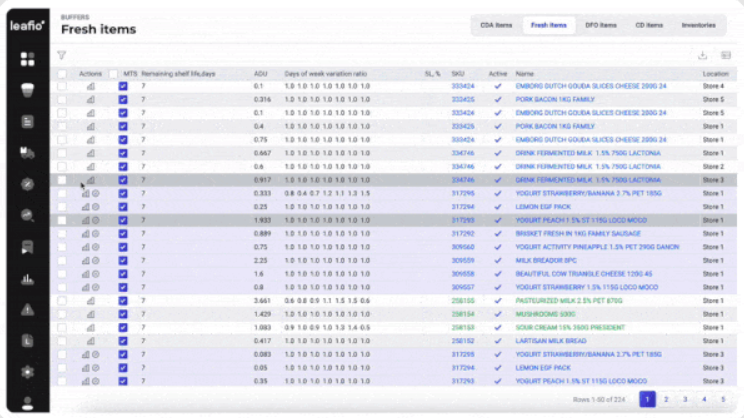
4— Leafio AI Demand Planning
Short description: LEAFIO AI is a retail-focused demand planning platform built for retailers across grocery, pharmacy, convenience, and specialty retail, offering ML-driven forecasting and supply chain automation.
Key Features
- ML-based demand forecasting with seasonality and trend detection
- Promotion-driven demand modeling with weather and external-factor adjustments
- Automated replenishment and inventory optimization
- Planogram and shelf space planning integration
- Multi-location and multi-warehouse support
- Cloud-based SaaS architecture
Pros
- Purpose-built for retail use cases
- Demand forecasts flow directly into replenishment and planogram planning within one platform
- Strong automation across the full supply chain cycle
- Trusted by 250+ retail companies across 40+ countries
Cons
- Less suited for non-retail industries
- Focused product suite rather than a broad, all-in-one enterprise system
- Full implementation across a large multi-location network takes several weeks
Security & Compliance
Cloud-based infrastructure with data encryption, role-based access controls, and compliance with international data protection standards.
Support & Community
Dedicated customer success team, onboarding support, product training, and an active user base across European and US markets.
5 — o9 Solutions Digital Brain
Short description:
o9 Solutions offers an AI-powered integrated planning platform combining demand planning, supply planning, and analytics.
Key features
- AI and graph-based forecasting
- End-to-end integrated business planning
- Scenario simulation and risk modeling
- Demand sensing and market signals
- Advanced analytics and dashboards
- Cloud-native, scalable platform
Pros
- Highly flexible and modern architecture
- Strong AI and analytics capabilities
- Supports complex, cross-functional planning
Cons
- Implementation can be resource-intensive
- Premium pricing
- Learning curve for advanced features
Security & compliance:
Enterprise security, SSO, encryption, GDPR, ISO standards.
Support & community:
Dedicated enterprise support, training, growing user ecosystem.
6 — Anaplan Supply Chain Planning
Short description:
Anaplan provides connected planning for demand, supply, finance, and operations through a unified modeling platform.
Key features
- Real-time collaborative planning
- Scenario modeling and forecasting
- Integrated financial and demand planning
- Cloud-based modeling engine
- Customizable dashboards
- Strong workflow automation
Pros
- Excellent collaboration and flexibility
- Strong finance and demand alignment
- Scales well across departments
Cons
- Modeling complexity for beginners
- Costs increase with scale
- Requires skilled model builders
Security & compliance:
SOC 2, GDPR, ISO, SSO, role-based permissions.
Support & community:
Strong documentation, active community, enterprise support options.
7 — ToolsGroup SO99+
Short description:
ToolsGroup specializes in probabilistic forecasting and inventory optimization for demand-driven organizations.
Key features
- Probabilistic demand forecasting
- Inventory optimization based on service levels
- Multi-echelon planning
- AI-driven replenishment
- Forecast accuracy monitoring
- ERP integration support
Pros
- Excellent forecast accuracy
- Strong inventory optimization focus
- Suitable for distribution-heavy businesses
Cons
- Less intuitive UI
- Limited visualization compared to newer tools
- Smaller ecosystem than big vendors
Security & compliance:
Standard enterprise security, GDPR, encryption, access controls.
Support & community:
Good customer support, industry-focused expertise, smaller user community.
8 — Netstock
Short description:
Netstock is a demand planning and inventory optimization tool tailored for SMBs and mid-market companies.
Key features
- Automated demand forecasting
- Inventory replenishment planning
- ERP integration
- Dashboards and alerts
- Scenario planning
- Multi-location inventory support
Pros
- Easy to use and fast to implement
- Affordable for SMBs
- Strong inventory focus
Cons
- Limited advanced analytics
- Not ideal for very large enterprises
- Customization options are moderate
Security & compliance:
Cloud security standards, encryption, role-based access, GDPR.
Support & community:
Responsive support team, onboarding assistance, smaller but helpful community.
9 — Forecastly
Short description:
Forecastly is a user-friendly demand forecasting tool focused on simplicity and quick adoption for growing businesses.
Key features
- Statistical and AI-based forecasting
- Sales and demand trend analysis
- Simple dashboards and reports
- Scenario planning
- CSV and ERP integrations
- Collaborative workflows
Pros
- Very easy to learn
- Cost-effective
- Quick deployment
Cons
- Limited enterprise scalability
- Fewer advanced features
- Basic customization
Security & compliance:
Standard cloud security, encryption, GDPR.
Support & community:
Good documentation, responsive support, limited community size.
10 — Slimstock Slim4
Short description:
Slim4 focuses on demand forecasting and inventory optimization with strong planning logic for retail and distribution.
Key features
- Demand forecasting with seasonality handling
- Inventory and replenishment optimization
- Exception-based planning
- Scenario simulations
- ERP integration
- Multi-echelon planning
Pros
- Strong balance of usability and depth
- Effective for retail and wholesale
- Good forecast transparency
Cons
- UI feels dated
- Limited AI compared to newer tools
- Custom reports may require support
Security & compliance:
Role-based access, encryption, GDPR compliance.
Support & community:
Solid customer support, training programs, regional user groups.
Comparison Table
| Tool Name | Best For | Platform(s) Supported | Standout Feature | Rating |
|---|---|---|---|---|
| SAP IBP | Large enterprises | Cloud | End-to-end IBP | N/A |
| Oracle Demand Mgmt | Oracle-centric orgs | Cloud | ML forecasting | N/A |
| Blue Yonder | Retail & CPG | Cloud | AI demand sensing | N/A |
| Leafio AI Demand Planning | Volatile demand | Cloud | Real-time scenarios | N/A |
| o9 Solutions | Integrated planning | Cloud | AI digital brain | N/A |
| Anaplan | Connected planning | Cloud | Collaborative modeling | N/A |
| ToolsGroup | Inventory-driven orgs | Cloud / Hybrid | Probabilistic forecasting | N/A |
| Netstock | SMBs | Cloud | Fast implementation | N/A |
| Forecastly | Growing teams | Cloud | Simplicity | N/A |
| Slimstock Slim4 | Retail & distribution | Cloud / On-prem | Inventory focus | N/A |
Evaluation & Scoring of Demand Planning Tools
| Criteria | Weight |
|---|---|
| Core features | 25% |
| Ease of use | 15% |
| Integrations & ecosystem | 15% |
| Security & compliance | 10% |
| Performance & reliability | 10% |
| Support & community | 10% |
| Price / value | 15% |
Insight:
Enterprise tools score highest on core features and scalability, while mid-market tools often win on ease of use and value.
Which Demand Planning Tool Is Right for You?
- Solo users & small teams: Lightweight tools like Forecastly or Netstock
- SMBs: Netstock, Slimstock, ToolsGroup
- Mid-market: Anaplan, ToolsGroup, Slimstock
- Enterprises: SAP IBP, Oracle, Blue Yonder, Kinaxis, o9
Budget-conscious users: SMB-focused tools with faster ROI
Premium solutions: Enterprise-grade IBP platforms
Feature depth vs simplicity: Advanced AI tools vs easy adoption
Integration needs: ERP-native tools for SAP or Oracle users
Security requirements: Enterprise tools for regulated industries
Frequently Asked Questions (FAQs)
1. What is a demand planning tool?
It is software that forecasts customer demand to optimize inventory, production, and supply decisions.
2. How accurate are demand planning tools?
Accuracy depends on data quality, model selection, and business complexity, but AI-based tools significantly outperform manual methods.
3. Are demand planning tools expensive?
Costs vary widely—from affordable SMB tools to premium enterprise platforms.
4. Can these tools integrate with ERP systems?
Yes, most support ERP integrations, especially SAP and Oracle ecosystems.
5. How long does implementation take?
SMB tools may take weeks, while enterprise platforms can take several months.
6. Do I need AI-based forecasting?
AI helps in volatile or complex environments but is not mandatory for stable demand.
7. Are these tools cloud-based?
Most modern tools are cloud-native, with some offering hybrid options.
8. Can they handle seasonal demand?
Yes, seasonality is a core feature of demand planning systems.
9. What are common mistakes when choosing a tool?
Overbuying features, ignoring usability, and underestimating change management.
10. Can demand planning tools replace planners?
No, they support planners by improving insights and decision-making.
Conclusion
Demand Planning Tools play a critical role in helping organizations forecast accurately, reduce costs, and respond quickly to market changes. From enterprise-grade platforms like SAP IBP and Oracle to SMB-friendly tools like Netstock and Forecastly, the market offers solutions for every business size and complexity.
The most important takeaway is that there is no single “best” demand planning tool for everyone. The right choice depends on your organization’s size, industry, data maturity, integration needs, budget, and planning sophistication. By focusing on real business requirements rather than hype, companies can select a tool that delivers measurable, long-term value.

Find Trusted Cardiac Hospitals
Compare heart hospitals by city and services — all in one place.
Explore Hospitals
Demand planning tools help businesses forecast customer needs, manage inventory, and make better supply chain decisions. Features like statistical forecasting, demand sensing, scenario planning, and inventory optimization are important when comparing platforms. I would also consider how well these tools use historical sales data and connect with ERP, CRM, and supply chain systems. Forecast accuracy should be reviewed regularly against actual demand. A reliable planning solution can help reduce stockouts, avoid excess inventory, and improve coordination between sales, procurement, and operations teams.
Demand planning tools deliver better results when teams combine sales history with market trends and seasonal changes. Regular forecast updates help businesses respond faster to shifting customer needs. Connecting demand plans with inventory and supply data also reduces stock shortages and excess inventory.
Demand planning is not just about predicting future sales; it also depends on how well teams respond to changing customer needs. I think businesses should review forecast errors regularly and compare them with actual sales data. This can help identify patterns and improve future planning. How often should teams update their demand forecasts to keep them useful and realistic?
Forecast accuracy usually depends less on the algorithm and more on input quality. Promotions, stockouts and one-off events distort history, so cleaning that data before modeling is worth the effort. I’d look for tools that let planners override a forecast while recording why, since that shows where human judgment really adds value. Comparing results against a simple naive baseline keeps vendor claims honest.
Demand planning tools help businesses forecast customer needs and maintain the right balance between supply and demand. When comparing platforms, I think forecasting accuracy, historical data analysis, scenario planning, and integration with inventory systems are important features to consider. Collaboration features can also help sales, finance, and supply chain teams work with consistent information. Choosing the right solution can reduce stockouts, minimize excess inventory, and support better business decisions.
Accurate demand planning depends on more than historical sales data; it requires understanding seasonal trends, market changes, and unexpected shifts in customer behavior. When evaluating these tools, businesses should pay close attention to forecast accuracy, scenario planning, and how easily the platform incorporates real-time sales and inventory data. Collaboration between sales, procurement, and supply chain teams is equally important to ensure forecasts translate into practical decisions. It is also useful to monitor forecast bias regularly and adjust models when actual demand differs from expectations. A well-integrated demand planning solution can help reduce excess inventory, prevent stockouts, and improve overall supply chain efficiency.
Demand planning tools should also be evaluated on how effectively they handle sudden changes in product demand caused by promotions, seasonal events, or unexpected market activity. Historical sales data alone may not explain these fluctuations, especially when a product has limited sales history or a temporary spike in orders. A useful platform should allow planners to compare baseline forecasts with adjusted scenarios and record why particular changes were made. This gives teams better visibility into planning decisions and helps them avoid carrying temporary demand increases into future periods as if they were permanent trends.
Demand planning tools help businesses forecast future customer demand, align inventory levels with sales expectations, and coordinate supply chain activities more effectively. Features such as statistical forecasting, historical sales analysis, scenario planning, inventory optimization, and collaborative planning enable teams to respond to changing market conditions. When comparing platforms, important factors include forecast accuracy, integration with ERP and supply chain systems, real-time data processing, reporting capabilities, and support for seasonal demand patterns. Choosing the right solution can reduce stockouts and excess inventory, improve resource allocation, and help organizations make more informed decisions across procurement, production, and distribution.
Demand planning gets complicated when sales trends, seasonal changes, and supplier constraints all influence what customers will need next. I think combining historical sales with current market signals gives teams a more realistic forecast than relying on past numbers alone. It’s also useful to compare forecast accuracy over time and involve sales and supply chain teams when assumptions change. This helps businesses adjust inventory decisions earlier and avoid both excess stock and unexpected shortages.
Demand planning tools work best when teams combine data with real business knowledge. Before choosing a platform, check how well it handles seasonal trends, changing customer needs, and past sales data. It is also useful to compare forecasts with actual results and update plans often. Sharing insights across sales, finance, and supply teams can help reduce stock shortages and excess inventory. A reliable process should support better decisions, not just produce more reports.
Demand planning becomes harder when teams introduce new products, change suppliers, or expand into unfamiliar markets. In these cases, historical sales alone may not provide enough information for a dependable forecast. It helps to combine order patterns with current inventory, supplier reliability, and upcoming business plans. Teams should also track how forecast changes affect purchasing decisions, warehouse capacity, and cash flow. A forecast that looks accurate on paper can still create excess stock or leave key items unavailable. Regular reviews between sales, procurement, and operations can expose these problems early. Keeping a record of forecast changes and their business impact also helps teams improve future planning decisions.
Demand planning tools are most useful when forecasts help teams make better business decisions. A forecast alone cannot explain every change in customer demand. I would compare scenario planning, data integration, forecast updates, and the ability to review assumptions. Teams should also consider how the software handles seasonal trends and sudden market changes. Clear reports can help sales, finance, and supply teams work from the same view. A strong demand planning tool should make risks easier to spot and help businesses prepare stock and resources without relying on guesswork.
Demand planning tools help businesses align inventory, procurement, and production with changing customer needs. Combining historical sales data, seasonal trends, and real-time market signals can improve forecast accuracy while reducing stockouts and excess inventory. Collaboration between sales, finance, and supply chain teams is equally important for turning forecasts into practical decisions that support operational efficiency and customer satisfaction.
Demand forecasts can become misleading when historical sales do not reflect actual customer demand. For example, a stockout may reduce recorded sales even when customers still want the product, causing the system to underestimate future requirements. Teams should check how each platform handles lost sales, discontinued products, unusual promotions, and gaps in transaction data. It is also useful to compare forecast errors across product groups and planning periods instead of relying on one overall accuracy score. Planners should be able to review unusual predictions and understand which data or assumptions influenced them. These checks help businesses avoid repeated inventory shortages and make purchasing decisions based on genuine demand rather than incomplete historical records.
Leveraging machine learning forecasting models, real-time demand sensing, and multi-echelon inventory optimization aligns cross-functional supply chain planning, preventing stockouts, reducing excess carrying costs, and improving working capital efficiency across enterprise retail, manufacturing, and distribution operations.
A demand planning system should help teams understand uncertainty, not just produce a single forecast number. Unexpected competitor actions, supplier shortages, product launches, or changes in customer preferences can make past sales patterns unreliable. I would assess whether the platform supports forecast ranges, tracks systematic overestimation or underestimation, and explains which factors drive major changes in its predictions. It is also useful to compare forecasts with actual results across product groups and planning periods, rather than relying on one overall accuracy score. This helps planners spot recurring errors, challenge unrealistic assumptions, and adjust inventory decisions before small forecasting mistakes turn into excess stock or missed sales.
Demand planning tools help businesses balance customer needs with inventory, production, and supply capacity. Features like demand forecasting, scenario analysis, and real-time data integration can help teams spot changing trends and avoid excess stock or shortages. When comparing solutions, businesses should assess forecast accuracy, ease of use, and how well the platform connects with existing sales and supply chain systems.
Demand planning tools are more reliable when they show planners why a forecast changed, rather than only presenting a new number. Comparing historical sales, promotional effects, seasonal patterns, and sudden demand shifts can help teams distinguish a genuine trend from a temporary spike. It is also useful to check how easily planners can compare forecast accuracy across products, so recurring errors can be corrected before they lead to excess stock or shortages.
Demand planning tools help businesses forecast customer needs, manage inventory, and coordinate supply chain activities. When comparing platforms, I would focus on forecasting accuracy, scenario planning, data integration, and collaboration features. These capabilities can reduce stock shortages and help teams make better purchasing decisions. The right tool should improve demand visibility and support more reliable business planning.
The breakdown of how different tools cater to specific organizational scales is spot-on—especially the emphasis on how enterprise solutions like SAP or Oracle can easily become overkill for mid-market teams. Choosing a platform that aligns with your internal data maturity rather than just chasing advanced AI features makes all the difference in successful adoption.
Accurate demand planning depends on more than historical sales data; seasonality, promotions, supplier constraints, and sudden market changes also influence forecasts. Connecting demand forecasts with inventory and procurement systems helps businesses reduce stockouts and excess inventory while responding faster to changing customer needs. Regularly comparing forecast accuracy with actual sales can also help teams refine planning decisions over time.
Demand planning tools help businesses forecast future customer demand, balance inventory levels, and coordinate purchasing and production more effectively. Platforms like Kinaxis provide demand forecasting, scenario planning, and supply chain analytics, enabling teams to respond faster to market changes, reduce stockouts, and make more informed planning decisions.
This is a very insightful comparison of demand planning tools! The article neatly outlines the key features, advantages, and limitations of each solution, making it easier for supply chain and operations professionals to evaluate which platform best fits their forecasting, inventory optimization, and planning needs. A practical and well‑organized resource for anyone looking to improve accuracy, streamline workflows, and make better data‑driven decisions in demand planning.