
Choosing a software configuration management (SCM) tool affects how your team versions code, reviews changes, enforces release controls, and integrates CI/CD. This guide is for engineering managers, DevOps engineers, and platform teams who need a structured way to compare options such as ClearCase, Git, SVN, Perforce, and Mercurial.
Originally published on 2010-09-17; fully revised and updated.
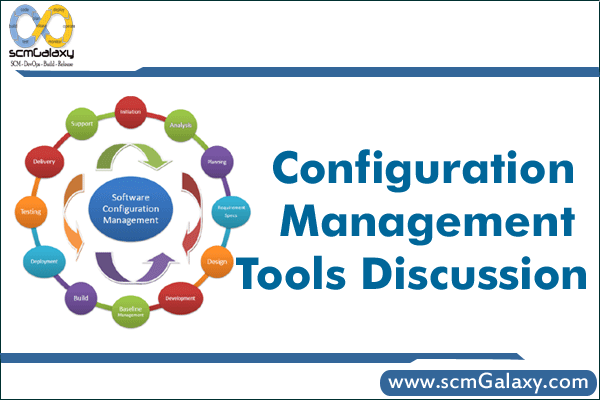
What this decision includes (and what it does not)
This article focuses on SCM/version control tooling (repository model, branching, history, governance, and integration). It does not focus on server configuration tools such as Ansible, Puppet, or Chef, which solve a different problem.
Evaluation criteria that usually decide the outcome
- Repository model: centralized or distributed, and whether offline commits matter for your teams.
- Scale profile: monorepo size, binary assets, branch count, and expected growth.
- Governance needs: approval workflows, auditability, traceability, and regulated change controls.
- Developer workflow: branching strategy, merge frequency, code review model, and onboarding complexity.
- Ecosystem integration: CI/CD, issue tracking, IDE support, artifact and release tooling.
- Operations burden: hosting model, backup/restore, admin staffing, and support model.
- Migration risk: history conversion quality, downtime tolerance, and training cost.
Comparison of common SCM tools
Use this as a starting point for shortlist conversations. Final selection should be validated through a pilot using your own repositories and release process.
| Tool | Model | Typical strengths | Typical trade-offs | Often selected for |
|---|---|---|---|---|
| Git | Distributed | Strong branching workflow, broad ecosystem, strong CI/CD compatibility | Needs clear governance conventions in large organizations | Most modern DevOps workflows |
| Subversion (SVN) | Centralized | Straightforward centralized model, simpler mental model for some teams | Less flexible offline and branch-heavy workflows | Teams preferring centralized control with simpler branching |
| Perforce Helix Core | Centralized | Commonly used where large binary assets and strict file locking are important | Operational and licensing considerations | Large asset-heavy environments |
| IBM ClearCase | Primarily centralized enterprise SCM | Used in legacy enterprise environments with established process controls | Higher operational complexity and specialized administration | Existing ClearCase estates with governance-heavy processes |
| Mercurial | Distributed | Clean distributed workflow and reliable core model | Smaller ecosystem than Git in many organizations | Teams that prefer distributed SCM with simpler conventions |
A practical selection workflow
A lightweight decision workflow helps prevent tool-first decisions and keeps selection tied to delivery outcomes.
flowchart TD
    A[Document delivery and compliance requirements] --> B{Need distributed offline commits}
    B -- yes --> C[Shortlist Git and Mercurial]
    B -- no --> D{Need strict centralized governance}
    D -- yes --> E[Shortlist SVN ClearCase and Perforce]
    D -- no --> F[Run pilot with two finalists]
    C --> F
    E --> F
    F --> G[Measure migration effort and team productivity]
    G --> H[Select tool and create rollout plan]
Example commands for pilot evaluation
Command sets differ by platform, but these examples help structure proof-of-concept work during evaluation.
Git pilot workflow
git clone https://example.com/team/app.git
cd app
git checkout -b feature/release-control
git add .
git commit -m "Pilot: release control workflow"
git push origin feature/release-controlCode language: PHP (php)
SVN baseline workflow
svn checkout https://svn.example.com/repos/app/trunk app
cd app
svn update
# edit files
svn commit -m "Pilot: release control workflow"Code language: PHP (php)
Repository sizing snapshot before migration
du -sh ./repo
find ./repo -type f | wc -l
git -C ./repo count-objects -vH
Questions to align with platform, security, and release teams
- How will branch and merge policies be enforced?
- What is the required retention policy for code history and audit evidence?
- What backup and disaster-recovery objective is required for repositories?
- What CI/CD systems must integrate on day one?
- How will access control map to existing identity and role models?
- What is the rollback plan if migration causes delivery disruption?
Best practices
- Run a time-boxed pilot with real repositories, not synthetic demos.
- Define success metrics up front: cycle time, merge pain, onboarding time, and compliance fit.
- Treat migration as a product rollout: communication, training, office hours, and staged adoption.
- Automate policy checks in CI/CD instead of relying only on manual reviews.
- Document branch strategy and release process before broad rollout.
For historical context, the original post referenced an external discussion link: Configuration Management Tools Discussion.

I’m Rajesh Kumar, a DevOps, SRE, DevSecOps, Cloud, and Platform Engineering expert passionate about sharing practical knowledge, real-world experiences, and industry best practices. I have worked at Cotocus and regularly write about technology, travel, investing, health, product reviews, and digital marketing through my various platforms.
I publish technical articles at DevOps School, travel stories at Holiday Landmark, stock market insights at Stocks Mantra, health and fitness guidance at My Medic Plus, product reviews at TrueReviewNow, and SEO and digital marketing strategies at Wizbrand.
Find Trusted Cardiac Hospitals
Compare heart hospitals by city and services — all in one place.
Explore Hospitals
Choosing a configuration management tool depends on the team’s infrastructure, skills, and daily needs. Tools should help keep systems consistent, track changes, and reduce manual work across environments. It is also worth comparing automation features, learning time, community support, and integration with existing workflows. A small pilot project can reveal practical limits before a team commits to one tool. Clear standards and regular reviews matter just as much as the tool itself.