
Are you tired of dealing with compliance issues in your software development process? Do you want to streamline your workflow while ensuring compliance? Look no further than GitOps!
GitOps is a relatively new approach to software development that has been gaining popularity in recent years. It involves using Git as the single source of truth for your infrastructure and application code. This approach not only improves collaboration and transparency, but it also helps you achieve compliance more effectively.
In this article, we will explore how to implement GitOps for compliance. We will cover the following topics:
What is GitOps?
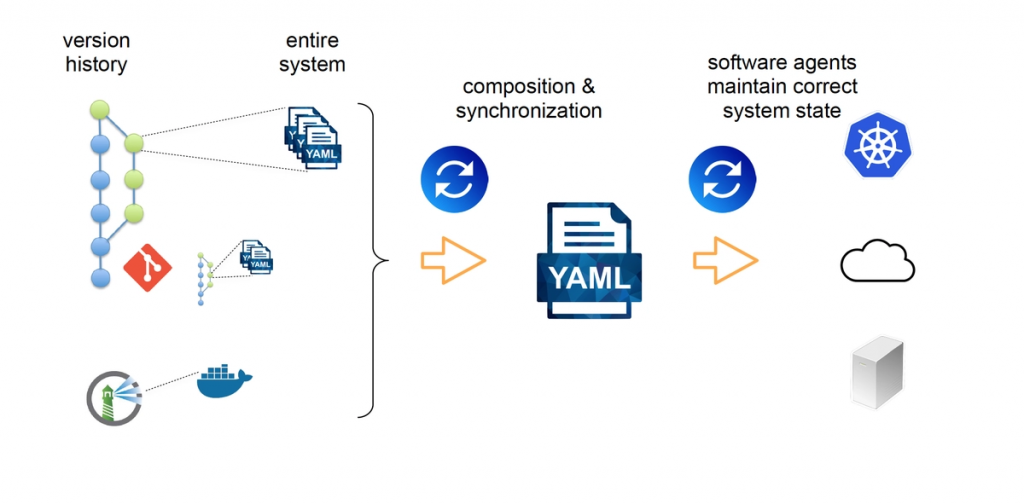
GitOps is a software development methodology that uses Git as the primary tool for managing infrastructure and application code. Instead of manually configuring infrastructure and deploying applications, GitOps automates these processes by using Git as the single source of truth.
In GitOps, all changes to infrastructure and application code are made through Git commits. These changes trigger automated processes that deploy the changes to the target environments. This approach ensures that all changes are version-controlled, auditable, and reproducible.
Why use GitOps for compliance?
Compliance is a critical concern in software development. Compliance regulations such as HIPAA, GDPR, and PCI require businesses to ensure that their software development processes meet specific standards.
GitOps can help you achieve compliance more effectively by providing the following benefits:
- Version control: With GitOps, all changes to infrastructure and application code are version-controlled. This means that you can track who made what changes and when, which is crucial for compliance audits.
- Auditability: GitOps ensures that all changes are auditable. You can easily review the history of changes to your infrastructure and application code, which is essential for compliance audits.
- Reproducibility: GitOps ensures that all changes are reproducible. You can easily roll back to previous versions of your infrastructure and application code, which is crucial for compliance audits.
How to implement GitOps for compliance?
Implementing GitOps for compliance requires the following steps:
Step 1: Define your compliance requirements
The first step in implementing GitOps for compliance is to define your compliance requirements. You need to identify the compliance regulations that apply to your business and the specific requirements that you need to meet.
For example, if you are developing software for the healthcare industry, you need to comply with HIPAA regulations. You need to ensure that your software development processes meet the specific requirements of HIPAA, such as maintaining strict access controls and protecting patient data.
Step 2: Implement GitOps for infrastructure code
The next step is to implement GitOps for your infrastructure code. You need to ensure that all changes to your infrastructure code are made through Git commits.
To implement GitOps for infrastructure code, you can use tools such as Terraform, Ansible, or Kubernetes. These tools provide declarative infrastructure management, which makes it easy to manage infrastructure as code.
Step 3: Implement GitOps for application code
The next step is to implement GitOps for your application code. You need to ensure that all changes to your application code are made through Git commits.
To implement GitOps for application code, you can use tools such as Jenkins, GitLab, or Argo CD. These tools provide continuous delivery pipelines that automate the deployment of your application code.
Step 4: Ensure compliance with automated testing and monitoring
The final step is to ensure compliance with automated testing and monitoring. You need to ensure that your software development processes meet your compliance requirements by using automated testing and monitoring tools.
For example, you can use tools such as SonarQube or Nessus to perform automated security testing. These tools can help you identify security vulnerabilities in your infrastructure and application code.
You can also use tools such as Prometheus or Grafana to monitor the performance and availability of your infrastructure and applications. These tools can help you detect and resolve issues before they impact your users.
Conclusion
GitOps is a powerful approach to software development that can help you achieve compliance more effectively. By using Git as the single source of truth for your infrastructure and application code, you can ensure that all changes are version-controlled, auditable, and reproducible.
Implementing GitOps for compliance requires you to define your compliance requirements, implement GitOps for infrastructure and application code, and ensure compliance with automated testing and monitoring. By following these steps, you can streamline your software development process while ensuring compliance with regulatory requirements.

👤 About the Author
Ashwani is passionate about DevOps, DevSecOps, SRE, MLOps, and AiOps, with a strong drive to simplify and scale modern IT operations. Through continuous learning and sharing, Ashwani helps organizations and engineers adopt best practices for automation, security, reliability, and AI-driven operations.
🌐 Connect & Follow:
Website: WizBrand.com
Facebook: facebook.com/DevOpsSchool
X (Twitter): x.com/DevOpsSchools
LinkedIn: linkedin.com/company/devopsschool
YouTube: youtube.com/@TheDevOpsSchool
Instagram: instagram.com/devopsschool
Quora: devopsschool.quora.com
Email– contact@devopsschool.com
Find Trusted Cardiac Hospitals
Compare heart hospitals by city and services — all in one place.
Explore Hospitals