Configuration Management (CM) is a core concept in IT, DevOps, and systems engineering. Here’s a concise and clear explanation:
What is Configuration Management?
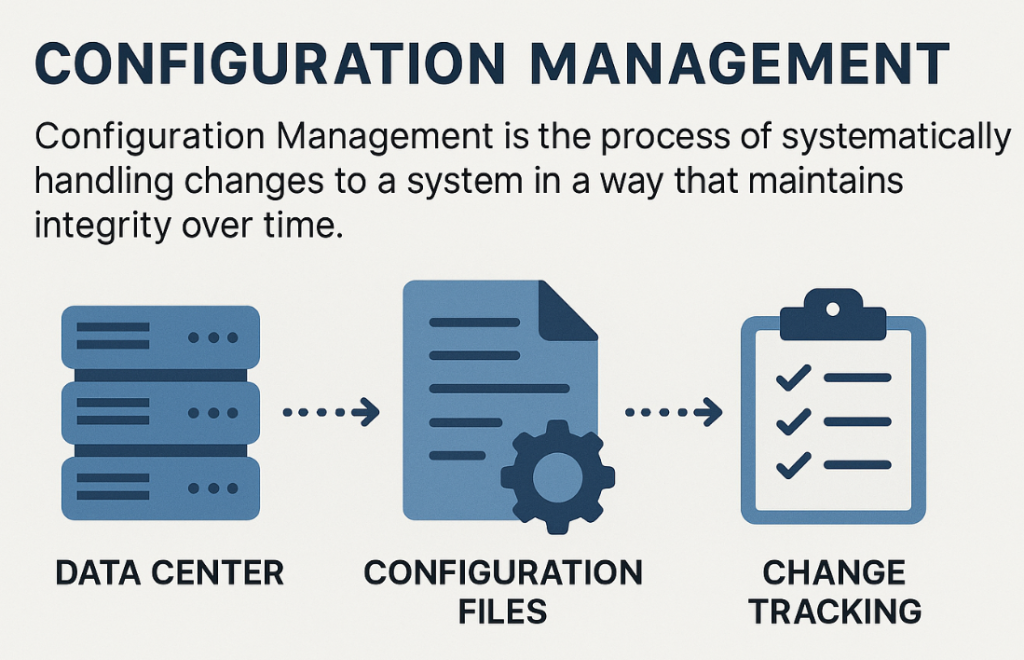
Configuration Management is the process of systematically handling changes to ensure that a system’s configuration is known, consistent, and can be restored to a desired state. In other words, it’s the practice of tracking, controlling, and automating the setup and maintenance of software, hardware, and IT infrastructure.
Key Points:
- Consistency: Ensures all environments (dev, test, production) are set up the same way, reducing “works on my machine” problems.
- Automation: Automates setup, deployment, and updates of systems, minimizing manual errors.
- Version Control: Tracks and records every change made to configurations, making it easy to roll back to a previous state if needed.
- Documentation: Maintains up-to-date documentation of the current system state, configurations, and changes.
- Compliance: Helps ensure systems comply with organizational or regulatory standards by enforcing configuration policies.
In Practice
- In traditional IT: CM might involve manually tracking hardware, software versions, network settings, etc.
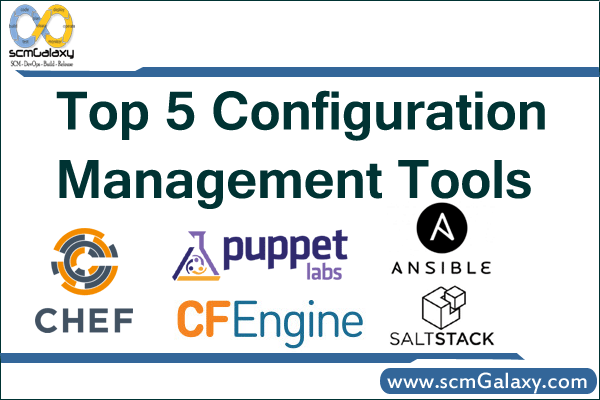
- In modern IT/DevOps: Tools like Ansible, Puppet, Chef, and SaltStack automate configuration management, making it possible to define the desired state of infrastructure as code.
Simple Example
Let’s say you have 100 servers and you need to:
- Install the same version of Nginx on all
- Ensure the config file is identical everywhere
- Change a setting and apply it across all servers
Without CM: You’d need to SSH and manually update each server (slow, error-prone).
With CM: You write a configuration script or playbook, and tools like Ansible push the same config everywhere, consistently, automatically, and track the change.
Benefits of Configuration Management
- Faster deployments
- Reduced human errors
- Easier recovery after failure
- Efficient scaling and updates
- Reliable, repeatable infrastructure
Summary Table
| Aspect | Description |
|---|---|
| Definition | Managing and maintaining the state/configuration of IT systems and software |
| Purpose | Consistency, reliability, and repeatability of environments |
| Tools | Ansible, Puppet, Chef, SaltStack, Terraform (for infrastructure CM) |
| Key Activities | Versioning, automation, rollback, compliance, auditing |
In short:
Configuration Management is the practice of ensuring all components in your environment are configured correctly, tracked, and maintained over time, often through automation.

MotoShare.in delivers cost-effective bike rental solutions, empowering users to save on transportation while enjoying reliable two-wheelers. Ideal for city commutes, sightseeing, or adventure rides.
Find Trusted Cardiac Hospitals
Compare heart hospitals by city and services — all in one place.
Explore Hospitals